





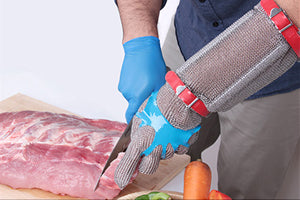



You clock in, the cool room is already humming, and the first thing that goes wrong is something small enough to ignore for ten minutes. An apron strap gives way, a glove stays damp from the last wash-down, or the knife pouch sits awkwardly so you keep putting the blade down where it shouldn't be. That's how a shift starts to leak time, attention, and confidence, and in an abattoir those leaks turn into contamination risk, safety exposure, and avoidable frustration fast.
Australia's red meat and livestock industry is not a small backdrop to that problem. It turned over $81.7 billion in 2022–23, and processing made up 31.7% of that, or $25.9 billion, which shows how much sits in the hands of processors and their suppliers (MLA state of the industry report). The work itself is tracked continuously too, with the ABS collecting slaughtering and meat production data from commercial abattoirs and meat processors through quarterly surveys and monthly abattoir data aggregation (ABS livestock products release).
For anyone buying abattoir supplies Australia wide, that scale matters because the purchase decision usually isn't about the catalogue line item. It's about whether the gear keeps throughput moving, protects people in wet and sharp-edged spaces, and survives enough shifts to justify the spend.
Table of Contents
- Why the Right Supplies Change Your Shift
- Essential Abattoir Supply Categories
- Compliance and Regulatory Requirements
- Material and Specification Guidance
- Choosing Australian Manufacturers and Wholesalers
- Maintenance and Purchasing Best Practices
- Frequently Asked Questions
Why the Right Supplies Change Your Shift
A butcher steps into a cold room, reaches for an apron, and finds a crack along the lower edge that wasn't there last month. By 9 a.m. the front of the shirt is wet, the straps are slipping, and every time someone washes down the bench, the discomfort gets worse. The work still gets done, but it gets done with more stops, more adjustments, and more risk than anyone wrote into the roster.

Practical rule: If a supply item keeps forcing a worker to adjust, dry off, re-tie, or re-check, it's already costing more than its invoice says.
That's why abattoir supplies Australia buyers need to think past price tags. In a plant with constant wash-downs, sharp tools, moving product, and hygiene controls, the right gear removes friction from the shift instead of adding to it. An apron that cleans easily, gloves that fit properly, and packaging that holds up under cold-chain handling keep people moving without constant interruption.
The broader industry context explains why these decisions matter. The red meat and livestock sector's processing arm alone accounted for $25.9 billion in turnover in 2022–23 (MLA state of the industry report). National tracking also keeps close watch on slaughter and meat-processing activity through the ABS livestock products release. If throughput and continuity are already under measurement pressure, purchasing needs to support them, not interrupt them.
The suppliers that understand this do more than sell consumables. They help a plant cut downtime, keep workers protected, and keep product moving from kill floor to pack-out. That separates a facility that runs cleanly from one that spends the morning fixing small failures that should never have reached the floor.
Protective gear, meatroom workflow, and what fails first in real plants is worth reading through that lens too. The right item is the one that still performs when the room is cold, the floor is wet, and the line will not stop.
Essential Abattoir Supply Categories
A shift in an abattoir usually fails at the point where one supply item does not match the job. A seal leaks, a glove tears, a wash-down product leaves residue, or a label cannot be read clearly enough for traceability. The practical way to buy abattoir supplies Australia operations rely on is to tie each category to the bottleneck it removes, whether that bottleneck is contamination risk, safety exposure, throughput delay, or a compliance gap.
Processing equipment that keeps product moving
Bandsaws, mincers, sausage fillers, vacuum machines, and compatible vacuum bags all sit in the same operational chain because they keep product flowing. If filling slows, seals fail, or cutting becomes awkward, the whole room feels it straight away. The issue is not only speed. Poorly matched equipment increases handling, adds rework, and makes it harder to keep product in spec through pack-out.
That is why equipment choices need to be made against the work the plant does. A machine that looks fine on paper can still create delays if it is difficult to clean, hard to service, or incompatible with the rest of the line. The better purchase is the one that keeps the room moving without adding another point of failure.
Safety gear that reduces exposure
Disposable PPE, hand protection, eye and face shields, respiratory protection, hearing protection, and sleeve protectors all do the same basic job, they keep people safe enough to work at a steady pace. In a wet room, the first signs of failure are often small. Sleeves stay damp, hands ache, visibility drops, or fatigue builds in noisy areas. Those problems slow people down before they become obvious incidents.
A good PPE set protects workers without getting in the way of the task. Fit matters. So does durability under cold, wet, and repetitive use. The wrong item may still meet a basic description, but if it slips, soaks through, or distracts the operator, it costs more than it saves.
Hygiene and sanitation consumables that protect the room
Sanitisation products and wash-down-friendly consumables matter because contamination does not wait for a convenient time. Surfaces that clean poorly, cloths that break down too quickly, or products that are not suited to repeated wet use make the room harder to control and harder to keep audit-ready. The supply needs to fit the cleaning method, not the other way around.
Practical food-safety systems matter. PSC TRADING Co PTY LTD's HACCP-focused food safety approach is a useful reference point for how suppliers can align consumables with hygiene controls rather than treating them as loose add-ons. In the meat room, the point is simple. If the cleaning item cannot hold up to the way the site washes down, it will create more work later.
Packaging, traceability, and cold-chain aids
Industrial packaging and sustainable packaging options protect product quality after it leaves the cutting bench. Carcass branding ink supports identification and traceability, while freezer pallet spacers help airflow in cold storage and freezing. These items solve different problems, but they work together. Clear identification reduces confusion further down the chain, and even freezing helps prevent avoidable product issues after packing.
Small accessories matter for the same reason. Knife pouches and belts, apron hooks, strap sets, and buckle options are easy to overlook, yet they affect how organised a workstation stays during a busy run. When those items fit the way the room is set up, tools stay where they should and staff spend less time fixing their own kit. PSC TRADING Co PTY LTD is one Australian source that brings machinery, consumables, PPE, accessories, and packaging into the same wholesale range, which can reduce the number of separate orders a site has to manage.
If a category does not solve a live bottleneck, it is probably a nice-to-have, not a priority.
That rule keeps purchasing honest. It also stops teams from spending on gear that looks sensible in a spreadsheet but does not change what happens on the floor.
Compliance and Regulatory Requirements
A meat room can fail compliance in small ways long before anyone notices. A cleaning item that leaves residue, a label that blurs, or PPE that does not hold up to the shift all create the kind of problems that show up later in audit records, incident reports, or product handling. Buying the right supply starts with knowing which rule it supports, because food safety, work health and safety, and site planning all shape what belongs in the room.

The livestock and meat sector is monitored closely, and the paperwork side is not abstract. The ABS livestock products release shows how slaughtering and meat production data are gathered through commercial abattoirs and meat processors, with national totals built from wider abattoir data collection. That matters on the floor because the same sector that produces the product also gets measured, audited, and compared. The practical result is that traceability, hygiene, and safe work systems have to be supported by the supplies sitting on the shelf, not just by the procedures in a binder.
Food safety starts with the items that touch product-facing spaces. Sanitisation products need to suit wash-down routines, and carcass branding ink has to support traceability without muddying identification. Local planning rules can also change what a buyer needs to keep on hand. In August 2025, Victoria amended its planning scheme so micro-abattoirs became a Section 1 use in the Farming Zone, Green Wedge A Zone, and Rural Activity Zone, so no permit is required there according to the Australian Food Sovereignty Alliance (AFSA national abattoir campaign). That kind of change pushes buyers toward supply packs that support compliance from the start, because small facilities need gear that fits the approval path they are operating under.
PPE sits in the same category of practical compliance. Hand, eye, face, respiratory, and hearing protection are part of keeping the crew working and reducing preventable exposure in hard-use rooms. Fit, coverage, and cleanability are not comfort upgrades. They are the difference between equipment that gets worn correctly and equipment that ends up hanging unused on a hook.
Here is the procurement filter I use on site:
- Traceability items first: Check that branding ink and other identification supplies suit the workflow before you spend on extras.
- Wet-area hygiene second: Match sanitation products to wash-down frequency and the surfaces in the room.
- PPE third: Make sure hand, face, respiratory, and hearing protection fit the actual task mix, not just the written site rule.
- Planning-aware sourcing last: If your facility sits in an area affected by micro-abattoir reform, buy for the approval model you operate under, not the one an older permit assumed.
The internal link on HACCP fits here because the paperwork only works if the products support it. PSC Trading's food safety and HACCP approach sits in the same practical lane as the supply choices above, where traceability, sanitation, and workroom control have to line up with what is used on shift.
Compliance-ready buying means every item has a clear job in the wash-down, the audit trail, or the safe-work routine. If a supply does not support one of those outcomes, it is taking up space that should be reserved for something that does.
Material and Specification Guidance
Aprons and workwear fail in different ways depending on the room they live in. Cold rooms punish stiff materials, splash zones punish weak waterproofing, and sharp-handling areas punish flimsy construction. The mistake I see most often is matching the wrong material to the wrong task because the item looked fine on the rack.
Matching material to the room
TPU is the option that tends to make sense when flexibility matters and the worker needs a waterproof apron that still moves comfortably. PVC suits heavy splash zones where cost control matters and the main job is to keep fluids out. Waxed canvas works better for longer shifts where breathability and wear comfort matter more than absolute splash resistance. Leather earns its place where puncture resistance and hard-use durability matter most.
A useful way to think about it is to start with exposure. If the worker spends the day in wash-down conditions, waterproofing outranks breathability. If the job is extended and movement-heavy, comfort becomes a bigger factor because a stiff apron eventually becomes a distraction. If the task involves harsher physical contact, leather or similarly tough construction usually wins.
| Material | Best For | Key Advantage | Limitation |
|---|---|---|---|
| TPU | Cold rooms, wet processing, flexible movement | Flexible and durable with good waterproof performance | Usually chosen for performance, not the lowest entry price |
| PVC | Heavy splash zones and budget-conscious wet work | Cost-effective waterproof barrier | Can feel stiffer in cold conditions |
| Waxed canvas | Long shifts and less extreme splash exposure | More comfortable and breathable over time | Not the first choice for the wettest jobs |
| Leather | Harsh work, puncture-prone tasks, demanding handling | Strong resistance and robust wear life | Heavier and less suitable where constant wash-down is the main issue |
Sizing and fastening matter just as much as the fabric. Coverage dimensions need to match the work posture, because a short apron that looks tidy on the hanger often exposes knees or lower legs where the mess lands. Fastening systems matter too, especially if the team needs to remove and replace gear quickly between tasks.
Practical rule: Buy the apron for the task, not for the shelf. If the material fights the room, the room wins.
That's where format variety helps. Hook systems, strap systems, and buckle tie options all solve different comfort and workflow problems, especially when several people are sharing a site and no one wears gear the same way. Apron choices also affect wash-down efficiency, because materials that dry and clean easily return to service faster.
For readers comparing apron hardware, stainless steel S-hooks are worth considering alongside format choices. The right fastener doesn't get much attention until it fails, then it becomes the whole problem.
Choosing Australian Manufacturers and Wholesalers
Local supply matters in abattoir work because the buyer isn't just shopping for postage speed. They're buying into someone else's understanding of meat-room realities, product fit, and compliance pressure. A supplier that knows butcher and processing workflows will ask better questions before the first box leaves the warehouse.
What to check before you place an order
Start with range depth. A supplier that can cover machinery, consumables, PPE, packaging, and accessories from one source reduces procurement noise, especially in plants where several teams are ordering at once. That doesn't just simplify admin, it lowers the chance that one missing component stalls the next job.
Then check whether the products are made or supported in Australia. Local manufacturing can matter for consistency, turnaround, and the ability to source repeatable apron formats or fastening variations. It also matters when the site needs a supplier who understands Australian meat-processing conditions rather than a generic industrial buyer profile.
Specialisation is the next filter. A wholesaler that serves butcher and meat-processing environments will carry the practical oddments too, knife pouches, belts, branding ink, freezer pallet spacers, and the kind of PPE combinations that suit wet rooms. A generic industrial catalogue often looks broad, but broad isn't the same as fit-for-purpose.
Australian suppliers also need to be judged on technical support. If the team can answer questions about material choice, fastening preference, hygiene compatibility, or product suitability for a particular workflow, that saves time and bad purchases. A decent supplier doesn't just ship cartons. They help a buyer avoid ordering the wrong gear for the wrong room.
The scale of the industry makes that support matter. Australia has around 300 abattoirs, including boning rooms, and the sector employs about 34,600 people according to a widely cited industry source (Australian Butchers Guild processing overview). Another industry source says the red meat supply chain supports about 134,000 jobs when flow-on effects are included, with livestock transport alone moving about 9 billion head of cattle, sheep, and goats each year and the sector contributing just under $23 billion in value added (AMPC meat industry essentials). Those numbers point to a supply chain where weak procurement creates downstream pain fast.
Good suppliers don't just hold stock, they understand why the stock exists.
That's the standard to apply when comparing wholesalers. PSC TRADING Co PTY LTD fits that model in a practical sense because its range combines equipment, PPE, aprons, packaging, and abattoir-related consumables in one place, which is exactly the kind of consolidation smaller teams often need. If a supplier can't explain how their catalogue maps to real meat-room tasks, keep looking.
Maintenance and Purchasing Best Practices
The best gear in the world fails early if it's cleaned badly, stored badly, or replaced too late. That's especially true in abattoirs, where wash-down, moisture, fats, and repeated movement punish every weak point. Maintenance isn't a side job. It's part of the purchasing decision.
The first habit is simple. Clean aprons, tools, and processing equipment on the same routine every shift, then dry and store them in a way that avoids lingering moisture. A product that holds residue or stays damp tends to wear faster and creates a hygiene headache long before it reaches the end of its physical life.
Watch for early failure, not dramatic failure. Cracking PVC, stiffening TPU, frayed straps, and worn fastenings all tell you the item is drifting out of service even if it still looks passable at a glance. The same goes for knife carry and tool organisation, once a pouch or belt starts misplacing tools or losing shape, it stops helping workflow.
Buying patterns matter too. Consumables are easier to manage when you bulk-order around predictable usage rather than reacting to shortages. PPE stock should always include a minimum buffer, because a missing glove size or damaged face shield can leave a worker exposed even when the rest of the room is ready. Equipment upgrades are usually better timed around production cycles than emergency breakdowns, because emergency buying narrows your options and pushes you into compromise purchases.
Here's a practical three-part stock discipline:
- Track wear by task: Separate gear that handles splash zones from gear that sees lighter use, because the failure patterns won't match.
- Set a replacement threshold: Replace items when they start changing fit, flexibility, or fastening performance, not after they visibly collapse.
- Keep backup consumables on hand: Don't let a single missing box of PPE or packaging delay a full day's work.
One thing I've learned on real floors is that “still usable” can be the most expensive phrase in the room. It usually means the item is past its best, but no one has had time to admit it yet. That's when replacement budgets get created by failure instead of by planning.
The smartest buying teams treat maintenance as a forecast. They look at the state of the current stock, match it to the next few production cycles, and buy before the old gear starts slowing the room down. That's how you protect throughput without bloating inventory.
Frequently Asked Questions
How do I choose the right apron material?
Start with the failure point, not the brochure. If the apron needs to stay light, move well in a wet room, and wash down easily between shifts, TPU usually makes daily sense. If splash control is the main job and you need to keep purchase cost down, PVC is often the straightforward option, but it tends to harden sooner if it is left folded, hot, or coated in fat for too long. Waxed canvas suits shifts where comfort matters and the apron is not taking constant soak-through, yet it needs routine drying and reproofing or it starts to lose its edge. Leather holds up better where puncture and abrasion are the problems, but it also needs cleaning discipline and proper drying, otherwise it stiffens, cracks, and turns into gear that looks fine until the first hard movement tears into it.
The practical question is not just what the apron is made from, it is how often the room will punish it. I have seen TPU hold up well when crews rinse it properly and hang it up instead of stuffing it into a locker wet. I have also seen PVC fail early because it was stored folded in heat, then split along the crease line mid-shift. Waxed canvas gives decent service when it is kept clean and reproofed, but once the coating wears thin, it starts absorbing blood and water instead of shedding them. Leather can last longer in abrasive work, yet it becomes a false economy if it is not dried away from direct heat and checked for stitching wear.
Cost per shift matters more than sticker price. A cheaper apron that needs replacing early, or one that slows the worker because it traps heat and limits movement, costs more than it first appears. The better buy is the one that stays in service without creating a cleanup problem, a comfort problem, or a replacement rush at the worst possible time. Section 4 covers the compliance side of that decision, so use it as the reference point and then match the material to how the room runs.
How often should PPE and protective gear be replaced?
Replace it when the fit changes, the surface breaks down, or the fastening stops holding properly. A glove that has lost grip, an apron that is cracking, or a strap that will not stay put is already past the point where it is doing its job. In a meat room, waiting for a total failure usually means the worker has already carried extra risk for longer than anyone noticed.
The best replacement rhythm comes from use, not the calendar. Gear used in washdown areas or on abrasive surfaces wears out faster than items that see lighter handling, so the inspection habit needs to match the task. Check the spots that fail first, cuffs, seams, corners, clips, and attachment points, because that is where the room usually tells the truth before the rest of the item looks tired. A small tear in the wrong place can turn into contamination control trouble or a safety exposure before the shift is over.
What documentation should I ask suppliers for?
Ask for food-grade information where relevant, material safety data sheets for chemicals and related products, and any Australian manufacturing declarations if local origin matters to your purchasing policy. For food-processing environments, also ask how the item is intended to be used, cleaned, and maintained. A good supplier can answer those questions clearly without making you chase the detail yourself.
I also ask for practical detail that helps on the floor, not just on paper. If an apron, glove, or cleaning product needs a specific wash method, storage condition, or replacement trigger, that should be written down before the order lands. The wrong product with the right paperwork still creates downtime if the crew cannot keep it in service. The easiest way to make a better buying decision is to ask one more question before you approve the order, what problem does this item solve on the floor? If the answer is unclear, the item probably is not ready for purchase yet.
If you are reviewing your current abattoir supplies Australia setup, walk the floor this week and mark the three items that slow people down most, then replace or upgrade those first. If you need a consolidated source for processing equipment, PPE, aprons, packaging, and abattoir consumables, start with the actual workflow, compare the material and compliance fit, and place an order that solves the bottleneck instead of just filling a cart.
