

If you're buying work pants for a butcher shop, boning room, smallgoods line, or abattoir floor, you're probably dealing with the same frustrations most sites face. One pair tears at the pocket corner after a week. Another feels fine in the dry store but turns heavy and miserable in a wash-down area. A third looks good on paper, then restricts movement the moment someone bends to lift a tub, reach under a bench, or work a long shift between the cold room and the cutting table.
That's why basic product descriptions rarely help. “Durable cotton drill” doesn't tell you enough. For meat processing, the decision lies in the details: fabric weight, weave, reinforcement, mobility, heat load, and whether the pants are suitable for wet work rather than just marketed that way. Good cotton drill pants earn their keep on the floor. Bad ones create replacements, complaints, and avoidable safety issues.
Table of Contents
- What Defines a True Pair of Cotton Drill Pants
- Cotton Drill vs Other Fabrics in the Workplace
- Essential Features for Meat and Food Processing
- Getting the Right Fit for Safety and Mobility
- Laundering and Maintenance to Maximise Lifespan
- A Procurement Checklist for Workwear Buyers
- Frequently Asked Questions
What Defines a True Pair of Cotton Drill Pants
A true pair of cotton drill pants starts with the fabric, not the label. “Drill” refers to a diagonal twill weave, and that weave matters because it gives the cloth more density and better resistance to abrasion than a lighter casual cotton trouser. In a meat room, that shows up fast. Pants rub against bench edges, crate corners, hooks, rails, and equipment all day. A loose, lightweight fabric won't last.
The benchmark most buyers should know is 310gsm. In Australia, cotton drill work pants are standardised to a fabric weight of 310gsm, using preshrunk 100% cotton construction that maintains structural integrity, offers UPF 50+ protection, and meets AS/NZS 1020: 1995 for fabric composition, as outlined in the Workit cotton drill work pants specification.
Consider tyres. A standard passenger tyre and a heavy-duty truck tyre are both tyres, but only one is built for repeated load, harsh surfaces, and long hours. Cotton drill works the same way. Two pairs of pants can both say “cotton”, but only one is built for industrial punishment.
Start with the specification
When you check a garment spec, focus on these points first:
- Fabric weight. Look for 310gsm if you want the standard heavy-duty benchmark used across Australian workwear.
- Fibre content. Preshrunk 100% cotton drill is the classic construction.
- Sun protection. UPF 50+ matters for outdoor loading, yard work, and any site where workers move between buildings.
- Standard compliance. If the product references AS/NZS 1020: 1995, you're looking at a clearer sign that the fabric composition has been specified properly.
Why the weave matters on the floor
A twill weave isn't marketing language. It's one reason drill handles repeated friction better than lighter plain-weave cottons. In practical terms, that means better resistance where butchers usually destroy pants first: thighs rubbing when walking fast, knees flexing all shift, and pocket edges taking constant strain from gloves, markers, thermometers, or small tools.
Practical rule: If the supplier can't tell you the GSM, the fibre composition, and whether the fabric is preshrunk, you don't have enough information to buy for an industrial site.
There's also a premium industrial variant at 311gsm noted in the Australian market, where cotton drill's diagonal twill weave is described as increasing tensile strength and density for abrasion resistance in high-friction environments such as abattoirs, according to the DNC 100 cotton drill work pants listing. That doesn't mean every heavier pant is better. It means proper drill cloth is engineered for punishment, not just stitched to look rugged.
Cotton Drill vs Other Fabrics in the Workplace
A butcher or abattoir manager doesn't need a fashion comparison. You need to know what happens when fabric meets blood, fat, hot weather, cold rooms, constant bending, and daily cleaning. Cotton drill remains the default for a reason, but it isn't automatically the right answer for every role.

Why drill became the default
Cotton drill usually sits in the sweet spot for heavy work. It's durable enough for repetitive abrasion, breathable enough for general use, and familiar to workers who don't want flimsy pants on a hard floor. In a boning room or production area, that combination still makes sense.
Denim can be tough, but it tends to feel heavier and less practical once it gets wet. In a wash-down zone, that extra weight becomes noticeable quickly. Poly-cotton blends can be easier to care for, but some feel too light or too slick for rougher work. Full synthetics may dry faster, yet many workers dislike the feel in long shifts, especially where they're already dealing with aprons, sleeves, gloves, and boots.
Where other fabrics fall short
The problem with fabric comparisons is that buyers often reduce them to one trait.
- Denim handles abrasion, but it can feel cumbersome in wet conditions.
- Poly-cotton is often easier to maintain, though it may not give the same heavy-duty feel buyers want in tougher stations.
- Full synthetics can be lightweight and quick-drying, but they're not always the preferred option where comfort against the skin matters over a full shift.
- Traditional cotton drill is dependable, but that doesn't mean every all-cotton version is comfortable in high heat.
Here's the practical comparison most buyers need:
| Fabric Type | Durability | Breathability | Moisture Management | Best For |
|---|---|---|---|---|
| Cotton Drill | High | Good | Fair once soaked | General meat processing, workshop floors, mixed indoor-outdoor work |
| Denim | High | Fair | Poor in wet areas | Dry, abrasive tasks where flexibility matters less |
| Poly-cotton Blend | Moderate to high | Moderate | Better than heavy cotton in some settings | General uniform use, easier-care sites |
| Synthetic | Varies by garment | Varies by garment | Often quick-drying | Light-duty roles, splash-prone tasks where natural feel matters less |
The heat and movement trade-off
The old assumption that 100% cotton drill is always the most comfortable option doesn't hold up in every Australian workplace. Stretch-cotton hybrids such as 85% cotton and 15% elastane have been shown to improve mobility and reduce fatigue incidents, while traditional heavyweight cotton in the 300 to 311gsm range can cause 35% more heat retention and 28% higher sweat accumulation in summer conditions, according to the Bisley stretch cotton drill product context.
That matters on a site where workers move between hot loading zones, processing rooms, and the cold room. A heavier fabric might still be right for hard abrasion. But for staff who bend, climb, squat, and walk all shift, a stretch drill option can be the better operational choice.
If you're comparing lower-body protection with aprons and layered PPE, it also helps to think about how the pant fabric behaves under waterproof gear. That same trade-off shows up when comparing TPU vs PVC aprons in butcher environments, where comfort under demanding conditions affects whether workers keep the gear on properly.
The best fabric isn't the one with the toughest sales pitch. It's the one your team will still tolerate halfway through a hard shift.
Essential Features for Meat and Food Processing
Fabric gets the attention. Construction decides whether the pants survive.
In food processing, pants fail at the same places over and over. Crotch seams open when someone steps up onto a platform. Belt loops tear because a worker keeps clipping gear in the same spot. Pocket corners split after constant reaching. If the garment isn't reinforced properly, you're replacing it long before the fabric is worn out.

Reinforcement matters more than branding
Modern drill work pants often include mechanical stretch for more give and comfort during cutting and mincing. Combined with bar-tacked stress points and organiser pockets on the legs, these features improve mobility, help with tool carry, and stand up to the demands of food processing plants, as described in the RSEA drill pant range.
Bar tacking sounds minor until you've watched a weak pocket blow out on a busy day. Reinforcement at high-strain points changes the service life of the garment. The spots worth checking are simple:
- Crotch area for repeated bending and stepping
- Pocket corners where hands and tools pull constantly
- Belt loops if workers wear belts or clip-on accessories
- Side seams where friction and movement combine
A pair that looks neat on the rack but skips those reinforcements usually won't last on a production floor.
Pocket layout has to suit the job
Pocket design should match workflow. Standard side pockets are fine for personal items, but they don't solve access during active processing. Organiser pockets on the leg are more useful where someone needs a marker, thermometer, notebook, or other small item within reach.
That doesn't mean every worker should carry everything in their pants. In knife-heavy environments, tool carry still needs to fit your site rules and broader PPE setup. But good pocket placement cuts down unnecessary walking and awkward reaching.
Keep the item where the hand naturally goes. If a worker has to twist, bend, or stop the job to reach it, the pocket design is wrong.
A practical example is the bench operator who needs a marker and a small notepad but doesn't want them in the front pocket pressing into the thigh all shift. A well-positioned leg pocket solves that without adding bulk where it interferes with movement.
Getting the Right Fit for Safety and Mobility
Poor fit creates two different problems. Pants that are too loose can snag on equipment, bench hardware, or storage racks. Pants that are too tight restrict bending, lifting, stepping, and walking speed. Both problems show up as fatigue first, then as safety risks.
Loose enough to move, clean enough to stay safe
For most butcher shops and processing floors, a classic or regular fit works better than anything overly tapered. The leg needs enough room for movement, especially when workers move between stations, mount low platforms, or crouch to access tubs and crates. But the fit still has to stay controlled around machinery and under aprons.
A simple check is whether the pants hang cleanly without excess fabric bunching around the lower leg. Too much loose fabric can drag, catch, or hold moisture longer after splash exposure.
Use this on-floor test when fitting staff:
- Waist check. The pants should stay in place without constant hitching up.
- Crouch test. Have the worker squat as if reaching into a low tub.
- Step test. One foot up onto a low ledge or pallet edge will show tightness fast.
- Apron check. Make sure the pants sit comfortably under the site's apron system and belt setup.
How to check fit on the floor
Don't size work pants like office trousers. Fit them for the actual task. A boner, slicer, cleaner, and dispatcher may all need slightly different allowances depending on how much they bend, walk, or layer PPE.
If your team carries tools on the waist, belt comfort matters too. A poor belt setup can drag the waistband down, distort the fit, and create pressure points by the middle of the shift. That's why it helps to look at purpose-built butcher belts for tool carry and organisation alongside the pants rather than as an afterthought.
A good fit should let the worker move naturally in the cutting room, through the cold room door, and into the loading area without feeling either restricted or sloppy. If the first thing staff do is roll the waistband, yank the knees up, or complain about binding through the seat, the fit is wrong.
Laundering and Maintenance to Maximise Lifespan
Work pants fail faster when laundering is rough, inconsistent, or treated as somebody else's problem. In meat processing, you need hygiene first, but you also need the garment to hold its shape, seams, and function over repeated washing.
Near the start of the process, it helps to train staff on what normal wear looks like versus damage caused by poor care.

Wash for hygiene without wrecking the fabric
Cotton drill responds best to consistent, sensible washing rather than aggressive guessing. If blood, fat, and general site grime sit too long, the clean gets harder. If staff hit everything with harsh chemicals without checking compatibility, the fabric and stitching pay for it later.
A practical laundering routine looks like this:
- Sort early. Don't leave heavily soiled pants bundled up for days if you can avoid it.
- Use the care label. Follow the garment instructions instead of assuming every industrial pant handles the same wash.
- Treat stains promptly. Blood and fat come out better when handled early.
- Skip unnecessary additives. Fabric softeners can interfere with how some garments feel and perform over time.
- Inspect after washing. Clean pants make seam failures, abrasion, and thinning fabric easier to spot.
For sites dealing with chemical exposure or harsh laundry conditions, it's also worth reviewing how bleach-proof uniforms are handled in food and industrial settings, especially where buyers are mixing garment types across departments.
When a pair should be retired
Don't keep a pair in service just because the fabric still exists. If the knees are worn thin, the seat is going transparent, the hem is fraying into a trip issue, or the seams are starting to open, the garment is done for work use.
Check these points after laundering:
- Knees and thighs for thinning or surface abrasion
- Crotch seam for spreading stitches
- Pocket edges for tearing
- Waistband and loops for distortion
- Hems for drag wear and thread breakdown
This visual guide is useful for team briefings and laundry checks:
A site gets better lifespan from workwear when someone owns the inspection process. That can be a supervisor, laundry lead, or store person. If nobody checks garments until they fail on shift, replacements always become urgent instead of planned.
A Procurement Checklist for Workwear Buyers
Buying work pants by price alone usually costs more later. The cheap pair that twists after washing, tears at the stress points, or gets rejected by workers because it's too hot or too stiff isn't saving anything. Buyers need a cleaner specification process.

Questions worth asking before you order
Start with the questions suppliers should be able to answer clearly.
- What is the exact fabric weight? For standard heavy-duty drill in Australia, 310gsm is the key benchmark.
- Is the fabric preshrunk and what is the fibre composition? That tells you more than a generic “cotton drill” label.
- What reinforcements are built in? Ask about bar tacks and high-stress seam construction.
- Does the garment include stretch or mechanical give? For active roles, that can affect acceptance on the floor.
- What is the UV rating? Relevant for yards, loading areas, and outdoor tasks.
- Is there any verified information on fluid resistance? If the answer is vague, treat that as a warning for wet-zone use.
Price should be judged in context, not isolation. Australian cotton drill work pants typically sit between AUD $50 and AUD $99.99, according to the Hard Yakka product pricing context at Everything Australian. That's a reasonable buying range for industrial workwear, but only if the garment specification matches the site.
What a sensible buying decision looks like
Here's the procurement view that holds up in practice:
Buy for the station, not for the catalogue category.
A smallgoods worker in a warmer area may need more mobility and less heat load. A yard hand who moves in and out of sun exposure may value the heavier traditional drill construction. A worker in a wet wash-down zone may need a different system altogether, with the pants treated as one layer of protection rather than the full answer.
Use this short checklist before signing off on a bulk order:
| Checkpoint | What to confirm |
|---|---|
| Fabric | Correct drill weight and composition for the task |
| Comfort | Movement through squat, bend, reach, and step tests |
| Construction | Reinforced stress points and practical pockets |
| Suitability | Whether the garment is intended for dry, mixed, or wet work |
| Price | Falls within the expected buying range for the spec |
| Supplier clarity | Clear answers, not vague sales language |
If the supplier can't explain the garment properly, that uncertainty becomes your site's problem later.
Frequently Asked Questions
Are cotton drill pants suitable for wet wash-down areas
Sometimes, but not automatically. This nuance often catches many buyers. A frequent challenge in Australia is finding cotton drill pants with verified food-grade fluid resistance. There has been a 40% rise in fluid-contamination incidents in abattoirs, while many cotton drill pants promote durability but leave out clear fluid-resistance data or references to standards such as AS/NZS 4802.1, as highlighted in the Hard Yakka cotton drill pants category context.
That means you shouldn't assume heavy fabric equals fluid protection. In wet wash-down zones, ask for verified performance information. If the supplier can't provide it, treat the pants as standard workwear, not fluid-resistant protective clothing.
Do darker colours work better in butcher shops
They can help with appearance between cleans, but colour doesn't replace hygiene. Dark colours may look cleaner for longer in some roles, while lighter colours can make contamination and soiling easier to spot. The better choice depends on your site rules, laundering process, and how visible you want contamination to be during the shift.
What matters more is whether the garment is cleaned properly and checked daily. Under the NSW Standard for Construction and Hygienic Operations of Retail Meat Premises, protective clothing and equipment must be thoroughly cleaned and sanitised at the end of each day's operation, as set out in the NSW retail meat premises standard.
What should cotton drill pants be worn with
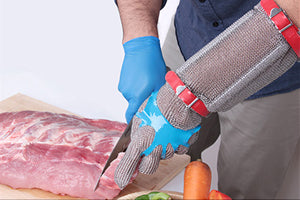
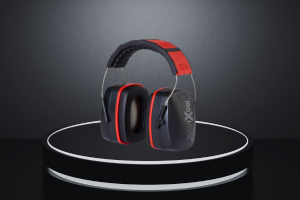
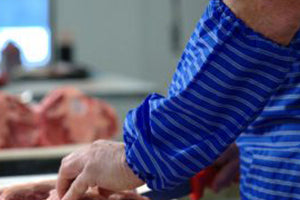
In most meat and food environments, pants are one part of the system. Workers often need them paired with waterproof aprons, suitable boots, and task-specific PPE such as gloves, sleeve protection, eye protection, or hearing protection depending on the station.
A practical example is the worker moving from trimming to wash-down support. Cotton drill pants may still be suitable as the base garment, but they need help from an apron that resists soak-through and from boots that hold traction on wet floors. Pants alone won't solve splash exposure.
Are cotton drill pants enough for compliance on their own
No. They're part of site control, not the whole answer. Meat businesses supplying the domestic market must hold a licence from the relevant State or Territory authority, and compliance sits within the wider operating system of the premises, as noted in the meat processing compliance unit guide.
For export operations, the compliance picture is broader again. Industry auditing and certification bodies such as AUS-MEAT and AUS-QUAL support meat industry standards, certification, and training across domestic and export settings. Work pants need to fit into that broader hygiene and PPE framework.
Good cotton drill pants solve durability and comfort problems. They do not replace a proper site standard, a documented hygiene program, or the right protective layers for wet and hazardous tasks.
If you're reviewing workwear for a butcher shop, abattoir, food plant, or hospitality operation, PSC TRADING Co PTY LTD supplies industrial and food-processing gear for exactly those environments, including PPE, aprons, butcher accessories, and meat-processing essentials through the PSC TRADING Co PTY LTD website.
