





You're probably at the point where the old machine is slowing service, staff are working around it instead of with it, and every quote you get seems to compare horsepower, tray size, or output claims without telling you what the purchase will practically mean on your floor. That's where most first major equipment buys go wrong. The machine looks right on paper, but once it lands on site, it's too hard to clean, doesn't suit your workflow, or creates a new bottleneck three metres downstream.
Buying food processing equipment in Australia isn't just about choosing a bandsaw, mincer, filler, or vacuum unit. It's about making sure the machinery, the layout, the cleaning routine, the consumables, and the PPE all work as one system. If one part is mismatched, throughput drops and compliance pressure goes up.
That matters in a market that's still expanding. The Australia food processing equipment market generated revenue of USD 2,784.2 million in 2025 and is projected to reach USD 3,969.1 million by 2033, driven by demand for processed foods and facility modernisation, according to Grand View Research's Australia food processing equipment market outlook.
Table of Contents
- Your Guide to Sourcing the Right Equipment
- Core Equipment for Australian Meat Processors
- Navigating Australian Food Safety and Compliance
- Procurement Beyond the Price Tag
- Essential Consumables and PPE for Safety and Throughput
- The Advantage of Sourcing from Australian Suppliers
- Building a Resilient and Profitable Operation
Your Guide to Sourcing the Right Equipment
A new butcher or plant manager usually starts with the wrong question. They ask, “Which machine should I buy first?” The better question is, “Where does the current process break down?” If trim is piling up before mincing, the issue may be cutting capacity. If product is ready but can't be packed fast enough, the problem sits at sealing, bag supply, or bench flow rather than primary processing.
That's why a smart buying process starts on the floor. Walk the line from receival to cut-down, mincing, filling, packing, chill, and dispatch. Watch where operators stop, wait, lift awkwardly, or rework product. Those delays tell you more than any brochure.
Start with the actual job
A small shop making fresh sausages for the week has different priorities from an abattoir handling carcass breakdown or a processor supplying portioned retail packs. One site needs compact equipment that can be stripped and washed quickly between tasks. Another needs machines that can run steadily for longer shifts without choking the workflow.
A practical shortlist usually comes from these questions:
-
What product are you making most often
Bone-in cuts, mince, burgers, sausages, vac-packed primals, sliced cooked meats. The answer decides the core machine mix. -
Who's using it each day
A machine that looks efficient can still fail if the team can't clean it properly or change parts without frustration. - What's the main constraint Labour, floor space, power, cleaning time, cold room access, packaging speed, or supply of consumables.
Practical rule: Buy for your most frequent production day, not your most optimistic one.
Think beyond the machine crate
The first major purchase should solve an operational problem for years, not create three new ones. A mincer needs plates, knives, cleaning access, and room for safe feed handling. A vacuum machine needs matching bags, bench space, and a packing rhythm that suits your labels and cartons. A bandsaw needs enough clearance around it for safe handling of larger cuts and proper wash-down at the end of the shift.
That's why the strongest procurement decisions consider the entire system. You're not only buying equipment. You're locking in a way of working.
Use practical examples when you compare quotes. Ask how long disassembly takes in real conditions. Ask what parts need replacing most often. Ask whether the machine's footprint includes operator movement and sanitation access, not just the base dimensions. Those answers usually separate equipment that works in Australia from equipment that only looks good in a warehouse photo.
Core Equipment for Australian Meat Processors
The best meat processing lines follow the product. Raw material comes in, gets broken down, reduced, mixed or filled if needed, then packed for storage or sale. If the machine sequence doesn't match that flow, staff start carrying product back and forth, benches get crowded, and hygiene control gets harder than it should be.

Start with the workflow, not the catalogue
For most Australian meat processors, the core path is straightforward. Primary cutting comes first. Then reduction or further processing. Then packaging. It sounds simple, but many first-time buyers overinvest in one stage and underinvest in the next.
A common example is buying a strong mincer while keeping an undersized packing setup. The mince comes out fast, but staff then queue at the bagging bench. Product temperature rises while they wait, and the expensive machine spends half the morning idle.
How each machine earns its place
Band saws handle the first hard work. If you're cutting bone-in sections, splitting larger pieces, or producing repeatable primal portions, a stable saw with good blade tracking and straightforward cleaning access matters more than extra features you won't use. In practice, operators need a table height that suits the product and enough visibility around the blade to work confidently.
Meat mincers turn trim and prepared cuts into saleable product. Plate size, feed design, and ease of strip-down make a real difference. If you're producing sausages, burger mix, or coarse mince, the right plate and knife setup matters as much as motor strength. A compact grinder can be the right call for smaller shops, especially when bench space is limited, which is why models discussed in this review of the Tre Spade Meat Mincer No.12 attract attention from butchers who need consistent output without oversizing.
Mixers and vacuum tumblers come into play when you're adding value. Marinades, seasoning distribution, and texture control all improve when the process is even. A mixer that empties awkwardly or traps product in corners will slow every batch change.
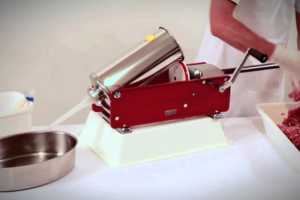
Sausage fillers need to match batch size and casing type. For short runs, a manual setup can still make sense. For heavier daily output, operators generally need a system that gives better control over fill consistency and reduces fatigue. The wrong filler doesn't just slow the team. It also affects presentation and casing performance.
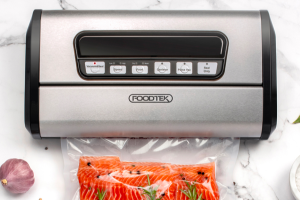
Vacuum machines, slicers, and tray sealers finish the job. These machines protect shelf life, improve product presentation, and support cleaner dispatch flow. A vacuum unit only performs properly when the bag stock matches the chamber and the product profile. A slicer only helps if you've allowed enough bench area to stack, separate, and pack portions cleanly.
A machine that runs fast in isolation can still slow the room if the next task isn't ready to receive the product.
Navigating Australian Food Safety and Compliance
A machine can look right in a showroom and still create trouble the first week inspectors walk through the plant. The usual failure point is not cutting speed or pack rate. It is whether the unit can be cleaned properly, kept free of buildup, and fitted into a process that holds up under Australian food safety requirements.
For meat processors, compliance starts with hygienic design. Equipment used in food premises must support effective cleaning and minimise contamination risks under Food Standards Code Standard 3.2.3, as outlined in this food processing equipment buying checklist on Standard 3.2.3. That matters at purchase time, because retrofitting hygiene into a poor design is expensive and rarely convincing during an audit.
What compliance looks like on the machine itself
On the floor, compliance is rarely about one big defect. It shows up in small design choices that affect every clean-down. Tight internal corners hold fat and mince. Hollow handles and open tube ends collect moisture. Guards that need awkward tools to remove get cleaned less thoroughly. Poorly sealed switches and cable entries become recurring problem spots.
Buyers should inspect the machine with sanitation in mind, not just production output.
- Surface finish Food-contact areas should be smooth and well finished. Rough welds, pitting, and scratched contact surfaces give residue somewhere to sit.
- Strip-down time Daily cleaning parts should come apart quickly and go back together without guesswork. If a basic clean takes too long, staff will rush it when the room is under pressure.
- Wash-down suitability Interlocks, emergency stops, covers, and housings need to stay safe for operators while still standing up to regular cleaning. Water ingress and dirt traps both cause trouble.
- Installed access Leave room around the machine. Even a well-designed unit becomes a hygiene risk if it is jammed against walls, drains, or other equipment where nobody can clean properly.
Ask the supplier to demonstrate a full clean-down. A running demo tells you capacity. A cleaning demo tells you whether the machine will work in your plant.
Material Compliance at a Glance
| Material | Primary Use | Key Advantage for Food Processing |
|---|---|---|
| Stainless steel | Food-contact surfaces, frames, benches, machine bodies | Smooth, non-porous, and easier to clean in wet processing environments |
| SS304 | General food-processing equipment | Strong corrosion resistance for many meat-processing applications |
| SS316 | Higher-exposure or harsher wash-down areas | Improved resistance where cleaning demands are more aggressive |
Compliance does not stop at the machine frame. Abattoirs and meat processors also need documented cleaning procedures, trained staff, temperature control records, and clear responsibility for food safety supervision. Those site obligations affect what you should buy. If a supplier sells the machine but leaves you to sort out validation, sanitation method, spare seals, chemical compatibility, and staff handover on your own, the risk stays with your business.
That is why experienced buyers look at equipment, consumables, and compliance together. A slicer may meet the spec sheet, but if the blade removal process is awkward, the correct sanitisers attack the seals, or replacement PPE and packaging are sourced from three different suppliers, the whole system becomes harder to control. A single-source approach usually gives better consistency across machine selection, cleaning advice, consumables, and operator support.
For a practical example of that HACCP-focused approach, see PSC Trading's commitment to food safety excellence through HACCP in Australia.
Procurement Beyond the Price Tag
The cheap quote often becomes the expensive machine. Not because it fails instantly, but because nobody accounted for fitment, power, cleaning access, workflow, or service response. Those costs don't appear on day one. They show up in lost time, workarounds, and frustrated operators.

A common question in Australian abattoirs is how to balance machinery throughput with food safety compliance, especially when vendors focus on capacity and leave processors to manage bottlenecks and compliance risks themselves, as noted in this FFWCRC discussion on processing technology and practical integration issues.
The hidden costs show up after delivery
Start with the room, not the brochure dimensions. Measure doors, corners, drains, bench clearances, and operator standing space. Then check whether the unit can be installed with enough room for product tubs, safe loading, and end-of-shift cleaning. A machine that technically fits can still be wrong for the site.
Power catches people out as well. Some equipment is straightforward on existing supply. Other machines may require electrical work or a different layout to run properly. If you only find that out after committing, the purchase stops being simple.
Here's what usually deserves a pre-purchase check:
-
Site fit
Confirm footprint, access path, cleaning clearance, and operator movement zones. -
Utilities
Check power supply, wash-down conditions, drainage, and ventilation around the machine. -
Maintenance reality
Ask what parts are commonly replaced and how quickly they can be sourced.
Check the line, not just the machine
The second mistake is buying one fast machine into a slow line. A larger vacuum sealer can be a strong investment, but not if labels, cartons, or dispatch benches can't keep up. The same goes for mincing and filling. If one stage outruns the next, the gain stays theoretical.
A short line-mapping exercise yields benefits. Time the handoffs. Watch where product waits. Note where operators stop to fetch bags, clean gloves, change aprons, or move tubs around a crowded bench. Those pauses are telling you what the machinery needs to connect to.
A quick visual reference helps when you're comparing equipment priorities and plant layout considerations:
A practical buyer treats the purchase as an operating system decision. The machine matters. So do the power point, spare blades, cleaning route, bag stock, service backup, and the person who has to use it every morning.
Essential Consumables and PPE for Safety and Throughput
At 5:30 am, the stuffer is ready, the team is on the floor, and production still cannot start because the right casings are missing from the bench or the glove stock does not suit knife work. That delay does not show up on the machinery quote, but it costs output all the same.

Consumables and PPE need to be treated as part of the line, not as separate buying decisions. New operators often focus on the major asset purchase first, then fill gaps in bags, casings, aprons, gloves, and sanitation items later. In meat processing, that approach creates friction fast. A filler only performs properly when the casing suits the product and the pace. A vacuum chamber only holds throughput when bag size, thickness, and seal performance match the machine and the cut being packed.
A sausage run makes the point clearly. If the casing is wrong for the mix, fill pressure, or presentation standard, staff spend the shift correcting splits, adjusting fill weights, and sorting inconsistent product. The machine may be in good order. The run still underperforms because the consumable choice was wrong.
Packing lines fail the same way. Bags that are too light, poorly sized, or unsuited to the product shape lead to poor seals, rework, and wasted film. Once that starts, operators stop focusing on flow and start firefighting at the pack station.
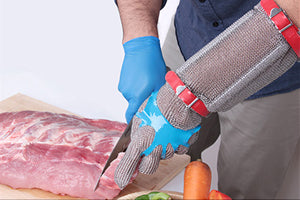
PPE has the same operational effect. Safe gear has to suit the actual task and the work area. Cut-resistant gloves for boning and knife handling, waterproof aprons for wet rooms, sleeve protection where splash is common, and eye protection near wash-down or chemical exposure all need to be selected station by station. If the gear is uncomfortable, poorly fitted, or unsuited to the job, staff work around it, and that creates risk.
Food businesses handling meat also need day-to-day controls that support hygienic storage and handling, as noted earlier in the compliance section. That includes keeping hazardous food under temperature control, separating raw and ready-to-eat product, and using storage and transport practices that do not compromise product condition. Consumables and support items play a direct role here. Tubs, liners, pallet spacers, and packaging all affect whether the standards written in your program can be maintained on a busy shift.
What to standardise early
These items are worth locking in early because they affect safety, consistency, and labour efficiency every day:
-
Vacuum bags
Match the bag spec to the vacuum machine, seal bar, product profile, and storage conditions. -
Sausage casings
Choose casings that suit the filler, the recipe, and the finish expected at retail or foodservice level. -
Aprons and sleeve protectors
Food-grade waterproof options work better in wet processing areas than general-purpose protective wear. -
Safety gloves and eye protection
Set protection by task. Knife work, handling cartons, wash-down, and chemical use do not need the same glove or eyewear. -
Cold-chain accessories
Pallet spacers and similar handling items help maintain airflow and support steady movement into chillers or freezers.
Standardising these items with the machine purchase solves a common startup problem. The equipment arrives on time, but the operation still loses days because bags, blades, gloves, or wash-down items were ordered later through another supplier with different lead times. Single-source planning reduces that risk. It also makes it easier to confirm compatibility before the first production run.
For hand protection, this guide to choosing the right safety gloves is a practical starting point.
The Advantage of Sourcing from Australian Suppliers
Buying overseas can look tidy on a quote sheet. The pressure starts later, when you need clarification on local requirements, replacement parts, or somebody to answer a problem that's stopping production. That's where local supply proves its value.

Australia has 481 businesses in the Food Processing Machinery Manufacturing industry, and the sector is valued at $1.4 billion in 2026, which means choosing a local partner supports a significant domestic base and often gives buyers easier access to people who understand Australian operating standards, according to IBISWorld's snapshot of Australia's food processing machinery manufacturing industry.
Why local supply changes day-to-day operations
The first advantage is communication. You can discuss site conditions, cleaning routines, electrical realities, and compliance expectations without translating everything into generic factory language. That reduces ordering errors and makes installation planning more grounded.
The second advantage is support speed. If a blade, seal, fitting, or accessory is needed, local channels usually reduce delay and uncertainty. That matters when the line is down and staff are standing around waiting.
A supplier with a combined range can also simplify procurement. Rather than sourcing machinery from one place, vacuum bags from another, aprons somewhere else, and abattoir consumables from a fourth vendor, some buyers prefer a single-source arrangement for better compatibility and fewer purchasing gaps. PSC TRADING Co PTY LTD is one example of an Australian supplier that combines meat processing equipment, packaging, PPE, aprons, casings, and abattoir-related supplies in one wholesale range.
Local support doesn't just save time. It often prevents the wrong purchase before it happens.
What local support usually solves faster
-
Compliance questions
Local suppliers are more likely to understand the practical interpretation of Australian standards on site. -
Parts and consumables
Ongoing supply matters just as much as the original machine sale. -
Training and troubleshooting
Operators need clear answers in the context of Australian work practices, not generic manuals alone.
For new buyers in food processing equipment Australia, local sourcing isn't about sentiment. It's a risk-control decision.
Building a Resilient and Profitable Operation
The strongest equipment purchases usually don't feel flashy after installation. They feel stable. Product moves cleanly. Staff know how to use the machinery. Cleaning routines are workable. Packaging matches the packer. PPE suits the task. Spare items are available when needed. That's what a resilient operation looks like.
Think in systems
A butcher shop, processor, or abattoir doesn't run on machinery alone. It runs on the fit between the machine, the room, the operator, the cleaning method, the consumables, and the compliance routine. If you buy each piece separately without thinking about the handoff, the weak point shows up fast.
That's why an integrated procurement approach generally ages better than a bargain-driven one. A bandsaw that suits your cut profile, a mincer that strips down properly, a filler that matches your casing choice, and a vacuum machine paired with the right bags will usually outperform a mismatched collection of individually cheap purchases.
The buy that usually ages well
If you're making your first major upgrade, keep the decision grounded in floor reality:
-
Solve the current bottleneck first
Don't chase capacity you can't support elsewhere in the line. -
Check compliance in physical terms
Look at surfaces, joints, guards, wash-down access, and cleaning steps. -
Buy support items at the same time
Consumables and PPE shouldn't be an afterthought. -
Choose supply arrangements that reduce friction
Reliable local support and parts access are worth planning for upfront.
Food processing equipment Australia buyers get the best long-term result when they treat procurement as operations design. The machine is only one part of the decision. The profitable result comes from making all the surrounding parts work with it.
