


Commercial meat bandsaws in Australia can range from about $1,150 to $38,000, and the average asking price is around $12,382. If you're looking at a meat bandsaw for sale right now, that price spread tells you the full picture straight away: you're not just buying a saw, you're choosing a level of throughput, safety, compliance, cleaning effort, and long-term service risk.
Most buyers reach this point after the same problem keeps showing up. Staff are spending too long breaking down bone-in product by hand, cuts aren't consistent, frozen stock slows the room down, or the current saw is old enough that every clean-down feels like a fight. Online listings rarely help much. They show a motor, a blade length, maybe a photo, then leave out the parts that affect ownership in an Australian shop.
That's where most bad purchases happen. A machine can look cheap and still cost you more once you factor in blade wear, cleaning time, missing guards, poor spare-parts support, or food-safety issues that should have been checked before it ever arrived on site.
Table of Contents
- Choosing Your Next Meat Bandsaw
- How a Meat Bandsaw Actually Works
- Decoding Key Bandsaw Specifications
- Sizing Your Bandsaw for Your Operation
- Safety Sanitation and Australian Compliance
- New vs Used Saws and Long-Term Costs
- Your Ultimate Meat Bandsaw Buyer Checklist
Choosing Your Next Meat Bandsaw
The usual trigger for an upgrade is simple. Your current cutting setup has become a bottleneck. Orders are there, product is there, staff are there, but the saw isn't keeping pace with the way the room runs.
That's why sticker price is only the starting point. In Australia, listings for a meat bandsaw for sale span $1,150 to $38,000, with an average of $12,382, according to current Australian meat bandsaw listings on Machines4U. A small tabletop unit can suit a light-duty bench. A large industrial floor model is built for a very different day.
The bigger market tells you why this matters. The Australian meat processing equipment market generated USD 559.4 million in 2024 and is projected to reach USD 760.9 million by 2030, while the broader Australian meat processing industry is sized at $32.4 billion in 2026 and includes 644 registered businesses, as outlined in Grand View Research's Australia meat processing equipment outlook. Efficient cutting equipment isn't a luxury in that environment. It's core production infrastructure.
What a smart buyer looks at first
A new shop owner usually starts with budget. Fair enough. But on the floor, these questions matter more:
- What product are you cutting: fresh primals, bone-in portions, frozen blocks, or mixed daily work?
- How often will it run: occasional counter prep, steady daily use, or continuous production?
- How easy is it to clean: smooth surfaces and access points matter more than glossy panels.
- Can you service it locally: a machine off the market is expensive even if it was cheap to buy.
Practical rule: If the saw is central to your workflow, buy for uptime first and sticker price second.
A butcher shop breaking lamb and beef primals has different needs from an abattoir running frozen product through a shift. That sounds obvious, but buyers still get caught by buying too small because the machine looked affordable, or too big because they assumed “industrial” automatically means better.
If you're comparing current options, it helps to start with a range built for local use rather than generic imports. A focused category such as commercial meat bandsaws in Australia gives you a better sense of what's relevant to butcher shops and processors here.
How a Meat Bandsaw Actually Works
A meat bandsaw is basically a heavy-duty continuous cutter. The easiest way to think about it is like a jigsaw that never stops and never lifts off the work. Instead of a short up-and-down blade, it uses a long blade loop moving in one constant direction through meat and bone.
This visual makes the idea clear.
The cutting loop that does the work
The motor drives the system. It turns the wheels. Those wheels keep the blade moving as a continuous loop. The operator presents the product to the blade on the table, and the teeth do the work with a steady, repeatable action.
That's why bandsaws handle repetitive portioning better than hand cutting. The blade doesn't need to reset between cuts. Once the machine is tensioned correctly and tracking properly, it keeps delivering the same motion over and over.
A simple practical example helps. If you're cutting bone-in chops from a chilled rack, the operator controls feed and positioning while the saw supplies a stable cutting path. If you're splitting heavier bone sections, the same principle applies, but machine rigidity and blade stability become much more important.
Here's a video if you want to see that operating logic in motion.
Why the support parts matter
Buyers often focus only on motor size. On the bench, other parts matter just as much:
- Upper and lower wheels: These keep the blade running on its path. Poor tracking gives you wandering cuts and premature blade wear.
- Blade guides: Guides stabilise the blade near the cut. Less movement usually means straighter cuts and better confidence for the operator.
- Cutting table: A stable table supports both safety and yield. If product rocks or drifts, the cut line suffers.
- Tension system: Correct tension keeps the blade firm enough to cut without fluttering.
A meat bandsaw that cuts well doesn't just have a sharp blade. It holds that blade in the right line under load.
Where cheaper machines disappoint is usually not the idea of the machine. It's the execution. Thin tables flex. Guides are crude. Cleaning access is poor. The saw works on day one, but it doesn't stay pleasant to use.
If you understand the mechanics, listings become easier to read. You stop asking only “what motor does it have?” and start asking “what keeps this machine accurate, cleanable, and safe after months of real work?”
Decoding Key Bandsaw Specifications
Specifications only matter if you connect them to product, pace, and operator behaviour. A listing can look impressive and still be wrong for your room. The useful specs are the ones that tell you how the saw will behave during a normal shift.
Blade speed and product type
Blade speed is one of the clearest examples. Industrial bandsaws in Australian abattoirs typically run between 1,070 m/min and 1,960 m/min, with examples including the Barnes Blademaster MK1 at 1,070 m/min and the Thompson 400 Supercut at 1,960 m/min, according to HT Barnes bandsaw and bonesaw specifications. Higher speeds are important when cutting frozen meat and dense bone because they reduce cutting time, help prevent blade binding, and reduce waste when the machine is set up properly.
That doesn't mean higher is always better. On harder product, speed helps. But speed also increases thermal load on the blade. If blade tension, tracking, or lubrication aren't right, the edge suffers faster. In practice, a buyer should read high blade speed as a capability, not a free pass.
For softer fresh product, you don't always need the most aggressive setup. A machine that's calmer and easier to control can produce a neater result for portion work. In such instances, operators notice the difference between “powerful” and “nice to use”.
Faster blade speed helps frozen product move cleanly. It also punishes poor setup more quickly.
Capacity and blade choice
The next specs to read closely are throat size and cutting capacity. These determine the maximum size of product you can feed safely and cleanly. If you're handling boxed meat, smaller primals, or routine shop work, you can often live with a more compact machine. If you're dealing with larger bone-in sections, oversized cuts, or bulk product, capacity starts limiting you fast.
Blade choice matters just as much as machine size. A saw can be mechanically sound and still cut poorly with the wrong blade for the job. In real use, buyers should think about three practical categories:
- Fresh meat work: prioritise a clean finish and operator control.
- Bone-in cutting: prioritise durability and stable tracking.
- Frozen product: prioritise a setup that resists binding and holds a line under heavier load.
Consumables deserve more thought than they usually get. A buyer who understands the relationship between product type and blades will usually spend less time fighting the machine. If you want a grounded look at how blade selection affects cut quality and day-to-day performance, this guide on Foodtek bandsaw blade precision and cutting performance is worth reading.
Other specs still matter, but they're secondary until the basics are right:
- Motor power should match workload, especially if frozen or dense product is involved.
- Table design affects control, cleaning, and confidence.
- Guide quality often separates pleasant machines from frustrating ones.
A good rule is simple. Buy the specifications that solve your actual cutting problem. Ignore the ones that only make the listing sound bigger.
Sizing Your Bandsaw for Your Operation
A butcher shop doesn't need to buy like an abattoir. A commercial kitchen doesn't need to buy like a wholesale processor. The right size comes from matching the machine to the heaviest work you do regularly, not the rare job you might do once in a while.
Match the saw to the shift
If you run a small butcher shop, your saw often handles primals, chop lines, and standard bone-in prep across the day. Bench space, easy cleaning, and simple controls matter a lot. Oversizing can be a mistake because it takes more room, can be harder for staff to clean properly, and may not give you a practical return.
A busy retail butcher usually benefits from stepping up a class. More throat space, better guide stability, and a stronger motor help when the counter is moving and the saw can't become the slow point. The goal here isn't just raw cutting power. It's consistency over a long day.
For a commercial kitchen or small processor, predictability matters. If the menu or production run depends on portions being ready on time, the saw has to deliver reliable throughput. The Foodtek 330A is a useful real-world reference point. It has a 330 mm blade width, runs at 18 m/s, and can process about 1,200 kg of bone-in meat per hour, as shown in the Foodtek 330A product details. That's the kind of specification set that tells you whether a machine suits a busy room rather than just looking impressive on paper.
An industrial abattoir or high-volume processing site is different again. The saw has to fit into a broader line. Reliability, heavy-duty construction, serviceability, and compliance become central because downtime affects more than one workstation.
Bandsaw sizing guide by operation
The table below is a practical buying shortcut. It's not a substitute for checking your product mix, but it gives a sound starting point.
| Operation Type | Typical Daily Volume | Recommended Motor Power (HP) | Recommended Throat Size |
|---|---|---|---|
| Small butcher shop | Low to moderate mixed daily cutting | 1.5 HP | Compact to medium |
| Busy retail butcher | Moderate to high counter and prep volume | 2 HP | Medium |
| Commercial kitchen or small processing plant | Repetitive portioning and steady production work | 2 to 3 HP | Medium to large |
| Abattoir or industrial processor | Heavy continuous use, larger bone-in or frozen work | 3+ HP | Large |
Buy for your busiest normal day, not your quietest week.
A practical example. If your team regularly cuts bone-in lamb and beef portions and also handles occasional heavy sections, a mid-size floor unit is often the safer choice than a compact tabletop saw. If you only break a smaller range with limited volume, the tabletop path may be fine. The mistake is choosing by price band alone and forcing the staff to work around the saw's limits every day.
Safety Sanitation and Australian Compliance
A meat bandsaw can cut product quickly. It can also create avoidable risk if the machine, the setup, or the paperwork isn't right. This is the part many online listings glide past, and it's often where the true cost sits.

What buyers miss before purchase
The most overlooked issue is food-safety compliance. A recent Australian Meat Industry Council survey found that 42% of small processors bought equipment without verifying food-safety compliance such as AS 4600, and the resulting fines or rework averaged AUD 3,200 per incident. That's not a theoretical problem. It usually starts with a buyer assuming that “stainless” automatically means suitable for food contact and wash-down use.
In practice, buyers should check the machine's contact surfaces, sanitary design, weld quality, and whether the unit is appropriate for the operating environment. Crevices, hard-to-clean corners, poor finishing, and awkward disassembly all create headaches. They also create labour cost because staff spend longer trying to clean around design flaws.
Australian operations also need to think beyond the saw itself. In Victoria, where over 65% of Australia's meat-processing plants operate, abattoir compliance requires carcass identification using meat branding ink that meets AS 4857 for legibility and permanence, as outlined by PSC's abattoir supply information on compliant meat branding ink. If your process involves traceability through cut sections, compliance doesn't stop at the blade.
What good compliance looks like on the floor
A safe and sanitary setup is visible in the details:
- Blade guarding: The exposed cutting area should be limited to what's necessary for the task.
- Emergency stop access: Operators shouldn't need to hunt for it.
- Smooth food-contact areas: Cleaning should be direct, not a puzzle.
- Push tools and workflow aids: Hands should stay away from the blade line.
- PPE discipline: The machine doesn't replace safe behaviour.
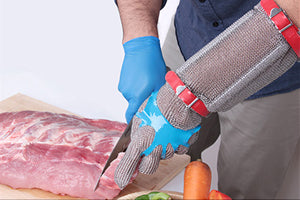
There's also a specific operator protection point buyers shouldn't miss. Australian safety expectations require cut-resistant sleeve protectors rated to at least Level 3 under AS/NZS 4306, resisting forces up to 750 g, for bandsaw work in high-throughput environments, as stated in the TMACH Bandsaw 400 brochure. If you're budgeting for a saw and not budgeting for correct PPE, you're not pricing the job properly.
A compliant setup is a system. Machine, cleaning routine, PPE, and traceability all have to work together.
For buyers who want a broader compliance view around food-safe operating standards, this article on HACCP-focused food-safety practice in Australian processing environments adds useful context.
New vs Used Saws and Long-Term Costs
The cheapest machine on day one is often not the cheapest machine by the end of the year. That's the basic rule behind total cost of ownership.
A new saw usually gives you cleaner history, current safety features, easier spare-parts support, and fewer unknowns. A used saw can be excellent value, but only if the previous owner maintained it properly and the machine still suits current operational and compliance expectations.

Where used machines go wrong
Used bandsaws usually become expensive in familiar ways.
- Unknown service history: If tracking, bearings, guides, or tension systems were neglected, you inherit that problem.
- Missing or outdated safety features: Guards, switches, and control layouts may not match current expectations.
- Hard-to-find parts: Even a good machine becomes a burden if a basic replacement part holds it off the floor.
- Poor cleaning design: Older units can be tougher to strip, wash, and inspect properly.
A practical example. A used saw that appears solid in a warehouse test can still be wrong for a busy butcher shop if the table surface is worn, the guides don't hold the blade properly, or the machine takes too long to clean at the end of shift. None of that shows up in the sticker price.
What total cost of ownership really means
When you compare a meat bandsaw for sale, include these costs in your thinking:
- Blades and consumables: A machine that burns through blades is never cheap.
- Cleaning labour: Awkward design costs you every day.
- Downtime risk: Lost production is often more painful than a repair invoice.
- Safety upgrades or compliance fixes: These can erase the savings of a used purchase.
- Service access: A saw with reliable backup is worth more than a bargain with no support.
If you can't get parts, can't clean it properly, or can't trust staff to use it safely, it was never a bargain.
That doesn't mean used is wrong. It means you should buy used only after checking condition, serviceability, guarding, and suitability for your actual product mix. New tends to suit buyers who want predictability. Used suits buyers who know exactly what they're inspecting and can absorb some maintenance risk.
Your Ultimate Meat Bandsaw Buyer Checklist
Use this as a working checklist before you commit to any meat bandsaw for sale.
Ask these questions before you buy
- What product will you cut most often? Fresh meat, bone-in portions, and frozen blocks place very different demands on a saw.
- How much saw do you really need? Buy for normal peak workload, not for the quiet days.
- How much room do you have? Measure the actual workspace, not just the spot where you want the machine to sit.
- What power supply is available on site? A good machine is no use if installation becomes a problem.
- How long does clean-down take? If a saw is annoying to wash, staff will hate it and hygiene standards can slip.
- What safety features are fitted? Check guards, stop controls, blade access, and operator workflow.
- Is the machine suitable for Australian food-processing compliance? Don't assume. Verify.
- Can you get blades, parts, and servicing without drama? This matters more after purchase than before it.
What a good buying decision looks like
The right machine should do three things well. It should match your product mix, fit your cleaning and safety routine, and stay supportable after the sale. If one of those is weak, the purchase can still go bad even if the machine cuts well in a demo.
A practical buyer also budgets for the full working setup, not just the saw. That includes blades, PPE, cleaning needs, and the small workflow items that keep the station running properly.
If you want one supplier that can help cover the machine itself plus blades, sleeve protectors, aprons, safety gear, and related meat-processing supplies, PSC TRADING Co PTY LTD is worth a look.
