

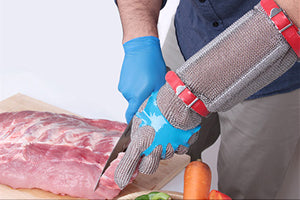

A metal mesh glove is an important part of many professional knife-handling setups, but protection isn’t the only consideration. The glove also needs to sit correctly on the hand. If it shifts, bunches or feels loose during repetitive cutting, the worker may need to stop and readjust it throughout the shift.
The High-Quality TPU Mesh Glove Tensioners | PSC Trading Australia are designed to help hold compatible mesh gloves closer to the wearer’s hand. They’re a practical accessory for Australian butcher shops, abattoirs and food-processing workplaces where workers rely on chainmail hand protection during regular knife work.
What Does a Mesh Glove Tensioner Do?
A mesh glove tensioner fits over a compatible chainmail glove to help reduce excess movement around the fingers and back of the hand. Its purpose is straightforward: keep the glove positioned more securely while allowing the worker to maintain a controlled working grip.
Metal mesh gloves can feel different depending on the wearer’s hand size, the glove design and the task being completed. A compatible tensioner helps refine that fit without modifying the glove itself.
It doesn’t replace the glove’s fastening system, correct sizing or workplace safety procedures. Instead, it works as part of the complete hand-protection setup.
Why Fit Matters During Repetitive Tasks
Butchers and food-processing workers may complete the same cutting movement hundreds of times during a shift. Even a small amount of glove movement can become distracting when the pace increases.
A closer fit may help the glove feel more settled during tasks such as:
-
Boning and trimming
-
Portioning meat
-
Preparing poultry or seafood
-
Working with slippery products
-
Repetitive knife handling
-
Cleaning and preparing suitable cutting equipment
The tensioner should never feel painfully tight or restrict normal hand movement. If the user cannot comfortably close their hand, hold a tool or move their fingers, the combination should be reassessed before work begins.
The Practical Benefits of TPU
TPU, or thermoplastic polyurethane, is used in many workplace products where flexibility and practical durability are important. For a mesh glove tensioner, this material can form around the outside of a compatible glove while retaining the structured shape needed to support its position.
The tensioner is also visually easy to distinguish from the metal glove underneath. This makes it simpler to include both components in equipment checks before and after a shift.
Material alone doesn’t determine whether a tensioner is suitable. Buyers should confirm the size, shape and compatibility with their existing mesh glove before ordering.
Who Uses Mesh Glove Tensioners?
TPU mesh glove tensioners may suit professionals who regularly work with knives and wear compatible metal mesh gloves as part of their assigned personal protective equipment.
Typical Australian workplaces include:
-
Independent butcher shops
-
Supermarket meat departments
-
Abattoirs
-
Meat-processing plants
-
Poultry-processing facilities
-
Seafood-processing workplaces
-
Commercial kitchens
-
Butchery training environments
Each workplace should choose equipment based on its own risk assessment, tasks and documented procedures. If a site follows specific PPE requirements, confirm that the complete glove setup meets those requirements.
How to Check the Fit
Before starting work, put on the metal mesh glove according to its instructions and secure its fastening system. Position the TPU tensioner over the compatible glove, making sure it sits evenly rather than twisting or pulling to one side.
Check that:
-
The mesh glove remains correctly positioned
-
The tensioner lies securely across the glove
-
Finger movement is not unnecessarily restricted
-
No section is cutting into the hand or wrist
-
The glove can still be inspected properly
-
The setup suits the intended task
Move the hand through the normal working range before entering the production area. If the tensioner slips, feels uncomfortable or changes the way the glove sits, stop and check the size and compatibility.
Inspect Tensioners Before Every Shift
Mesh glove tensioners are working accessories and should be inspected regularly. Repeated stretching, cleaning and everyday handling can eventually affect their condition.
Look for:
-
Splits, tears or cracking
-
Stretched or misshapen sections
-
Rough or damaged edges
-
Residue from previous use
-
Discolouration that requires assessment
-
A fit that has become loose or uneven
A damaged tensioner should be removed from use and assessed according to workplace procedures. The metal mesh glove must also be inspected separately, as the tensioner cannot compensate for damage to the protective glove.
Cleaning and Storage
Clean TPU mesh glove tensioners according to the product guidance and the workplace’s hygiene program. Remove the tensioner from the metal glove so both items can be cleaned and inspected properly.
Pay attention to narrow areas where residue may collect. Once cleaning is complete, dry and store each component as directed in the designated equipment area.
Keeping gloves and tensioners organised can make pre-shift checks faster and reduce the chance of workers using mismatched or damaged equipment.
A Small Addition to a Better PPE Setup
A mesh glove tensioner is a simple accessory, but it addresses a specific workplace issue: unwanted movement in a compatible chainmail glove.
For Australian butchers and food-processing teams, that can mean fewer mid-task adjustments and a more consistent PPE setup. The key is choosing the correct tensioner, checking compatibility and treating it as part of the wider hand-protection system.
Shop TPU Mesh Glove Tensioners in Australia
PSC Trading supplies practical butcher PPE and food-processing accessories for professional Australian workplaces.
Explore the High-Quality TPU Mesh Glove Tensioners from PSC Trading Australia and choose a compatible option for your metal mesh glove setup.
