

The Apron You Wear Says a Lot About Your Shift
If you've spent any time in a meat room, seafood plant, commercial kitchen, or food processing line, you know the routine. You rock up before sunrise, grab your apron off the hook, and hope it makes it to knock-off without cracking, splitting, or soaking through.
For decades, PVC aprons were the default. They were cheap, they were everywhere, and they sort of did the job. But anyone who's worked a cold-room shift in July knows the truth: PVC goes stiff, cracks, splits at the ties, and lasts about as long as a politician's promise.
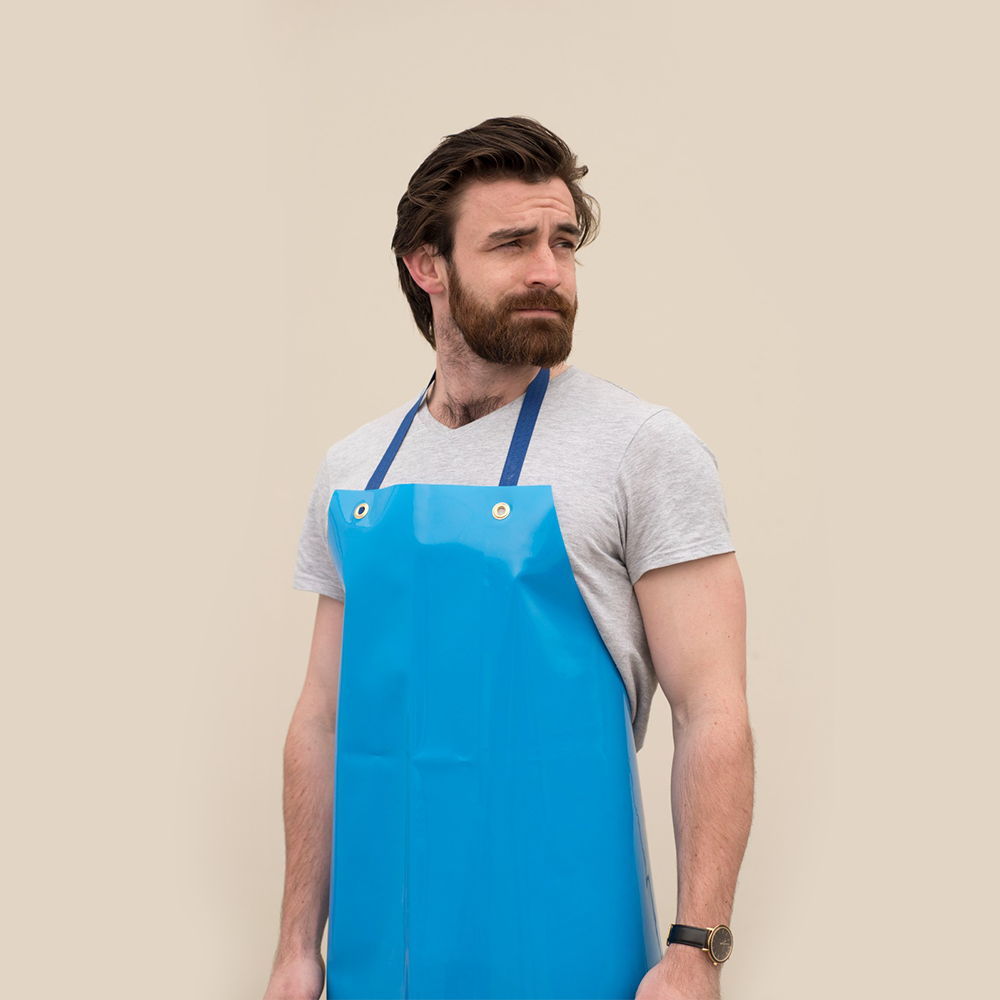
Enter TPU (thermoplastic polyurethane) — the modern, hardworking alternative that's quickly becoming the go-to across Australian food industry workplaces. In this guide, we'll break down why TPU aprons outperform PVC in every way that matters, what to look for when buying one, and why the Heavy-Duty TPU Food Processing Apron (900mm × 1200mm) is the smart pick for serious professionals.
What Is TPU and Why Does It Matter?
Thermoplastic polyurethane (TPU) is a high-performance plastic polymer known for being incredibly tough, flexible, and chemical-resistant. You'll find TPU in everything from premium phone cases to medical-grade tubing — anywhere durability and cleanliness matter.
In the apron world, TPU hits a sweet spot that PVC and rubber can't match:
- Light like PVC (no more heavy rubber apron shoulder ache)
- Tougher than rubber (resists cuts, punctures, and tears)
- Flexible in the cold (no cracking in freezers or cold rooms)
- Smooth and non-porous (wipes clean, no bacterial build-up)
- Chemical resistant (handles oils, blood, grease, sanitisers)
Bottom line: TPU is what PVC wishes it was.
TPU vs PVC: The Head-to-Head Breakdown
Let's get practical. Here's how the two materials actually stack up in real food industry conditions:
| Feature | TPU Apron | PVC Apron |
|---|---|---|
| Durability | Lasts 3–5x longer | Cracks within months |
| Cold Resistance | Flexible down to -20°C | Stiffens & cracks below 5°C |
| Tear Resistance | Excellent | Moderate |
| Weight | Lightweight | Heavier |
| Chemical Resistance | High | Limited |
| Hygiene | Smooth, non-porous | Non-porous but degrades |
| Environmental Impact | Recyclable, PVC-free | Contains plasticisers |
| Cost Over Time | Lower (lasts longer) |
Higher (frequent replacement) |
The Cold-Room Killer
If there's one area where PVC falls flat on its face, it's cold environments. Meat processors, seafood handlers, and cold storage workers know the drill: PVC goes stiff, crinkles like paper, and cracks at the folds within weeks of regular use.
TPU, on the other hand, stays flexible down to -20°C. You can wear it in a freezer room all day and it'll feel the same coming out as it did going in.
The Hygiene Factor
Food safety audits aren't getting any easier. TPU's smooth, non-porous surface means bacteria can't hide in micro-crevices the way they do in worn-out PVC. It wipes clean in seconds, handles standard sanitisers without degrading, and won't harbour odours over time.
Why Size Matters: The 900mm × 1200mm Sweet Spot
Not all food industry aprons are created equal, and sizing is one of the biggest mistakes buyers make. Too small, and you'll soak your uniform in blood, water, or grease. Too big, and you'll be tripping over it on the line.
The 900mm × 1200mm dimension is the industry-standard sweet spot for heavy-duty food processing:
- 900mm wide — full chest-to-hip coverage, wraps properly around your sides
- 1200mm long — protects from collarbone to below the knees (shin-length)
- Covers uniform tops, trousers, and the top of your gumboots
- Reduces splash-back and wet-through during washdowns
Whether you're 5'4" or 6'4", this size works for virtually all adult body types.
Who Actually Needs a Heavy-Duty TPU Apron?
If you or your team work in any of these environments, a TPU apron isn't a luxury — it's the smart financial call:
Meat & Poultry Processing
Butchers, boners, slicers, and packers deal with blood, fat, water, and sharp tools daily. TPU handles it all without degrading.
Seafood Industry
Filleting, scaling, and packing in wet, cold conditions — exactly where PVC fails and TPU thrives.
Commercial Kitchens
Dishpit staff, prep cooks, and cleaning crews need waterproof, hygienic protection that lasts longer than a single service.
Dairy & Beverage Production
Constant washdowns and chemical exposure mean you need a material that won't break down.
Fruit & Veg Processing
Acidic juices, water, and cleaning chemicals take a toll on cheap aprons fast.
Abattoirs & Agricultural Processing
Heavy-duty environments where failure isn't an option.
What to Look For When Buying a Food Processing Apron
Not all TPU aprons are the same. Here's what separates a quality apron from a cheap knockoff:
1. Gauge (thickness) — Heavier gauge = longer lifespan. Cheap TPU aprons skimp on thickness and fail fast.
2. Food-grade certification — Make sure it's rated for direct food contact environments.
3. Adjustable ties — Fixed-length neck loops are a nightmare. Look for adjustable neck and waist ties.
4. Smooth surface — No textures, seams, or stitching that can trap bacteria.
5. Reinforced edges — The ties and neck are the first points of failure on cheap aprons.
6. Temperature range — Confirm it's rated for cold-room use if that's your environment.
The Heavy-Duty TPU Food Processing Apron (900mm × 1200mm) ticks every one of these boxes — which is why it's become a staple in Aussie processing facilities.
Care Tips: Make Your TPU Apron Last Years, Not Months
One of the best things about TPU is how easy it is to maintain. Follow these simple tips and your apron will outlast three or four PVC equivalents:
- Rinse after every shift — don't let blood, grease, or food residue sit overnight
- Use warm soapy water or food-safe sanitiser for regular cleans
- Hang to dry — don't ball it up wet in a locker
- Avoid direct heat — no tumble dryers, no hot radiators
- Inspect the ties regularly — replace if fraying starts
Simple care = years of service.
FAQ: What Aussies Are Asking About TPU Aprons
Is TPU the same as PVC? No. TPU is a newer, higher-performance polymer. It's more flexible, tougher, cleaner, and more environmentally friendly than PVC.
Can I machine-wash a TPU apron? We recommend hand-washing or wiping down with food-safe sanitiser. Commercial dishwashers may affect TPU over time.
Is it safe for food contact? Yes — quality TPU aprons are manufactured to food-grade standards and are safe for use in all food processing environments.
How long should a TPU apron last? With regular care, 12–24 months of heavy daily use is typical. That's 3–5x longer than most PVC aprons.
Does it matter what colour I buy? In most food industry settings, white is the standard for hygiene visibility — stains and contamination show up immediately. Some facilities use colour coding for different zones.
The Bottom Line: Upgrade Once, Save Every Shift After
The maths on this is simple. A quality TPU apron costs a bit more upfront than a basic PVC one — but it outlasts 3–5 cheap aprons, performs better in every condition, and keeps you cleaner, drier, and more productive across every shift.
If you're running a team, the savings compound fast. Fewer replacements, fewer complaints, fewer ruined uniforms underneath.
👉 Shop the Heavy-Duty TPU Food Processing Apron Now →
Fast Australia-wide dispatch. Bulk pricing available for teams and facilities. Trusted by Aussie food industry pros.
