

You're probably dealing with one of two situations right now. Either staff are coming off a shift in the boning room or wash-down area with wet clothes underneath the apron, or you're reviewing supplier options and noticing that half the market says “water resistant” when what the job really needs is full fluid protection.
That wording matters more than most buyers realise. In a butcher shop, abattoir, seafood room, or commercial kitchen, the apron isn't a style choice. It's part of the hygiene system, part of PPE, and part of how you control replacement cost over time. Get the material wrong and you don't just get discomfort. You get soak-through, harder cleaning, more apron failures, and more friction between procurement and the floor.
A practical buying decision starts with the workflow. A kill-floor operator doesn't need the same apron setup as a front-of-shop butcher trimming primals. A cold-room packer needs flexibility. A dish area or prep section needs quick cleaning and dependable coverage. That's where most generic guides fall short. They list materials, but they don't tie them to what happens on shift.
Table of Contents
- Why Water Resistant Is the Wrong Term for Your Workplace
- Apron Materials A Complete Breakdown
- Fastening Systems Sizing and All-Day Comfort
- Sanitisation Durability and Apron Lifecycle
- Navigating Australian Food Safety and Compliance
- Recommended Apron Specs for Your Workflow
Why Water Resistant Is the Wrong Term for Your Workplace
If your staff work around blood, fat, wash water, cleaning chemicals, or constant splash, water resistant apron is the wrong buying category.
In practice, “water resistant” gets used too loosely across food processing. It often describes something that can shrug off light splashes for a short period, not something that stays impermeable through a full shift in a wet room. That matters because the floor doesn't care what the label says. If fluid gets through, the apron has failed the job.
The gap is already showing up in industry behaviour. The term is often misapplied in food-processing aprons that require full waterproof certification, and data cited for the Australian meat processing industry says 68% of workers in butcher shops report fluid exposure incidents, yet only 34% wear certified waterproof gear (water resistant apron product guidance). For procurement, that's the warning sign. Buyers accept “resistant” language, but the task exposure still demands full impermeability.
A wash-down example from a normal shift
Take a butcher hosing down a block area at close. Water rebounds off stainless, fat and protein residue carry across the front of the body, and overspray hits the torso and upper legs repeatedly. A coated fabric or lighter “resistant” apron may look fine for the first part of the job, then start wetting through at the folds, tie points, or high-contact zones.
That failure creates three problems at once:
- Hygiene risk because clothing underneath gets contaminated
- Comfort loss because staff stay wet through the rest of the shift
- False economy because the site keeps replacing aprons that were never suited to the area
Practical rule: If the apron will be used in a wet room, wash-down bay, kill floor, trimming station, seafood room, or dish area, buy for waterproof performance, not splash resistance.
A lot of buyers still use “water resistant apron” as the search term because that's how the market phrases it. That's fine for search. It's not fine for specification. On the purchase order, the actual requirement is a waterproof, food-grade apron that won't soak through under sustained exposure.
Apron Materials A Complete Breakdown
Material choice is where most apron programs are won or lost. Buyers usually focus on unit price first. The floor notices something else first. Does it stay dry, clean fast, and keep moving with the worker?
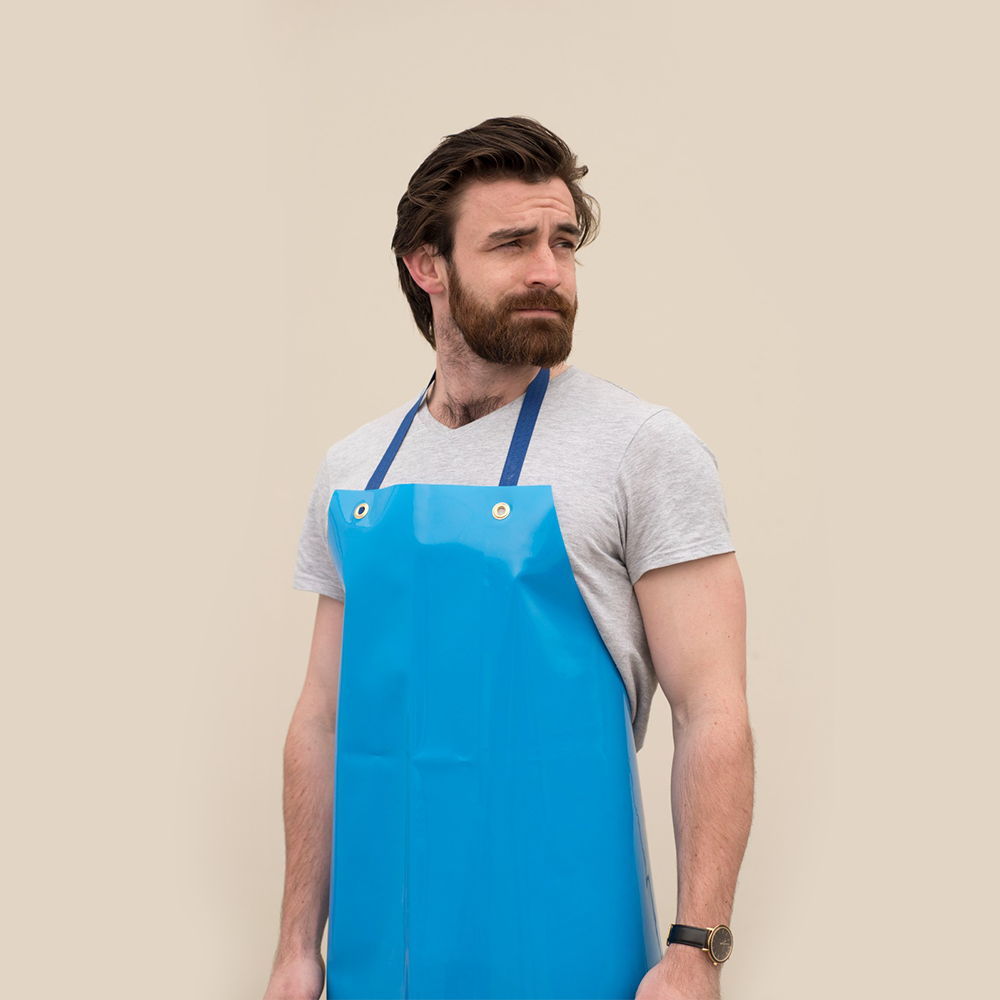
For Australian food-processing use, the practical starting point is TPU and PVC. Verified product guidance states that aprons for these environments must use materials like TPU or PVC with a minimum thickness of 0.03mm to provide barrier protection while staying lightweight enough for prolonged use in wet workflows (waterproof polyethylene bib apron specification).

What holds up in wet processing
Think of apron materials like choosing armour for the job. The right one depends on what's hitting it all day.
TPU is usually the safer call when the apron has to handle repeated fluid contact without becoming cumbersome. It gives you a proper barrier, wipes down well, and tends to suit operations where staff are moving between tables, rails, hooks, and wash points. In cold environments, buyers often prefer TPU because it remains practical to wear when flexibility matters.
PVC is the workhorse option when easy wipe-down and lower upfront cost matter most. In many plants it's the default choice for wash-down, basic processing, and utility use. The trade-off is feel. Some PVC builds can feel stiffer in use, especially when compared with TPU, so the decision often comes down to how much range of movement the task needs.
A useful side-by-side view:
| Material | Best For | Waterproofing | Durability | Flexibility (Cold) | Avg. Lifespan |
|---|---|---|---|---|---|
| TPU | Wet processing, cold rooms, long shifts | Excellent | High | Better than rigid options | Depends on usage and cleaning routine |
| PVC | Wash-down areas, general food processing | Very high | High | Fair to low depending on build | Depends on usage and cleaning routine |
| Waxed Canvas | Dry-side prep, hospitality, presentation-focused work | Water repellent, not fully waterproof | High | Moderate | Depends on rewaxing and exposure |
| Leather | Heavy industrial non-food contact tasks | Limited for wet food work | Very high | Moderate | Depends on conditioning and task type |
| Nylon | Light-duty hospitality and utility tasks | Varies by construction | Moderate | Good | Depends on coating wear and wash method |
For buyers comparing the two main wet-area materials, this TPU vs PVC apron buying guide for Australian butchers is useful because it frames the choice around actual floor conditions rather than generic textile talk.
Where the other materials fit
Waxed canvas earns its place in dry-side production and hospitality where staff want a tougher look, lighter splash handling, and a fabric feel. It's a poor substitute for a waterproof apron in a butcher wash-down area. Once the task moves into sustained liquid exposure, it stops being the right tool.
Leather works for abrasion, sparks, and heavier industrial handling. It doesn't belong as the main answer for wet food processing. It's harder to clean properly for those environments and doesn't solve the fluid barrier problem the way TPU and PVC do.
Nylon can make sense in lighter-duty settings where comfort and lower weight matter, but you still need to check whether the construction is suitable for wet food work. Buyers often assume nylon means practical all-round use. Sometimes it does. Sometimes it just means the apron dries quickly after getting wet, which is not the same as preventing soak-through.
On the floor, the simplest rule is this. TPU and PVC belong in the serious wet jobs. Canvas, leather, and nylon belong in narrower roles.
If you're buying for butcheries, abattoirs, or heavy prep kitchens, don't start with appearance or habit. Start with fluid exposure, cleaning method, and how the material behaves halfway through a real shift.
Fastening Systems Sizing and All-Day Comfort
A good apron material can still perform badly if the fastening system is wrong. That usually shows up as neck strain, slow changeovers, loose fit around the torso, or staff tying aprons differently just to make them bearable.

Fasteners affect speed and hygiene
In production, fastening choice isn't cosmetic. It changes how quickly staff suit up, how securely the apron sits, and how easily the site can keep fit consistent across a team.
Cord-and-hook sets are common because they're straightforward and familiar. They suit sites where teams already know the system and don't need constant readjustment. Flat strap and buckle systems often feel more controlled. They spread load better and can stay more stable through active movement.
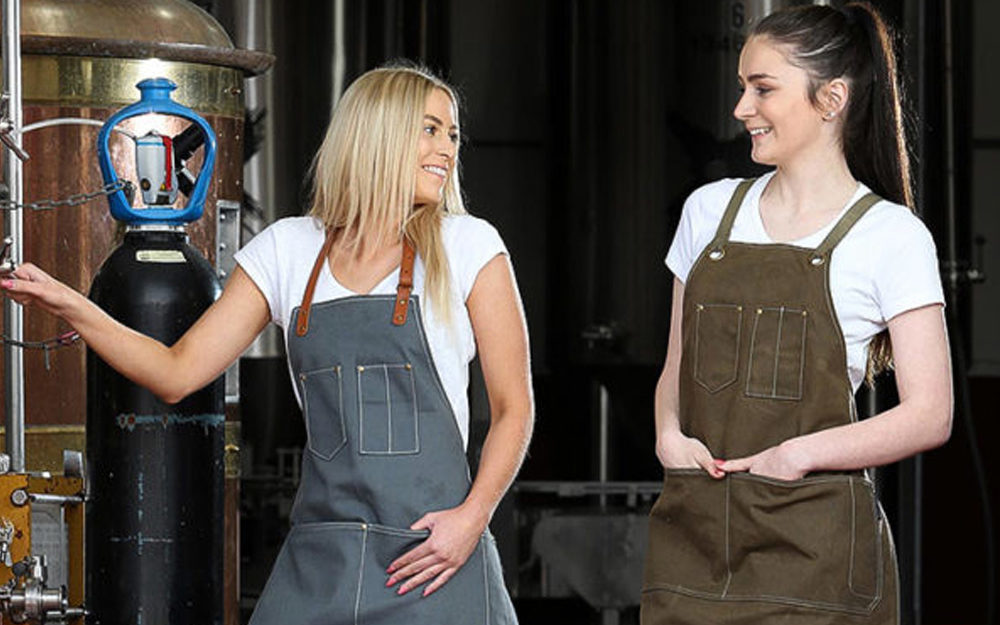
Cross-back support matters when an apron is worn for long periods. A neck loop concentrates weight where staff feel it fastest. Cross-back or better-balanced strap systems spread that load across the shoulders and upper back, which is usually the smarter choice for boning rooms, prep lines, and long kitchen shifts.
For buyers reviewing hardware options, this guide on high-quality apron hooks and how they affect performance is worth checking because hardware failure is one of the most common reasons an otherwise good apron gets sidelined.
Sizing for coverage without getting in the way
Coverage has to match the task. Too short and the apron leaves the upper legs exposed in splash zones. Too long and it catches on movement, benches, or low work.
A practical sizing check looks like this:
- For bench work: The apron should cover the torso fully and reach low enough to protect the upper thigh during trimming and portioning.
- For wash-down and heavier splash: Go longer, especially where water rebounds off floors, tubs, or stainless.
- For high-movement roles: Avoid excessive width or length that twists when the worker turns quickly or steps through narrow spaces.
One-size-fits-all can work when the apron has enough adjustability built into the ties and hardware. It doesn't work when procurement assumes one body length means one fit. If the apron rides up, gaps open around the side body, or the lower section folds back on itself, the worker loses protection where they need it.
A comfortable apron gets worn properly. An uncomfortable one gets shortened, tied loosely, or left hanging on a hook.
That's why all-day comfort isn't a soft issue. It affects compliance on shift.
Sanitisation Durability and Apron Lifecycle
The apron purchase isn't finished when the carton lands on site. Its full cost shows up in cleaning time, how the material reacts to repeated sanitising, and how long the apron stays reliable before cracks, stiffness, or hardware fatigue start causing failures.
Waterproof plastic and TPU aprons have a clear advantage here. Their waterproof and antimicrobial properties are cited as helping prevent pathogen spread, and the use of waterproof, food-grade aprons is reported to reduce the risk of cross-contamination by up to 85% in high-risk food-processing environments (waterproof apron hygiene analysis).
Cleaning method changes lifespan
Most premature apron failures come from a mismatch between material and cleaning regime.
If your site relies on quick wipe-down, rinse, sanitise, and reissue cycles, smooth waterproof surfaces are easier to keep in service. TPU and PVC are generally chosen for exactly that reason. They don't ask the team to scrub absorbed residue out of fibres. That saves labour and reduces the chance that yesterday's contamination ends up back on the line today.
A practical cleaning routine usually includes:
- Immediate rinse after heavy exposure: Blood, fat, and protein soils are easier to remove before they dry.
- Wipe-clean focus on folds and tie points: These are the spots where residue often stays behind.
- Air-dry correctly: Don't leave aprons bunched on hooks or in tubs where surfaces stay tacky and contaminated.
- Inspect while cleaning: If a worker can see crazing, deep cuts, or edge splits, the apron is already on borrowed time.
When replacement is the cheaper decision
Procurement teams sometimes try to squeeze too much life out of aprons because the item value looks small. On the floor, that can cost more than replacing earlier.
Replace an apron when it starts doing any of the following:
- loses its surface integrity and becomes harder to sanitise
- stiffens to the point that staff fight the fit instead of wearing it properly
- develops cracks or cuts in high-flex areas
- has straps, hooks, or buckles that no longer hold a stable position
If cleaning takes longer every week and the apron still doesn't look or feel hygienic, the asset has stopped being low-cost.
Lifecycle cost is simple. The right apron isn't the one with the lowest invoice price. It's the one that survives your cleaning method, stays wearable through a shift, and gets replaced before it becomes a hygiene liability.
Navigating Australian Food Safety and Compliance
Compliance starts with a plain question. Can this apron go into a food-processing environment without becoming a contamination point itself?
That's the right way to read Australian requirements. You're not buying an apron because the catalogue says “food industry”. You're buying protective clothing that has to work inside a documented hygiene system.

What compliance means on the floor
The most useful compliance filter for apron buying is material absorbency. Australian food premises rules state that equipment and protective clothing used in food processing must be made of materials that do not absorb grease, food particles, or water to prevent contamination under Standard 3.2.3 of the Food Standards Code (Food Standards Code Standard 3.2.3 guidance).
That has a direct purchasing consequence. If the apron absorbs fluid, traps residue in the surface, or can't be cleaned back to a hygienic condition, it's the wrong product for food processing. This is why wet-area buyers keep coming back to non-absorbent waterproof builds rather than fabric options that only handle light splash.
HACCP matters in the same practical way. Buyers don't need to turn into auditors. They need to ask whether the apron is suitable for food-contact environments, easy to clean, and supported by documentation that fits the site's own food-safety program. If the supplier can't answer those points clearly, move on.
What procurement should ask a supplier
A decent compliance review doesn't need to be complicated. It does need to be disciplined.
- Material suitability: Ask whether the apron material is non-absorbent and intended for wet food-processing use.
- Cleaning compatibility: Confirm how the apron should be cleaned and whether the surface is designed for wipe-clean sanitisation.
- Documentation: Request food-safety or HACCP-related supporting information where relevant.
- Site fit: Match the apron to the actual area. Boning room, kill floor, dish area, and service counter do not need the same spec.
For teams reviewing suppliers, PSC Trading's food safety and HACCP commitment overview is one example of the type of documentation-led approach buyers should look for.
Compliance is rarely lost in the boardroom. It's lost when a site buys a product that can't be cleaned properly, then expects staff to make it work.
A water resistant apron can sound acceptable in a catalogue. In a regulated food environment, the practical standard is tougher than the wording.
Recommended Apron Specs for Your Workflow
Specification gets easier when you stop asking, “Which apron is best?” and start asking, “What happens to this apron between clock-on and clean-down?”
Here's the product view that usually makes sense by workflow.

Kill floor and heavy wash-down work
The kill floor is where soft specifications fail fast. Aprons here need full fluid protection, fast cleaning, strong fastening, and enough length to shield the upper legs through repeated splash and hose rebound.
Heavy-duty industrial aprons are often benchmarked at 90cm x 85cm and are expected to be HACCP-certified, one-size-fits-all, and wipe-clean for use across abattoirs and hospitality settings (heavy-duty apron and overboot specifications). In practice, many kill-floor buyers will go heavier or longer depending on task exposure, but that benchmark is a useful baseline.
Recommended setup:
- waterproof TPU or PVC construction
- secure buckle or stable hook fastening
- longer cut for lower torso and thigh protection
- smooth wipe-clean surface that tolerates repeated sanitising
This is also the part of the market where Australian-made waterproof food-processing aprons, such as those supplied by PSC TRADING Co PTY LTD, can fit procurement needs because the company manufactures aprons in TPU and PVC configurations for butcher, abattoir, and hospitality environments. That matters when you want material choice and fastening options aligned with local wet-area use rather than generic imported stock.
Retail butcher and service counter production
A retail butcher needs protection, but not always the heaviest apron on the shelf.
A typical day mixes bench trimming, customer-facing work, mincer loading, tray carrying, and periodic wash-down. The apron still needs to be waterproof if there's regular fluid contact, but comfort and presentation matter more here than on the kill floor. Bulky hardware, excessive stiffness, or overly long cuts tend to get rejected by staff.
A practical spec for this role usually looks like:
- lightweight waterproof TPU or lighter PVC
- bib shape covering the torso without crowding the knees
- fastening that can be adjusted quickly between staff
- clean, simple front with no unnecessary catch points
If the role shifts toward display work with only occasional splash, some buyers look at canvas or lighter nylon options. That's fine for the dry side. It's not the answer for the cutting block or wash-down corner.
Commercial kitchens and cold wet processing
Commercial kitchens split into two different apron jobs. Front-line cooking and prep often need lighter, more mobile protection. Dish, seafood, and cold wet processing need a proper barrier and easy clean-down.
In cold wet rooms, flexibility becomes a deciding factor. Staff are lifting tubs, turning in tight spaces, and working around chilled product where rigid gear quickly becomes annoying. That's where TPU often gets picked over stiffer alternatives.
A practical way to specify by task:
-
Seafood prep or cold-room packing
Choose a waterproof apron with good flexibility, stable straps, and enough length to catch splash from tubs and benches. -
Dish area and heavy prep sink work
Prioritise full waterproofing and rapid wipe-down. Comfort matters, but impermeability comes first. -
General commercial kitchen prep
Match the apron to the wetness of the task. If exposure is intermittent, lighter builds can work. If the section spends hours around sink splash, sauces, and wash water, step back up to true waterproof gear.
Buy for the wettest part of the job, not the driest part of the shift.
That one decision prevents most regret purchases.
If you're searching for a water resistant apron for professional food work, treat that phrase as a starting point, not the specification itself. In butcheries, abattoirs, and commercial kitchens, the buying standard is simpler than the marketing language. Use non-absorbent, waterproof materials. Match the fastening to the shift. Match the size to the task. Replace the apron when cleaning and wear tell you it's done. That's what works on the floor.
