





The Hidden Cost of Hand Injuries in Australian Meat Processing
If you run a butchery, boning room or abattoir in Australia, you already know the numbers: one bad cut can halt a line, send a skilled worker home, and trigger workers’ compensation paperwork that drags on for months.
Most sites don’t lose money because their knives are too sharp. They lose money because their hand protection is inconsistent, poorly fitted or simply not designed for real Australian meat‑processing conditions.
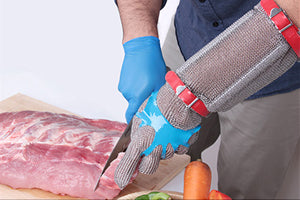
That’s where a properly specified stainless steel mesh glove with a medium / long cuff stops being “just another PPE item” and becomes a small piece of equipment with a big impact on your bottom line.
Why Stainless Steel Mesh – Not Just “Thick Fabric”
For high‑risk knife work, especially in boning rooms and butcher shops, fabric or coated gloves are a compromise. They’re fine for light prep, but they don’t provide the level of protection you need when:
- Breaking down primals at speed
- Working shoulder‑to‑shoulder on a busy chain
- Training new team members who are still learning good knife habits
A stainless steel mesh glove delivers:
- True cut resistance against slips from boning knives and breaking knives
- Consistent protection shift after shift – it doesn’t downgrade as quickly as fabric
- Easy sanitation, which is critical under Australian food safety and export standards
For operations supplying major supermarkets, export markets or strict QA clients, this level of protection isn’t optional – it’s expected.
The Advantage of a Medium / Long Cuff
A lot of gloves on the market protect the palm and fingers but leave the wrist and lower forearm exposed. That’s exactly where many serious cuts occur, especially when:
- Workers rest a forearm on the bench or carcass for leverage
- Knives glance off bones and slide down towards the wrist
- Carcasses swing slightly on hooks, forcing awkward hand positions
A medium / long cuff changes that risk profile:
- Extended coverage protects the wrist and lower forearm – common impact points in boning rooms
- Better overlap with sleeves or arm guards, reducing gaps in protection
- Improved confidence for workers, which helps them maintain speed without “babying” each cut
In practical terms, that means fewer near‑misses and fewer recordable injuries on your safety reports.
Built for Australian Butchers, Abattoirs and Food Processors
Conditions in Australian meat processing plants are tough: cold rooms, condensation, fat, blood and constant wash‑downs. The Stainless Steel Mesh Glove – Medium / Long Cuff we supply at PSC Trading is specified with those realities in mind:
- Corrosion‑resistant mesh that stands up to regular hot‑water and chemical sanitation
- Secure fastening and the option of mesh tensioners so the glove doesn’t twist or slide mid‑cut
- Sized for real workers, not just “small / medium / large” guessed from an online chart
We see consistent orders from butcheries and abattoirs in Sydney, Melbourne, Brisbane, Adelaide and regional processing hubs because managers understand one simple principle: reliable PPE is cheaper than downtime.
Turning Safety into a Competitive Advantage
Foodservice buyers and retail chains are paying closer attention to their suppliers’ safety performance. A plant that can demonstrate:
- Reduced lost‑time injuries
- Documented PPE standards for boning, slicing and trimming
- Investment in quality gear such as stainless steel mesh gloves
has a stronger story to tell when tenders are up for renewal.
By standardizing on a stainless steel mesh glove with a medium / long cuff, you’re not just ticking a compliance box you’re signaling to customers and auditors that you take safety and continuity of supply seriously.
How to Roll Out Mesh Gloves on Your Site
From experience with Australian customers, here’s a practical rollout plan:
-
Start with high‑risk stations
Priorities boning, breaking and high‑speed trimming positions where knife slips are most common. -
Fit‑test by size
Have supervisors check glove fit on each worker. A mesh glove that’s too loose reduces protection and slows work. -
Pair with correct tensioners and chain belts
Use mesh glove tensioners and stainless steel chain belts so gloves stay exactly where they should be. -
Train for care and cleaning
Build a simple routine for rinsing, sanitizing and inspecting the mesh each shift. This keeps gloves in service longer and satisfies QA checks. -
Track incidents and productivity
Compare cut‑related incidents and line performance before and after rollout. Most customers see fewer first‑aid events and less disruption within the first few months.
Ready to Lift Hand Safety on Your Floor?
If you’re serious about reducing knife‑related injuries without slowing your team down, upgrading to a Stainless Steel Mesh Glove Medium / Long Cuff is one of the most effective, low‑friction changes you can make.
PSC Trading supplies mesh gloves, glove tensioners and chain belts to butcheries and meat‑processing sites across Australia, from metro plants in Sydney and Melbourne to regional abattoirs and game processors.
Explore the Stainless Steel Mesh Glove – Medium / Long Cuff in our online store or contact us for tailored recommendations for your site.
