

Ordering workwear for one employee is relatively simple. Choosing aprons for an entire production team requires more thought. Different workers have different builds, responsibilities and movement patterns, yet the business still needs a consistent level of practical coverage.
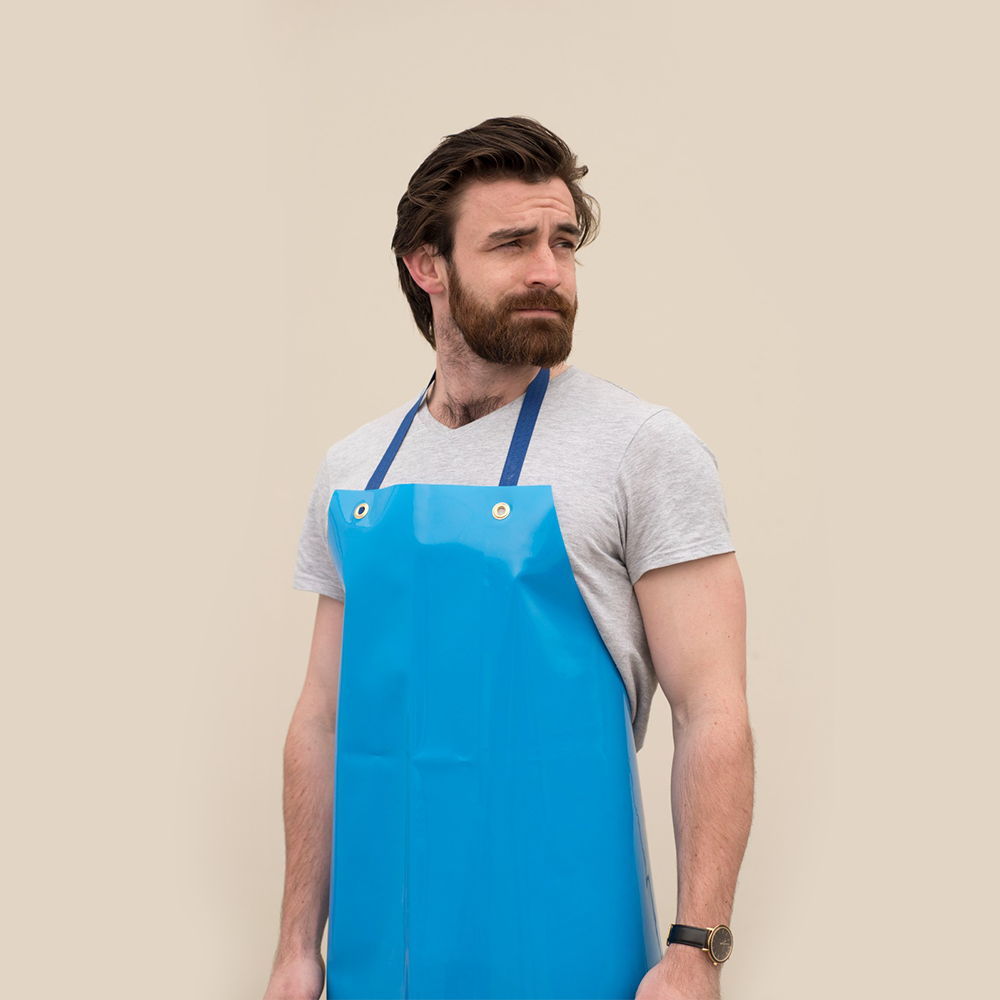
The Heavy-Duty TPU Food Processing Apron | 900mm × 1200mm from PSC Trading gives Australian food businesses a clearly defined option to assess. Its durable TPU construction and generous dimensions make it suitable for consideration across butcher shops, abattoirs, seafood-processing facilities, commercial kitchens and food-manufacturing workplaces.
Why Standardised Workwear Matters
When staff use aprons with noticeably different sizes or designs, coverage can vary from one worker to another. A standardised product makes it easier for supervisors and purchasing teams to understand what has been issued and assess whether it remains suitable.
Using a consistent apron style can also simplify:
- New employee workwear preparation
- Pre-shift equipment checks
- Stock monitoring
- Damage reporting
- Replacement decisions
- Cleaning and storage procedures
Standardisation should never mean ignoring individual fit. It provides a consistent starting point, but every employee still needs to check that the apron suits their body size, uniform and assigned tasks.
Begin with the 900mm × 1200mm Dimensions
Dimensions are one of the most important details when comparing food-processing aprons online.
The PSC Trading Heavy-Duty TPU Apron measures:
- 900mm across
- 1200mm long
Its 900mm width provides broad front coverage, while the 1200mm length extends down the wearer’s work clothing. This generous format may be useful for employees involved in hands-on preparation, processing and cleaning activities.
Purchasing teams should compare these measurements with the workers who will wear the apron. An employee’s height, build and uniform can all affect how the same apron sits.
If a business is ordering for several people, trialling the fit within representative roles can help determine whether the dimensions are appropriate before the apron is adopted more widely.
Match the Apron to the Role
Two employees working in the same facility may have very different workwear requirements.
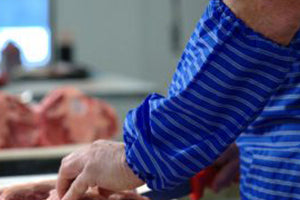
A retail butcher may spend much of the shift preparing products at a bench. A processing worker may move between equipment and work areas, while a cleaning team may perform a wider range of bending and reaching movements.
Before standardising an apron across multiple roles, consider:
- The tasks performed by each team
- The amount of front coverage required
- The employee’s normal working movements
- Other protective equipment worn
- The work area and available space
- Workplace hygiene procedures
- Inspection and replacement requirements
If one apron does not suit every role, the business may need separate workwear standards for different teams.
What TPU Brings to Professional Workwear
TPU stands for thermoplastic polyurethane. In this apron, TPU provides a durable material option for demanding professional food-processing environments.
This makes the apron more relevant to hands-on industry work than a lightweight fabric apron intended for domestic or decorative use. Its straightforward design keeps attention on front coverage and practical daily wear.
The “heavy-duty” description should not be interpreted as meaning that the apron is indestructible or suitable for every hazard. Workplaces should assess it as part of their complete protective clothing system and use it only for appropriate tasks.
Suitable Australian Food-Industry Environments
PSC Trading’s Heavy-Duty TPU Food Processing Apron may suit teams working in:
- Independent butcher shops
- Supermarket meat departments
- Abattoirs and boning rooms
- Meat-processing facilities
- Poultry-processing plants
- Seafood-processing operations
- Commercial kitchens
- Catering preparation areas
- Food-manufacturing workplaces
Every facility has its own production methods, risk controls and hygiene systems. The responsible business should confirm that the apron’s material, dimensions and design align with its documented requirements.
Test Movement Before Approving the Fit
An apron can provide generous coverage while the employee is standing still but feel different once work begins. That is why a movement check matters.
Once the apron has been fitted over the employee’s normal uniform, ask the wearer to complete the movements typical of the role. These may include:
- Walking between work areas
- Bending towards a preparation bench
- Reaching for approved equipment
- Turning from side to side
- Working beside machinery
- Moving while wearing other required PPE
The apron should maintain the expected coverage without unnecessarily restricting movement or interfering with other equipment.
If it shifts excessively or prevents another protective item from sitting correctly, the setup should be reviewed before active work starts.
Consider the Complete PPE Setup
A TPU food-processing apron provides an outer layer over work clothing. It does not replace any other protective equipment required by the workplace.
Depending on the task, employees may also need:
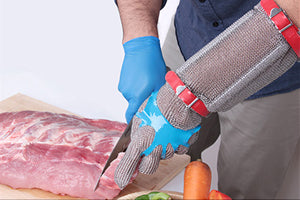
- Protective or cut-resistant gloves
- Mesh aprons or harnesses
- Safety glasses
- Protective footwear
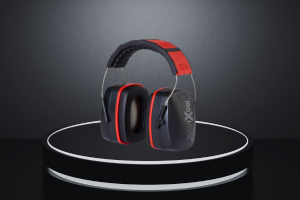
- Hearing protection
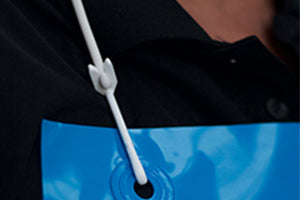
- Butcher belts and authorised tool holders
- Other role-specific workwear
Each item should be checked as part of one complete setup. The apron should not cover, obstruct or displace equipment that needs to remain accessible.
Create a Simple Inspection Routine
If a business issues the same apron to multiple employees, a consistent inspection checklist can make wear easier to identify and report.
Before use, workers should check for:
- Cuts, tears or punctures
- Worn areas in the TPU material
- Damage around the edges
- Problems with fastening points
- Residue from the previous shift
- Changes in shape or fit
- Anything affecting the expected coverage
Damaged aprons should be handled according to the workplace’s established assessment and replacement process. Employees should know who to notify and where replacement workwear is kept.
Cleaning and Storage Procedures
The apron should be cleaned according to the supplied product guidance and the workplace’s documented hygiene program.
Businesses should avoid creating care instructions based only on the general properties of TPU. Follow the recommended cleaning method for the specific product, including any guidance relating to chemicals, temperature and storage.
After cleaning, aprons should be stored in their designated area. A consistent storage system helps staff locate the correct workwear at the start of the shift and prevents clean and used items from becoming mixed.
Shop Heavy-Duty TPU Food-Processing Aprons in Australia
A standard workwear choice should make sense for the team, the task and the workplace—not simply fit a broad product category.
PSC Trading’s Heavy-Duty TPU Food Processing Apron offers durable construction and generous 900mm × 1200mm coverage for demanding professional environments. It gives Australian food businesses a practical option when reviewing or standardising aprons across suitable processing roles.
Shop the Heavy-Duty TPU Food Processing Apron and other professional butcher and food-industry workwear online at PSC Trading Australia.
