


It's a familiar shift. Orders are building, the grill is packed, and someone on prep is still hand-forming patties off a tray of mince. One patty comes out thick at the centre, the next one spreads wide and thin, and by the time service hits its stride, you've got uneven cook times, inconsistent portions, and staff wasting motion on a task that should've been locked down before the first docket printed.
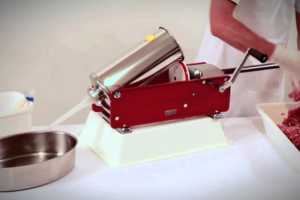
That's where a burger patty press stops being a nice extra and starts becoming a working tool. In a butcher shop, it helps keep portion control tight across a run of fresh patties for the cabinet. In a pub kitchen, it gives the grill section a stack of burgers that cook at the same rate. In a processing room, it reduces handling, supports hygiene, and makes the workflow easier to document. If you're also packing burgers for takeaway, the same consistency carries through to presentation and fit in cardboard food boxes made for burger takeaway service.
Table of Contents
- The End of the Inconsistent Burger Patty
- What Is a Burger Patty Press Really Doing
- Exploring Different Types of Burger Presses
- Key Benefits for Your Commercial Operation
- Proper Use and HACCP-Compliant Maintenance
- How to Choose the Right Burger Patty Press
- Common Burger Press Questions Answered
The End of the Inconsistent Burger Patty
Friday night tells the truth about a burger operation. You can have a good recipe, a solid grill hand, and quality mince, but if patties are being shaped by feel under pressure, the flaws show up fast. Some shrink harder than others. Some finish before the bun is ready. Some need extra time, which backs up the rail and throws the whole pass off rhythm.

A butcher sees the same problem in a different setting. Hand-formed patties in the display can look homemade in the wrong way. Diameters wander. Thickness changes from batch to batch. The end result is a product that's harder to price, harder to cook consistently, and harder to repeat once the staff member who made it goes home.
What the press fixes on the floor
A burger patty press takes guesswork out of a repetitive job. Instead of relying on whoever is on prep to eyeball shape and thickness, the press gives you the same form every cycle. That matters in practical ways:
- Portion control stays tighter because the mould sets the shape and the operator follows the same movement each time.
- Cook times become more predictable because thickness doesn't vary all over the batch.
- Presentation improves because patties stack neatly, freeze better, and fit buns more consistently.
- Prep gets easier to delegate because the process depends less on hand skill.
Practical rule: If your burger quality depends on one experienced staff member shaping every patty by hand, the process is too fragile.
A small tool that professionalises the workflow
Value isn't convenience. It's control. A press turns patty-making from a rough prep task into a repeatable production step. That's good for a café pushing a lunch rush, a pub doing steady burger trade, or a butcher supplying local venues with fresh patties that need to look and cook the same every time.
It also changes the standard inside the business. Once patties are uniform, it becomes easier to cost them accurately, easier to train new staff, and easier to spot problems in the mince mix, portioning, or handling before they become expensive. That's why experienced operators don't look at a burger patty press as a gadget. They treat it as basic equipment.
What Is a Burger Patty Press Really Doing
A burger patty press isn't just flattening mince. It's controlling diameter, thickness, and portion repeatability in one movement. Hand-forming relies on feel. A press relies on a fixed shape and a repeatable stroke. That difference is the gap between craft done by memory and production done by process.
Think of it this way. Hand-shaping is like cutting steaks without a guide. An experienced butcher can get close, but “close” still varies. A press works more like a calibrated mould. Once the mince is correctly portioned and loaded, the unit gives the operator the same physical limit every time.
The mechanics that matter
Most commercial manual units use a bowl or mould and a plunger. The bowl sets the patty diameter. The plunger compresses the mince to a repeatable thickness. On better-built units, the geometry of those surfaces matters because it reduces the need to tidy edges, re-press a misshapen patty, or manually correct the batch afterward.
In practical terms, the press is doing four jobs at once:
- Setting the footprint so patties fit the bun and the plate the same way each time.
- Managing thickness so the grill section doesn't get mixed cooking times in the same run.
- Supporting yield control by reducing over-portioning and corrective trimming.
- Standardising density so the product handles better during stacking, chilling, or transfer to paper.
A press also forces the team to be more disciplined upstream. If the mince grind is too warm, too wet, or poorly mixed, the press exposes that immediately. That's useful. It tells you the issue isn't the shaping tool. It's your prep.
Why Australian operators adopted them early
Burger patty presses became a foundational part of commercial meat-processing in the mid-20th century as fast-food expanded. In Australia, that shift accelerated in the 1960s and 1970s as standardised burger menus demanded consistent patty size, thickness, and weight. By the 1980s, many Australian kitchens and butcher shops had adopted presses to reduce labour and improve consistency, as outlined in this commercial hamburger press history guide.
That history matters because the problem hasn't changed. Service is still busy. Labour is still tight. Customers still notice when one burger eats properly and the next one doesn't.
Pressing starts before the press
A burger patty press only performs properly if the upstream steps are under control. That includes mince quality, grind consistency, mix temperature, and portioning discipline. If you're grinding in-house, the feed texture and final mince condition have a direct effect on how cleanly the press works, which is why getting the right commercial meat mincer for your kitchen workflow is part of the same production conversation.
The best press in the room won't fix sloppy portioning, warm mince, or a poor grind. It will only show you the problem faster.
Exploring Different Types of Burger Presses
Not every burger patty press belongs in every operation. The right machine depends on how many patties you need, how often you run them, and how much variation your menu allows. A shop making a modest run of premium house patties has different needs from a venue pushing heavy burger volume across multiple services.

Manual presses
Manual presses suit smaller and mid-volume operators that still want strong control over the product. They're straightforward, easy to understand, and usually the right place to start for butcher shops, cafés, takeaways, and pubs that aren't ready to dedicate floor space or budget to powered gear.
A practical example is the butcher preparing a fresh weekend burger run. A manual unit lets staff work steadily, keep shape consistent, and pack patties cleanly between papers for the display or cool room. The same applies in a pub where prep happens before service and the aim is to have an organised stack ready for the grill.
What manual presses do well:
- Keep training simple because the action is visible and easy to repeat.
- Handle product changes better when you're switching between different patty sizes or blends.
- Stay serviceable in wash-down environments where simplicity is a real advantage.
Their weak point is operator fatigue if you're asking one person to stand there for long runs day after day.
Semi-automatic and hydraulic presses
Once volume rises, the labour side changes. A powered or assisted press reduces physical effort and usually improves pace across a longer production window. That makes sense for larger pubs, central prep kitchens, or meat processors producing for several outlets.
These machines earn their keep when the operation has a regular demand pattern and the staff can't afford to spend too much time on shaping alone. They also help when consistency needs to stay tight across multiple operators.
If one staff member can make a neat batch but the next one can't, you don't just have a training issue. You may have the wrong level of equipment for the volume.
Multi-portion and automated systems
At the top end, automated systems belong in manufacturing-style environments. These are for processors and large-scale food operations where patties are part of a broader line and need to move through portioning, forming, chilling, and packing with minimal interruption.
Here's a simple side-by-side view.
| Press type | Best fit | Strength | Limitation |
|---|---|---|---|
| Manual | Butcher shops, cafés, smaller pubs | Low complexity, flexible, easy to clean | More operator effort |
| Semi-automatic or hydraulic | Mid-volume kitchens and processors | Better pace, less fatigue | Higher cost and more setup |
| Automated multi-portion | Large food production | High output and consistency | Best suited to dedicated production lines |
A high-volume burger outlet can also justify industrial pressing equipment because heavy service can demand a constant flow of pre-portioned patties. Commercial units for 1/3 lb patties are marketed for exactly that kind of environment, which aligns with Australian burger venues and pubs facing peak-hour demand of 50 to 100+ burgers per hour, as shown in this industrial hamburger press product overview.
Key Benefits for Your Commercial Operation
Friday lunch prep runs late. One cook is weighing mince, another is hand-shaping, and the head chef is pulled off higher-value work to fix uneven patties before service. In a market with high wage pressure and frequent staff turnover, that is an expensive way to make burgers.
A burger patty press improves labour control, portion accuracy, hygiene, and documented food-safety practice. Those are the gains that matter in a commercial kitchen, butcher shop, or small processing room. The tool gives the team a repeatable method, which makes output easier to train, easier to check, and easier to cost.
Labour efficiency under wage pressure
Hand-forming patties relies too heavily on individual skill. A press reduces that dependence. Newer staff can follow a set method and produce saleable patties without the same level of shaping experience, which helps businesses handle staff shortages and reduce the amount of senior labour tied up in basic prep.
In practice, the time saving is usually seen in fewer touchpoints, less rework, and less supervision across a batch, rather than a fixed percentage that applies to every operation. The bigger the batch, the more obvious the saving becomes.
That labour shift shows up quickly on the floor:
- Less senior staff time spent correcting shape and weight issues
- Faster handover of prep jobs to junior staff
- More predictable prep windows before service
- Lower fatigue during larger burger runs
Yield and consistency affect gross profit
Every patty that runs heavy chips away at margin. Every patty that runs light creates customer complaints, inconsistent cook times, or both. A press helps keep portion size and shape inside a tighter range, which protects recipe costing and makes stock usage easier to forecast.
The benefit carries through service. Patties of similar diameter and thickness hit the grill the same way, fit the bun properly, and give the pass a more reliable product. Kitchens spend less time sorting the good ones from the rough ones.
Uniform patties protect food cost, prep speed, and service consistency in the same step.
Better control for compliance and raw-meat handling
The compliance value is often underrated. Hand-shaping means repeated contact with raw mince, more opportunities for process drift, and more variation between operators. A press gives staff a defined forming step that can be written into SOPs, monitored by supervisors, and cleaned as part of a scheduled raw-meat equipment routine.
That matters for businesses working to HACCP-based systems and FSANZ-aligned food handling standards. If your team is already documenting sanitation, allergen controls, and raw-product handling, a press is easier to fit into that system than an informal hand-shaping process. Our guide to what HACCP is and why it matters in day-to-day food operations explains why documented control points matter once production volume starts to grow.
Throughput without adding chaos
A busy venue does not need more rushing at the bench. It needs a prep system that holds up under volume. A burger press helps build neat, stackable batches before trade, so service starts with organised product instead of a tray of mixed sizes and shapes.
For pubs, takeaway shops, and butcher retailers supplying house-made patties, that steadier throughput reduces prep bottlenecks and takes pressure off the team during peak periods. The result is not just a cleaner-looking patty. It is a more controlled operation, with less waste, less labour drag, and fewer food-safety shortcuts under pressure.
Proper Use and HACCP-Compliant Maintenance
The problems usually start halfway through prep. A staff member leaves mince sitting in the press while they answer the slicer, another skips a full strip-down because service is close, and the next batch goes through a machine with fat and protein already drying in the seams. That is how a burger press turns from a labour-saving tool into a hygiene risk.

A press needs to be treated like any other raw-meat contact item on the bench. In practical terms, that means a written method, clear cleaning points, and enough supervision that the process does not drift between operators. In Australian shops dealing with wage pressure and hard-to-replace staff, that matters. A simple, repeatable pressing routine cuts training time and reduces the chance of one rushed team member creating rework, waste, or a food-safety problem.
A repeatable operating method
A burger press works best when the forming step is controlled before the meat goes anywhere near the mould. Staff should start with portioned meat, clean patty papers or trays, and a sanitised unit that has been checked at the start of the run.
The operating sequence should stay plain and repeatable:
- Portion the meat before pressing so weight stays under control.
- Load the mould evenly to avoid thin edges and thick centres.
- Press with steady force so the patty forms cleanly without tearing.
- Release onto patty paper or a clean tray for stacking and transfer.
- Keep the product moving back to chilled holding within the site's raw-meat handling limits.
Small habits make a difference here. Overfilling the mould creates trim loss. Underfilling creates patties that cook fast, shrink hard, and fail on portion control. Letting staff guess the fill weight defeats one of the main reasons to own the press in the first place.
For mixed teams, a simple visual training aid helps reinforce the method. This short demonstration is useful for showing the movement and pace expected at the bench.
Cleaning that stands up to audit
Cleaning has to cover every food-contact surface, including the spots staff tend to miss when they are in a hurry. On most presses, that means the mould, plunger, handle joints, springs, pins, and any removable liners or spacers. If meat can get into it, the cleaning procedure has to address it.
A practical routine usually includes:
- Full disassembly after use so residue is not trapped in seams or under fittings.
- A detergent wash step to remove fat and protein build-up.
- A sanitising step that matches site procedure and contact times.
- Drying before reassembly so moisture is not sealed into the unit.
- Pre-use inspection for residue, corrosion, wear, or cracked parts.
Food Standards Australia New Zealand sets out the baseline clearly in its guidance on food businesses and safe handling. Equipment must be able to be effectively cleaned and kept in a condition that does not contaminate food, as outlined by Food Standards Australia New Zealand in its safe food handling guidance for food businesses. That is the standard a burger press has to meet on the floor, not just in the catalogue.
Put the press inside the HACCP routine
A press should appear in the same cleaning schedule, pre-operational checks, and corrective-action records as mincer parts, knives, tubs, and sausage gear. If it contacts raw meat, it belongs in the documented system. Sites already working to HACCP-based controls should also include the press in verification steps such as visual inspection, sanitation sign-off, and damaged-equipment reporting. Our article on how HACCP works in practical food businesses covers the logic behind documenting those control points properly.
This saves labour as much as it supports compliance. A clear clean-down and start-up routine gives less experienced staff a process they can follow without constant supervision, which is worth money when experienced hands are hard to keep.
Habits that cause trouble
The same few mistakes show up again and again:
- Leaving raw mince in the press during breaks or task changes
- Skipping full disassembly because the unit looks clean
- Using worn accessories that are hard to inspect or sanitise
- Letting fat and protein dry onto stainless surfaces before wash-down
- Returning mishandled scraps into the next batch
Cleanability affects compliance, yield, and labour. If the press is hard to strip, hard to inspect, or easy to misuse, the cost shows up in wasted product, slower cleaning, and avoidable risk.
How to Choose the Right Burger Patty Press
Friday lunch trade starts in two hours. One staff member is trimming, another is on the slicer, and the newest hand is portioning mince by eye because the press on the bench is too slow, too awkward, or too hard to clean properly. That decision costs twice. Labour blows out, and the process becomes harder to control under a food safety program.

The right press should suit production volume, fit the menu, and hold up under repeated wash-down. In Australian kitchens, butcher shops, and small processing rooms, it also needs to save skilled labour. Wages are high, good staff are hard to keep, and any piece of equipment that shortens prep without creating extra cleaning or record-keeping work earns its bench space.
Start with production pressure, not catalog price
Cheap units often look acceptable until the first busy week. Then the handle binds, the mould size is wrong, or the operator has to stop and scrape product out by hand. A press that slows the line is not cheap once paid labour is standing around it.
Start with a practical prep run. Count how many patties you need in a batch, how long staff can reasonably spend on that task, and whether the press will be used once a day or across multiple production windows. Manual presses suit many shops and kitchens, but only if they can cover demand without turning one employee into a full-time patty former.
If the same team is also mincing, packing, labelling, and cleaning down, labour efficiency matters more than the purchase price.
Match the mould to the product you actually sell
Patty size affects more than appearance. It changes raw portion control, cooking loss, bun fit, and the consistency customers notice from one order to the next.
Ask practical questions before you buy:
- What finished weight are you aiming for
- What bun diameter does the menu use
- Do you need one fixed size or interchangeable moulds
- Will the press handle thicker pub-style patties as well as thinner grill patties
A press that produces the wrong diameter or depth creates waste fast. Staff start trimming, re-pressing, or overfilling to compensate. That hurts yield and slows the room down.
Buy for cleanability and compliance
A burger press is part of the raw-meat process. Choose it the same way you would choose a mincer attachment or sausage filler component. Surfaces should be food-grade, smooth, and easy to inspect. Parts that contact product should come apart without tools or with minimal effort, because complicated disassembly usually means corners get missed during a rushed clean-down.
That matters for HACCP-based programs and FSANZ obligations. Equipment must be able to be cleaned and maintained in a condition that does not compromise food safety. FSANZ sets that expectation out in its guidance on food premises and equipment requirements. If a press has crevices, worn coatings, loose hinges, or parts that trap protein and fat, it creates unnecessary risk and extra verification work for supervisors.
A useful buyer's checklist looks like this:
| Buying factor | What to check | Why it matters |
|---|---|---|
| Output fit | Patties needed per prep run and per shift | Prevents bottlenecks and labour waste |
| Mould size | Diameter, depth, and portion range | Protects consistency and yield |
| Construction | Food-grade stainless and solid contact surfaces | Stands up better to raw-meat use and wash-down |
| Disassembly | How quickly staff can strip and reassemble it | Cuts cleaning time and supports compliance |
| Stability | Bench grip, handle feel, and overall balance | Reduces operator fatigue and rework |
| Parts support | Availability of papers, moulds, and replacement parts | Keeps the unit in service longer |
Check the operator side before signing off
A press can look fine on a spec sheet and still fail on the bench. Handle travel, bench stability, loading height, and ejection all matter in daily use. If the action is awkward, staff will avoid it. Then the business is back to hand-forming, variable weights, and more direct contact with raw product.
Good equipment makes the correct method the easier method. That is the standard to buy against. In a tight labour market, a press should help less experienced staff produce saleable patties with less supervision, while giving managers a process that is easier to control, train, and document.
Common Burger Press Questions Answered
How do I stop the meat sticking to the press
Keep the mince properly chilled and use patty papers where they suit the workflow. Sticky mince often points to temperature or mix condition rather than the press itself. If staff are scraping patties out by hand, the process needs adjusting.
Can I use a burger patty press for chicken, fish, or plant-based mixes
Yes, but the mix has to be suited to pressing. Chicken and fish blends can be softer, and some plant-based mixes need better binding to hold shape on ejection. Test the mix before committing to a full run, and don't assume a beef setup will transfer perfectly.
Does using a press really help with a food safety plan
Yes, when it's used and cleaned as part of a documented procedure. A 2022 SQF report noted that 42% of meat processing facilities had issues with “inadequate physical controls to minimize contamination” during manual portioning. A burger press helps by standardising the step and reducing direct hand contact, which makes it easier to use as a documented control within a HACCP or SQF plan.
Is a manual press enough for a professional kitchen
Often, yes. If the operation's prep demand fits the press and staff can run it without bottlenecks, a manual model is a practical choice. The key is whether it supports your service pattern cleanly, not whether it looks more industrial.
What's the biggest mistake operators make
Treating the press like a simple shaping tool instead of part of the production and hygiene system. The businesses that get the best result build the press into prep, cleaning, and staff training from day one.
If your shop, kitchen, or processing room needs a burger patty press that fits real commercial work, PSC TRADING Co PTY LTD supplies food-processing equipment, PPE, packaging, and meat industry essentials for Australian operators who need gear that performs on the floor.
