





By the middle of a shift, you can usually tell whether a mask belongs in a real food-processing environment or in a box near the front counter. In a butcher shop, it gets damp. In an abattoir, it gets tested by wash-down conditions, cold rooms, movement, and splash risk. In a commercial kitchen, it gets tugged on and off between heat, steam, and fast service.
That's why a reusable face mask has to be judged like any other piece of site gear. The question isn't whether it looks tidy at the start of the day. The question is whether it still fits, still cleans properly, and still makes sense once you factor in hygiene, staff comfort, and the reality of repeat use.
Table of Contents
- Why Your Old Disposable Masks Are Failing Your Team
- Choosing the Right Mask Material for Your Crew
- Understanding Filtration Fit and Food Safety
- Commercial Cleaning and Maintenance Protocols
- Meeting Compliance and Workplace Standards
- Smart Procurement and Replacement Strategies
Why Your Old Disposable Masks Are Failing Your Team
A flimsy disposable mask might get a worker through a quick visitor walk-through. It usually won't hold up through trimming, boning, packing, loading, wash-down, and cold-room movement. Once it's wet, slipping, or collapsing against the face, your team stops treating it like PPE and starts treating it like an annoyance.
That matters because people adjust annoying gear constantly. They pull it down to speak. They pinch the nose again and again. They leave it under the chin between tasks. In a food site, every one of those habits creates another hygiene and compliance problem.
Disposable masks break down where the work is rough
In butcheries and abattoirs, masks aren't dealing with clean office air. They're exposed to moisture, temperature changes, physical movement, and nearby contamination sources. A mask that's fine for a short errand often fails once staff are leaning over benches, turning carcasses, stacking cartons, or stepping in and out of chillers.
A practical example is the boning room. Staff work fast, breathe harder, and often wear eye protection. If the mask shifts every time they talk or fogs glasses each time they enter a colder zone, they won't trust it. If they don't trust it, they won't wear it properly.
Practical rule: If staff spend more time adjusting a mask than forgetting it's there, the mask is wrong for the job.
A reusable option changes the standard
A proper reusable face mask isn't just a swap from one product type to another. It's a move from throwaway convenience to managed PPE. That means choosing material deliberately, assigning enough units per worker, laundering them correctly, and checking wear before the next shift.
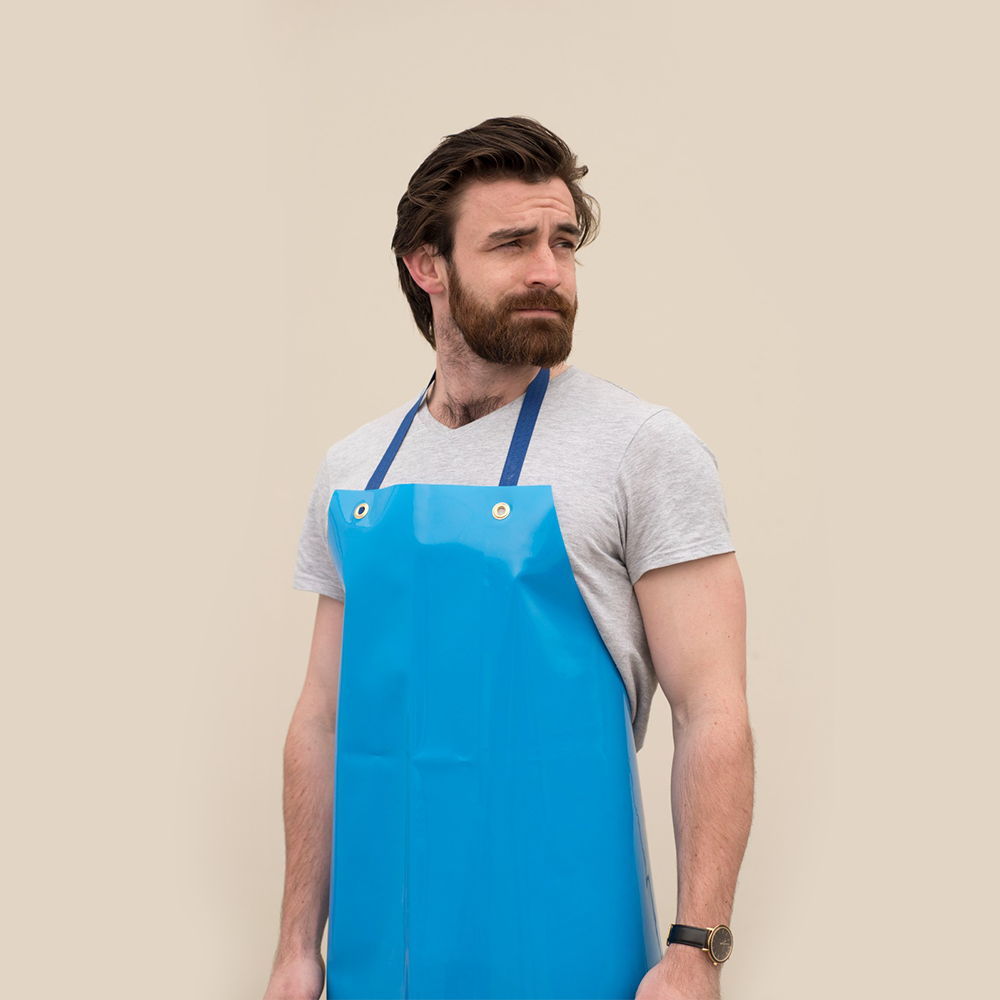
Think about aprons. No serious meat processor treats apron selection as an afterthought. You match TPU, PVC, nylon, canvas, or leather to the task, the fluid load, and the cleaning routine. Masks deserve the same thinking.
Here's what usually improves when sites move away from low-grade disposables:
- Fit stability: Better structure usually means less shifting during repetitive work.
- Daily comfort: Staff are more likely to keep the mask on when it's breathable and less irritating over a full shift.
- Site control: Managers can standardise issue, collection, washing, and replacement instead of relying on whatever comes out of a carton.
- Waste handling: You reduce the churn of used masks in bins, lockers, and break areas.
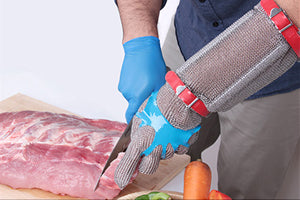
The main point is simple. In food processing, face covering isn't just about public-facing courtesy or box-ticking. It's part of the same professional standard as sleeve protection, waterproof aprons, gloves, and eye protection. If your current disposable masks can't survive the actual shift, they're not saving you money. They're creating drag.
Choosing the Right Mask Material for Your Crew
Material choice is where most buyers either fix the problem or bake in a new one. The wrong fabric feels acceptable on day one and frustrating by week two. The right one stands up to moisture, repeated cleaning, and long wear without turning into a soggy patch over the mouth.
The easiest way to judge mask material is to compare it to apron selection. A plain cotton mask is a bit like a canvas apron in a wet room. It can be comfortable, but it absorbs, holds moisture, and asks more of your wash process. A multi-layer synthetic mask is closer to the logic behind food-processing apron materials. It's built for repeat handling, practical cleaning, and rougher site conditions.
Material options for your crew

The first filter is construction. The World Health Organization and Health Canada recommendation for at least three layers of different materials gives buyers a useful baseline for cloth face masks in workplace settings.
A short comparison helps.
| Material | Where it fits | Main strength | Main trade-off |
|---|---|---|---|
| Polyester blend | Bulk issue across active teams | Durable and moisture-wicking | Can feel less soft against skin |
| Cotton/poly blend | General wear where comfort matters | Softer and easier for long wear | Needs tighter wash discipline |
| Nanofiber composite | Higher-demand users wanting lighter filtration-focused construction | Lightweight with stronger filtering intent | Higher upfront cost |
Not every team needs the same build. Front-of-house food staff, kitchen prep crews, boning room workers, and cleaners all stress PPE differently.
What works on a wet floor and what doesn't
For food environments, these are the decision points that matter most:
- Fluid handling: A mask should cope with droplets and damp air without quickly soaking through. In practical terms, synthetics usually hold up better than plain absorbent fabrics.
- Breathability over a shift: A material that feels fine for ten minutes may become sticky and hard to tolerate over repeated movement and talking.
- Wash durability: Reusable only makes sense if the mask survives regular laundering without warped shape, loose stitching, or tired straps.
- Drying speed: Slow-drying masks create stock bottlenecks. They also increase the risk that staff reuse something that isn't fully dry.
- Skin tolerance: If a worker gets rubbing around the nose or behind the ears, compliance drops fast.
A common mistake is buying on softness alone. Soft isn't enough in a room with splash, condensation, and repeated handling. Another mistake is buying heavy fabric because it feels substantial. Heavy can mean hotter, slower to dry, and more likely to stay damp between uses.
Cotton can work for lower-intensity use, but in wet processing areas it often behaves like the wrong apron in the wrong room.
One practical example. If your team works near wash-down hoses, chilled product, or fluid-heavy trimming lines, a synthetic multi-layer option will usually make more sense than a basic all-cotton covering. If your staff are in lighter hospitality or counter service roles, a softer blend may be easier to keep on correctly for longer.
A reusable face mask should match the station, not just the purchasing spreadsheet. Buy for the harshest normal conditions on your site. That's what stops masks becoming drawer stock that no one wants to wear.
Understanding Filtration Fit and Food Safety
A lot of confusion starts when people talk about filtration as if that's the whole story. It isn't. In food processing, fit often decides whether a mask works acceptably in practice or fails the moment a worker starts moving, talking, bending, or stepping into a cold room.
That doesn't mean filtration is irrelevant. It means you need honest expectations about what a reusable cloth-style mask can and cannot do.
Fit failure causes most of the trouble

Australian-context data published in PLOS ONE shows that reusable face masks with multi-layer synthetic materials recorded a Geometric Mean Total Inward Leakage Protection Factor of 1.78 to 2.26, while N95 respirators reached 165.7. The same analysis states that reusable masks provide moderate filtration and that face seal leakage remains the dominant failure mode. You can review that directly in the PLOS ONE analysis of total inward leakage and mask performance.
For a site manager, the practical reading is straightforward. A reusable face mask isn't a substitute for a properly selected respirator where the hazard requires respiratory protection at that level. If your task involves higher-risk airborne exposure, you need to step up to the correct class of RPE, such as the options discussed in this P3 respirator mask guide for half mask setups.
What causes trouble on site is usually simpler than the lab language suggests:
- Nose gaps: Staff get glasses fogging or upward air leakage.
- Loose chin area: Talking and bending break the seal.
- Side gaps at the cheeks: Ear loop tension isn't strong or balanced enough.
- Mask movement during work: Repeated head turns pull the fabric out of place.
In a cold-chain room, this becomes a safety issue, not just an irritation. Fogged lenses near knives, hooks, conveyors, or wet floors are a real operational problem.
If a mask seals badly, better fabric won't rescue it.
Food safety matters beyond breathing performance
In butcher shops and abattoirs, the role of a reusable face mask often includes source control and splash management as much as particle capture. That changes the buying criteria. You're looking for a mask that sits securely, handles moisture sensibly, and doesn't introduce its own contamination concerns.
Use these checks when approving a mask for site use:
| Check | Why it matters in food processing |
|---|---|
| Stable nose shaping | Reduces upward leakage and fogging |
| Secure chin coverage | Stops the mask riding up during speech and movement |
| Low-shed construction | Helps avoid loose fibres entering the work area |
| Wash-safe dyes and materials | Reduces concern about chemical transfer or breakdown |
| Compatibility with eyewear and visors | Prevents PPE conflict during real work |
A practical example from kitchens and prep rooms is steam exposure. A mask that looked fine in dry fitting can fail once staff are plating near heat or moving from a warm line to a cool room. You want a model that keeps shape, not one that collapses onto the lips each time the wearer inhales.
That's also why blanket advice doesn't help much. The right answer depends on the station. For general food handling and lower-risk tasks, a well-chosen reusable face mask can be sensible and manageable. For work that calls for higher respiratory protection, the cloth-style reusable option belongs underneath a wider PPE discussion, not at the centre of it.
Commercial Cleaning and Maintenance Protocols
A reusable mask program falls apart in the laundry room before it fails anywhere else. If masks are collected loosely, washed inconsistently, or handed back without inspection, the site loses control fast. The fix is a routine that's boring, repeatable, and easy for supervisors to audit.
Start with separation. Clean stock and used stock can't share bins, benches, or lockers. Once that line gets blurred, the whole program turns into guesswork.
Build a wash-dry-store routine

A simple commercial workflow works best:
-
Collection at shift end
Staff drop used masks into clearly labelled sealed containers. Don't allow loose masks in apron pockets, lunch bags, or vehicle dashboards. -
Controlled washing
The CDC cleaning guidance cited here recommends either warm soapy water or a bleach solution of five tablespoons of household bleach per gallon of tap water. The useful lesson for commercial sites is consistency. Use one approved method, document it, and train to it. -
Complete drying
Masks must be thoroughly dried before storage or reissue. Damp stock invites odour, discomfort, and hygiene problems.
After hand hygiene checks, teams can also support the wider cleaning routine with products such as rinse-free hand sanitiser used in food and industrial settings, but sanitiser doesn't replace proper mask laundering.
A short visual guide helps train mixed-language teams and new starters:
Retire masks before they become a liability
Many sources fail to emphasize that a mask doesn't have to be torn in half to be unserviceable. Small failures are enough to make it unreliable.
Train supervisors and workers to reject masks with any of these issues:
- Nose bridge damage: If it won't hold shape, fit usually goes with it.
- Stretched loops or ties: A loose mask won't stay stable through movement.
- Fabric thinning: Repeated washing can weaken structure, especially at fold lines.
- Permanent staining or odour: If laundering no longer returns the mask to acceptable condition, retire it.
- Curling edges or seam failure: These often create leakage points and discomfort.
Site advice: Give staff permission to bin a worn mask without a debate. If they think they'll be blamed for wastage, they'll keep using bad stock.
Storage matters as much as washing. Clean masks should be dried fully, checked, then stored in a clean enclosed area away from splash zones, chemical stores, and open traffic. Don't toss them into the same drawer as disposable gloves, pens, and blade packets. Once clean PPE gets treated like loose clutter, contamination creeps back in.
For larger facilities, assign responsibility by role. One person owns collection, another owns laundering sign-off, and supervisors own pre-shift issue checks. When everyone owns it vaguely, nobody owns it properly.
Meeting Compliance and Workplace Standards
Reusable masks only help with compliance when they're part of a controlled system. A random pile of washable masks bought online doesn't satisfy much on its own. A documented issue, cleaning, inspection, and replacement process is what turns them into usable workplace PPE.
For butcheries, abattoirs, and food manufacturers, that process usually sits across two fronts. One is worker protection under site safety obligations. The other is contamination control inside the food safety plan.
Masks sit inside a bigger control system
A face covering should fit the task, the risk profile, and the rest of the PPE stack. If staff need eye protection, face shields, sleeve protectors, aprons, gloves, and hearing protection in the same area, the mask can't interfere with those controls. It has to work alongside them.
That's why managers should write mask use into practical site rules rather than vague policy language. Spell out where masks are mandatory, where higher-grade respiratory protection is required, where clean stock is issued, and who signs off laundering. If your site runs a HACCP-based system, the mask program should sit with the same discipline as apron management, handwashing points, and contamination controls. A useful reference point for that wider framework is PSC's article on food safety excellence through HACCP in Australia.
A few compliance checks are worth formalising:
- Task matching: Don't issue a general reusable mask where the hazard assessment calls for respirator-grade protection.
- User training: Show staff how to put it on, remove it, and isolate used stock.
- Compatibility review: Test masks with eyewear, visors, and hearing PPE on the actual job.
- Written replacement criteria: Remove guesswork and supervisor-by-supervisor decisions.
Sustainability only counts when the program is controlled
There's also a business case beyond the immediate PPE line item. According to the Life Cycle Initiative comparison of single-use and reusable face masks, switching from single-use to reusable masks can reduce climate change impact by 70%, lowering CO2e from about 670 grams to 200 grams per functional unit of 20 uses, provided machine washing is done efficiently. The same source notes that machine washing with household laundry in full loads is strongly preferred over hand washing for environmental efficiency.
That matters because many food businesses are now expected to show practical waste reduction, not just talk about it. A reusable face mask program can support that goal, but only if masks are reused enough times, washed properly, and retired sensibly. If staff lose them, over-wash the wrong way, or discard them early because the model was uncomfortable from the start, the environmental benefit gets diluted.
Compliance and sustainability line up nicely when the mask is selected for its intended job and managed like every other serious PPE item on site.
Smart Procurement and Replacement Strategies
Buying reusable masks as a one-off order usually ends in uneven stock, staff complaints, and random substitutions. The better approach is to buy a program. That means deciding what each role needs, how many masks sit in rotation, who holds backup stock, and what triggers replacement.
The long-term direction of the market supports that thinking. Industry projections show the global washable and reusable mask market is expected to generate US$ 2.7 billion in 2024 and reach US$ 5.77 billion by 2034, with a CAGR of 7.9%, signalling an ongoing move toward sustainable PPE rather than a short-term spike. Those figures appear in the verified market data provided for this topic.
Buy a program not a carton
A practical rollout starts with stations, not catalogue pages. Counter staff, boning room staff, cleaners, dispatch teams, and kitchen teams shouldn't automatically get the same mask. Conditions are different, and replacement rates will be different too.
For most sites, the workable model is a rotation pool per worker. Enough masks need to be in circulation so one can be worn, others can be in wash or drying, and a spare is available if a unit gets contaminated mid-shift. The exact quantity depends on your laundering turnaround, but the rule is simple. If staff are ever forced to reuse a damp or uninspected mask because clean stock ran out, your pool is too small.
Use a checklist before placing the order:
| Procurement question | What the answer should tell you |
|---|---|
| Which stations are wet, cold, or splash-heavy? | Where synthetic multi-layer options make more sense |
| How quickly can used stock be washed and dried? | How many masks each worker needs in rotation |
| Are staff wearing glasses, visors, or hearing PPE? | Whether fit conflicts will ruin compliance |
| Who approves retirement of worn masks? | Whether replacement stays controlled or becomes ad hoc |
| Where is clean stock stored? | Whether your hygiene system will hold up in practice |
One factual example worth noting is product fit by use case. PSC TRADING Co PTY LTD supplies washable face covering options such as the LA Protects Mask and PSC Unity Face Mask, and also supplies reusable respiratory equipment like the MaxiGuard Half Mask Chemical Kit for chemical hazards. Those aren't interchangeable. They sit in different parts of a PPE decision.
Set replacement rules before stock gets messy
Replacement should be based on condition and role demand, not on somebody's memory of when a carton arrived. Once masks get mixed in lockers, glove bins, and personal bags, traceability disappears.
Use straightforward retirement triggers:
- Loss of fit: If it won't sit firmly on the nose and under the chin, pull it.
- Visible wear: Frayed seams, warped shape, or broken loops mean it's done.
- Persistent contamination: If staining or odour remains after approved cleaning, remove it.
- User rejection for genuine performance reasons: Repeated fogging, slippage, or collapse during inhalation usually means the design isn't working for that role.

Good procurement also means resisting false economy. The cheapest mask in the tender can become the expensive one once supervisors spend their time resolving complaints, replacing rejected stock, and chasing clean inventory. A reusable face mask earns its keep when staff will wear it, laundry can process it properly, and managers can inspect it in seconds.
The sites that get this right usually do three things well. They standardise by task, they keep stock rotation simple, and they remove worn masks early instead of trying to squeeze extra life out of gear that's already failing.
If your site is reviewing face protection for butcheries, abattoirs, kitchens, or food manufacturing, start with the conditions on your floor. Moisture, splash, cold rooms, eyewear, and laundering capacity should drive the decision. A reusable face mask works well when it's selected for the job and managed like serious PPE, not treated like a disposable with a longer sales pitch.
