


A butcher arrives before sunrise, pulls an apron from the hook and discovers the waist tie has already split. A chef starts service with a clean front panel, then spends the afternoon leaning over steam, sauces, grease and wet benches while the fabric slowly soaks through. By knock-off, the apron is stiff, stained and headed for the bin.
That isn't a uniform problem alone. In Australian kitchens, butcher rooms and small abattoirs, an apron sits inside a broader food-safety and workflow system. The right choice has to protect clothing, tolerate cleaning, stay comfortable through a shift and support sensible separation between food-handling areas and the rest of the workplace. The wrong one creates avoidable laundry, replacement and contamination-control problems.
Table of Contents
- Why the Right Chef Apron Matters on the Job
- What Australian Food Safety Rules Expect from an Apron
- Choosing the Right Apron Material for Australian Kitchens and Butcher Rooms
- Sizing, Coverage and Fastening Systems That Fit
- Cleaning and Maintenance Habits That Extend Apron Life
- Branding, Customisation and Ordering for Australian Businesses
- Procurement Checklist and the Case for Australian-Made Aprons
Why the Right Chef Apron Matters on the Job
A line cook can identify a poor apron before the first service rush ends. A short cotton bib may look neat at the pass, yet leave clothing exposed when the wearer bends over a sink or carries a tray from a wet prep bench. A stiff waterproof apron offers stronger splash protection, but can rub the neck and restrict movement through a busy service. The decision is a workflow trade-off, not a style preference.
In a butcher shop, the priorities change. Raw-meat handling calls for a barrier that can be cleaned promptly, resists fluid absorption and comes off before the worker leaves the food-handling area. Waxed canvas may suit a front-of-house baker, while a wet cutting room needs coverage and cleanability over a rugged appearance.

The shift exposes weak design quickly
Cracked edges, frayed ties and broken hooks are obvious failures. More subtle faults include a panel that folds into a difficult-to-clean crease, straps that hold moisture, or fabric that turns rigid after repeated contact with cold rooms and cleaning chemicals.
Fastening affects hygiene as well as comfort. If an apron takes too long to remove, or catches on equipment, staff may keep wearing it during breaks or outside the prep area. Australian food-safety guidance expects food handlers to wear clean aprons and other outer protective clothing in food-handling areas, then remove those garments for toilet visits and other breaks. The FSANZ food safety standard places apron use within that wider hygiene framework.
Practical rule: Choose an apron workers can put on, remove and clean without fighting the garment.
A poor choice creates more than another purchasing line. It can mean extra change-outs, damaged laundry equipment, uncomfortable staff, poor storage and uneven hygiene between stations. Those costs matter in kitchens, butcher rooms and small abattoirs, where wash-down routines and staff movement expose weak materials quickly.
A well-fitted apron will not control every food-safety risk. It does give the team a dependable, cleanable barrier suited to the station, the cleaning regime and the way protective clothing must be changed during a shift. That connection between garment design, compliance and daily workflow should guide procurement more than marketing claims about toughness or heritage fabric.
What Australian Food Safety Rules Expect from an Apron
A clean apron is part of the food-safety system, not a branded accessory. Australian guidance treats it as outer protective clothing. Food handlers should wear clean aprons and other protective garments in food-handling areas, then remove them for toilet visits and other breaks. This separation reduces the chance of contamination moving from one area into another.
Aprons and overalls should be used where possible in food-handling areas. Waterproof coverings are required in some contamination-control situations, so the correct garment depends on the station. A chef plating ready-to-eat food faces a different exposure profile from a worker washing down a raw-meat room.

Apply the baseline to the actual station
Assess the food handled first. Then check fluid exposure, the cleaning process and how often staff must change or remove the garment.
- Raw and ready-to-eat work: Choose an apron system that helps separate street clothing from food-contact zones, particularly where one venue handles both raw and ready-to-eat food.
- Wet or wash-down work: Use a waterproof covering when splash and fluid transfer make a textile apron unsuitable.
- Breaks and toilets: Make removal part of the routine. A fastening system that releases quickly is easier for staff to manage consistently.
- Glove changes: Treat the apron as one part of contamination prevention. The standard reinforces one-task-only use for disposable gloves and handwashing between glove changes. A clean apron cannot compensate for poor hand hygiene.
Meat-processing work brings more specific requirements. Australian meat-processing guidance calls for washable or disposable protective clothing, clean outer clothing and complete coverage of wounds with a detectable waterproof covering. Aprons and related equipment must not enter toilet areas, and they should be cleaned in a dedicated facility, as set out in the Australian meat-processing guidance.
Procurement should reflect those controls. Hooks, straps and buckles need to tolerate repeated cleaning without trapping residue, corroding or fraying. In a high-exposure room, a disposable or fast-cleaning waterproof apron may be more practical than heavy fabric that takes longer to clean and dry. Textile aprons can suit lower-splash hospitality work when the venue's cleaning process keeps them hygienic.
For a wider operational view, read PSC Trading's food-safety and HACCP discussion. The practical point is straightforward: apron selection should fit the site's hazard controls rather than sit apart from them.
FSANZ maintains Food Safety Standards Chapter 3, published and maintained in 2025. Protective clothing therefore remains relevant across commercial kitchens, butcher shops and food-processing workplaces.
A short explainer can help teams reinforce the connection between clothing, handling and cleaning:
Choosing the Right Apron Material for Australian Kitchens and Butcher Rooms
Material choice should follow the job, not a colour board. A cold-room butcher, a café baker and a wash-down operator need different balances of waterproofing, flexibility, breathability and maintenance.
| Material | Best For | Waterproofing | Cold-Room Performance | Cleaning Method |
|---|---|---|---|---|
| TPU | Wet benches, raw-meat handling and wash-down work | Strong waterproof barrier | Flexible and supple | Wipe, rinse and clean according to site procedure |
| PVC | Heavy-duty wet work and exposed processing areas | Strong waterproof barrier | Works well but can become stiff | Wipe, rinse and inspect for cracking |
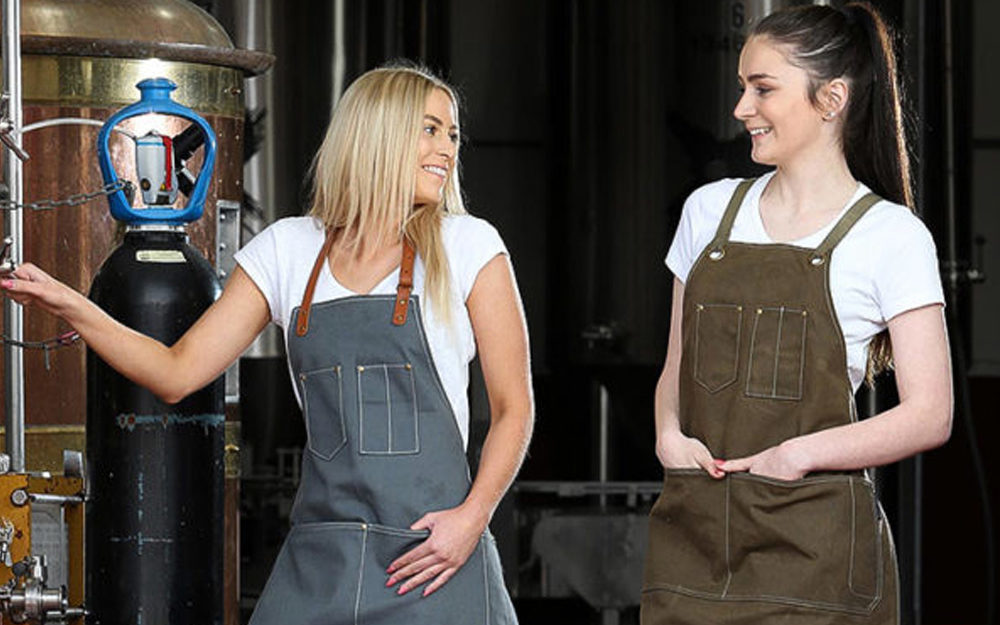
| Waxed canvas | Hospitality, baking and lower-splash work | Water-resistant rather than a full wet barrier | Comfortable, though less suited to sustained wet exposure | Brush, spot-clean or launder only as the care instructions allow |
| Leather | Tool belts, knife work and abrasion-heavy tasks | Limited as a waterproof barrier | Durable, but can become rigid | Spot-clean and condition, avoid soaking |
| Durable nylon | Light hospitality, mobile service and quick change-outs | Depends on coating and construction | Lightweight and practical | Wash using the maker's instructions and dry thoroughly |
TPU and PVC for wet work
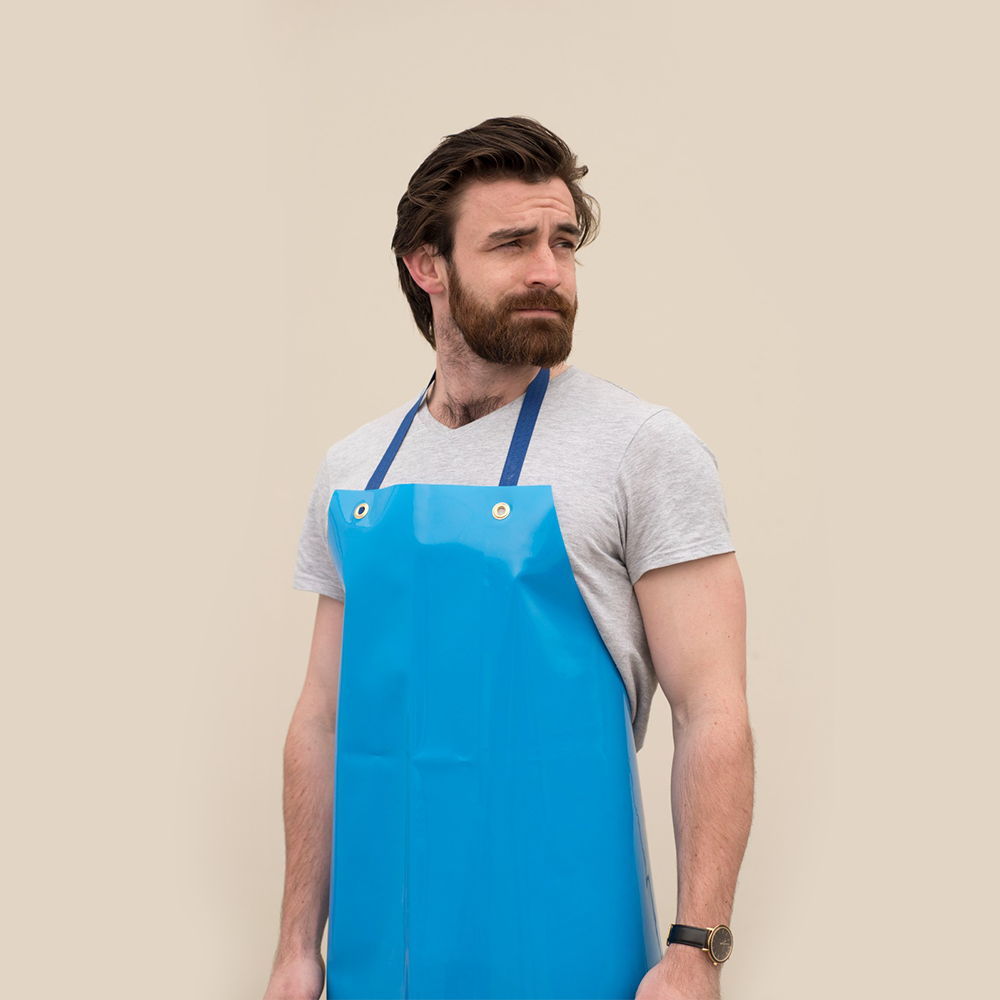
TPU is often the more comfortable modern option for food-processing work. It can stay flexible in a cold room, resists soak-through and cleans quickly after a shift. That makes it a sensible choice for a butcher leaning over a wet bench or moving between cutting and wash-down duties.
PVC remains a practical workhorse. It offers a waterproof surface and suits demanding wet areas, but buyers need to inspect how the particular garment behaves in cold conditions and around cleaning chemicals. Repeated stress can expose weakness at seams, edges and fastening points. The TPU versus PVC comparison for Australian butchers is useful when the decision comes down to flexibility, durability and cleaning rather than appearance.
Canvas, leather and nylon
Waxed canvas earns its place in restaurants, bakeries and front-of-house settings because it breathes better and develops a practical workwear feel. It isn't the material I'd nominate for a raw-meat wash-down zone, where absorbed contamination and drying time create extra work.
Leather handles abrasion well. It can suit a butcher who carries tools, works against rough surfaces or needs protection around repeated knife and equipment contact. It shouldn't be treated as a substitute for a waterproof food-processing apron, and soaking it during cleaning will shorten its useful life.
Durable nylon sits between lightweight hospitality fabric and heavier protective materials. It suits a café worker who needs a quick-drying apron and modest splash protection, but buyers must check the coating and construction rather than assuming every nylon apron is waterproof.
Sustainability claims need the same practical scrutiny. Australian hospitality coverage promotes recycled-fibre and low-carbon uniform ranges, including aprons made with recycled bottles, but that label doesn't prove suitability for a meat room. The sustainable uniform coverage highlights the marketing direction, while the procurement question remains whether the garment survives waterproofing demands, frequent cleaning and contamination controls.
A recycled fibre can be a sensible choice for a café apron. It isn't automatically a sensible choice for an abattoir apron.
Ask for wash-performance information, evidence for the intended task and clear limits on use. If a supplier can't explain what happens after repeated cleaning, the sustainability claim is incomplete.
Sizing, Coverage and Fastening Systems That Fit
Apron sizing should follow posture, reach and exposure, not only shirt size. A panel that looks adequate while standing can leave the thighs and lower uniform exposed when a worker leans across a boning bench.
A hospitality bib around 700 x 900 mm suits many front-of-house and kitchen tasks. A butcher-grade panel around 900 x 1200 mm provides more coverage for workers who bend, reach and handle wet product. The supplied sizing visual shows a butcher or chef-grade size of 900 x 1100 mm, so confirm the product's exact dimensions before ordering and match them to the workflow.

Coverage is a movement decision
Taller workers, and anyone leaning over a band saw or boning bench, generally need extra length without a narrow cut that restricts movement. Check that the apron covers the front of the torso, extends far enough down the legs and stays clear of handles or moving equipment.
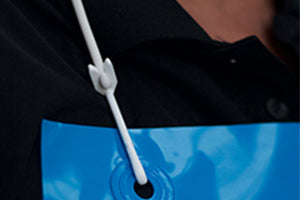
Fastening affects both fit and workflow. Classic apron hooks allow quick change-outs and remain familiar to many butcher teams. Flat hooks sit neatly against the body, while flat straps and buckle ties provide adjustment for different workers. Cord-and-hook sets can feel comfortable and are easy to replace, provided the cord resists fraying and contamination.
| Workflow | Suitable fastening approach | What to inspect |
|---|---|---|
| Fast change-outs between food tasks | Hook system | Release speed, edge strength and cleanability |
| Mixed staff sizes | Flat strap and buckle | Adjustment range, buckle durability and comfort |
| Long hospitality shifts | Soft cord and hook | Shoulder pressure, knot security and fraying |
| High-wash processing | Simple, cleanable hardware | Corrosion resistance and residue-free construction |
Choose hardware that withstands commercial laundering without corroding. Stitched straps need resistance to fraying, while bulky buckles can create pressure points during repeated bending. A fastening may look strong in a catalogue yet fail where the strap joins the apron. Inspect that connection when samples arrive, and check whether the fastening can be cleaned without trapping residue. For Australian food businesses, that small join can affect replacement frequency, staff comfort and the reliability of the hygiene routine.
Cleaning and Maintenance Habits That Extend Apron Life
A clean apron starts with a defined end-of-shift routine. Staff shouldn't leave a wet, contaminated garment crumpled in a tub or on the floor, because folds slow drying and make inspection harder.
Waterproof TPU and PVC aprons usually suit a wipe-down and rinse after use, followed by the site's approved cleaning process. Pay attention to seams, neck areas, straps and the underside of buckles. Those points collect residue even when the main panel looks clean.
Match the cleaning method to the material
Waxed canvas and nylon need care instructions that match the fabric and any coating. Use the approved machine-wash process, detergent and temperature for the specific garment. Excessive heat or unsuitable chemicals can damage coatings, shrink fabric or weaken stitching.
Leather needs a different routine. Brush off dry residue, spot-clean the affected area and use suitable leather care when required. Don't soak a leather apron or send it through a standard wash cycle without clear manufacturer approval.
Inspection habit: Clean the apron, then inspect it. Cleaning can reveal cracks, splits and weakened fastening points that were hidden under grease or residue.
Storage also affects hygiene. Hang clean aprons on designated hooks, keep used garments separate and avoid folding waterproof panels into sharp creases. Flat straps and buckles should be stored so they dry fully and don't press damp hardware into the apron surface.
Workers should remove aprons for toilet visits and other breaks, consistent with the Australian food-handling guidance cited earlier. That rule works best when the workplace provides a clear clean-garment area and a separate used-garment collection point.
A practical rotation system includes:
- Clean stock: Keep ready-to-use aprons away from used garments and wet floors.
- Station separation: Assign garment types to the tasks they suit, especially in raw-meat and ready-to-eat areas.
- Damage removal: Retire an apron with a crack, split, broken tie or soaked-through panel.
- Replacement records: Keep a simple replacement log so supervisors can spot recurring failures and answer audit questions.
Branding, Customisation and Ordering for Australian Businesses
A small hospitality group can easily order the wrong apron in the name of consistency. One site chooses a printed cotton canvas bib, another needs a waterproof TPU garment, and staff moving between venues end up with a brand that looks unified but performs unevenly.
A better approach starts by separating appearance from task assignment. South Coast Kitchen, as a representative multi-site operator, might use a printed canvas apron for front-of-house, a plain waterproof apron for wet prep and a consistent colour family across both. The logo remains visible where customers see it, while the back-of-house garment is selected for cleaning and coverage.

Choose decoration that suits the surface
Screen printing can work well on cotton and canvas, particularly for a bold front-of-house mark. Heat-pressed logos may suit coated materials such as TPU or PVC, but the supplier should confirm adhesion, cleaning tolerance and placement before a full run.
Ask suppliers these questions before approving artwork:
- Minimum order: Can the supplier produce the quantity required for each site without leaving excess stock?
- Lead time: Will the run arrive before a menu launch, opening or rebrand?
- Colour control: Can the same colour and logo treatment be repeated across future orders?
- Garment division: Are branded hospitality aprons kept separate from protective processing aprons?
- Freight: Will cartons, storage space and delivery timing work across Australian locations?
For businesses ordering internationally, catalogue currency options may simplify browsing, but they don't remove the need to check freight, delivery terms and after-sales communication. Australian buyers should also plan custom runs around genuine operational milestones rather than ordering a large batch every time a seasonal menu changes.
For practical design considerations, see personalised aprons for Australian businesses. Keep branding readable, but don't place decoration where it interferes with cleaning, fastening or the protective area.
Procurement Checklist and the Case for Australian-Made Aprons
A supplier conversation should end with answers, not adjectives. Use this checklist before approving chef aprons for an Australian kitchen, butcher shop or processing site:
- Task fit: Is the apron intended for hospitality splash, raw-meat handling or wash-down work?
- Material: Does the fabric or coating provide the required barrier without creating avoidable cleaning problems?
- Compliance: Does the garment support FSANZ expectations and any applicable meat-processing requirements?
- Coverage: Does the panel protect the torso and lower uniform during the worker's actual posture?
- Fastening: Can staff remove it quickly, and will the hardware survive repeated cleaning?
- Maintenance: Is the cleaning method documented for the material?
- Branding: Will printing or embroidery remain suitable for the intended cleaning routine?
- Packaging: Can the supplier explain whether shipping materials are reusable, recyclable or compostable?
- Replacement: What defects trigger retirement, and how will clean and used stock be controlled?
Australian-made production can make those conversations more direct. Local manufacturing may support clearer communication about custom dimensions, materials and fastening systems, while domestic supply can simplify lead-time discussions and accountability under Australian consumer law. It may also reduce the freight burden associated with bulk imports, although buyers should compare the complete supply arrangement rather than assume origin alone guarantees better performance.
The historical foundation is substantial. Australian textile manufacture traces back to first settlement in 1788, with George Bond beginning cotton-yarn spinning in Sydney in 1923, followed by Airedale Weaving Mills weaving cotton tweeds and engineering textiles in Melbourne in 1926, according to the University of Melbourne textile-manufacture history. Aprons also became a familiar part of Australian domestic life during the 1940s and 1950s, as described by an Australian historical source.
Packaging deserves a place on the purchase order. Australia's packaging reform is moving towards mandatory targets and design standards, and the government says industry will be responsible for packaging placed on the market, as outlined in the Australian Government packaging-design guidance. The Australian Packaging Covenant Organisation guidelines) state the National Packaging Target is for all packaging to be reusable, recyclable or compostable by 2025. Food businesses should also use FSANZ food-packaging guidance when evaluating packaging around food operations.
PSC TRADING Co PTY LTD manufactures and distributes industrial and food-processing supplies, including TPU, PVC, waxed canvas and other work aprons, alongside PPE and packaging options. Treat that catalogue as one supplier option, then assess every garment against the checklist above.
If you're sourcing chef aprons in Australia, list each work area, record the material and coverage required, request samples, and test the fastening and cleaning routine before placing a larger order. Speak with a supplier such as PSC TRADING Co PTY LTD about task-specific apron options, branding and packaging, then approve only the garments that your staff can wear, remove and maintain correctly through a full Australian shift.
