



You're probably dealing with one of two situations right now. Either your knives are scattered between a bench drawer, a plastic tub, and a tired old roll that never really dries out, or you're trying to standardise gear across a team that works in blood, fat, steam, and constant wash-down. In both cases, the bag matters more than is often acknowledged.
A knife bag isn't just a way to carry blades from one site to another. In a butcher shop or abattoir, it sits right in the middle of safety, hygiene, tool life, and how smoothly a shift runs. A bag that works for a city chef walking into a service kitchen can be the wrong bit of kit for a boner, slicer, or floor supervisor moving through wet processing areas.
Most of the market still talks about handsome leather rolls, brass buckles, and chef presentation. That's fine for front-of-house image or dry kitchen use. It doesn't answer what happens when the bag gets splashed, wiped, stacked, dragged, and cleaned over and over in a meat plant.
Table of Contents
- Why Your Knife Bag is as Important as Your Knives
- Understanding the Different Types of Knife Bags
- Deconstructing a Professional Knife Bag
- A Selection Checklist for Your Specific Role
- Upholding Safety and Hygiene Standards
- Best Practices for Storage and Transport
- Cleaning Maintenance and Commercial Considerations
Why Your Knife Bag is as Important as Your Knives
The day usually starts before anyone talks about equipment. A butcher opens, pulls on the apron, checks the edge on a breaking knife, and gets moving. If that knife comes out of a damp cloth roll with a nicked edge, or if the handle picked up grime from another tool rubbing against it, the problem starts before the first cut.
That's why experienced operators stop treating culinary knife bags as an accessory. They're part of the working setup. A decent bag protects the edge, keeps tools organised, separates clean from dirty, and reduces the chances of someone reaching into the wrong pocket and catching a blade.

The commercial side matters too. The Australian knife market generated USD 66.7 million in 2021 and is projected to reach USD 111.1 million by 2030. That growth is tied to rising demand for professional-grade knives, and it tells you something practical. More businesses are spending serious money on blades, which means storage can't be an afterthought.
What goes wrong with the wrong bag
A cheap department-store roll usually fails in predictable ways:
- Edges knock together: Loose storage dulls blades faster and increases the chance of tip damage.
- Moisture stays trapped: Fabric that doesn't dry properly becomes a hygiene problem in wet work.
- Access gets messy: When every tool sits in one flap or open sleeve, staff waste time finding the right knife.
- The bag becomes a compliance headache: If it absorbs fluids or can't be cleaned properly, it doesn't belong near a professional food operation.
Practical rule: If the bag can't protect the blade, clean up properly, and survive daily handling, it's not professional gear. It's just luggage.
A sharp knife gets attention because everyone can see it. A proper bag often gets ignored until something goes wrong. On a meat-processing floor, that's the wrong way around.
Understanding the Different Types of Knife Bags
Not all culinary knife bags are built for the same job. The confusion starts because people use one term for everything. Roll, case, pouch, backpack. They all store knives, but they solve different problems.

Knife roll
Think of a knife roll like a mechanic's tool roll. It keeps a core set organised, folds up compactly, and works well when you know exactly which knives you carry every day.
For chefs, a roll makes sense when they move between venues or classes. For butchers, a roll can work if the material suits wet use and the internal slots hold each blade properly. A practical example is this professional butcher knife roll pouch with belt loop and multiple storage pockets, which is designed around quick tool access rather than presentation.
Briefcase style bag
A briefcase style bag is the structured option. It's less flexible, but that's the point. It protects a larger kit better, stops blades shifting around, and usually gives you a neater layout for extra tools.
This style suits supervisors, travelling trainers, and chefs who carry more than knives. A professional chef knife roll can also carry scissors, peelers, meat thermometers, graters, and tweezers in one unit, as noted by Kitchen Warehouse's guide to knife bags and knife rolls. If your kit includes measuring and prep tools as well as blades, structure helps.
Knife pouch
A knife pouch is the quick-access option. It's the holster, not the suitcase. On a butcher belt, it's there to keep the knife where the worker needs it during the shift.
That makes pouches useful on the floor, but they aren't the whole answer for transport or long-term storage. You still need secure separation and protection when the tools are off the body.
Backpack or shoulder bag
A backpack style bag is built for mobility. It's the easiest option if someone travels with a broad set of tools and needs both hands free. Hospitality staff tend to get more value from this style than abattoir workers because commuting matters more and fluid exposure is usually lower.
Knife bag size also matters. In Australia, cases are sold from small units that hold 5 knives to larger cases designed for up to 20 knives, according to Club Chef Store's overview of knife case sizes. That range is useful, but capacity alone doesn't tell you whether the bag is fit for butcher work.
A bag that holds twenty knives but can't be washed properly is still the wrong bag.
Deconstructing a Professional Knife Bag
A professional bag isn't defined by how it looks hanging off a shoulder. It's defined by what happens after months of handling, cleaning, loading, and transport. It is during this time that most stylish products get separated from working products.

Materials that hold up on the floor
The first question is material. In dry hospitality settings, waxed canvas or leather may survive well enough if the user looks after it. In meat-processing, the calculation changes fast.
Culinary knife bags built for Australian butcher and abattoir use often rely on padded 600 Denier fabric or waxed canvas with individual foam-lined slots to prevent blade-edge micro-fractures from transport vibration, as outlined in this AU knife bag product reference. That detail matters. Tiny edge damage often starts in storage and transport, not on the block.
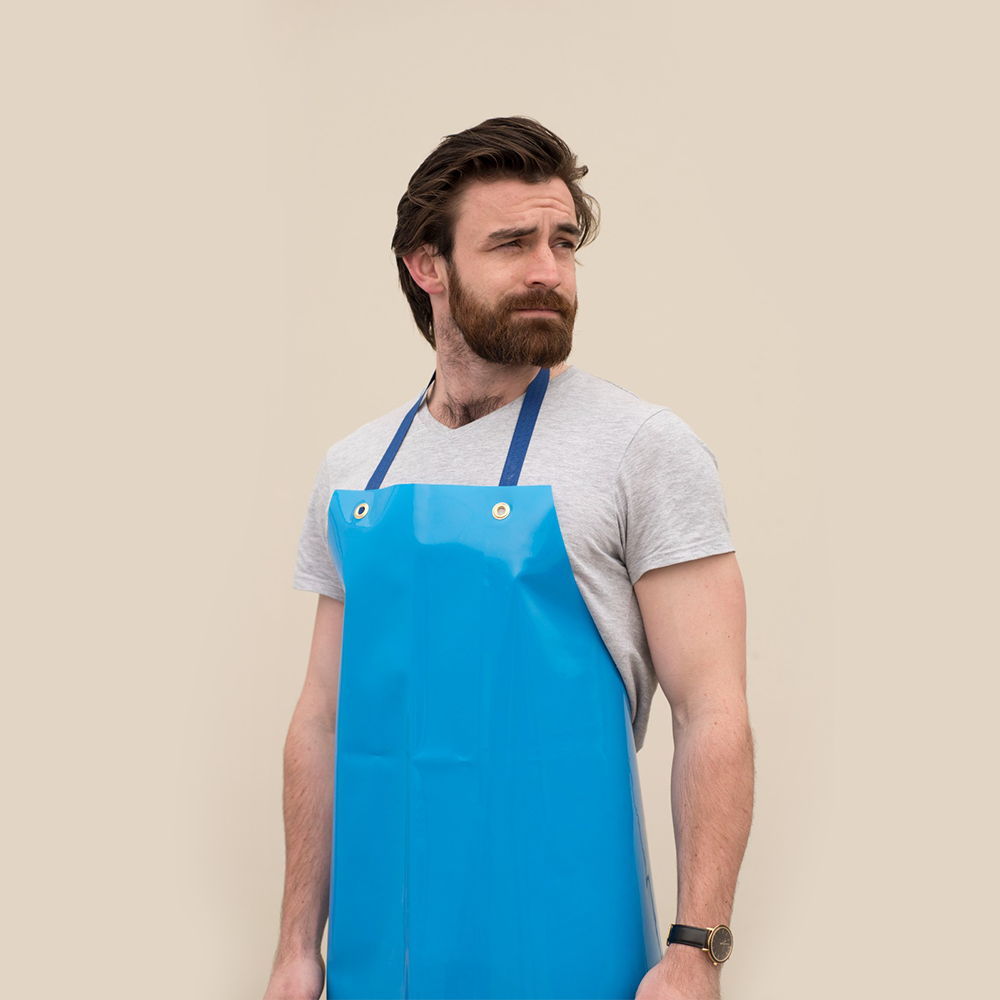
For wet areas, though, fabric choice needs a harder look. TPU and PVC make more sense when the bag is likely to meet blood, rinse water, fat, and repeated wipe-down. Suppliers who work in aprons and protective gear already know this. The same reasons that make TPU and PVC useful in waterproof aprons apply to knife storage. They resist soak-through and they're easier to sanitise.
What works better in meat processing
- TPU or PVC surfaces: Better suited to wet, dirty handling and easier wipe-down.
- Dense woven outer fabric with protected lining: Useful where abrasion matters but full waterproof construction isn't required.
- Leather in wet rooms: Looks good. Usually the wrong choice if the bag lives in wash-down conditions.
Slot design and internal protection
A proper bag isolates each blade. That's not just about tidiness. It stops knives from rubbing edge to edge and reduces the risk of one contaminated tool touching another.
Foam-lined individual slots are one of the clearest signs that the maker understands tool protection. The knife sits stable. The edge doesn't chatter around in transit. The user can also spot missing tools faster because each knife has a home.
A poor internal layout usually gives itself away quickly:
- Pockets are too shallow: tips push into seams
- Compartments are shared: handles tangle and blades touch
- No reinforcement at stress points: slots tear where the tip loads the fabric
- No retention: knives slide upward when the bag is carried vertically
This video shows the sort of design thinking buyers should look at closely before choosing a bag.
Closures and carry points
Closures don't need to be fancy. They need to stay shut, clean up without fuss, and keep working after repeated use. Zips should run cleanly and be stitched into reinforced panels. Buckles and clips should hold without shifting. Handles and shoulder points should be anchored so the load doesn't rip the outer shell over time.
On a meat site, failure usually starts at the seams, corners, zip ends, and carry points. That's where you inspect first.
The carry method should match the job. A belt-mounted pouch suits active line work. A hand-carried case suits secure transport. A shoulder bag helps if someone is moving a full kit between locations, but only if the bag keeps blades from moving inside.
A Selection Checklist for Your Specific Role
The mistake buyers make is choosing by appearance first and worksite second. That's why so many knife bags look right online and feel wrong after a week on the floor.
The market gap is obvious. Existing content overemphasises leather knife rolls for urban chefs but underserves meat-processing users who need waterproof TPU or PVC solutions for wet, wash-down environments. If you buy as though every workplace is a dry prep kitchen, you'll overspend on the wrong features and miss the critical ones.

What suits a local butcher
A local butcher usually needs a bag that can move between storage, bench area, and occasional transport. The key requirement is easy cleaning without sacrificing access. If the knives come in and out constantly through the day, rigid structure matters less than secure slots and surfaces that don't hang onto moisture.
A practical setup often looks like this:
- Primary need: Hygiene and quick access
- Better bag type: Washable roll or compact structured case
- Better material: TPU, PVC, or other wipe-clean materials
- Avoid: Decorative leather and absorbent linings
What an abattoir team needs
An abattoir or meatpacking facility is harder on gear. Bags get exposed to fluids, stacking, rough handling, and repeated cleaning. Procurement should think in terms of standardisation and replacement cycles, not fashion.
For this role, I'd choose secure compartmentalisation, reinforced stitching, and materials that can take repeated sanitation. If a bag can't be cleaned easily and checked quickly by supervisors, it slows everyone down.
Where chefs and students differ
Hospitality chefs still need protection and organisation, but their transport pattern is different. They're more likely to carry mixed tools, commute with the bag, and value lighter weight. Culinary students usually need durability at a sensible cost and enough space for a starter kit, not a huge setup.
Pastry staff are another category again. Their tools are often more delicate and oddly shaped, so internal layout can matter more than brute protection.
A simple role-based checklist
| Role | Primary Need | Recommended Bag Type | Recommended Material |
|---|---|---|---|
| Restaurant Chef | Portability and mixed-tool organisation | Roll or backpack-style bag | Durable canvas or wipe-clean synthetic |
| Culinary Student | Value, durability, room for a starter set | Basic roll or compact case | Hard-wearing synthetic or canvas |
| Butcher/Abattoir Worker | Hygiene, rugged protection, easy cleaning | Structured case, washable roll, or belt pouch system | TPU, PVC, or other easy-clean waterproof material |
| Pastry Chef | Organisation for smaller delicate tools | Slim case or organiser-style bag | Cleanable synthetic with divided compartments |
Buy for the cleaning method, the environment, and the shift pattern. Looks come after that.
A serious home butcher sits somewhere between chef and butcher use. The volume may be lower, but the same logic applies. If the work includes breaking down carcasses, trimming primals, or processing game, choose the material and slot layout you'd trust in a commercial setting.
Upholding Safety and Hygiene Standards
In meat processing, bag choice ties directly to food safety. The issue isn't just where the knives sit. It's what the bag absorbs, what it traps, and whether staff can clean it properly between uses.
Why wash-down changes everything
Butcher tools go through far more cleaning stress than most restaurant kits. Australian industry data indicates butcher tools undergo 300% more cleaning cycles annually than restaurant knives, yet 70% of marketed knife bags fail AU-specific durability testing after 50 wash cycles, and knife bag failures contributed to 18% of minor cuts in abattoirs. Those numbers explain why a tidy-looking bag can still be a bad operational choice.
A wet floor changes failure points. Seams soften. Pocket edges deform. Non-sealed compartments let knives shift. If the internal fabric absorbs residue, the bag becomes part of the contamination risk instead of part of the control.
What to look for in a compliant setup
A site that takes hygiene seriously should assess knife bags the same way it assesses aprons, gloves, and other handled equipment. The checklist is practical:
- Can the surface be cleaned quickly? If staff need special treatment or long drying times, the bag won't be maintained properly.
- Do compartments isolate each tool? Separation reduces cross-contact and makes visual checks easier.
- Will the bag hold shape during repeated washing? Bags that sag after cleaning stop retaining knives safely.
- Are seams and closures easy to inspect? Hidden grime traps are a problem.
For businesses tightening procedures, it helps to align knife storage with broader food safety and HACCP practices used in Australian operations. The bag should support your hygiene system, not sit outside it.
A knife bag belongs in the same conversation as sanitising routines, PPE, and tool control. If it isn't part of the hygiene plan, it will become part of the hygiene problem.
Best Practices for Storage and Transport
A strong bag can still be used badly. Most transport issues come from simple handling mistakes. Knives get inserted edge-first into the wrong slot, tips punch through worn pockets, or the whole kit gets carried loose when it should be locked down.
How to pack knives properly
Use the same method every time so nobody has to guess.
- Clean first: Don't store a knife with residue on the blade or handle.
- Dry properly: Moisture trapped in a pocket causes trouble even in better materials.
- Match knife to slot: Long blades need full-depth pockets. Don't force a boning knife into a short compartment.
- Keep edges away from seam stress: Insert so the blade sits where the bag is reinforced.
- Check retention before lifting: Turn the bag slightly and make sure nothing shifts.
If the bag carries extras like shears, tweezers, or a thermometer, keep those in dedicated sleeves. Loose accessories are one of the fastest ways to mark blades and wear out linings.
Transport rules that matter in Australia
For public transport in Australia, the rule is stricter than many people expect. Chef knife kits must be kept inside a lockable hard case or toolbox with secure locking mechanisms and foam inserts to prevent blade movement. Open knife rolls or cloth wraps without locking features are explicitly prohibited.
That means a soft roll may be suitable inside a workplace or vehicle setup, but it isn't enough on its own for public transport. If staff travel with knives, issue guidance in writing so nobody assumes the usual roll is compliant.
Knives in checked luggage are a separate travel issue. Commercial teams moving interstate should confirm airline and customs requirements before travel rather than relying on normal site habits.
Cleaning Maintenance and Commercial Considerations
Maintenance starts with matching the method to the material. TPU and PVC bags usually reward simple habits. Wipe down after use, wash according to site procedure, and hang them so water drains and seams dry fully. Waxed canvas needs more care. Leather needs even more, which is one reason it often makes little sense in meat-processing work.
For managers buying across a team, consistency matters more than individual preference. Standard bag types make training easier, visual checks faster, and replacement simpler. It also helps if the bag format works alongside the aprons, belts, and pouches already used on site.
Commercially, there's nothing wrong with asking for logo application or colour coding if it helps identify teams or departments. Just don't let branding override function. The order of importance should stay the same: cleanability, retention, durability, then appearance.
Knife care also sits alongside bag care. A worn edge increases handling risk no matter how good the storage is. If staff are carrying sharpening gear, practical references like this guide to keeping knives razor sharp with an F. Dick 12" regular cut sharpening steel are useful for keeping the whole kit serviceable.
A professional knife bag should earn its place on the floor. If it protects the blade, cleans up fast, and survives the conditions your team works in, it's doing the job. If it only looks good in product photos, leave it for someone working a dry pass in a city kitchen.
If you're selecting culinary knife bags for butcher shops, abattoirs, or food-processing teams, choose the bag the same way you'd choose an apron or a piece of PPE. Start with the environment. Then the cleaning routine. Then the way the tools are carried. That's what holds up in real work.
