

If you're weighing carcasses off an overhead rail with a scale that fogs up, drifts after wash-down, or can't hold a stable reading long enough to ticket the product, you've already felt the problem. The scale stops being a simple tool and starts slowing the room down. In an abattoir or busy butcher shop, that affects hygiene, throughput, billing, and compliance at the same time.
That's why buying hanging weighing scales on price alone usually backfires. In meat processing, the right unit has to survive wet work, give a readable result fast, and stand up to legal scrutiny when that weight is used for trade. Generic buying guides rarely deal with that intersection. On the floor, that's the part that matters.
Table of Contents
- Why Hanging Scales Dominate the Meat Industry
- Mechanical vs Digital A Critical Decision
- Must-Have Features for Abattoir and Butcher Use
- Installation Calibration and Legal Compliance
- Daily Maintenance and HACCP Sanitation
- Choosing the Right Hanging Scale A Buyers Checklist
Why Hanging Scales Dominate the Meat Industry
A platform scale makes sense when product comes to the scale. Meat plants usually work the other way around. Product is already suspended, moving, dripping, and handled in a controlled flow. In that environment, hanging weighing scales effectively solve the problem because they let staff weigh the item where it already sits in the process.
In the Australian meat processing sector, hanging scales are used because they fit the workflow of carcasses travelling on overhead rails in wet wash-down areas. The design removes the bottleneck of trying to transfer large suspended product onto a floor unit and supports hygiene and efficiency while protecting carcass identification and billing integrity, as outlined in this hanging scale overview for Australian operators.
A better fit for carcass flow
Take a lamb carcass moving down the rail. If the operator has to stop, lower it, shift it to a platform, record the weight, then rehang it, the line loses rhythm and the risk of mess rises straight away. A hanging unit lets the operator hook in, settle the load, capture the weight, and move on.
That matters for three day-to-day reasons:
- Hygiene control: Product stays suspended instead of being moved across extra surfaces.
- Floor space: You don't give up room in already crowded processing zones.
- Line continuity: Staff weigh and identify product without breaking the handling sequence.
Practical rule: If the product is already hanging, the scale should usually hang too.
Weight is operational and commercial
In meat processing, weight isn't only a number for stock records. It ties into carcass identification, dispatch, invoicing, and customer confidence. If the reading is slow, hard to see, or inconsistent, the problem shows up far beyond the scale itself.
A lot of buyers underestimate how much a poor scale choice affects labour. If two workers have to recheck a carcass because the display bounces around, that's wasted handling. If the unit doesn't suit a wet room and starts failing after repeated cleaning, the downtime arrives at the worst possible time, usually in the middle of production.
The best hanging weighing scales earn their keep because they match the way meat is processed. They don't force the room to adapt around them. They support the rail, the pace, and the hygiene standard already in place.
Mechanical vs Digital A Critical Decision
This choice still trips buyers up. Some sites assume digital is always better. Others cling to mechanical dial scales because they've “always worked”. In practice, each type suits a different operating style, and the wrong choice creates avoidable friction every day.

What mechanical scales still do well
Mechanical hanging scales still have one clear advantage. They're simple. No battery. No charger. No display board. Fewer failure points if the unit is used in a rough, basic setting.
That can suit a small operation, a backup station, or a field setup where power access is awkward and the weighing task is straightforward. A butcher using one for occasional gross checks may prefer a dial face and heavy casing over extra functions they won't use.
But simplicity comes with limits:
- Reading precision can be harder to interpret, especially when the load swings.
- Operators read the dial differently, which can create inconsistency.
- Feature set is minimal, so you lose tare, hold, and any practical data functions.
Where digital scales earn their keep
Digital units suit plants that need speed, repeatability, and easier readability. A clear display reduces hesitation. Tare and hold functions make real work easier. When staff are weighing suspended product repeatedly through the day, those small efficiencies matter.
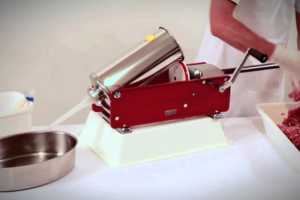
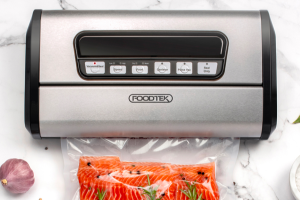
For larger processing operations, digital systems also fit better with broader equipment decisions. A site that already relies on vacuum machines, sausage fillers, mincers, and other dedicated processing gear will often prefer weighing equipment that sits inside the same disciplined workflow. That's one reason buyers reviewing broader food processing equipment in Australia often end up favouring digital hanging scales for primary production use.
A scale that's hard to read is slow, even if the load cell is accurate.
The trade-off is durability versus sensitivity. Modern digital units can be rugged, but electronics still need protection from careless cleaning, impact, and poor charging habits. If the team hoses everything without thinking, a digital scale suffers faster than a basic mechanical one.
Mechanical vs Digital Hanging Scales Comparison
| Feature | Mechanical Scale | Digital Scale |
|---|---|---|
| Accuracy | Reliable for general weighing, less precise for specific readings | High precision with decimal readings, ideal for exact measurements |
| Durability | Built for harsh environments, fewer electronic parts to malfunction | Modern units are rugged, but sensitive electronics require careful handling |
| Features | Basic weighing functionality only | Offers tare, hold, unit conversion, and possible data connectivity |
| Cost | Typically lower initial purchase price | Higher upfront investment due to added technology |
| Maintenance | Occasional mechanical adjustment and calibration | Needs power management and regular calibration checks |
For most abattoir and trade-use butcher environments, digital wins when the scale is part of the main workflow. Mechanical still has a place, but usually as a basic solution, a backup, or a choice for lower-demand tasks.
Must-Have Features for Abattoir and Butcher Use
A meat room destroys lightweight equipment quickly. Blood, fat, hot water, sanitisers, knocks from hooks, and constant handling expose every weakness. That's why a spec sheet needs to be read like an operations checklist, not a sales flyer.

What matters on the spec sheet
Start with capacity and readability. If the scale is too close to its upper limit every day, wear comes sooner and confidence drops. If readability is too coarse, operators can't work cleanly when they need a precise net weight.
High-capacity digital hanging scales used in Australian meat processing, such as the SHS series, offer readability from 0.01 kg to 0.05 kg across capacities from 50 kg to 300 kg, according to the product specifications published by Adam Equipment Australia. For a butcher handling smaller carcasses or product portions, that kind of readability is useful. For larger beef work, capacity needs to be judged against the total suspended load, including hooks and attachments where relevant.
Then look at construction. The same product information notes die-cast aluminium housing and safety-catch rotating chrome-plated hooks for structural integrity under repetitive heavy-duty use in wet wash-down settings. That's the kind of detail worth paying attention to because weak hooks and poor body construction don't fail neatly. They fail under load.
What works in a wet room
Some features sound optional until you've worked through a few months of production. Then they become essential.
- High IP rating: Buyers should look for a unit built for wet cleaning conditions. In practice, the higher the protection against water and debris, the better the scale stands up in wash-down zones.
- Corrosion-resistant build: Stainless components are far easier to keep serviceable around blood, fats, and aggressive cleaning routines.
- Large remote display: When the main body hangs near the product, a readable display mounted away from splash and handling is often a better setup.
- Tare function: This matters when hooks, gambrels, containers, or packaging need to be excluded from the final reading.
- Hold function: Suspended loads don't always sit still. A hold feature helps operators lock the stable value instead of guessing at a moving display.
Buy for the cleaning method you actually use, not the one written in the procedure manual.
A practical example is a lamb line where operators weigh suspended carcasses with wet gloves in a room that gets hosed down hard at shift end. In that case, compact size alone isn't a feature. A sealed keypad, visible screen, sturdy hook, and body that won't corrode are what keep the scale in service.
Cheap units often look acceptable on day one. The problems show up later. Buttons split, seals weaken, hooks wear, displays dim, and the unit starts drifting after repeated cleaning. By then the money saved up front has usually disappeared into rework, service calls, and replacement.
Installation Calibration and Legal Compliance
A good hanging scale can still become a bad installation. That usually happens when buyers focus on capacity and skip the mounting details, or when they assume a scale that turns on and displays weight is automatically suitable for trade use.

Install it like lifting gear, not like a shop fitting
The first question isn't the scale. It's the support point. If the unit is hanging from an overhead structure, that structure needs to be appropriate for the load and the working environment. In a meat room, that usually means a dedicated beam, rail interface, or properly engineered hanging point, not a convenient bracket someone found spare in the workshop.
Basic installation discipline includes:
- Use a suitable anchor point: The support must suit the load path and repeated use.
- Match hardware properly: Shackles, hooks, and connectors should be appropriate for the application.
- Keep the scale hanging true: Side load and twisting create bad readings and unnecessary stress.
- Check operator access: The display has to be visible where the work is done, not hidden behind the carcass.
- Test before production use: A controlled check with known load is far better than finding problems mid-shift.
In practice, one of the most common mistakes is hanging a scale in a spot that's convenient for maintenance, not for workflow. The result is awkward lifting, poor sightlines, and staff nudging product to read the display. That's how impact damage starts.
What legal compliance actually means
If the weight is being used for trade, the scale has to do more than function. It has to comply. In Australian industrial food processing, hanging scales used in trade contexts must comply with NITP 6.1 to 6.4 non-automatic weighing instrument standards, which specify maximum permissible errors of 0.5e for the first 500e, 1e from 500 to 2000e, and 1.5e above 2000e, where e is the verification scale interval, as set out in the NITP 6.1 to 6.4 instrument standards document.
That matters because the legal standard isn't based on guesswork or “close enough”. It's based on traceable accuracy.
A buyer should ask clear questions before purchase:
- Is the scale suitable for trade use in Australia?
- Can it be verified properly for the intended application?
- Who will handle calibration and ongoing checks?
- Does the installation environment affect accuracy or seal life?
Here's a useful visual overview of calibration in an industrial setting:
If the weight goes on an invoice, label, or sale record, legal verifiability isn't optional.
Verification isn't a one-off mindset either. In meat plants, scales live in wet, hard-working environments. Shock loading, aggressive cleaning, and general wear can all affect performance over time. Good operators treat calibration as part of operating discipline, not a paperwork nuisance.
There's also a practical compliance link to inspection and product control inside the wider meat chain. Australian meat processing facilities must carry out ante-mortem and post-mortem inspections under AS4696:2023, with certified meat safety inspection forming part of the compliance framework, as described in this Australian meat processing training reference. In a real plant, weighing, identification, inspection, and documentation all sit close together. If one part is loose, the whole chain gets harder to defend.
Daily Maintenance and HACCP Sanitation
Most scale failures in meat rooms don't start with manufacturing faults. They start with cleaning habits. Staff either clean too lightly and leave contamination risks behind, or they clean too aggressively and drive water into the wrong places. Good maintenance sits in the middle. Thorough, consistent, and controlled.
Meat processing businesses in Australia must implement a food safety arrangement that includes a HACCP plan covering on-site activities, and a practical HACCP program can identify sanitation frequency for equipment such as bandsaws and scales with documented logs to support compliance and contamination control, as outlined by South Australian meat safety guidance.
A practical daily routine
The daily routine should be simple enough that the team follows it. If the process is too fiddly, it gets skipped when the room is busy.

A solid routine usually looks like this:
- Check before start-up: Look for cracked housings, loose hooks, damaged cables, or residue from the previous shift.
- Remove heavy residue first: Fat and meat fragments should come off before detergent work starts.
- Wash with approved cleaner: Use a food-safe detergent suitable for the scale's materials.
- Rinse properly: Detergent left behind causes its own problems.
- Apply sanitiser correctly: Follow site procedure for contact time.
- Allow the unit to dry: Don't rush a wet scale straight back into storage.
- Do a quick accuracy check: A known test weight can reveal obvious drift before the next run.
For teams building a stronger hygiene system around equipment and PPE, this guide to food safety excellence through HACCP in Australia is worth reviewing.
What damages scales during cleaning
The biggest mistake is treating an IP-rated scale as indestructible. Water resistance helps, but it doesn't make poor cleaning technique harmless. Directing high-pressure spray at seals, display edges, charging points, or cable entries is a fast way to shorten service life.
Another problem is chemical mismatch. Wet processing environments need waterproof, food-grade materials that help prevent contamination and support cleanability under Standard 3.2.3 of the Australia New Zealand Food Standards Code, which addresses premises and equipment design and maintenance in food businesses, as detailed in Safe Food Australia guidance on Standard 3.2.3. If a site uses harsh products without checking compatibility with seals, screens, and metal finishes, the damage may show up slowly but it will show up.
Good sanitation removes contamination without turning the scale into a maintenance job.
A practical butcher-shop example is the end-of-day hose-down. The right approach is to clean the scale thoroughly while avoiding repeated direct blasting into vulnerable points. The wrong approach is to hold the nozzle close and assume the casing will cope forever. It won't.
Choosing the Right Hanging Scale A Buyers Checklist
Buying hanging weighing scales for meat processing is a business decision, not a catalogue exercise. The right unit protects workflow, hygiene, and legally defensible weight. The wrong one creates rework and doubt.
Analysis of existing content has found calibration and compliance gaps in guidance for Australian meat-processing environments, with reported inaccuracies linked to uncalibrated equipment. That's why AU-specific buying discipline matters, as noted in this discussion of hanging scales versus weighing scales.
Use this checklist before you buy:
- Match the scale to the job: Small butcher tasks, lamb lines, and heavier carcass work don't place the same demands on capacity or handling.
- Choose the right format: Mechanical suits simple, lower-demand work. Digital suits primary production use where readability and functions matter.
- Check cleaning reality: Buy for wet wash-down conditions if that's how the room operates.
- Confirm trade suitability: If the weight is used commercially, legal compliance has to be part of the purchase decision.
- Look closely at hooks and fittings: Weak connection hardware ruins a good scale. The same discipline used when selecting strong stainless steel S hooks for food and industrial use applies here.
- Plan for calibration and maintenance: Ongoing checks should be part of ownership from day one.
A hanging scale should make the room cleaner, faster, and easier to manage. If it doesn't, it's the wrong scale.
If you're sourcing equipment for a butcher shop, abattoir, or meat processing site, PSC TRADING Co PTY LTD supplies industrial and food-processing products for Australian operations, including meat processing equipment, waterproof aprons, PPE, packaging, and abattoir essentials.
