



You know the scene. The boning bench is already busy, the prep line's behind, the vacuum machine keeps getting waited on, and someone's hunting for the right knife pouch or clean apron while product sits. That's where workflow efficiency is won or lost in food operations, not in a dashboard, but in the few metres between a saw, a mincer, a packing station, and the wash-down bay.
In Australian meat rooms, abattoirs, and commercial kitchens, the fastest route isn't always faster if it creates backtracking, extra handling, or rework. A better workflow removes wasted motion, waiting, and over-processing so the same team can move cleaner, steadier, and with less friction.
Table of Contents
- What Workflow Efficiency Looks Like on the Floor
- Map the Current Process Before You Touch Anything
- Finding Bottlenecks Hiding in Plain Sight
- Redesign Workstations So Tools Move With the Operator
- Standard Operating Procedures That People Follow
- Measure What Slows the Line
- Your 30-Day Workflow Efficiency Action Plan
What Workflow Efficiency Looks Like on the Floor
A busy 6am boning bench tells the story better than any theory. One operator is waiting for the next trolley, another is walking back for a knife, and a third is standing idle because the packing station hasn't cleared the previous batch. The issue is flow, not speed.

The three wastes that matter most
In food operations, the most visible wastes are waiting, motion, and over-processing. Waiting shows up when product, equipment, or approvals aren't ready. Motion is the extra walking, reaching, bending, and carrying that does not add value. Over-processing is every extra check, transfer, label, or clean-down step that exists because the workflow was not designed cleanly in the first place.
Practical rule: if a task keeps asking people to move twice, handle product twice, or clean twice, the workflow needs redesign, not more pressure.
That is why workflow efficiency on the floor looks calm, not frantic. Operators know where tools live. Product moves in one direction. Changeovers are simple. Clean-down and re-entry are built into the job instead of happening as an afterthought.
Why physical flow comes before software
Software can help, but it cannot fix a layout where the knife pouch sits behind the operator, the vacuum machine is in the wrong bay, or the sanitising gear is stored across the room. The biggest leaks usually sit between stations, not inside a single machine. In meat rooms and kitchens, a few unnecessary steps repeated all shift become a hidden tax on output.
Australian workplace efficiency data points to the same pattern. The Australian workplace efficiency baseline reports employees spent 5.5 hours per week on unnecessary meetings and 3.1 hours per week on duplicated work. That is 8.6 hours weekly lost to avoidable workflow friction, or roughly 22 working days per employee per year if repeated across 52 weeks. It also found 66% of workers said they were less productive because of poor collaboration and communication, which matters here because poor handoffs slow cycle time even when individual task performance is strong.
The same logic shows up on an abattoir floor, in a meat processing room, and in a busy kitchen pass. A process can look busy and still be badly arranged. Workflow efficiency is about removing the pointless movements that make a shift feel longer than it should.
Map the Current Process Before You Touch Anything
Start with the process as it exists, not the one in a policy folder. In a butcher shop, that might run from intake, breakdown, trimming, mincing, filling, vacuum packing, chill storage, and dispatch. In a commercial kitchen, it might be receiving, prep, portioning, cooking, plating, pass, and wash-up. Either way, the map should show who does what, in what order, and where work pauses.

Build the map from the floor up
Draw it on paper first if that's quicker. Use boxes for each step and arrows for handoffs. Name the process owner at every step, because bottlenecks don't get fixed when nobody owns them. Then record the baseline numbers that matter most, lead time, cycle time, throughput, and work-in-progress.
A practical butcher-line example looks like this. Raw product arrives, it's checked, broken down, trimmed, minced if needed, filled or packed, chilled, and sent out. A kitchen version is just as workable, prep ingredients, portion, cook, plate, and pass. The point isn't to make the map pretty, it's to make the delay visible.
Useful habit: measure the workflow before changing it. If you don't know the starting point, every improvement is just guesswork with better language.
Keep the mapping simple enough to use
The best process maps don't try to capture every exception. They show the main route, the common rework loop, and the handoff points that slow everyone down. That makes it easier to see where the line waits for containers, where product queues near packing, or where a station becomes congested because the next step hasn't been cleared.
This is also where process mapping becomes a discipline instead of a one-off exercise. Australian workflow-improvement guidance recommends documenting the current state, naming owners, and measuring before changing anything, because staged improvement is safer than trying to fix everything at once. Process mapping and baseline metrics guidance
Keep one thing in mind. A map that doesn't match the floor gets ignored the first time the shift gets busy.
Finding Bottlenecks Hiding in Plain Sight
The machine gets blamed first. It is the bandsaw, the vacuum machine, or the lone prep bench everyone can see. The slower point is often elsewhere, in apron changes, knife sharpening gaps, sanitiser dwell time, waiting for containers, or a workstation that looks efficient on paper but slows the whole room in practice.

Look for the handoff, not just the machine
A machine bottleneck is easy to spot because it is noisy. A handoff bottleneck is quieter. One person finishes early, another arrives late, and the whole flow waits because the next task depends on a clean apron, a cleared tray, a sharpened knife, or a sanitised surface. In kitchens and meat rooms, that waiting is often what makes the line feel slow even when the equipment itself is running well.
The Australian productivity picture puts that in a wider frame. The Australian Bureau of Statistics reported labour productivity in the market sector fell 3.7% in 2022–23, and multifactor productivity also fell. The Australian Productivity Commission has repeatedly pointed to slow diffusion of better practices and weak management capability as structural barriers to productivity growth. That matters here because process discipline, clearer scheduling, and better information flow are exactly what workflow improvement is meant to fix. Australian productivity context
Confirm bottlenecks with timing, not opinion
Stand at the line and time the delay. Watch where product queues, where people wait for the next handoff, and where small pauses repeat across the shift. One slow apron change will not look dramatic by itself. Repeated across the day, it becomes a serious loss of flow.
The safest way to check a suspected bottleneck is simple. Observe the process, time the stop, note who waited, and compare it with the map. Then decide whether the issue is equipment, layout, staffing, or an unnecessary step that keeps coming back.
Freezer pallet spacers and cold-chain flow aids matter here because even storage can become a bottleneck when airflow and freezing consistency are not managed properly. In practice, the line often slows down where people think they are just putting product away.
Redesign Workstations So Tools Move With the Operator
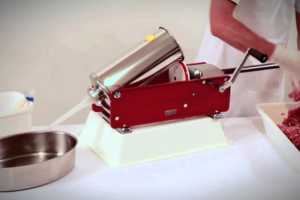
A workstation should fit the operator's hands, not force the operator to chase the tools. That means putting the bandsaw, mincer, vacuum machine, sausage filler, trays, casings, labels, and packaging consumables where the job happens. If the worker has to cross the room for basic items, the layout is working against throughput.
Design for reach, not hope
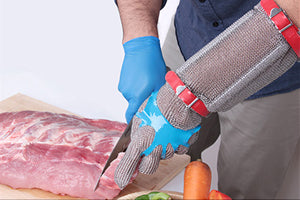
Place the most-used items within arm's reach and keep the path from one action to the next short and predictable. Knife pouches and butcher belts aren't just storage, they're motion-control tools because they keep the blade secure and available without extra walking. Apron hooks, straps, and buckle systems matter for the same reason, changeover is faster when gear can be swapped or cleaned without a fight.
That's where practical layout links directly to workflow efficiency. A well-set bench reduces the distance between cutting, weighing, packing, and cleaning. A poorly set bench turns every task into a small commute.
A workstation is efficient when the operator can finish a task, reset, and start the next one without crossing their own path.
Treat aprons and wash-down gear as workflow assets
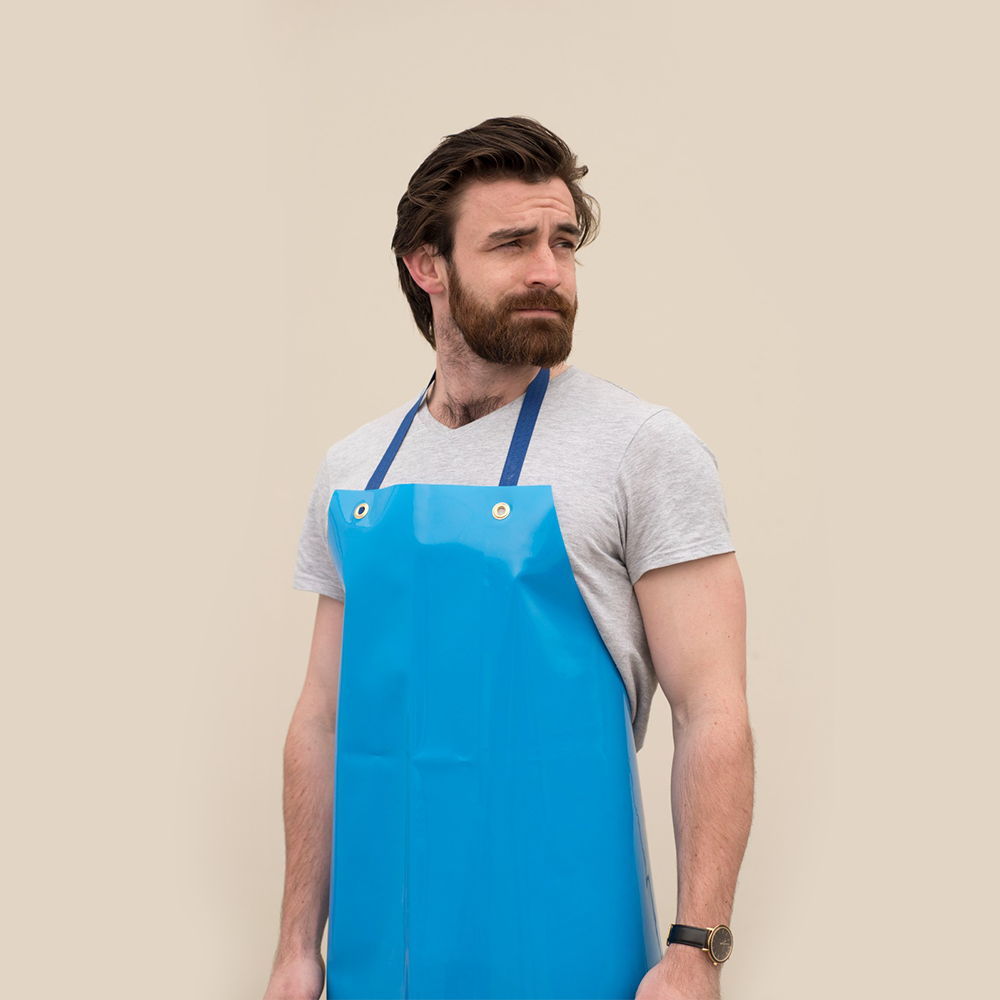
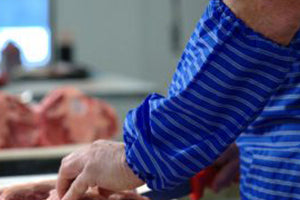
Waterproof, food-grade aprons do more than protect the worker. They reduce soak-through, cut cleanup time, and make end-of-shift wash-down less painful. In wet areas, that matters just as much as safety. If an apron takes too long to clean or dry, the operator loses minutes every time the process resets.
This is also where the physical side of the cold chain matters. Commercial kitchen design considerations make more sense when the layout respects how staff move between prep, cooking, plating, and cleaning. The same logic applies in meat processing, where product, PPE, and consumables need to support a steady rhythm instead of a scramble.
Australian worksite guidance on ergonomics and manual handling points in the same direction. Redesign the work to reduce repetitive lifting, awkward postures, and excessive carry distances before relying on individual effort. That's the practical test for every workstation change, does it reduce motion, or does it just shift the strain somewhere else?
Standard Operating Procedures That People Follow
The best SOPs are short enough to use during a shift and specific enough to survive an audit. If a clean-down checklist reads like corporate boilerplate, it gets skipped when the room is busy. If it matches the actual sequence at the bandsaw, the sausage filler, the wash-down hose, or the pass, people use it.
Write the SOP around the job, not the file cabinet
A useful SOP for a bandsaw clean-down should say what gets switched off, what gets removed, what gets washed, what gets sanitised, and who checks the return-to-service point. A changeover SOP for sausage making should cover product clearance, casing change, tool swap, label check, and the first-run quality check. A hot-side to cold-side re-entry routine should define the clothing, hand hygiene, and surface control steps that keep the workflow moving safely.
Australian compliance gives these SOPs real weight. Standard 3.2.2 of the Australia New Zealand Food Standards Code requires food premises, equipment, utensils, and transport vehicles to be kept clean, and food contact surfaces to be sanitised where necessary. Safe Work Australia's PPE hierarchy treats PPE as a last line of defence, with employers responsible for selection, training, fit, maintenance, and replacement. The Australian Government's manual handling guidance also pushes redesign of the work process to reduce excessive lifting and carry distances. Food Standards Code and cleaning requirements, Safe Work Australia PPE guidance, manual handling and ergonomics guidance
A good SOP also leaves less room for improvisation when the shift is under pressure. That matters in an abattoir, a boning room, or a busy kitchen, because the work keeps moving while the cleaning, checking, and handover steps still have to happen in order.
Keep the SOP close to the floor
A good SOP sits where the work happens. Laminate it. Pin it near the bench. Keep the wording direct. Use the same names people use on the floor, not the language from a training slide. If the crew can't follow it during a busy shift, it needs revision.
| Workflow Step | Example SOP | Supporting Australian Standard or Guidance |
|---|---|---|
| Bandsaw clean-down | Isolate machine, remove residue, wash, sanitise contact points, sign off before restart | Standard 3.2.2 of the Food Standards Code |
| PPE changeover | Swap task-specific PPE at the designated point, check fit, confirm clean reuse or disposal | Safe Work Australia PPE hierarchy |
| Heavy carry reduction | Stage consumables at the bench, avoid unnecessary trips, keep frequent-use items within reach | Australian manual handling and ergonomics guidance |
| Hot-side to cold-side re-entry | Change gloves or outerwear as required, wash hands, confirm clean route back to production | Food safety and sanitation guidance |
A SOP nobody follows is worse than no SOP, because it creates false confidence during an audit or incident. A living checklist, updated with the people who use it, gives you control that exists on the floor.
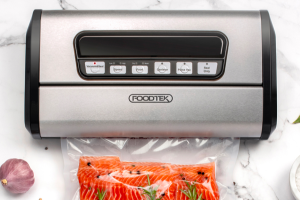
A practical example is vacuum sealing. If the handoff between trimming, packing, and sealing is not written down clearly, operators waste time hunting for bags, checking seals twice, or waiting on the next step. A simple reference like vacuum machine workflow guidance can help frame the task around product flow, seal quality, and equipment checks instead of paperwork for its own sake.
Measure What Slows the Line
Wrong metrics send teams after the wrong fixes. A shiny dashboard will not help much if the losses come from micro-stoppages, sanitation downtime, rework, and changeovers that nobody is timing properly. In a meat room or kitchen, those physical losses usually matter more than approval chains or meeting counts.

Use the numbers a frontline team can capture
A clipboard, whiteboard, or shared sheet is enough to start. Track cycle time per unit, queue length at each station, apron and PPE changeover minutes, sanitiser dwell time, defect or rework rate, and freezer or chiller pull times. That gives you a view of what is slowing the line without turning the floor into an admin exercise.
Start with the physical process before you build more software around it. If repetitive tasks and rule-based decisions are not documented first, automation usually just makes an inefficient process run faster. In an abattoir, that might mean a trim bench waiting on bags or knives. In hospitality, it might mean prep staff crossing the kitchen for consumables that should sit beside the station.
Practical rule: the best pilot target is one the team can see and time on the floor, not one that lives only in a system report.
Set a pilot target and keep it narrow
Start with one station or one product family. A pilot target such as a 20% reduction in approval time only works if the team can compare it to a baseline and see whether the flow changed. The goal is not to prove that everything is broken. It is to prove which changes move product faster with fewer interruptions.
For vacuum packaging workflows, the equipment itself can be part of the improvement, but only after the process is clear. A useful reference is vacuum machine workflow guidance, which fits best when it sits inside a measured workflow, not outside it.
Measure, then standardise. Standardise, then automate only the repetitive parts. That order keeps you from locking an old inefficiency into a newer system.
Your 30-Day Workflow Efficiency Action Plan
Week one is mapping and baseline measurement. Walk the floor, draw the current workflow, and record the numbers that matter. Don't fix anything yet. Just document the route from intake to dispatch or service, including where product waits and where staff backtrack.
Week two is bottleneck confirmation. Time the pauses you found in the map, watch the handoffs, and check whether the delay sits at a machine, a person, or a layout decision. Pick one bottleneck only. A narrow focus gets you a clean result.
Week three is workstation and SOP change. Move the tools closer, tidy the changeover points, simplify the clean-down sequence, and update the checklist so it matches the floor. Apron formats, fastening systems, knife pouches, and consumable placement start paying back immediately.
Week four is pilot measurement and scale-out. Compare the new result to the baseline, then decide whether to extend the change to the next line, the next shift, or the next room. If the numbers didn't move, fix the process again before rolling it wider.
Use this checklist on the next shift:
- Standardise apron formats and fastening systems so changeovers are faster.
- Place knife pouches, butcher belts, and consumables within arm's reach.
- Schedule sanitiser dwell time into the SOP instead of treating it as dead time.
- Keep freezer and chiller storage organised so product doesn't wait for space.
- Pilot one change with one small team before scaling it to the rest of the floor.
If you want practical gear that supports cleaner flow in meat rooms, kitchens, and wash-down areas, speak with PSC TRADING Co PTY LTD about workstation items, PPE, aprons, and cold-chain accessories that match the way your team works.
