

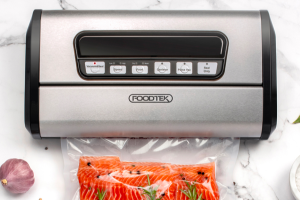







You're probably dealing with one of these problems right now. A vacuum bag isn't sealing cleanly on a busy prep day. Pallet wrap keeps tearing when cartons come out of the cool room. A tray looks fine at packing time, then flexes and leaks before delivery. Or your team is trying to sort out “sustainable” options while still keeping meat cold, clean, labelled, and saleable.
That's the reality of buying industrial packaging supplies for butcher shops, abattoirs, food processors, and hospitality venues in Australia. The wrong choice doesn't just waste packaging. It slows packing lines, creates rework, risks spoilage, and makes compliance harder than it needs to be.
Good packaging decisions are usually boring when they work. Bags seal properly. cartons stay shut. loads stay stable. labels stay readable. staff don't have to improvise. That's exactly what you want.
Table of Contents
- Why Your Industrial Packaging Choices Matter More Than Ever
- The Essential Toolkit of Industrial Packaging Supplies
- Decoding Materials for Food-Grade and Cold-Chain Use
- Navigating Sustainable Industrial Packaging in Australia
- A Procurement Framework for Selecting Your Supplies
- Best Practices for Handling and Compliance
- How to Choose the Right Wholesale Partner
Why Your Industrial Packaging Choices Matter More Than Ever
A common failure point in meat processing isn't dramatic. It's a small seal defect, a punctured corner, or a pallet that shifts just enough in transit to damage the outer cartons. The product inside may still be good, but once packaging integrity is compromised, staff have to stop, inspect, repack, relabel, and often explain the delay to a customer.
In a butcher shop, that might mean re-bagging primals before the afternoon run. In an abattoir, it can mean line disruption and product segregation. In hospitality distribution, it usually shows up as complaints about leaks, freezer burn, split cartons, or unreadable labels. Packaging failures create labour costs first, then product risk.
That pressure is rising because the category itself is getting bigger and more complex. The Australian industrial packaging market was valued at USD 1.0 billion in 2024 and is projected to reach USD 1.8 billion by 2033, growing at a CAGR of 5.60% from 2025 to 2033, reflecting stronger demand across sectors including food processing where correct packaging is critical, according to IMARC's Australia industrial packaging market outlook.
The cost of getting “good enough” wrong
Many sites still buy packaging as if it's a background consumable. They compare unit price, order what looks familiar, and only revisit the decision when something fails. That usually leads to three avoidable mistakes:
- Using one bag for everything: Lean beef trim, wet-aged primals, and marinated product don't all behave the same inside a pack.
- Treating pallet wrap like generic plastic: Some loads need puncture resistance and holding force, not just coverage.
- Buying sustainability claims without operational checks: A greener option that seals poorly or struggles in chill and freezer conditions creates a different problem.
Practical rule: If your team is compensating for a packaging product with extra labour, the product isn't cheaper. It's just underpriced at the invoice stage.
For Australian food businesses, packaging now sits at the intersection of efficiency, hygiene, transport protection, and environmental responsibility. That's why buyers are spending more time comparing materials, compatibility, and disposal pathways instead of just ordering the same stock code again.
There's also more scrutiny on whether your packaging choices fit broader operational goals. If you're reviewing recyclable or lower-waste options, it helps to understand the practical side of eco-friendly advantages of sustainable packaging before changing a spec on the floor.
The Essential Toolkit of Industrial Packaging Supplies
Industrial packaging supplies work best when each item has a clear job. Problems start when one product is forced to do another product's job. A thin vacuum pouch can't make up for rough handling. Good tape won't rescue a weak carton. Stretch film can stabilise a pallet, but it won't fix poor stacking.
Food and non-alcoholic beverages were the leading industries by market share for pack materials in Australia in 2019, accounting for a dominant portion of the 33.7 billion units produced, which shows just how much the food sector depends on packaging that matches the application, according to Research and Markets on Australian packaging industry trends.

Containment that protects the product
For meat and hospitality operations, the first layer usually does the critical work. That includes vacuum bags, liners, films, and trays.
Vacuum bags are the obvious example. A chamber vacuum machine packing whole sirloin needs a bag that seals consistently, resists puncture from bone or hard edges, and holds shape under storage and handling. If the bag is too thin or the film structure isn't suited to the product, you'll see seal failures, leaks, or product presentation issues.
Trays matter just as much when product is displayed or handled in short shelf-life cycles. A tray has to hold weight without flexing too much, fit the sealing film properly, and tolerate chill-room conditions without becoming messy in use. In commercial kitchens, tray-and-film combinations also need to support speed. Staff shouldn't be fighting awkward fit or poor peel.
Use these products by function, not by habit:
- Vacuum bags: Best for primals, portioned meat, smallgoods, and products where air removal matters.
- Tray and top film systems: Best for display-ready items, portion control, and fast back-of-house packing.
- Carton liners: Useful when outer cartons may face moisture, purge, or repeated handling.
Stabilising loads and sealing cartons
Once product is packed, the next job is keeping units secure through storage and transport. For this purpose, stretch film, strapping, cartons, and industrial tapes prove their worth.
A butcher wholesaler sending mixed cartons to restaurants has different needs from a processor moving uniform loads between facilities. Mixed loads usually need smarter wrapping and better top-to-bottom containment because corners shift, heights vary, and carton faces don't align cleanly. Uniform pallet loads are more forgiving, but they still fail if film tension is inconsistent or the pallet is stacked badly.
Carton sealing is another area where teams often over-simplify. In a dry ambient environment, a standard tape spec may perform well. In chilled logistics, adhesives and board condition matter more. If the carton surface is damp, cold, or dusty, ordinary tape application becomes unreliable.
The safest packaging setup is usually the one that removes staff guesswork during a busy shift.
A practical toolkit for food operations usually includes:
| Supply type | Best use in meat and hospitality | What goes wrong when it's mismatched |
|---|---|---|
| Vacuum bags | Extending pack integrity for cuts and portions | Weak seals, punctures, leaks |
| Stretch film | Holding pallet loads through storage and transport | Load shift, crushed cartons, rewraps |
| Industrial tape | Closing cartons and reinforcing stress points | Burst cartons, failed seals |
| Strapping | Bundling rigid or heavy packs | Movement during transit |
| Labels | Traceability, handling instructions, stock control | Mis-picks, compliance issues |
The toolkit doesn't need to be huge. It needs to be deliberate.
Decoding Materials for Food-Grade and Cold-Chain Use
Most packaging problems that show up in cold rooms start at material selection. Buyers often focus on pack format first. Bag, tray, wrap, liner. That matters, but material behaviour matters more once the product moves from the packing bench into chill, freezer, transport, and customer handling.
What food-grade means on the floor
In practical terms, food-grade isn't a marketing phrase. It means the packaging is suitable for contact with food and can do its job without introducing contamination risk under normal use. For a meat processor, that also means the material must cope with moisture, fat, temperature shifts, handling pressure, and routine wash-down conditions around the work area.
A food-contact bag that seals well on clean, dry test packs can still be the wrong choice in production if it slips on wet product, wrinkles at the seal bar, or tears when staff load cartons quickly. That's why it helps to assess material choice against actual line conditions, not catalogue descriptions.
Three material behaviours matter most:
- Barrier performance: Useful where you want to protect freshness and reduce exposure to air.
- Flexibility at low temperature: Important for chilled and frozen handling, especially where packs are moved often.
- Seal consistency: Critical on fast lines where minor variation creates rework.
How material choice affects cold-chain performance
A simple way to think about materials is this. Some are better at protecting the product from the environment. Others are better at surviving the environment themselves.
For example, a high-performance multi-layer vacuum film may suit wet-aged primals because it combines barrier and toughness. A simpler film might be fine for short-turn products packed and used quickly. Polyethylene-based structures are often chosen where flexibility and sealing behaviour matter. More rigid materials may suit trays or outer pack applications where shape retention is the priority.
Cold-chain operations add another layer of pressure. Materials can stiffen, crease, or become easier to puncture once product is blast chilled or frozen. If cartons are stacked tightly and moved across several handoff points, minor weaknesses show up fast.
A practical buying approach looks like this:
- Start with the product profile: Bone-in, boneless, fatty, wet, frozen, or short-life prepared food all create different stress on the pack.
- Match the packaging to the machine: A bag that's technically food-safe still won't help if it doesn't run cleanly on your vacuum sealer.
- Test after storage, not just after packing: Seals that look fine immediately can fail later after chill or freezer exposure.
- Review secondary handling: Packs may survive sealing but fail when loaded into crates, tubs, or cartons.
If you want fewer cold-room headaches, check how your packaging works after the product has sat, moved, and been handled. Bench-top performance can hide real failures.
Cold-chain support products also matter. Airflow and spacing on pallets influence freezing consistency, carton condition, and overall handling. That's why many sites also look at food-grade HDPE freezer pallet spacers for cold storage efficiency as part of the broader packaging and storage setup, not as a separate issue.
Navigating Sustainable Industrial Packaging in Australia
Sustainability discussions often become vague fast. On the floor, they aren't vague at all. Buyers need to know whether a film still seals properly, whether a tray will hold shape in the cool room, and whether the waste stream on site can process the packaging being ordered.

A lot of Australian operators are feeling that pressure. A critical issue in the AU meat-processing sector is confusion over Australia's 2025 Sustainable Packaging Mandate, and nearly 60% of small butchers and abattoirs report confusion about meeting new standards due to insufficient supplier guidance, according to IBISWorld's Australia packaging services coverage.
Why buyers get stuck
The confusion usually comes from three gaps.
First, product descriptions often sound better than they function. “Sustainable” can refer to recycled content, recyclability, reduced material use, or a broader environmental positioning. Those aren't the same thing operationally.
Second, disposal pathways differ by site. A recyclable tray only helps if your facility, your customer, or the downstream waste stream can separate and recover it properly. A compostable item may sound attractive but still be a poor fit if it contaminates existing recycling practices or doesn't perform under refrigeration.
Third, teams tend to treat sustainability as a purchasing issue only. It isn't. It affects storage, packing speed, seal quality, waste separation, customer communication, and procurement records.
What sustainable packaging looks like in practice
For meat processing and hospitality, the sensible approach is to treat sustainable packaging as a performance-and-compliance choice. The packaging still has to protect the product first.
That means asking harder questions:
- Will this material hold up in cold-chain conditions?
- Can staff use it without changing the line speed dramatically?
- Is the pack format easy to segregate for disposal?
- Does the supplier provide clear technical guidance instead of broad claims?
One useful benchmark for the wider context is recyclability. In Australia, 86% of all packaging can currently be recycled, which still falls short of the national target of 100% reusable, recyclable, or compostable packaging, as outlined in Matthews on the future of sustainable packaging in Australia. That gap matters because it shows why buyers can't rely on labels alone. They need packaging that works within real recovery systems.
This video gives extra context on where sustainable packaging is heading and why compliance language matters:
A practical rule for meat businesses is to prioritise changes that improve recoverability or reduce waste without introducing packing instability. Start with items that are easier to standardise, such as secondary packaging, pallet wrap programs, outer cartons, or clearly specified food-contact packs from suppliers who provide documentation you can use.
A Procurement Framework for Selecting Your Supplies
Procurement works better when packaging is judged on line performance, not just on quote price. The cheapest unit cost can still be the most expensive option once failed seals, damaged loads, rework, downtime, and disposal problems start showing up.
That matters even more now because the sustainable side of the market is expanding. Australia's sustainable packaging for food market is projected to reach USD 1,615.0 million by 2033, up from USD 879.4 million in 2024, reflecting strong demand from meat processors and hospitality venues investing in compliant solutions, according to Grand View Research on Australia sustainable packaging for food.

A practical comparison matrix
Use three filters before approving a packaging line item: equipment compatibility, cost versus performance, and supplier reliability.
| Decision area | Low-risk choice | High-risk shortcut |
|---|---|---|
| Equipment compatibility | Match bag, film, or tape to the machine and operating conditions | Assume “universal” means it will run well on your line |
| Cost versus performance | Pay more where failure creates product loss or heavy labour | Buy the cheapest option for high-stress applications |
| Supplier reliability | Choose suppliers who can explain specs and substitutions clearly | Buy on catalogue appearance alone |
In meat processing, equipment compatibility is often the first thing to check. A vacuum bag might look identical to another option on paper, yet behave differently on the seal bar, during dwell time, or when staff pack wet product quickly. The same applies to tray seal films, pallet wrap stretch characteristics, and tape performance on cold cartons.
Questions worth asking before you place the order
Some questions expose weak packaging decisions quickly:
- What machine is this running on? Chamber vacuum sealer, tray sealer, manual wrap station, or machine-applied film all change the spec.
- Where does failure hurt most? On a premium primal, better barrier and puncture resistance may be worth it. On a low-risk dry goods carton, it may not.
- What does the staff workaround look like today? Extra tape, double-bagging, overwrapping, and hand re-sealing are signs of poor procurement, not “careful packing”.
- Can the supplier maintain consistency? A good sample means little if the ongoing product varies.
Buy packaging on total operating fit. Not on the idea that staff will compensate for a weak spec every day.
It also helps to run short live trials with real staff on real product. Not a bench sample, and not a one-off perfect pack. Use a normal shift, normal pace, and normal handling. That's where the true cost of industrial packaging supplies shows up.
Best Practices for Handling and Compliance
Even well-chosen packaging fails when it's stored badly or used carelessly. Film rolls pick up dust. cartons absorb moisture. food-contact items are left open in messy storage areas. Then the site blames the packaging when the actual problem was handling discipline.
Storage and handling rules that prevent avoidable failures
Most packaging stores should be treated as controlled work areas, especially for food-contact items. Keep products dry, clean, and organised by application. If a site stores vacuum bags beside dirty maintenance stock or leaves open cartons under variable temperatures, it invites avoidable risk.
A few habits make a noticeable difference:
- Keep food-contact stock protected: Leave bags, films, liners, and trays in clean outer packaging until needed.
- Rotate inventory properly: Older stock should be used first so adhesives, films, and cartons don't sit too long in poor conditions.
- Separate general packaging from food-zone packaging: Don't mix dirty warehouse consumables with items destined for direct food contact.
- Train for handling, not just ordering: Staff need to know how to lift, open, dispense, and reseal packaging stock without contaminating it.
This is also where site-wide food safety systems matter. Packaging can support hygiene, but only if storage and handling standards are enforced consistently. Strong internal procedures often sit alongside broader food safety and HACCP commitments in Australia.
Compliance points that matter in real operations
Some rules are straightforward and still get missed. Australian industrial packing standards mandate that bundles be strapped at a minimum of four locations with steel strapping and explicitly prohibit polystyrene peanuts as packing material to minimise waste and biological contamination risks, as set out in INPEX packing, marking and documentation requirements.
That matters for two reasons. First, strapping requirements exist because load integrity fails when heavy or rigid materials aren't secured properly. Second, the ban on polystyrene peanuts speaks directly to contamination and environmental concerns. In food-adjacent operations, loose-fill materials create cleanup problems and can harbour unwanted contaminants.
Use this quick compliance check on site:
- Inspect bundling methods: If you're packing rigid items, confirm the strapping method meets the required standard.
- Remove unsuitable loose fill: If polystyrene peanuts are still sitting in the stores area, phase them out.
- Check for dirt-trap packaging: Avoid damaged, creased, or poorly stored materials that can hold dust or pests.
- Review labels and traceability practices: Packaging should support identification, not complicate it.
Clean packaging stock is part of product protection. Auditors and customers both notice when sites treat it like an afterthought.
How to Choose the Right Wholesale Partner
By the time you're comparing wholesalers, the main question isn't who can sell you a carton of bags the cheapest. It's who helps you avoid repeat packaging problems across sealing, storage, transport, compliance, and stock continuity.

A strong wholesale partner for meat processing and hospitality should do a few things well. They should understand the difference between a bag that looks acceptable and one that runs properly on your machine. They should carry related items that support the same workflow, such as vacuum equipment, food-safe aprons, PPE, casings, hygiene products, and cold-chain aids. They should also be able to talk plainly about sustainable options without treating compliance like a slogan.
Look for these signs:
- Application knowledge: They understand butcher shops, abattoirs, food processors, and commercial kitchens.
- Range depth: They can supply packaging alongside the consumables and equipment your team already uses.
- Operational fit: They help you match products to machinery, handling conditions, and storage realities.
- Consistency: They can support repeat ordering without constant substitution surprises.
Single-source supply has real value in this category because packaging decisions don't sit alone. They connect to equipment performance, PPE use, hygiene standards, and cold-chain handling. When one supplier understands that whole environment, procurement gets easier and site problems get solved faster.
If you want one place to review packaging, meat-processing consumables, PPE, machinery, and Australian-made apron options, PSC TRADING Co PTY LTD is built around those exact operating needs in butcher, abattoir, hospitality, and food-processing environments.
