




You've got the meat chilled, the spice mix sorted, and the filler ready on the bench. Then you hit the part that stalls a lot of first-time sausage makers and more than a few butchers doing a small run outside their normal ordering cycle. You search for hog casings near me, ring a couple of shops, and get vague answers like “yeah, we can probably get some” or “they come in a tub”. That's usually where the trouble starts.
Good sausages don't fail because of seasoning alone. They fail because the casing was the wrong type, stored badly, not soaked properly, or bought without asking the two questions that matter most. What calibre is it, and is it salt-packed or brined? Those answers affect snap, stuffing speed, shelf life, and how much swearing happens at the filler.
Table of Contents
- The Secret to Great Sausages Starts Here
- What Exactly Are Hog Casings
- How to Choose the Right Hog Casing for Your Sausage
- Preparing and Storing Your Hog Casings
- Where to Find Hog Casings in Australia
- Frequently Asked Questions About Hog Casings
The Secret to Great Sausages Starts Here
A common beginner mistake is spending all the effort on the filling and treating the casing like an afterthought. That's backwards. The casing decides how the sausage fills, how it links, how it cooks, and whether you get that clean bite or a chewy, split mess.
Natural hog casings sit right at the centre of sausage making for a reason. They aren't a niche product used by a few traditionalists. The global natural sausage casings market, with hog casings as a primary product, is projected to grow from USD 2.77 Billion in 2026 to USD 4.53 Billion by 2035, which shows how central they remain in meat processing and sausage production worldwide, according to Business Research Insights on the natural sausage casings market.
That scale makes sense when you're standing at a bench trying to turn a tray of seasoned pork into proper links. Hog casings give you the classic shape expected from bratwurst, Italian-style sausages, fresh snags, and heavier smoked links. They twist well, they cook with the meat instead of fighting it, and they don't look fake.
Natural casings are one of those ingredients you only notice when they're wrong.
The local buying problem is that casings are often sold with less detail than they should be. A butcher may sell a short length from a tub. A wholesaler may sell a full pack. An online shop may list the product clearly but not explain how preservation changes handling. That's where buyers get caught. They end up with casings that are technically usable, but wrong for the batch they're making or awkward for the way they work.
What Exactly Are Hog Casings
Hog casings are the cleaned small intestines of pigs used as a natural sausage casing. They give a sausage its traditional diameter, a tender snap, and the slight irregularity that makes a fresh link look real rather than manufactured.

What they do in the sausage
A casing does more than hold the fill in place. It affects how the mix feeds onto the horn, how tightly you can stuff without blowouts, how the link twists, and what the bite feels like after cooking.
Hog casings sit in a very workable middle ground. They are larger and more forgiving than sheep casings, but still tender enough to eat cleanly. That is why they suit everything from fresh barbecue sausages to thicker smoked links.
Good hog casing also lets you read the sausage before it is cooked. You can see whether the fill is even, whether fat is smeared or clean-cut, and whether seasoning is distributed properly. For a closer look at how natural sausage casings perform in real sausage making, it helps to compare them against collagen and other natural options.
Why butchers keep using them
In day-to-day production, hog casings save time because they are easier to load and less delicate than sheep runners. They still give the eating quality people expect from a proper natural casing. That balance matters on a busy bench.
They also bring up a buying question that gets missed too often. Freshness and preservation are not the same thing. A salt-packed casing usually keeps longer and gives you more flexibility in storage, but it needs proper soaking and flushing before use. A wet brined casing is convenient and often faster to prep, but it can have a shorter shelf life once opened and needs colder, tighter handling. If you are buying locally, ask which format you are getting, because that changes prep time, storage space, and sometimes the final bite.
A few common uses show where hog casings fit best:
- Fresh pork sausages for the barbecue fill well and stay plump without feeling heavy.
- Kielbasa or thicker smoked links benefit from the larger diameter and stronger wall.
- Home batches on a hand filler usually run more smoothly in hog casings than in sheep casings because the casing is less fiddly on the tube.
Practical rule: If you want a natural casing for a standard fresh or smoked sausage, hog casing is usually the safest place to start.
How to Choose the Right Hog Casing for Your Sausage
A casing choice usually goes wrong at the bench, not on the order form. You load the horn, start filling, and the problems show up fast. Links vary in size, weak spots burst, or the bite feels heavier or softer than the sausage style needs. Good hog casings prevent that. The right hog casings match the product, the filler, and the way the casings were preserved.
Start with the finished sausage, not the packet description. Ask two questions. What diameter do you want on the plate, and are you buying salt-packed or wet brined casings? That second question gets missed too often. Preservation affects shelf life, prep time, storage, and sometimes the way the casing handles during stuffing.
Match calibre to the sausage style
Calibre is the stuffed diameter range. It changes appearance, cook time, and eating quality. A narrower hog casing gives a slimmer link with a quicker cook and a lighter feel. A wider one gives more bite, more weight, and a fuller slice if you are making smoked sausage.
Hog Casing Calibre and Common Sausage Types
| Calibre (Diameter) | Common Sausage Types | Notes |
|---|---|---|
| Smaller hog calibre | Breakfast-style larger links, slim fresh sausages | Better when you want a lighter sausage that still has natural snap |
| Medium hog calibre | Bratwurst, Italian sausage, standard butcher's sausages | The most versatile choice for general sausage work |
| Larger hog calibre | Kielbasa, thicker smoked sausages, pepperoni-style work | Suits a fuller bite and a heavier finished profile |
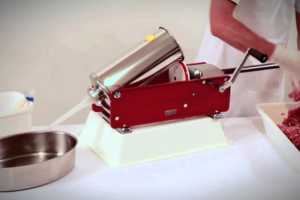
Medium hog calibre is the safest starting point for many home makers and small shops. It loads well, links cleanly, and gives enough strength without feeling clumsy. If you are still sorting out horn size and fill pressure, this sausage filler machine guide will help you match your filler to the casing instead of fighting both at once.
Choose the preservation format with your workflow in mind
This is the part many buying guides skip. Salt-packed and brined hog casings are both usable, but they suit different work.
Salt-packed casings usually give you longer storage life and more flexibility if you do not make sausages every week. They often need a bit more prep, and poor rinsing leaves you with a firmer, less even casing during stuffing. Brined casings are convenient and often faster to bring into service, which suits same-day production, but once opened they need tighter cold storage and quicker turnover.
The trade-off is practical. If you run small occasional batches at home, salt-packed stock is often the safer buy. If you make sausages regularly and want less prep on production day, brined casings can save time. Ask the supplier how the casings are packed before you order locally. It affects waste, storage space, and how much handling you need before the first link is filled.
Check quality before you commit a batch of filling
Natural casings vary a lot from one bundle to the next. A casing can be labelled hog and still give you trouble if the grading is poor or the handling was rough.
Check for these points:
- Even calibre: More consistent diameter means cleaner linking and a neater tray.
- Wall strength: Thin patches and weak spots show up as blowouts under pressure.
- Clean preparation: Rough, patchy casings usually take more work and give less reliable results.
- Long usable runs: Longer lengths mean fewer stoppages, fewer joins, and faster stuffing.
On a busy bench, long consistent runs matter. Every reload slows the job and raises the chance of air pockets or twisted links that do not match. For fresh retail sausages, that hurts appearance. For smoked work, it can also affect how evenly the sausage dries and colours.
Hog versus beef and sheep in practical use
Hog sits in the middle and that is why so many butchers stay with it. Beef casings are heavier and better suited to larger sausages. Sheep casings give a finer link, but they are more delicate and slower for many beginners to handle. Hog casings give a natural bite without making the job harder than it needs to be.
Buy for the sausage style and the way you work. A home cook making weekend barbecue sausages has different needs from a butcher filling smoked kielbasa for a display case. Get the calibre right, choose the preservation format that suits your storage and production schedule, and the casing will work with you instead of against you.
Preparing and Storing Your Hog Casings
Preparation is where many casing problems begin. A good natural casing can still tear, knot, or feel tough if you rush the rinse or skip the flush. Casings preserved in salt or brine need to be brought back to a usable state properly. They should feel supple, slick, and alive in the hand, not stiff, gummy, or crusty.
A simple process chart helps if you're doing this for the first time.

Get them from preserved to workable
Start with a section you can manage. Don't drag the whole bundle out if you only need part of it.
-
Rinse the outside first.
Use cool running water and work off the visible salt or brine. Don't rush this. If the outside still feels gritty, keep going. -
Soak until the casing loosens.
Lukewarm water helps the casing soften and separate. You're looking for pliability, not mushiness. -
Flush the inside.
This is the step many beginners skip. Open one end, run water through, and let the casing fill and slide. That clears trapped salt, checks for holes, and makes loading onto the horn much easier. -
Keep it wet while you work.
Once prepared, don't leave casings drying on the bench. A casing that starts drying before stuffing becomes harder to control.
A practical example. If you're doing a home batch of pork and fennel sausages, the difference between a flushed casing and an unflushed one shows up quickly. The flushed casing slides onto the nozzle with less snagging and fills more evenly. The unflushed one often catches, twists on itself, or bursts where salt has stiffened the wall.
The feel you want before stuffing
A ready casing shouldn't feel brittle. It should stretch a little without fighting you. When you pull a length through your fingers, it should move smoothly and feel evenly hydrated.
This walkthrough helps if you want to see hand movement and setup in action before your first batch:
Salt-packed versus brined in storage
This is the part most local guides skip, and it matters. Salt-packed and brined casings both work, but they don't behave the same way in your fridge or on your bench.
- Salt-packed casings suit people who buy ahead and want a longer storage window. They usually need more rinsing and a bit more care before use.
- Brined casings are convenient for quicker turnover and small batches, but they can leave buyers assuming they're “fresh” when they're really just preserved differently.
The practical trade-off is simple. Salt preservation gives stability. Brine gives convenience. Neither is automatically better.
A butcher making sausages every week may prefer salt-packed stock. A home cook doing one batch this month may prefer brined, if they know they'll use it quickly.
What to do with leftovers
If you don't use the whole lot, don't throw the loose casing back in wet and hope for the best.
- Drain it well: Excess water dilutes the preservative.
- Re-salt thoroughly: Coat the unused casing so it goes back into storage protected.
- Use a sealed container: Keep odours out and moisture controlled.
- Refrigerate for future batches: Cold, clean storage matters more than fancy packaging.
A poorly stored leftover casing often feels soft in the wrong way, smells off, or becomes inconsistent at the horn. A properly re-salted one stays useful for later work.
Where to Find Hog Casings in Australia
A search for Hog Casings Near Me typically indicates one of three needs. They want a small amount today, a reliable supply for repeat sausage making, or a local option that won't leave them guessing about preservation and handling.

Local butcher shops
A good craft butcher is often the fastest answer, especially if you only need a short length for a home batch. Some will sell from their working stock if you ask properly and give them notice.
The problem is product detail. Data from Australian consumer forums shows 68% of home processors are confused about preservation methods, while 92% of local butcher listings don't specify whether casings are brined or salt-packed, according to discussion cited from Australian consumer forums. That lines up with what buyers run into every day. The listing says “hog casings”, but not much else.
If you're buying from a butcher, ask these questions before you hand over cash:
- Are they salt-packed or brined
- What sausage style are they usually used for
- Are they sold by length or by pack
- Have they already been portioned from a larger bundle
Wholesalers and processing suppliers
If you make sausages regularly, a wholesaler is often the cleaner option. Stock is usually more consistent, and the product descriptions are more likely to match the way butchers and processors work.
One example is natural hog casings in 90m lengths from PSC TRADING PTY LTD, which sits in the type of supply channel used by butcher shops, processors, and serious home makers who want a larger quantity rather than a handful of loose lengths. That won't suit everyone, but it makes sense if you're trying to standardise batches.
Online suppliers across Australia
Online buying works well when the product page is specific. If the page doesn't say how the casings are preserved, what they suit, or how they're packed, move on.
A strong listing should make it easy to tell whether the casing is for quick use or longer storage, as the preservation method changes your prep and your eating result.
The freshness versus preservation trade-off
Here's the part buyers should pay attention to.
If you ask for “fresh” casings, many sellers won't define what they mean. Some buyers mean less salt. Others mean unbrined. Others just mean recently packed stock. That confusion causes poor buying decisions.
Use this working guide:
| Preservation type | What works well | What doesn't work well |
|---|---|---|
| Salt-packed | Long fridge storage, ordering ahead, keeping reserve stock | Faster prep on short notice |
| Brined | Quicker prep, convenient small-batch use | Longer storage without paying attention |
The texture side matters too. Salt-packed casings can feel slightly firmer before prep and need a more thorough rinse and soak. Brined casings are often easier to get moving on the day, but buyers sometimes overestimate how long they can sit around after opening.
Ask about preservation before you ask about price. The wrong answer costs more in waste than the right answer costs at purchase.
Frequently Asked Questions About Hog Casings
How long do hog casings last
That depends on how they're preserved and how cleanly you store them after opening. Salt-preserved casings generally suit longer refrigerated storage than loosely handled wet casings. Once prepared for stuffing, treat them as ready-to-use product, not something to leave sitting around all day if you can avoid it.
Are natural hog casings better than collagen
For classic fresh and smoked link sausages, many makers prefer natural hog casings because of the bite, appearance, and way they handle during cooking. Collagen is convenient and consistent, but it doesn't give the same natural finish. If speed and uniformity matter most, collagen can be useful. If eating quality and traditional feel matter most, hog usually wins.
Why can hog casings be hard to source in Australia
Australia doesn't have an open market for natural casing imports. Importation of natural sausage casings into Australia is highly restricted and permitted only from Canada, New Zealand, the UK, the Republic of Ireland, and the USA under an import risk framework for disease control, according to the Australian Government import risk analysis on sausage casings. That's one reason local supply can feel patchy and why established distributors matter.
Can I substitute sheep or beef casings instead
Yes, but the finished sausage changes. Sheep gives you a slimmer, more delicate link. Beef gives you a heavier casing suited to larger products. If the recipe expects hog, substituting changes bite, diameter, and handling. For a basic sausage sizzle snag or a bratwurst-style link, hog is usually the natural middle ground.
If you're buying locally, ask better questions than most buyers ask. Don't stop at “Have you got hog casings?” Ask what calibre they are, how they're preserved, and how they've been stored. That's what separates a frustrating batch from one that links cleanly, cooks evenly, and eats the way a proper sausage should.
