






You're probably dealing with one of two headaches right now. Either the sausage meat is right, the seasoning is right, the machine is running well, and the finished link still eats flat because the casing has no life in it. Or the opposite. The casing has too much life, and now you're getting burst links, uneven fill, wasted labour, and a bench full of rejects.
That's where natural sausage casings separate good sausage making from reliable sausage production. In a butcher shop, smallgoods room, or processing plant, the casing isn't an afterthought. It controls bite, shape, moisture movement, linking behaviour, stuffing speed, and how much rework your team does before the tray ever hits the display.
A lot of the public advice on casings is written for hobby batches. Commercial work is different. You need consistency across a run, sensible labour input, and a product that looks right, cooks right, and earns its keep. That matters even more when you're buying into a category that still sits inside a durable international supply chain, with one estimate valuing the North American natural sausage casings market at USD 0.93 billion in 2024 and projecting USD 1.22 billion by 2033 through this market outlook for natural sausage casings.
Table of Contents
- The Butcher's Essential Guide to Natural Sausage Casings
- Understanding the Craft of Natural Casings
- Choosing the Right Casing for Your Sausage
- From Hank to Link Perfect Preparation and Filling
- Natural vs Synthetic Casings A Butcher's Breakdown
- Storing Casings and Troubleshooting Common Issues
- Sourcing Quality Casings for Your Business
The Butcher's Essential Guide to Natural Sausage Casings
A professional sausage has to do two jobs at once. It has to taste good, and it has to behave properly from the stuffer to the cookplate. That second job is where many batches go wrong. You can grind clean meat, mix to a strong bind, and still end up with a disappointing sausage if the casing is the wrong type, poorly prepared, or inconsistent from one bundle to the next.
That's why experienced butchers pay attention to casings early, not after problems start. If the brief is a traditional fresh link with a proper bite, natural casing is usually the reference point. Customers might not use the technical language, but they notice it straight away. They notice the snap, the curve, the way the sausage browns, and whether the skin separates or holds close to the filling.
Practical rule: If the product is sold on tradition, texture, or visible craft, the casing is part of the recipe.
In Australian production, that matters across more than one scale. A butcher making fresh snags for the week, a smallgoods maker running smoked lines, and a processor supplying foodservice all face the same basic question. How do you get the eating quality of natural casing without letting natural variability wreck consistency?
The answer isn't mystique. It's selection, prep, handling, and buying discipline. Good operators treat natural sausage casings like a working raw material. They don't expect every hank to behave identically, and they don't let staff stuff by feel alone when the casing, horn size, pressure, and fill rate all need to line up.
Understanding the Craft of Natural Casings
Natural casings still hold their place because they do something synthetic options don't fully copy. They become part of the sausage rather than acting like a separate shell.

What natural casings actually are
Natural sausage casings are derived from the submucosa of animal intestines. In practical trade terms, that's the collagen-rich structure that gives the casing its stretch, strength, and edible bite. Industry references describe them as one of the oldest food-packaging technologies, with sausage making likely beginning about 6,000 years ago, and natural casings remaining the only casing type until the early 20th century, as outlined in this history of natural casings.
That history matters because it explains why natural casings still set the benchmark for many traditional products. They're not just old. They're still commercially relevant because they work as both casing and edible packaging.
Think of them as a breathable membrane with structure. They hold the fill, but they also respond during cooking and smoking. They tighten, dry, and bite differently from a manufactured tube.
Why the old method still wins
When an apprentice asks why one sausage tastes more “finished” than another even with similar seasoning, the answer often sits in the skin. Natural casing sits close to the meat and gives a particular chew and release when bitten. That's the eating cue many customers read as quality.
There's also a visual side to it. Natural links don't look sterile. They have a slight curve, a more honest surface, and a traditional appearance that suits butcher-made sausages, chipolatas, and many smoked products.
The casing isn't just there to keep the meat in shape. It controls how the sausage feels in the mouth and how the product presents in the cabinet.
What doesn't work is treating natural casing like a universal commodity. Different species, grades, and handling histories produce different results. Once you understand that, you stop blaming the machine for every burst or wrinkled link and start correcting the actual cause.
Choosing the Right Casing for Your Sausage
Most casing problems start before stuffing. They start with a mismatch between the sausage style and the casing selected for it.

Match the casing to the product, not the other way around
For Australian-style production, the practical guide is straightforward. Pig casings suit fresh sausages, chorizos, frankfurters, and similar products. Sheep casings suit smaller-diameter lines such as frying sausages, wieners, and chipolatas because they're more tender and better regulate expansion and contraction during cooking, according to food processing guidance from FAO.
For most butchers, hog casings are the working standard. They're versatile enough for classic fresh links and strong enough to tolerate ordinary production pressure without feeling too tough on the bite. The same guidance notes hog casings are typically around 32 to 35 mm for link sausages.
Sheep casings are a different tool. They give a finer, more delicate eating quality, but they won't forgive rough stuffing. If your staff are heavy-handed on the pedal or overfill to save time, sheep casings will expose that instantly.
Beef casings come into their own on larger products where a stronger wall and larger format matter more than a tender bite. They're useful for selected smoked or cured applications and for products where a firmer casing presence suits the style.
Natural casing selection guide
| Casing Type | Typical Diameter (mm) | Key Characteristics | Ideal For (Examples) |
|---|---|---|---|
| Hog | 32–35 | Balanced strength, good snap, versatile for general link production | Fresh sausages, chorizos, frankfurters |
| Sheep | Smaller-diameter products | Tender bite, finer finish, more sensitive during stuffing | Frying sausages, wieners, chipolatas |
| Beef | Larger formats | Stronger texture, suited to larger sausages | Larger smoked or cured sausages |
A few bench-level examples make the choice clearer:
- For a classic butcher's fresh sausage: Hog casing gives enough diameter for a proper link and enough strength for steady filling.
- For chipolatas or slim breakfast lines: Sheep casing gives the right scale and a cleaner, more delicate bite.
- For larger speciality products: Beef casing handles the size better and suits applications where strength matters.
Use the smallest casing that properly suits the product. Oversized casing makes the fill look slack and the eating quality clumsy.
What doesn't work is picking one casing and forcing every recipe through it. That creates avoidable problems with portion control, stuffing pressure, cook performance, and presentation. A thin breakfast sausage in a casing that's too heavy feels wrong. A broad fresh sausage in a casing that's too fine becomes awkward to fill and easy to damage.
From Hank to Link Perfect Preparation and Filling
Most natural casing waste happens in preparation, not in the final twist. If the casing comes to the horn dry in spots, tangled, or under-rinsed, you're already behind.

Preparation that prevents waste
Start by separating what you need for the run. Don't drag the full stock out onto a warm bench if only one portion is required. Keep the remainder properly packed and cold.
The working routine should stay simple:
- Rinse thoroughly under running water to remove surface salt.
- Soak in lukewarm water until the casing becomes pliable. Hot water is a mistake. It toughens and weakens at the same time, which is a bad combination.
- Flush the inside with water before loading. This opens the casing, helps you find holes early, and makes it easier to slide onto the tube.
A casing that has been properly rinsed and hydrated loads faster and fills more evenly. A casing that hasn't will grab on the horn, twist unevenly, and encourage the operator to compensate with more pressure. That's how blowouts begin.
For teams working on piston fillers or other commercial units, the machine matters as much as the casing. Staff using a poorly matched horn or inconsistent pedal pressure will waste casing no matter how carefully it was soaked. Good setup on the filler saves labour and product loss. PSC Trading Co PTY LTD outlines the machine side of that process in this guide to a sausage filler machine.
Here's a practical visual reference before the stuffing starts:
Filling without blowouts or soft links
Once the casing is on the horn, the job is control. Not speed. A well-filled natural casing should feel firm, not drum-tight.
Use these working habits:
- Start with a loose first section: Give yourself room to tie or twist the end without straining the first link.
- Keep feed pressure steady: Jerky pressure creates thin spots followed by hard-packed spots. Those hard-packed spots burst first.
- Watch the casing, not just the meat flow: Operators often stare at the barrel and miss a dry patch or snag developing at the horn.
- Leave linking tolerance: If you stuff every length to maximum tightness, the casing has nowhere to go when you twist.
If the casing is fighting you on the horn, stop and correct it. Pushing harder rarely fixes anything.
For uniform links, pick a standard length and train everyone to work to it. Inconsistent hand spacing creates irregular weights and an untidy pack. On a commercial bench, that turns into yield drift and trimming time.
What doesn't work is rushing the last quarter of the batch. That's usually where staff start accepting overfill, air pockets, and uneven twist because they want the tub empty. The finished tray always shows it.
Natural vs Synthetic Casings A Butcher's Breakdown
There's no point pretending one casing type suits every operation. It doesn't. The right choice depends on product style, line speed, labour tolerance, and what the customer expects to eat.

Where natural casings earn their keep
Technical reviews identify barrier performance and mechanical strength as the two critical functional properties of a sausage casing, as noted in this technical overview of sausage casing properties. In plain butcher's language, that means the casing affects moisture movement, smoke behaviour, and how the sausage bites and tears during eating and handling.
That's where natural casing has a clear advantage on traditional products. It delivers the familiar snap and a more organic finish. It also suits sausages where smoke uptake, texture, and authentic presentation matter.
Natural casing usually works best when:
- The product sells on eating quality: Fresh premium links, traditional snags, and many smoked lines benefit from the bite.
- Appearance matters at the counter: Natural curve and surface texture support a handcrafted look.
- You want the casing to be part of the product: Not something peeled away or ignored.
Where synthetic options make more sense
Synthetic and manufactured casings solve different problems. They tend to offer better uniformity, easier handling, and cleaner performance on high-throughput systems. For emulsified products, skinless formats, or lines that prioritise exact diameter and speed, they can be the sensible choice.
That said, they often trade away some of what customers notice in a traditional link.
| Casing Type | Strong points | Weak points |
|---|---|---|
| Natural | Traditional bite, edible, strong product identity | More prep, more variability, operator skill matters |
| Synthetic | Uniform size, easier line control, efficient for certain products | Different mouthfeel, less traditional appearance |
A butcher should choose with intent. If you're making a classic fresh sausage and trying to hit a premium eating experience, synthetic casing can make the product feel too neat and too flat. If you're running a highly standardised line where every unit must match tightly, natural casing may add handling complexity you don't want.
Storing Casings and Troubleshooting Common Issues
Natural casing isn't difficult to manage, but it does punish lazy storage. If casings dry out, warm up too often, or sit poorly packed after opening, they lose working quality fast.
Storage habits that preserve working quality
Keep salted casings cold, sealed, and protected from contamination. After opening, repack carefully so exposed sections aren't left drying around the edges. A casing can still look acceptable and perform badly if parts of it have dehydrated unevenly.
For day-to-day operations:
- Portion before service: Pull only what the shift needs.
- Keep salt coverage consistent: Exposed sections deteriorate first.
- Label opened stock clearly: Staff need to know what was opened and when.
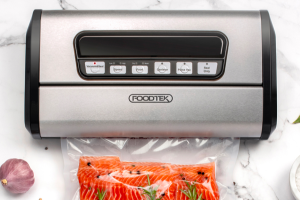
- Protect finished sausage properly: Once linked, good packing and vacuum storage help preserve product condition. For that side of the workflow, this guide on vacuum machines and freshness is worth reviewing.
Common faults on the bench and how to fix them
One of the least understood issues in commercial use is natural variability. Peer-reviewed work shows casing toughness varies with collagen stability, and sheep casing toughness increases with animal age, as discussed in this peer-reviewed review on casing toughness and variability. That means two batches of the same nominal product can behave differently before you even start stuffing.
When faults appear, look at the casing as well as the machine.
Blowouts during filling
Usually caused by under-soaked casing, excessive pressure, an oversized fill for the calibre, or a weak section in the batch. Lower the stuffing pressure, check horn fit, and reject damaged strands earlier instead of trying to nurse them through.
Air pockets in links
Often a loading issue. The casing wasn't flushed properly, the operator let air enter at the horn, or fill rate was uneven. Fix the setup and prick trapped air only as a correction, not a habit.
Tough bite after cooking
This can come from casing choice, poor hydration, or batch variability. If one delivery consistently eats tougher than another, ask harder questions about species, origin, grading, and storage history.
Wrinkled finished product
Usually the fill was too loose or the sausage lost shape through cooking and cooling. Fill more evenly and match the casing more closely to the product diameter.
Natural doesn't mean identical. Good operators adjust for the batch in front of them instead of assuming last week's settings will always hold.
What doesn't work is writing every issue off as “bad casings” or “operator error” without checking both. Reliable troubleshooting starts with pressure, hydration, horn size, fill density, and batch consistency.
Sourcing Quality Casings for Your Business
Buying natural casing on price alone usually costs more later. It costs in labour, split links, stop-start stuffing, and uneven presentation in the case.
Questions that get better stock
Commercial buyers should ask specific questions, not just order “hog casings” and hope for the best.
Ask your supplier about:
- Species and product fit: Make sure the casing suits the sausage style you produce.
- Calibration and grading: You want predictable diameter and working consistency.
- Origin and traceability: This matters more now than many buyers admit.
- Packing and storage chain: Poor handling before the casing reaches your site can undo every other quality point.
Questions around provenance are becoming more common for Australian buyers operating under compliance expectations. Origin disclosure and traceability sit much higher on the buying checklist than a lot of public-facing content suggests, as reflected in the International Natural Sausage Casing Association FAQs.
Buy for fit, not just price
A cheaper casing that slows your bench down isn't cheaper. A bundle that gives inconsistent fill, variable snap, or too many weak sections pushes cost straight into labour and waste.
Procurement works better when the buyer and supplier speak the same language. If you need natural hog casings for regular fresh sausage production, specify that clearly and buy against your equipment and product standard. One example is natural hog casings in a 90 m format, which gives buyers a defined product reference rather than a vague category request.
The best results come from treating casing supply as part of production control. That's how you protect consistency, maintain product identity, and avoid turning a good sausage mix into a poor finished sausage.
Natural sausage casings still earn their place because they deliver something customers recognise straight away. Not a theory. A bite. If you choose the right casing, prepare it properly, and buy with tighter specs, you'll get better links, less waste, and a product that feels like it was made by a butcher who knows the craft.
Created with the Outrank tool
