



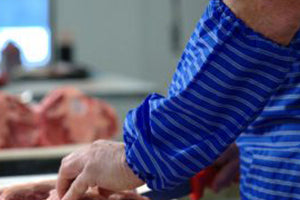

You don't need a lecture if you've already stood in a cold room before dawn, pulled on wet sleeves, checked the bandsaw, and watched the wash-down hose snake across the floor. In that moment, industrial safety regulations aren't an abstract legal topic. They're the difference between a shift that runs cleanly and a shift that ends with a cut hand, a spill, a stoppage, or a regulator asking for records you can't produce.
Table of Contents
- A Pre-Shift Snapshot of What Safety Regulations Are Really Asking
- The Legal Framework That Backs Every Shift
- Sector-Specific Duties Inside Meat Plants and Commercial Kitchens
- Building a Practical Compliance System Step by Step
- Hazardous Chemicals, Noise, and Air Quality in Food Environments
- Enforcement, Penalties, and Where Compliance Breaks Down
- Where Industrial Safety Meets Food Safety
- Tools, Templates, and Resources to Implement This Week
A Pre-Shift Snapshot of What Safety Regulations Are Really Asking
The first people in the room usually solve the first safety problem before anyone calls it a safety problem. Someone hangs aprons on the right hooks, someone checks whether the mincer is isolated, and someone dries the patch of floor that always gets slippery near the hose reel. Those are small habits, but they line up with the purpose of industrial safety regulations, which is to keep people alive, keep food moving, and give the business a system it can defend if something goes wrong.
A good pre-start in an abattoir or commercial kitchen doesn't look dramatic. It looks ordinary, and that's the point. The shift starts with workers who know where the knives are, which guards must stay closed, what chemical is in the spray bottle, and who to call if a blade jams or a line leaks.
What compliance looks like before the first carcass or tray arrives
Compliance begins with the sequence, not the paperwork. A supervisor who checks guarding, PPE, spill control, and emergency access before production starts is already doing part of the legal work expected under the WHS framework. A team that records the issue, fixes it, and tells the next shift has turned a hazard into a managed task.
Practical rule: if the floor crew can't tell you what the main hazards are by looking at the room, the system is too vague to be trusted.
The reality in meat rooms and kitchens is that the strongest controls are physical and routine. Machine guards stay in place because someone checks them. Wet floors get managed because somebody owns the hose and the squeegee. Aprons, gloves, and face protection work only when the right item is matched to the task and worn.
That's why industrial safety can't be reduced to a binder, a poster, or a one-time induction. It lives in the first ten minutes of the shift, then follows the work until the last apron is hung up and the last surface is washed down.
The Legal Framework That Backs Every Shift
A supervisor walks into a cold room before the first carcass comes through. The hose is already on the floor, one guard is sitting loose, and a cleaner has left a chemical bottle near the prep bench. That moment is where the legal framework stops being abstract. It is the point where Work Health and Safety duties, food-safety rules, and the actual pace of the line all have to line up.
Australia's model Work Health and Safety system gives the legal backbone, while state and territory regulators enforce it on the ground. Safe Work Australia publishes national injury and fatality indicators used by governments and industry, and the model WHS laws standardised expectations across most of the country after harmonisation began in 2011. Safe Work Australia's national fatality data is the place to check the current worker-fatality picture and the long-run trend in plain terms (Safe Work Australia national fatality data).
That matters on the floor because written duties are there to force repeatable control, not rely on memory or good intentions. In meat rooms, cold stores, and commercial kitchens, the risk profile changes with traffic, moisture, knife work, moving plant, and the way teams clean down at the end of a shift.
How the rulebook is split in practice
The WHS regime deals with worker safety. Food-safety rules deal with hygiene, contamination control, and product integrity. In a butcher shop or hotel kitchen, those frameworks overlap, but they are not the same thing. A guard on a slicer protects the worker. A sanitation process protects the worker and the food. If the process is weak, both systems fail at once.
The WHS Regulations make information, training and instruction mandatory, and they have to be delivered in a way workers can understand and use. That matters in wet, high-turnover workplaces where a generic induction will not help a new employee judge splash hazards, blade exposure, or the right way to clean a drain line. Safe Work Australia's model code also requires PCBUs to provide personal protective equipment when risks cannot be eliminated, and the PPE has to be suitable, maintained, and worn properly (Safe Work Australia model code).
Chemical control has its own rules as well. Hazardous chemicals are managed through a 16-section safety data sheet structure aligned with GHS, covering identification, hazards, composition, first aid, firefighting, release response, handling and storage, exposure controls and PPE, and the other information needed for safe use (SDS structure aligned with GHS). In a wash-down area, that means the spray bottle, the label, and the glove choice have to match the SDS, not a guess made on the floor. For a practical check on how chemical handling sits alongside contamination control, see how to prevent cross-contamination in food work.

The practical test is simple. Rotating metal needs guarding and isolation. A chemical splash needs SDS-led PPE and storage. A wet floor needs cleaning discipline, not a reminder poster. In real abattoirs and commercial kitchens, compliance is the set of controls that still holds when the room is cold, the floor is busy, and the last apron is coming off.
Sector-Specific Duties Inside Meat Plants and Commercial Kitchens
The same hazards keep returning because the workflow keeps repeating. Bandsaws run. Mincers feed. Crates move. Floors get washed. Knives get sharpened. That's why the most cited industrial controls remain guarding, energy isolation, and powered industrial truck controls, because those are the places where injury risk stays high if the control fails (OSHA enforcement reference).
The failures regulators usually notice first
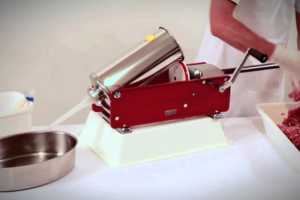
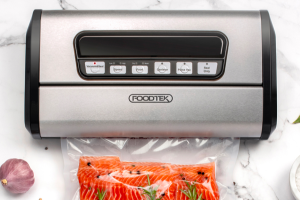
A guard missing from a bandsaw is not a theoretical breach. A hand can reach the danger zone in the time it takes a line worker to clear a jam. The same goes for mincers and vacuum equipment. If the machine can start unexpectedly, the worker needs an isolation process that is obvious, trained, and enforced.
In a meat-processing line, traffic controls matter just as much. Forklifts, pallet jacks, and delivery trolleys create the sort of crush risk that PPE alone can't solve. Route segregation, pedestrian markings, and supervised movement are what make the floor safer. PPE still matters, but it's not a substitute for physical separation.
Chemical use is the other everyday gap. A wash-down crew might use a corrosive cleaner in one zone and a sanitiser in another. Without a register, a labelled container system, and site-specific training, the worker is left to remember which bottle is which. That's a bad system in a room where the floor is wet and the shift is moving quickly.
Operational truth: the hazard that gets cleaned up every day is the hazard that gets underestimated every day.
Noise and air quality are easy to ignore because they don't always stop production. In a vacuum-packing area, a saw line, or a freezer-adjacent workspace, workers often accept the noise until hearing protection becomes routine. That's where compliance starts to break down, because a task that feels normal can still be unsafe if the exposure is unmanaged.

The detail that matters is the point of work. A policy might say “use PPE.” A floor supervisor has to decide whether the glove resists the chemical, whether the apron covers the splash zone, whether the hearing protection is being worn correctly, and whether the machine can be cleaned without defeating the guard. That's where written rules turn into real control.
For a practical contamination-control crossover, this cross-contamination guide shows how hygiene discipline and workwear choices often intersect on the same line.
Building a Practical Compliance System Step by Step
A compliance system only holds up if it still works on a busy Friday, when someone calls in sick, and during the last hose-down before close. Controls need to be chosen in the order the job is done, not in the order they sit in a policy folder. The hierarchy still applies, but the floor version is more grounded. Remove the hazard if you can, guard it if you can't, isolate energy if the machine can restart, and only then rely on PPE.
What a usable system looks like on a small site
Start with the risk assessment. Walk the room, watch the task, and note where people touch blades, chemicals, hot surfaces, moving loads, or wet floors. A paper template only helps if it reflects real work such as carcass handling, tray movement, wash-down, and waste disposal.
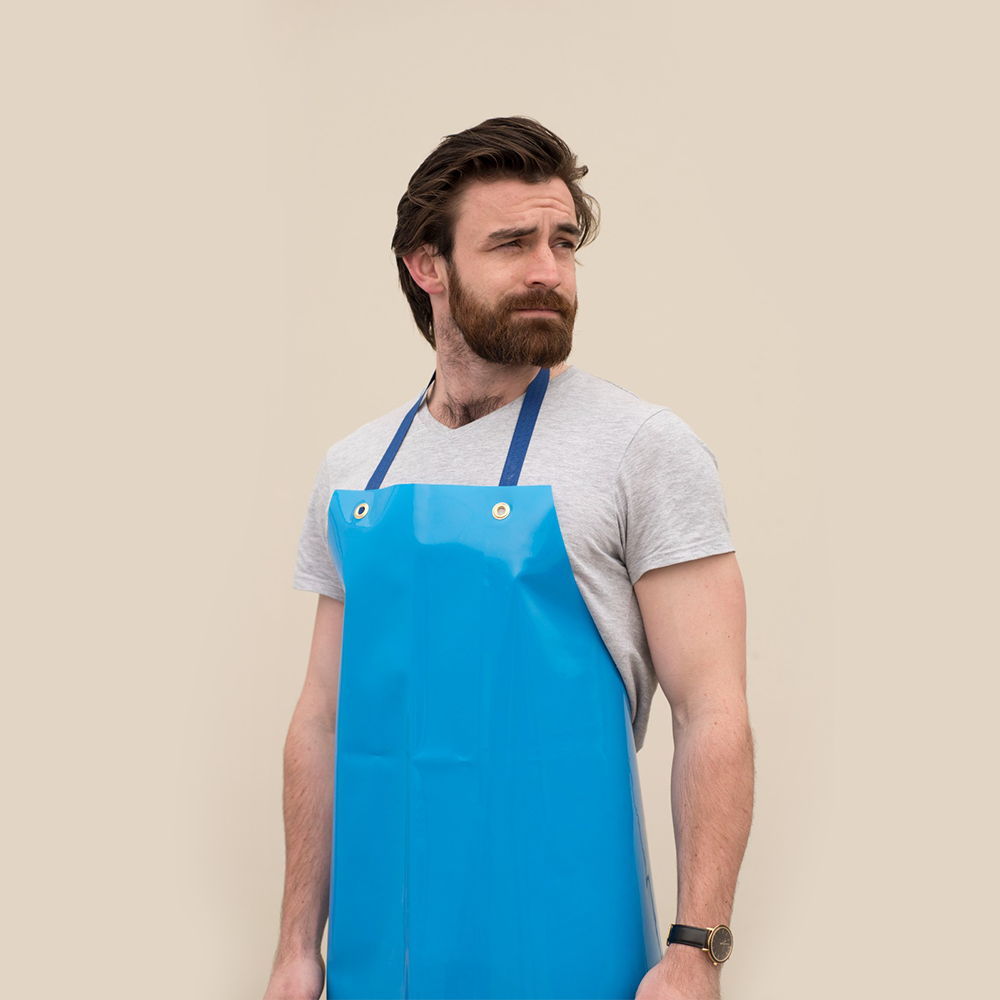
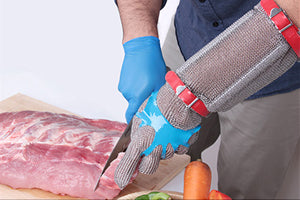
Then match PPE to the hazard and the worker. A generic apron will not always suit a splash task. A standard glove will not always suit cut resistance or chemical exposure. Safe Work Australia's model code expects PPE to be suitable, maintained, and worn correctly, which means the gear has to fit the workflow instead of being chosen on price alone.
A shop floor version of that rule is simple. If the apron rides up during wash-down, it fails. If the glove slows knife control at the trim table, it creates another problem. If the face shield fogs in a cold room, workers stop using it properly.
Side-by-side choices that usually make the difference
A small site can compare controls in a simple way:
- Machine task: bandsaw or mincer use. Best control: fixed guarding, lockout or equivalent isolation, and clear restart checks.
- Chemical task: wash-down or sanitising. Best control: SDS-based selection, labelled containers, segregation of incompatible products, and PPE matched to the chemical handling instructions.
- Noise task: saw lines or packing rooms. Best control: hearing protection plus exposure management, not just a box of earplugs.
- Dust or fume task: dry ingredient handling or poorly ventilated cleaning. Best control: source control and ventilation first, with respiratory protection as part of the control stack, supported by the right fit and use checks. See our respiratory protection equipment guide for what that looks like on site.
A weekly rhythm helps. Check guarding, test isolation, inspect PPE condition, confirm signage, and verify that training records match current tasks. If a worker moved from trimming to cleaning, the training should reflect both jobs.
The system does not need to be fancy. It needs to hold together through handover, overtime, wet floors, and the end-of-shift rush.
Hazardous Chemicals, Noise, and Air Quality in Food Environments
Walk through any wet plant at first light, and the same hazards keep showing up in plain sight. Chemical spray, wash-down foam, saw noise, and airborne dust become part of the background because they happen every day, but routine does not make them safe. Safe Work Australia treats exposure standards as a legal trigger for control measures, and for wood dust the workplace exposure standard is 1 mg/m³ as an 8-hour time-weighted average (Safe Work Australia exposure standard).
Chemical control starts with the SDS, not the label
The SDS layout matters because it tells you how the product has to be handled on site. In practice, Sections 7 and 8 carry most of the decision-making, storage and handling on one side, exposure controls and PPE on the other (GHS SDS structure). If the cleaner is corrosive, the glove, face shield, and ventilation need to suit that exact product. A label might warn you there is a hazard, but the SDS tells you how the hazard shows up in a real kitchen or abattoir wash-down.
The workplace also needs a register of hazardous chemicals, current SDSs, labelled containers, and training that tells workers which bottle goes where. In meat rooms, hospitality kitchens, and wash-down zones, that detail matters because sanitiser, degreaser, and detergent can all be in play during the same shift. If the wrong product gets poured into the wrong sprayer, the result is usually a bad mix, a damaged surface, or a worker exposed to something they were not expecting.
Noise is the other hidden problem. The IFC occupational health and safety guidance says workers should not be exposed to noise above 85 dB(A) for more than 8 hours without hearing protection (IFC OHS guidance). That benchmark is useful in saw rooms, packaging areas, and any line with constant mechanical noise. On the floor, the test is simple. If a worker has to raise their voice to be heard at normal distance, the site is already in hearing-protection territory.
For food environments, the PPE system has to work as one set. Hearing protection, splash protection, cut resistance, and respiratory protection are not separate purchases. They have to fit the job, the room, and the pace of the shift. The wrong glove slows a cleaner down. The wrong face protection fogs in a chiller. The wrong respirator sits in a locker because it is uncomfortable after an hour of wet work.
A practical reference for selection and fit is this respiratory protection guide. The better system is the one workers can wear through a wet shift and still clean, store, and use properly.
Enforcement, Penalties, and Where Compliance Breaks Down
A written policy is not compliance. It's only evidence that someone knew the rule existed. Regulators look for what happened on the floor, because the gap between paper and practice is where most incidents start. That's especially true in high-turnover environments like abattoirs, meat processing, and hospitality, where supervisors rely on routine and repetition to keep standards in place.
What happens after a serious event
Under model WHS laws, a notifiable incident, including a death, serious injury or illness, or dangerous incident, must be reported to the regulator immediately after becoming aware of it, and the incident site has to be preserved until released or exempted. A serious cut from a bandsaw, a crush injury from a mincer, or a chemical splash that sends a worker for treatment can all trigger that duty very quickly (incident notification framework).
That immediate-reporting rule changes behaviour. Supervisors can't just clean up and move on. They need to secure the area, preserve evidence, record who was present, and start the investigation while the facts are still fresh. That is how root cause gets identified instead of guessed.
The broader enforcement picture also includes notices, required corrections, and prosecution where the breach is serious. But the more useful question is where compliance falls apart. The ILO has noted that enforcement failures, inspector training gaps, and resource limits can undermine statutory safety even when the law looks strong (ILO-linked enforcement discussion). That matters because many operators still assume the existence of a policy, induction, or poster means the job is done.
Why the floor is harder than the policy
The floor is harder because the work changes fast. A kitchen hand who was safe in prep can become unsafe at close if the area is wet, the pace is up, and the right gloves aren't handy. A new line worker might know the rule but not the workaround the regulars use when the machine jams. A contractor might understand the machine but not the site's isolation process.
The fix is supervisory discipline. Check training against actual tasks. Watch the work, not just the briefing. Verify that the PPE is the right type and is being worn correctly. If the crew can't demonstrate the control, the business doesn't really have it.
Where Industrial Safety Meets Food Safety
The best sites don't treat worker safety and food safety as separate paperwork streams. They design the line so the same action protects both people and product. A food-grade apron that resists soak-through protects the worker and helps keep contamination out of the product stream. A sleeve protector that stays in place during wash-down reduces splash contact and helps preserve hygiene discipline.
One workflow, two compliance outcomes
In a wash-down area, the sequence matters. The worker selects the right chemical from the register, checks the SDS, puts on the correct gloves, face protection, and apron, then applies the product in a controlled way. That same routine helps satisfy chemical safety, hygiene control, and local cleaning procedure at once.
Cold rooms and chillers show the same overlap. Workers need clothing and gloves that fit the environment, but they also need clear movement rules because slippery floors and reduced dexterity change how people carry trays, boxes, and carcass components. A product that's good for the food stream but awkward for the task won't stay in use.
The same logic applies to tool carry. A secure knife pouch or belt helps protect against accidental contact and keeps sharp tools organised at the workstation. That's a safety control and a contamination control, because loose blades on benches create problems on both fronts.
An integrated approach also makes audits easier. Instead of separate answers for hygiene, PPE, and hazard control, the supervisor can show one workflow, one training path, and one record trail. The business spends less time duplicating documents and more time keeping the room under control.
For an example of how food-safety thinking and workplace systems overlap, see this HACCP and food-safety commitment overview. The useful takeaway is simple, the cleaner the workflow, the easier it is to prove both safety and sanitation.
Tools, Templates, and Resources to Implement This Week
A good compliance pack should fit on a clipboard or a shared tablet, not on a shelf. The goal is to give the shift leader something practical enough to use before the first order leaves the dock. That starts with a daily checklist and ends with a short SOP that people can follow under pressure.
A simple toolkit that works on a real floor
Use these four tools first:
- Daily PPE and equipment check: confirm guarding, isolation readiness, apron condition, glove integrity, eye protection, and floor condition before production starts.
- Risk assessment template: list the task, the hazard, the control, the person responsible, and the review date. Keep it specific to bandsaws, mincers, wash-down, chillers, and manual handling.
- One-page SOP for high-risk machinery: include start-up, isolation, cleaning, jam response, restart, and sign-off.
- Training record sheet: match each worker to the actual tasks they do, not just the site induction they completed months ago.
A short weekly review helps too. The supervisor should check whether guards stayed in place, whether chemicals were labelled, whether PPE was available and suitable, and whether any worker was moved into a task without update training. That review is where weak points surface before they become incidents.
A quick comparison of duties and practical examples
| Regulatory Duty | Workplace Example | Practical Action |
|---|---|---|
| Machine guarding | Bandsaw or mincer line | Keep fixed guards in place, verify before start-up, and isolate before cleaning |
| Hazardous chemicals | Wash-down with detergent or sanitiser | Maintain the chemical register, keep SDSs accessible, and match PPE to the product |
| Training and instruction | New cleaner on a wet floor | Give task-specific instruction, not a generic induction |
| PPE selection | Splash-prone butcher or kitchen task | Use apron, gloves, eye protection, and face protection suited to the hazard |
| Incident reporting | Serious cut or crush injury | Report immediately, preserve the site, and document the sequence |
For authoritative references, keep Safe Work Australia, the relevant state or territory regulator, and your food-safety authority close at hand. The best site file is the one that proves the crew was trained, the hazard was assessed, and the controls were used.
If you need to tighten your site controls this week, start with the room you work in, the tasks you repeat every day, and the PPE your team reaches for without thinking. Then source the right aprons, sleeve protection, knife storage, and hearing or respiratory gear from PSC TRADING Co PTY LTD, and build the checklist around what your crew uses on the floor.
