



You know the moment. A knife's sitting on the bench where it shouldn't be, someone's reaching into a pocket for a blade mid-cut, and a sharpening steel has rolled close to a sink full of trim. On a busy butcher floor, the problem usually isn't the knife itself, it's where the knife lives between uses. That's where a knife pouch belt earns its keep, because it gives the blade a fixed home at the waist, keeps hands off loose edges, and keeps the workstation from turning into a clutter of sharps.
Table of Contents
- Why a Knife Pouch Belt Matters on the Floor
- The Three Parts of a Carry System
- Comparing Belt and Pouch Materials for Wet Environments
- Sizing, Belt Widths, and Pouch Fit
- Hygiene, Wash-Down, and Australian Compliance
- Ergonomics, Retention, and Shift Safety
- Wholesale Ordering and Procurement Checklist
- Putting It All Together
Why a Knife Pouch Belt Matters on the Floor
A butcher doesn't usually lose time because the knife is blunt. Time gets lost when the knife is not where the hand expects it, or when the worker has to choose between pocket carry, bench placement, and walking back to a rack. Medieval users solved the same problem in a very plain way, they kept knives in belt sheaths because hosts didn't provide cutlery, and belt-mounted knife storage was routine personal equipment rather than a novelty California Academy of Sciences. That old logic still maps cleanly onto modern meat work, where the job needs fast access and controlled storage at the waist.

The carry gap is usually the real bottleneck
On a floor with shared benches, sinks, hooks, and trolleys, a loose knife creates friction every few minutes. A pocket works until the pocket is wet, full of debris, or used for something else. Bench placement works until somebody bumps the handle, wipes across it, or uses the space for trim, trays, or paperwork.
Practical rule: if a worker needs to think about where the knife is, the carry system is already failing.
The old carry problem was not about style. It was about secure, repeatable access. A knife pouch belt shifts the blade from “where did I put it?” to “it's on my waist, in the same place every time.” That matters in busy butcher and food-processing workflows because the belt becomes part of the workstation, not a separate accessory.
The historical trail is useful here too. Early knife belts weren't one-item holders. A Visigoth belt pouch could carry two knives and also hold scissors or bone combs, which shows the carrier was built as a utility system from the start knife history source. That's exactly how most working buyers should think about it now. The pouch is there to control a tool, reduce hand-carrying, and keep the blade where the operator can return it quickly without searching.
The Three Parts of a Carry System
A good knife pouch belt has three jobs split across three parts. The belt carries the load, the pouch or sheath protects and stabilises the tool, and the closure controls whether the knife stays put or comes out cleanly when needed. If one of those parts is wrong, the whole system feels wrong on the floor.
Belt, pouch, closure, each one does a different job
A butcher workstation shows the idea clearly. The belt is the rail, the pouch is the holster, and the closure is the safety catch. A strong rail with a weak holster still lets the tool move around. A solid pouch with a sloppy closure still risks a blade working loose during a shift. A good closure on a poor belt can still leave the whole thing swinging into the body during bending or crouching.
That's why changing one component affects the rest. A food-grade polyurethane belt system behaves differently from a leather setup because the material changes the cleaning routine, stiffness, and moisture behaviour. The same logic applies to the pouch and closure. If the sheath mouth is too soft, draw consistency drops. If the retention is too aggressive, the worker starts fighting the tool every time it comes out of the pouch.
A carry system should answer three questions every day, does it stay in position, does it protect the blade, and does it come clean?
That's the standard I use when buying for butcher shops and abattoirs. The belt needs enough structure to stop migration, the pouch needs the right envelope for the knife shape, and the closure needs to match the pace of the job. A system that looks tidy in the storeroom can still be wrong if it twists at the waist or traps fat and moisture around the opening.
One useful product example is a professional butcher tool combo belt paired with knife, steel, and pouch carry. The category itself shows the right mindset, because the belt is not just holding a pouch, it's coordinating the whole carry pattern across tools and task flow PSC Trading professional butcher tool combo belt.
Comparing Belt and Pouch Materials for Wet Environments
Material choice decides whether the belt is workable in a dry kitchen, a wash-down room, or a greasy processing area. Buyers often start with habit, leather because it feels familiar, nylon because it's light, PVC because it looks wipeable, or polyurethane because it's built for food-contact work. The better question is what survives the actual environment, wet shifts, detergent, fat, abrasion, and repeated sanitising.
What each material does well, and where it falls down
Leather works well in dry hospitality settings and can wear comfortably against clothing. It has a traditional feel and decent toughness, but it's not my first choice for repeated wash-down or oily meat-room use because porous materials are harder to keep clean under routine wet-area conditions.
Nylon and 1000D Cordura bring abrasion resistance and a more technical feel. They're useful when the focus is on light weight and rugged stitching, but they're less convincing when sanitising and food-safety cleaning are the main concern. In wet, chemical-heavy use, fabric can hold onto grime at seams and edges.
PVC is easier to wipe than leather and is often chosen for wet workplaces. The downside is comfort and ageing under repeated flex and heat exposure, so it needs checking for long-shift wear and for how the closure and seams hold up after constant cleaning.
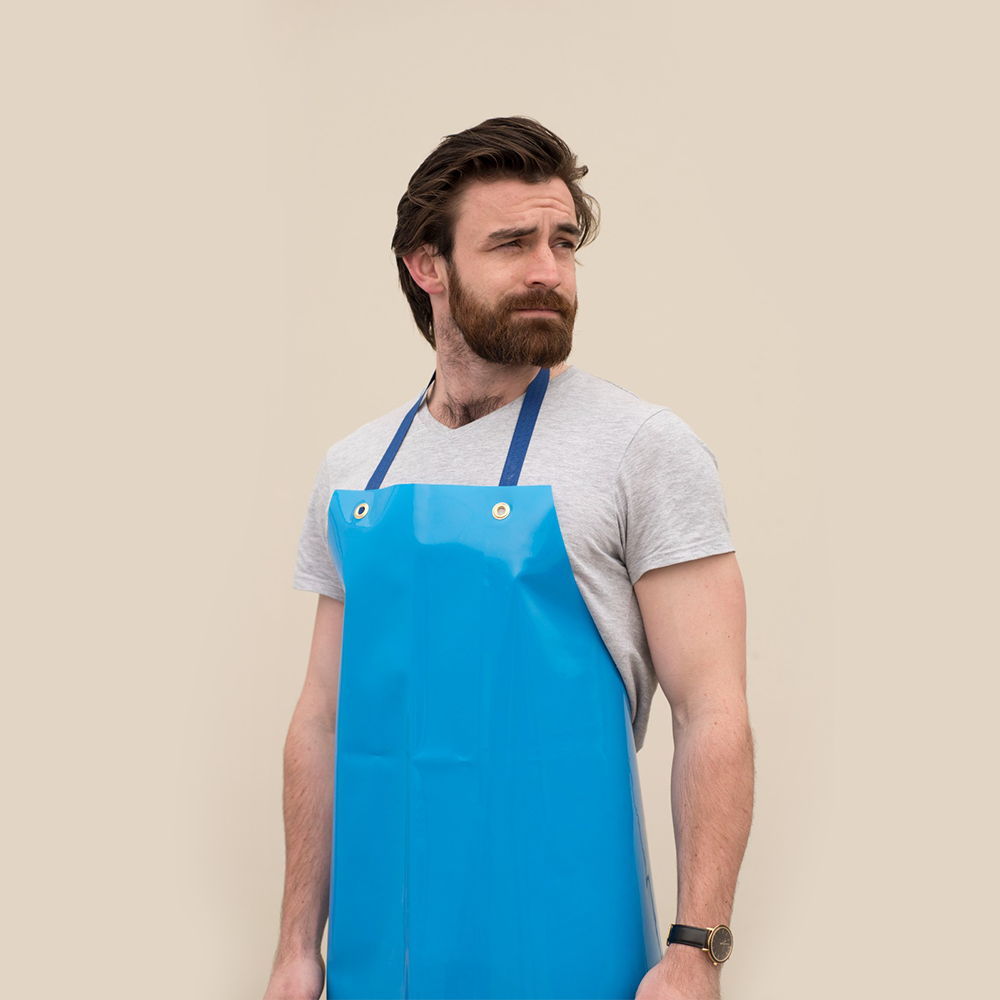
Food-grade polyurethane or TPU is the strongest fit for wash-down butchers, abattoirs, and food-processing teams. The material is non-absorbent, designed for cleanability, and built for fluid exposure. A matching apron system from an Australian supplier shows the same wet-area logic, solid food-contact polyurethane, easy cleaning, steam sterilisation, and resistance to oil, grease, abrasion, and tear propagation PSC Trading TPU vs PVC apron guide.
Buyer's rule: choose the material around the cleaning method first, then look at comfort second.
| Material | Cleanability | Wet-Area Suitability | Typical Price | Best Fit |
|---|---|---|---|---|
| Leather | Moderate, depends on maintenance | Better in dry areas | Usually mid to higher | Dry hospitality kitchens, traditional carry |
| Nylon or Cordura | Moderate | Good for lighter-duty use | Usually lower to mid | General utility, less aggressive wash-down |
| PVC | Good for wipe-downs | Good in wet areas | Usually mid | Wet kitchens and mixed-use work |
| Food-grade polyurethane or TPU | Strong | Strongest fit for wash-down | Usually mid to higher | Abattoirs, butcher shops, food processing |
A plain-spoken way to decide is this. If the pouch will see fat, steam, rinse cycles, and shared use, put polyurethane or TPU at the top of the list. If the environment is dry and the team wants a familiar feel, leather can still make sense. If the site is a mixed bag, test before you buy in volume, because the wrong material won't fail loudly, it will just become annoying to clean and harder to keep compliant.
Sizing, Belt Widths, and Pouch Fit
Fit decides whether the pouch works or turns into a nuisance. Australian utility-belt suppliers commonly size belts in three waist bands, Small 31"-37" (79-94 cm), Medium 36"-44" (91-112 cm), and Large 43"-53" (109-135 cm), and note that the belt is worn over clothes and apron to carry a knife pouch and sharpening steel Tuffin Belt. That matters because a belt that's too loose swings, and a belt that's too tight creates pressure points and awkward blade access during repetitive work.
Belt width and tool envelope have to match
Commercial pouches in the Australian market often use belt loops sized for belts up to 60 mm wide, or slotted fittings up to 2 inches (51 mm). That range is practical because heavier butcher belts need a stable interface, not a narrow loop that lets the pouch roll or drift. On the tool side, one folding-knife pouch is specified for blades no longer than 140 mm, 35 mm wide, and 15 mm high, while leather pouches in the same market can be compact at 94 x 41 x 37 mm and 29 g, or 127 x 36 x 37 mm and 33 g Klein Tools pouch data.
That size data tells you where problems start. If the blade or multitool approaches the top end of the pouch envelope, the mouth starts to rub, the draw feels less consistent, and the tool can move around too much inside the sheath. If the belt loop is too small for the belt, the pouch won't stay oriented properly and you'll get swing or twist when the wearer bends, crouches, or reaches across a bench.

Here's the test I use with buyers. Put the belt on over the actual apron and workwear, clip in the pouch, then have the wearer bend, twist, and return the knife one-handed. If the pouch migrates, if the blade catches at the mouth, or if the wearer has to look down every time to re-seat the knife, the fit is wrong. A clean spec sheet is useful, but a live fit check catches the problems that catalogue photos hide.
The practical ordering brief should also include the butcher-belt style being used across the site, because compatibility matters more than appearance. One useful reference point is PSC Trading's own butcher-belt range, which shows how carry systems are often sold as a matched belt-and-accessory setup rather than as isolated parts PSC Trading butcher belt guide.
Hygiene, Wash-Down, and Australian Compliance
A knife pouch belt used around food belongs in the sanitation-controlled environment, not just in the clothing category. Australian food safety rules expect equipment around food-contact areas to stay clean and maintained, so the pouch must avoid holding debris, blood, fat, and moisture. A poor carrier does more than look untidy. It can become a contamination source if it sits beside exposed product or goes through shifts without proper cleaning.
Cleaning routine beats guesswork
For a meat-room or commercial-kitchen setup, the routine should be straightforward. Wipe the pouch between tasks when contamination is visible, sanitise at shift end, and remove the belt for washing whenever the material allows it. That matters in abattoir and butcher work, where wet-area exposure is normal and porous or hard-to-clean materials can hold residue in seams and closures.
If a pouch can't be cleaned without soaking up grime, it doesn't belong in a wet-area carry system.
Closure style also affects hygiene. Velcro can trap fine debris and fibres if the pouch lives in a dirty environment. Snap and knife-snap systems are often easier to inspect visually, though they still need checking for residue under the flap and around the hardware. A cleanable belt should be treated like the rest of the PPE, inspected for wear, wiped down after use, and retired if cracks, fraying, or surface damage make cleaning unreliable.
Australian WHS practice also puts blade storage into the hazard-control picture. Knives are a recognised source of cuts and punctures in meat handling and hospitality work, so keeping the blade in a fixed place reduces hand-carrying, bench clutter, and unsafe set-downs. That is the compliance argument in plain English. A belt-mounted pouch supports a safer system of work when it keeps the knife accessible but controlled, especially in a shift that moves between trimming, packaging, and wash-up.
For buyers who want a hygiene-led source point, PSC TRADING's focus on butcher and food-processing supplies fits the same operational frame, because the question is whether the carry system supports cleanability and worksite hygiene, not whether it looks like a leather accessory. PSC TRADING

Ergonomics, Retention, and Shift Safety
A belt that fits badly is a safety issue, not a comfort issue. If a worker is tying sausages, stepping between benches, or moving from trimming to packaging, the pouch has to stay put and the knife has to come out cleanly without fumbling near the body. A loose belt, the wrong carry angle, or weak retention creates snag risk and slows the hand at exactly the moment the task gets repetitive.
Retention hardware is the difference between secure and annoying
Velcro is fast and simple, but it can wear loud in a quiet area and it isn't always the cleanest option in debris-heavy work. A snap or knife-snap gives a firmer mechanical hold, which many buyers prefer when the knife needs to stay in place through bending and crouching. Mixed-handed teams also benefit from left- and right-handed configurability, because a blade that sits in the wrong orientation wastes time and forces awkward movement.
Vertical carry and horizontal carry each have a place. Vertical carry is often easier for straightforward draw-and-return cycles, while horizontal carry can help with clearance when a worker is seated, crouched, or working under a bench edge. The wrong choice shows up quickly. A pouch that catches the apron, rotates toward the hip, or digs into the side during repeated reaches is telling you the carry angle doesn't match the task.
Safety note: if the worker needs to adjust the pouch during the shift, the setup hasn't been dialled in properly.
Retention, stiffness, and belt width all interact. A rigid belt with the right closure can keep the pouch from migrating. A soft belt with the same closure can still drift if the load is heavy or the wearer is moving constantly. That's why long-shift comfort is never separate from cut risk. The better system is the one that stays stable, keeps the edge covered, and lets the worker return the knife without looking down.
Wholesale Ordering and Procurement Checklist
A buyer who is ordering a knife pouch belt for multiple sites needs more than a polished product page. The brief has to hold up across shift patterns, handedness, apron types, and the cleaning routine on the floor. The supplier should be able to speak clearly about sizing, material choice, and replacement hardware, because that is what stops mismatched stock from being written off after the first round of use. PSC TRADING is one Australian wholesaler that works in butcher and food-processing supplies, so it fits naturally into that procurement conversation.

What to confirm before you place a recurring order
- Minimum Order Quantity: confirm the MOQ with the distributor before you try to roll the item out across several sites.
- Sizing Kit: ask for a sample range so different staff can test fit over apron and workwear.
- Material Test: verify cut resistance, cleanability, and wash-down durability in the actual environment.
- Compliance Docs: request certificates or written confirmation for food-contact materials where relevant.
- Brand Customisation: if you need site identity, discuss logo embossing or colour options before bulk order.
A practical order brief should also spell out the belt width, pouch size, closure type, handedness, and the cleaning method you expect. If a supplier cannot answer those points plainly, the product is probably not ready for controlled food-processing work. The same goes for repeat supply. If replacement parts are awkward to source, the carry system becomes a maintenance problem instead of a clean operational standard.
Putting It All Together
The decision is straightforward once you strip away the styling. Material has to suit the wash-down regime, sizing has to match the worker and the belt width, and hygiene has to hold up under real cleaning. If the pouch doesn't stay put, doesn't clean easily, and doesn't fit the actual knife, it's the wrong system.
The fastest next step is to request a sample set, have a few staff try it over apron and uniform, and then lock the carry spec to the rest of your PPE. A knife pouch belt should make the shift cleaner, safer, and easier to run, not add another item that needs workarounds.
