


Some workwear earns its place by doing two jobs well. It supports the practical needs of food preparation while helping the team look professional when serving customers.
PSC Trading’s Traditional Butcher Stripe Bib Apron – Poly Viscose 220gsm brings a familiar trade look to Australian butcher shops, delicatessens, commercial kitchens and food-service businesses. With its bib-style coverage, recognisable striped design and substantial 220gsm poly-viscose fabric, it’s a straightforward uniform choice for teams working across preparation and customer service.
A Professional Look Customers Recognise
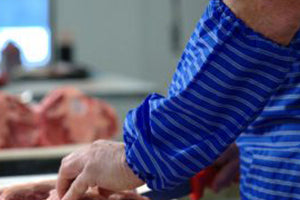
The striped butcher apron has a strong visual connection with the meat trade. It immediately feels appropriate behind a butcher counter without appearing decorative or over-styled.
That familiarity matters in customer-facing businesses. A coordinated team looks organised, easier to identify and ready to help. The apron can give employees a consistent appearance whether they’re preparing an order, restocking the display or speaking directly with customers.
It may suit:
-
Independent butcher shops
-
Supermarket meat departments
-
Delicatessens
-
Farm shops and specialty food retailers
-
Commercial kitchens
-
Catering teams
-
Market vendors
-
Butchery training environments
For businesses that want practical uniforms with a clear connection to the trade, the traditional stripe remains a sensible choice.
Why Choose a Bib Apron?
A waist apron covers only the lower portion of the wearer’s uniform. A bib apron extends across the front of the torso, providing broader coverage for work performed at benches, counters and preparation stations.
This format is particularly useful for employees who move between different responsibilities throughout the day. A team member may begin the shift preparing products, spend time assembling orders and later serve customers at the counter.
The bib design creates a complete uniform appearance while helping cover the areas most exposed during everyday food-handling tasks.
A butcher bib apron may be appropriate for workers who:
-
Spend extended periods at preparation benches
-
Move between back-of-house and customer-facing areas
-
Package and assemble customer orders
-
Restock refrigerated displays
-
Wear an apron as part of a coordinated staff uniform
-
Need practical front coverage for suitable routine tasks
The apron should always be matched to the work being performed. It does not replace specialised protective equipment required for cutting hazards, chemicals or demanding industrial processing.
What Does 220gsm Mean?
GSM means grams per square metre. It describes the weight of a fabric rather than the total weight of the finished garment.
At 220gsm, this poly-viscose apron has a substantial workwear feel. It offers businesses a practical option when they want something more structured than a very light promotional apron but don’t require a heavy industrial processing apron.
Fabric weight is only one factor to consider. Purchasing managers should also assess:
-
The employee’s role
-
The length of each shift
-
The temperature of the workplace
-
The uniform worn underneath
-
The required level of coverage
-
The workplace’s cleaning routine
-
How frequently aprons are issued and rotated
Looking at the complete working environment helps businesses choose an apron for real operating conditions rather than selecting one based on appearance alone.
Why Poly-Viscose Suits Staff Uniforms
Poly-viscose combines polyester and viscose fibres in one material. The blend is commonly used for workwear and uniforms where presentation and everyday practicality both matter.
For a traditional butcher stripe apron, the fabric helps create a neat, recognisable appearance suitable for preparation and service areas. It can be worn over an existing uniform without making the employee look excessively industrial when they move behind the retail counter.
Cleaning requirements can vary according to the fabric composition, trims and construction. Follow the supplied care information rather than assuming every poly-viscose apron should be washed in the same way.
Made for Mixed Preparation and Service Roles
Many employees in smaller food businesses don’t remain at one station all day. A butcher may trim products, package orders, replenish the display and speak with customers during the same shift.
That’s where a traditional bib apron makes practical sense. Its appearance fits naturally into a customer-facing environment, while its coverage supports appropriate everyday preparation duties.
Potential applications include:
-
Butcher-counter service
-
General food preparation
-
Packing and order assembly
-
Deli service
-
Catering preparation
-
Market and event service
-
Product demonstrations
-
Hospitality and butchery training
Every workplace should confirm that a fabric apron is suitable for the intended task and the conditions in which it will be worn.
Creating a Consistent Butcher-Shop Uniform
A professional uniform doesn’t need to be complicated. A practical setup may include an approved shirt, suitable trousers, footwear selected for the workplace and an apron matched to the employee’s duties.
Using the same apron style across customer-facing staff can make employees easier to identify and give the shop a more cohesive presentation.
Depending on the work being performed, employees may also require:
-
Protective gloves
-
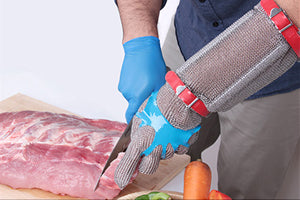
Cut-resistant equipment
-
A mesh apron
-
Safety glasses
-
A butcher’s belt and knife pouch
-
Other task-specific PPE
The striped bib apron should fit comfortably over the employee’s uniform without interfering with any required protective equipment.
Check the Fit Before Work Begins
Even a straightforward apron can become distracting when it isn’t fitted correctly. Before starting the shift, check that the bib sits properly across the torso and that the neck loop and waist ties are appropriately positioned.
The wearer should walk, bend and reach as the role normally requires.
Confirm that:
-
The apron allows comfortable movement
-
The bib provides the expected coverage
-
The hem does not create a tripping or snagging concern
-
The waist ties remain secure
-
The apron does not shift excessively
-
Other required equipment can still be worn correctly
Any fit problem should be addressed before entering the work area.
Inspection, Cleaning and Storage
Aprons used in butcher shops and food-service businesses should be managed under the workplace’s documented uniform and hygiene procedures.
Before each use, look for:
-
Tears, holes or worn sections
-
Loose or damaged stitching
-
Frayed neck or waist ties
-
Permanent residue or staining
-
Changes affecting the apron’s fit
-
Damage that may make it unsuitable for the task
Follow the attached care instructions when cleaning the garment. Pay particular attention to the seams, edges, neck loop and waist ties because these areas experience frequent handling.
After cleaning, store the apron in its designated uniform area, separate from used garments and possible sources of contamination. If it becomes damaged, follow the workplace’s process for assessment, repair or replacement.
Shop Traditional Butcher Stripe Aprons in Australia
The best uniforms feel appropriate for the work and the business. They support everyday tasks while helping the team maintain a professional presence in front of customers.
PSC Trading’s Traditional Butcher Stripe Bib Apron combines classic trade styling, practical bib coverage and 220gsm poly-viscose fabric. It’s a reliable uniform option for Australian butcher shops, delicatessens and food-service teams that want a smart, recognisable appearance.
Shop the Traditional Butcher Stripe Bib Apron and explore professional butcher workwear online at PSC Trading Australia.
