



A 500 ml container sounds simple until it starts leaking in a chiller, collapsing under a lid, or turning a tidy prep run into a cleanup job. In a butcher shop, a commercial kitchen, or an abattoir support area, that usually shows up at the worst possible time, when product is packed, the vehicle is loading, and nobody wants to reopen tubs because the seal failed.
The right container does more than hold product. It supports portion control, keeps cold-chain handling cleaner, and helps teams stay aligned with food-contact and recycling expectations that now shape packaging decisions in Australia. The wrong one creates avoidable waste, awkward stacking, and compliance headaches that should never reach the floor.
Table of Contents
- Why the Right 500 ml Container Matters in Food Processing
- Common 500 ml Container Types and Materials
- Headspace Control and Sealing Performance
- Food-Grade Compliance and Temperature Performance
- Sustainability Targets and Cost Trade-Offs
- Procurement Checklist for Butchers and Hospitality
Why the Right 500 ml Container Matters in Food Processing
A kitchen manager gets a tray back from delivery and finds three tubs with lifted lids and one split seam. In a meat room, the same failure means rework, lost product presentation, and more handling in a cold area that should've stayed efficient. That's why a 500 ml container is a working unit, not just a package size.
Why this size shows up everywhere
In Australia, 500 ml has become a practical middle-size pack between single-serve formats and larger sharing containers, especially in premium beer, ready-to-drink products, and food-service dispensing. That sits within the wider packaging shift away from refillable bottles and toward standardised disposable containers, a change that improved manufacturing efficiency, transport handling, and retail comparison across products. For historical context, U.S. container data show one-way containers reached 37% of beer volume and 6% of soft drinks by 1960, then rose to 80% of beer volume by 1984 and 99.5% of soft drinks by 1998. Container Recycling facts on refillable beverage bottles
For meat processors and hospitality operators, that history matters because the format became common for a reason. It balances handling efficiency with enough volume to be useful for sauces, prepared components, marinades, and chilled ingredients without wasting bench space. It also makes procurement easier, because purchasing teams can compare like with like across suppliers more cleanly than they can with oddball pack sizes.
Practical rule: if a pack is meant to move through prep, chill, transport, and service, the container has to survive the whole chain, not just the filling stage. Cold-chain discipline is part of the package decision, not an afterthought. Cold-chain management guidance
A poor match between product and container shows up downstream. Shallow containers stack badly, oversized lids waste shelf space, and brittle walls crack under low temperatures. A well-chosen 500 ml container makes the rest of the operation easier, which is why it deserves the same attention as knife control, label accuracy, and chiller loading.
The operational stakes are real
Packaging choices also affect waste handling and recovery. The U.S. EPA reports that containers and packaging generated 82.2 million tons of municipal solid waste in 2018, equal to 28.1% of total generation, with 53.9% recycled, 7.4 million tons combusted with energy recovery, and 30.5 million tons landfilled. EPA containers and packaging data
That's why buyers in meat processing and hospitality shouldn't treat the container as a simple line item. The pack size affects material throughput, transport density, spoilage risk, and the number of times staff need to touch a product before it reaches the customer. In practice, a sensible 500 ml choice cuts friction everywhere the pack moves.
Common 500 ml Container Types and Materials
The easiest way to get packaging wrong is to buy by size alone. A 500 ml container in a chilled meat room is not interchangeable with the same nominal size in a soup line, a deli counter, or a vacuum-packed ingredient room. Shape, wall stiffness, lid design, and material all change how the pack behaves once it is stacked, cooled, handled, and transported.
Round and rectangular formats in real workflows
Round containers usually suit liquids, sauces, and products that need reliable pouring and easy lid engagement. Rectangular containers are often better for stacked storage, shelf density, and display, especially where staff want a neat footprint in fridges or transport crates. Specialty shapes can help with presentation or niche workflows, but they usually cost more in complexity and can be harder to source consistently.
A round container with published dimensions, for example height 114.3 ± 0.5 mm, top diameter 94.5 ± 0.5 mm, bottom diameter 74.2 ± 0.4 mm, OFC 510 ml, and weight 25.5 ± 0.3 g, shows why geometry matters for automation and nesting. Small changes in those dimensions can affect lidding, label placement, and case-packing stability. 500 ml round container specification
Rectangular packs can be more forgiving in chill storage because they waste less shelf space and often sit more cleanly in cartons. That matters in catering prep and butchery side rooms where staff move fast and do not want rolling containers or awkward dead space. For anything that has to travel from prep bench to cabinet to delivery crate, the footprint matters as much as the nominal size.
A round container with published dimensions, for example height 114.3 ± 0.5 mm, top diameter 94.5 ± 0.5 mm, bottom diameter 74.2 ± 0.4 mm, OFC 510 ml, and weight 25.5 ± 0.3 g, is a practical reminder that geometry affects automation and nesting. In a packing room, that difference shows up in how cleanly lids seat, how labels land, and whether cases stack without snagging. For operators running repeat fills, small dimensional drift can create bigger problems than the brand name on the carton.
Material choice is a process decision
Polypropylene is often the practical pick for chilled food handling because it can be shaped into repeatable forms, works well in many food-service contexts, and supports strong lidding when the fill is controlled. A published 500 ml polypropylene container example shows a brim-full volume of 598 ml and a content volume of 530 ml, which is exactly why nominal capacity alone can mislead buyers. Polypropylene container capacity details
PET is often chosen where presentation matters and where a clearer look helps front-of-house use, but it is not the answer for every hot-fill or heavy-handling application. Glass can suit premium presentation or repeat use in controlled settings, yet it is heavier and less forgiving if staff are moving packs through wet, fast-paced areas. The right choice depends on where the pack lives, not just what it is made of.
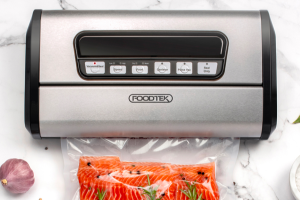
In plant work, I also look at how the container fits with sealing equipment and vacuum systems. If the operation uses controlled atmosphere or vacuum packing upstream, vacuum machines and freshness control can change how much pressure the lid or wall has to tolerate once the pack is moved, chilled, and opened again. A container that looks fine on the bench can behave poorly once it is loaded into real cold-chain traffic.
| Material | Temperature Range | Best For | Limitations |
|---|---|---|---|
| Polypropylene | Chilled and controlled warm-fill use | Meat prep, sauces, deli products, batch portioning | Must be validated for exact fill and lid fit |
| PET | Chilled display and presentation-focused use | Clear visibility, front-of-house packs | Less suited to rough thermal or handling stress |
| Glass | Premium reuse-oriented or controlled service settings | Higher-end presentation, some refill workflows | Heavier, breakage risk, slower handling |
Headspace Control and Sealing Performance
A pack can look right on paper and still fail on the floor if it is filled to the wrong point. A 500 ml container often has more usable internal space than the label suggests, and if operators treat the nominal volume as the fill target, leaks, lid lift, and messy transit failures are the usual result. The issue is not just volume, it is headspace.

Validate the actual fill point
A published 500 ml polypropylene container can have a brim-full volume of 598 ml and a content volume of 530 ml. That means the line should never assume that “500 ml” means exactly 500 ml of safe usable space. Capacity and content-volume specification
Start with the supplier sheet, then confirm the brim-full and content-volume values for the exact pack and lid combination. Set the filler below the content volume so product viscosity and thermal expansion do not push liquid into the lid zone. Short pilot fills tell you more than a tidy bench sample, especially once the pack has to cope with chill rooms, cart movement, and the way a line handles product.
If the operation runs vacuum or controlled atmosphere upstream, vacuum machine selection and freshness control should also sit in the decision. A pack that is stable before evacuation can behave differently after pressure changes, chilling, and reopening, so the container has to suit the whole sequence, not just the fill bench.
A practical workflow looks like this:
- Check the supplier sheet. Confirm brim-full volume, content volume, and lid compatibility.
- Set a conservative fill target. Leave room for expansion, viscosity variation, and staff handling.
- Run pilot fills. Use short batches before full production.
- Inspect after vibration. Closed packs should stay seated after transport conditions.
- Lock the tolerance window. Give operators a clear acceptable range and a clear reject point.
The key issue is not whether the tub “holds 500 ml”. The question is whether it holds the product safely once temperature, movement, and lidding pressure are added. That is the difference between a pack that looks fine on the bench and one that survives real operations.
Match seal behaviour to the workflow
Lid performance changes with product type, fill temperature, and handling roughness. A thick sauce behaves differently from a brined ingredient or a chilled prepared meal, and each one loads the seal in a different way. If the lid sits tight in the warehouse but loosens after a courier run, the fill spec needs revision, not wishful thinking.
Fill for the product, not for the label. The label size is a starting point, not a production target.
The same rule applies when packs are lidded, stacked, and then moved into a cold room. Any movement that pushes product into the seal path can create lift or seepage, so validation has to reflect the actual route the pack takes. A container that performs in isolation but fails in transit is not fit for the job.
Food-Grade Compliance and Temperature Performance
A food pack can't be judged by size and shape alone. In Australian food service, a 500 ml container has to suit the food it carries, the temperature it sees, and the way staff reuse or discard it. That means looking at the material, the lid seal, the inks, the adhesives, and the handling conditions together.
Food-contact compliance is the baseline
Australian food-contact packaging has to comply with the Food Standards Code's material requirements, which prohibit packaging from transferring substances to food in amounts that could endanger health or make the food unsafe or unsuitable. For sauces, deli products, or prepared meals, that means the whole pack system matters, not just the tub body. Food-contact material requirement overview
That becomes especially important when a site uses mixed workflows. A tub might be fine for chilled storage, but the same pack may not be suitable for hot fill, reheating, or repeated wash-down if the lid, seal, or label components aren't designed for it. The safe assumption is that compliance has to be proven for the exact use case, not borrowed from a product photo.
Independent reporting has also kept container safety in view, including concerns about chemical leaching and microplastics in heated plastics. Recent reporting on plastic food-container hazards That doesn't mean every plastic pack is a problem. It means buyers should ask better questions before a tub is cleared for reheating, hot-fill, or repeated reuse.
Reuse needs a strict line
A 500 ml container that enters a commercial workflow should have a defined life. Some packs are single-use by design, some are meant for controlled reuse, and some sit in a grey area that causes trouble when staff start improvising. If the container is reused, the buyer needs proof that the material and lid system can tolerate the intended cleaning, handling, and temperature pattern.
For Australian buyers, the practical question is simple, can this pack survive the job without changing the food, deforming under heat, or giving staff a false sense of safety? If the answer is uncertain, the container is being asked to do too much.

Temperature performance should match the room, not the brochure
A chilled pack in a meat room faces condensation, handling shock, and repeated moves between cool zones. That's where lid fit and material stiffness matter most, because the container has to stay stable while staff move quickly. If the line uses microwave reheating, the pack needs clear validation for that use too, not guesswork.
Compliance rule: if you can't show that the material, lid, and intended temperature range all fit the food and the process, don't approve the container for production.
A good procurement file should therefore ask for use conditions, not just a capacity claim. That includes whether the container is approved for chilled storage, hot-fill, or repeated handling, and whether the closure system stays secure after transit. The more demanding the workflow, the less tolerance there is for vague product descriptions.
Sustainability Targets and Cost Trade-Offs
Sustainability stopped being a branding layer a long time ago. In Australian packaging decisions, a 500 ml container now sits inside a target-driven recovery framework, so procurement has to weigh cost, waste, and compliance together instead of treating them as separate conversations. The cheapest pack on paper is not always the cheapest pack in the room.
The targets shape the buying decision
The Australian Packaging Covenant Organisation's packaging targets require 100% of packaging to be reusable, recyclable, or compostable by 2025, 70% of plastic packaging to be recycled or composted by 2025, and 50% average recycled content across packaging by 2025. APCO packaging targets summary
That changes the buying question. Instead of asking only whether the tub is cheap and stackable, buyers now have to ask whether the material and lid system can support the site's recovery path. In a busy meat or hospitality operation, that means one pack might win on unit price but lose on recyclability, while another might cost more upfront and reduce downstream sorting problems.
Cost has more than one layer
A good procurement decision looks at cost per unit, lead time, stock reliability, waste reduction, and transport efficiency together. A container that stacks well, nests cleanly, and reduces spoilage may be more valuable than one that looks cheaper on the invoice. That's especially true in chilled operations where damaged packs and product loss are expensive to handle.
The other hidden cost is staff time. If a pack is fiddly to lid, prone to cracking, or awkward to palletise, people end up spending more time fighting packaging than moving product. That's not a sustainability win, and it's not a savings either.
Match the material to the recovery pathway
For some sites, recyclable polypropylene is the sensible compromise because it can support operational use while fitting recovery goals more cleanly than mixed-material alternatives. For others, the right answer is a different structure entirely, especially where presentation or reuse is more important than single-use efficiency. The point is to choose a pack that fits the site's waste pathway, not the other way around.

If you're building a packaging policy, start by deciding whether the site is optimising for recovery, presentation, or the lowest practical handling cost. Then assess the 500 ml format against that priority. A container that helps the operation stay tidy, compliant, and recoverable is usually the one that earns its place.
PSC Trading's sustainable packaging overview is a useful reminder that packaging choices should be aligned with the whole workflow, not just with a supplier catalogue.
Procurement Checklist for Butchers and Hospitality
A buyer can spot a weak container within one shift if the testing is done properly. The trick is to ask the supplier for the right evidence before the order lands, then confirm it in your own cold room, prep bench, or wash-down area. A 500 ml container should be judged by what it does in your workflow, not by what the brochure says it can do.
Ask for proof, not promises
Start with the basics. Get the material specification, the food-contact proof, the exact dimensions, and the lid compatibility details before you approve anything for production. If the supplier can't provide that cleanly, the pack is already a risk.
- Supplier material certification: Ask what the container is made from and whether the material is consistent across batches.
- Food-grade compliance proof: Request documentation that ties the pack to the intended food-contact use.
- Dimensional tolerance sheet: Check height, diameter, and closure fit, not just nominal volume.
- Lid compatibility confirmation: Confirm the lid is designed for the actual container, not a “close enough” match.
- Country-of-origin claim support: Verify whether a “Made in Australia” claim is valid under local rules. The ACCC's Country of Origin rules allow that claim only when the product's last substantial transformation occurred in Australia and at least 50% of production costs were incurred in Australia. Country-of-origin rule explanation
Test the pack in your own operation
Don't approve a container just because it looks stable on a desk. Run it through the same handling path it will face in daily use. That means filling it, chilling it, moving it, lidding it, and opening it again under normal staff conditions.
- Cold-chain test: Put filled packs through the same chill and transport sequence used on site.
- Wash-down check: If the pack is reused, confirm whether it survives the cleaning process without distortion.
- Stacking test: Build a full carton or crate and see whether the base profile stays stable.
- Seal retention test: Shake or move the pack as it would be handled in transit, then inspect for lift or seepage.
- Batch consistency check: Open samples from more than one carton so you can spot variation early.
A common red flag is a pack that performs well only when handled gently. That's not real-world performance. Another warning sign is a container whose lid feels tight in one batch and loose in the next, because that usually points to poor dimensional control.
If the container survives only the demo, don't buy it.
Use the approval record as a working tool
Keep one short sign-off sheet for every approved pack. Include supplier name, material, tolerance range, intended food, and the exact handling conditions it passed in your operation. That record saves time later when a buyer changes, a SKU disappears, or a site manager asks why a certain pack was approved in the first place.
For butcher shops, abattoirs, and commercial kitchens, that discipline avoids the costly habit of repurchasing the same bad packaging because it was the cheapest option in the last round. A well-documented 500 ml container decision protects product quality, staff time, and the compliance record at the same time.
If you're reviewing packaging for meat processing or hospitality, shortlist your current 500 ml container against the checklist above, then ask PSC TRADING Co PTY LTD for packaging options that suit butcher, abattoir, and commercial kitchen workflows. Start with the specs, test the seal in your own cold chain, and buy the pack that survives your floor.
