




You're probably in one of two spots right now. You're either fitting out a new shop and trying to work out what you need, or you've been operating long enough to know that the wrong mincer, the wrong apron, or the wrong packaging choice creates problems every single day.
That's why buying butcher supplies in Australia can't be treated like ticking items off a catalogue. A bandsaw isn't just a bandsaw if it slows the bench down, an apron isn't just an apron if it soaks through in a wet room, and casings aren't just casings if the supplier can't support hygienic handling standards. Good operators learn this early. The supplies that look cheapest at purchase often cost more in downtime, waste, cleaning time, staff frustration, and compliance headaches.
A practical supply setup has to do three jobs at once. It has to keep product moving, keep people safe, and stand up to Australian food handling requirements in practice.
Table of Contents
- Equipping Your Operation for Success
- Your Butchery's Mechanical Backbone
- From Casings to Cold Chain The Essentials
- Protecting Your People and Your Product
- Extending the Life of Your Investment
- How to Choose the Right Supplier in Australia
- Your Butcher Supply Questions Answered
Equipping Your Operation for Success
A new operator often starts with the obvious purchases first. Knives, a saw, a mincer, a bench, some trays, maybe a vacuum sealer. That's sensible, but it's incomplete. The fit-out question is whether the whole setup works together under commercial pressure.
Take a small suburban butcher doing display cuts, mince, sausages, and value-added items. If the workflow forces staff to carry trim across the room to the mincer, stack cartons in the wrong spot, or clean awkward apron hardware at the end of every shift, the business loses time all day. Nothing looks dramatic in isolation. The losses come from repetition.
That matters in a mature market. The Australian Fresh Meat, Fish and Poultry Retailing industry had a market size of $8.0 billion in 2026 and contains exactly 4,143 registered businesses nationwide, which means operators are competing in a crowded environment where practical efficiency matters every week, not just at startup (IBISWorld industry profile).
Buy for the job the business actually does
A shop focused on traditional service cuts needs a different mix from a processor handling wet production and packing runs. An abattoir floor doesn't buy aprons the same way a boutique butcher does. One site may need hard-wearing waterproof gear for constant wash-down conditions. Another may need more front-of-house presentation, lighter workwear, and faster bench turnover.
The mistake is buying a broad mix before defining the daily sequence:
- Receiving and storage: What arrives chilled, frozen, boxed, or bulk packed?
- Primary breakdown: Are you doing heavy cutting in-house or receiving portion-controlled product?
- Further processing: Will you mince, fill sausages, cure, ferment, or vacuum pack?
- Cleaning and reset: Can staff strip, wash, sanitise, and reassemble equipment without wasting time?
Practical rule: If a supply choice makes cleaning slower, it usually makes production slower too.
Fit-out decisions that pay back quietly
The best purchasing decisions usually look boring. A mincer that strips down properly. Vacuum bags that seal consistently. Sleeve protection that staff will wear. Apron straps that don't twist or fail after repeated washing.
Those details don't make a catalogue exciting, but they make a shop organised. In butcher supplies Australia buyers often focus on the visible machinery first. The operators who stay efficient give equal weight to consumables, sanitation gear, packaging, and PPE because that's what affects the shift from open to close.
Your Butchery's Mechanical Backbone
Heavy equipment sets the pace of the room. If the machinery is undersized, poorly matched, or awkward to clean, the whole operation works around its limitations.

Start with throughput, not catalogue size
A common mistake is buying on ambition instead of workflow. A retail shop doing a modest daily mince run can work well with a lighter unit if staff use it within its intended load. Push that same machine through extended high-volume production and it becomes a bottleneck. Motors heat up, feed slows, and the bench starts waiting on one machine.
A simple way to think about it is good, better, best.
| Setup level | Best fit | Typical priority |
|---|---|---|
| Good | Small retail butcher or farmgate processor | Compact footprint, easy cleaning |
| Better | Busy independent shop with regular sausage and mince production | Faster throughput, sturdier components |
| Best | High-volume production room or processor | Continuous performance, durable construction, smoother workflow |
The same logic applies across the core machines:
- Bandsaws need stable tables, straightforward blade changes, and surfaces that clean properly.
- Mincers need enough power for your busiest production window, not your quietest day.
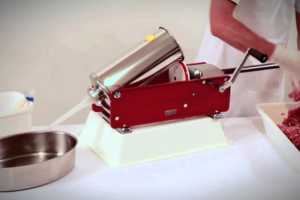
- Sausage fillers need to match your product mix and staff pace.
- Vacuum machines need reliable seals, especially when product is moving into storage or wholesale supply.
A useful reference point for equipment categories and production fit is this guide to food processing equipment in Australia.
What to look for in each machine
Meat bandsaws
A bandsaw should cut true and clean without constant adjustment. In practice, operators want a table height and layout that suits the person using it, guards that don't create cleaning headaches, and parts access that doesn't turn end-of-day wash-down into an argument.
What doesn't work is buying a saw purely on blade capacity and ignoring how often you'll dismantle, clean, and inspect it.
If the saw is hard to clean properly, staff will rush it when the room gets busy.
Mincers
A mincer has to match both product type and production rhythm. Coarse trim, chilled product, fat content, and batch timing all affect performance. If you're producing fresh mince through the day, a machine that recovers quickly between batches matters more than one flashy feature you'll never use.
Look for:
- Feed design: Smooth loading matters when one person is running the bench.
- Plate and knife availability: Consumables have to be easy to replace.
- Strip-down time: Faster cleaning supports better hygiene habits.
Sausage fillers
For fresh sausage production, filler control matters more than many buyers expect. An awkward filler creates inconsistent links, wasted casing, and poor staff flow. If you're using natural casings, that inconsistency becomes expensive quickly because every split and overfill slows the table down.
Manual units can suit small-batch work. Once production becomes routine and volume rises, labour-saving control becomes more valuable.
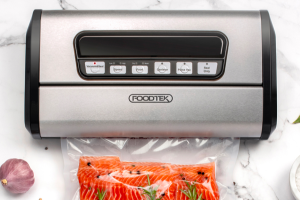
Vacuum packing machines
Vacuum packing isn't just a packing step. It affects storage life, display quality, and transport confidence. A machine that struggles with wet product, inconsistent bag placement, or uneven seals will cause rework and waste.
What works is simple:
- Choose a machine that fits the largest product format you pack regularly.
- Match the machine to the bags you can reliably reorder.
- Test seal consistency with actual product, not an empty demo bag.
In butcher supplies Australia, the right machine isn't the one with the longest feature list. It's the one your team can run cleanly, safely, and repeatedly on a real production day.
From Casings to Cold Chain The Essentials
The daily consumables usually decide whether production feels smooth or messy. Operators notice it in small moments. Casings split. Labels won't hold. Packaging fogs or tears. Twine runs out halfway through prep. Gloves bunch up at the wrist. None of it sounds major until it happens every day.

Consumables decide consistency
A smart buyer treats consumables as part of product quality control, not just stock on a shelf. That includes:
- Sausage casings: Natural and artificial options suit different products, stuffing behaviour, and finish.
- Packaging materials: Trays, film, vacuum bags, and labelled formats need to match display and storage needs.
- Cleaning and sanitation items: Brushes, sanitisers, and wash-down tools shape the standard of the room.
- Cold-chain support items: Practical airflow aids and freezing accessories matter in bulk handling.
- Small bench essentials: Twine, tags, gloves, and knife maintenance items stop needless interruptions.
For anyone buying casings regularly, this overview of natural sausage casings is a useful starting point.
Where sourcing mistakes usually happen
Natural casings are one of the clearest examples of why sourcing matters. In Australia, natural sausage casings must be produced in compliance with AS 5011-2001, which demands hygienic conditions and temperature controls of ≤12°C equivalent to accredited meat plants, ensuring they are free from pathogens like Salmonella and E. coli (Food Standards reference document).
That has practical consequences for buyers. You're not just choosing diameter, bite, and appearance. You're choosing whether the supplier handles a food-sensitive product the way it needs to be handled.
A practical comparison helps:
| Consumable | What works | What causes trouble |
|---|---|---|
| Natural casings | Consistent sizing, proper storage, dependable handling | Irregular calibre, poor storage history, fragile stuffing performance |
| Vacuum bags | Reliable seals, correct thickness for product | Seal failures, punctures, mismatched sizes |
| Labels and tags | Clear product identification, easy handling in chillers | Smearing, lifting, poor visibility |
| Cleaning tools | Separate tools for separate tasks, easy replacement | One brush used everywhere, worn gear left in service |
Natural versus synthetic casings
Natural casings suit traditional sausage products where texture and appearance matter. They can produce an excellent eating result, but they demand better handling from receiving through stuffing. Synthetic options can be simpler for some product lines because they offer uniformity and predictable fill behaviour.
Neither is universally better. The right choice depends on your product, your staff skill, and how much control you need on the bench.
Cheap consumables usually show their true cost during rework, not at purchase.
Packaging and cold chain
Packaging has to suit the product's journey. A tray for same-day retail isn't the same decision as a vacuum format for storage or transport. Cold-chain support items often get ignored because they aren't customer-facing, but they matter in production rooms where airflow and orderly freezing affect consistency.
Butcher supplies Australia becomes less about shopping and more about system design. The everyday supplies need to support the way product moves through your site, not just fill a shelf in the storeroom.
Protecting Your People and Your Product
Poor PPE decisions usually come from treating workwear as a uniform problem instead of a risk-control problem. In a meat room, that approach fails quickly. Staff are working with blades, wet surfaces, blood, fat, cleaning chemicals, hot water, and repeated wash-down. The gear has to suit the exposure.
A useful visual comparison sits below.

The safety case is straightforward. A 2022 Safe Work Australia report noted that 68% of reported injuries in meat processing involved exposure to bodily fluids or slippery surfaces, which is why waterproof, food-grade aprons made from materials like TPU or PVC are a practical requirement in wet environments (industry reference citing the report).
Match PPE to the task
Different jobs need different protection. A front-bench butcher trimming and serving doesn't face the same exposure as a worker on a wash-down production line.
Here's the practical split.
Wet processing and wash-down areas
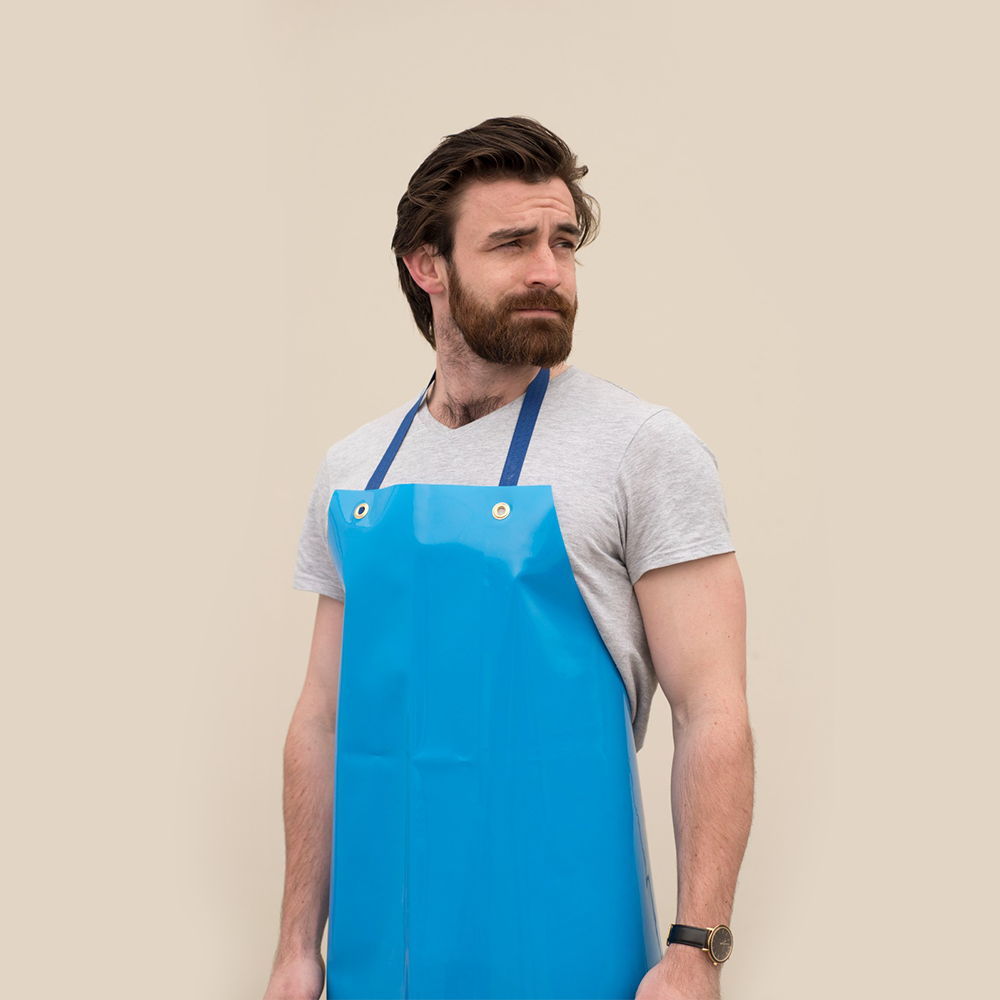
TPU and PVC aprons make sense where splash, fluids, and repeated cleaning are routine. They're easier to wash, less likely to hold contamination, and better suited to environments where soak-through is a real issue.
What fails in these areas is absorbent or poorly finished material that stays wet, smells, or becomes unpleasant to wear through a long shift.
Dryer prep and heavier-duty handling
Waxed canvas and leather have their place in certain tasks, especially where abrasion resistance matters more than full waterproof performance. They can work well for specific workshop or handling jobs, but they aren't the first pick for heavy wet processing.
A supplier such as PSC TRADING Co PTY LTD offers Australian-made aprons in TPU, PVC, waxed canvas, and other configurations alongside butcher accessories and PPE, which is useful when a site needs different apron types for different tasks rather than one material for every workstation.
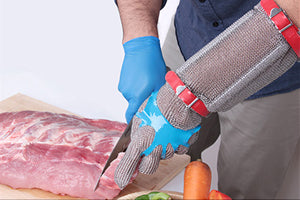
A more task-specific look at hand protection is available in this article on stainless steel mesh gloves used by Australian butchers.
What works and what fails on the floor
Good PPE gets worn properly. Bad PPE gets modified, avoided, or removed.
That's the test.
Operators should look at more than apron material alone:
- Cut-resistant hand protection: Important where knives are in constant use.
- Sleeve protectors: Useful in wet and messy processing tasks.
- Eye and face protection: Worth the attention in splash zones and wash-down work.
- Respiratory and hearing protection: Relevant in environments with chemicals, aerosols, or noisy plant.
A short checklist helps during purchasing:
- Does the gear clean easily after a dirty shift?
- Can staff move properly while wearing it?
- Will it hold up under repeated wash-down and handling?
- Is it suitable for the contamination risk at that station?
On-floor reality: Staff won't keep wearing PPE that pinches, twists, traps water, or slows hand movement.
The product side matters too. Protective clothing doesn't just protect the person wearing it. It also helps stop clothing, moisture, and external contamination from reaching food contact areas. In practical terms, good PPE is part of hygiene control, workflow control, and staff retention. People work better when the gear fits the job.
Extending the Life of Your Investment
Most equipment doesn't fail all at once. It wears out in small, preventable ways. Product gets left in corners after cleaning. Blades dull and force staff to work harder. Fasteners loosen. Aprons get folded wet and crack early. The damage usually comes from poor routines, not bad intentions.
Build maintenance into the shift
The sites that get the longest life from their gear don't rely on occasional deep cleans. They build simple habits into daily shutdown.
For bandsaws and mincers, the basics are consistent:
- Strip down properly: Remove the parts that contact product.
- Wash before sanitising: Sanitiser doesn't do much if residue is still on the surface.
- Dry components well: Moisture left sitting invites corrosion and odour.
- Reassemble with care: Forced parts and rushed assembly damage equipment over time.
A good shutdown routine also includes visual inspection. Staff should notice worn seals, nicked cutting surfaces, damaged cords, or blade issues before the next shift starts.
Workwear lasts longer when staff clean it properly
Aprons often get ruined by rough cleaning, bad storage, or the wrong expectations. TPU and PVC workwear should be rinsed and washed according to site hygiene procedures, then hung so the material can dry without sharp creases. If workers roll them up wet and leave them compressed, even decent gear degrades faster.
A practical maintenance split looks like this:
| Item | Daily care | Common mistake |
|---|---|---|
| Bandsaw | Full clean, dry, inspect blade area | Leaving residue in hard-to-reach points |
| Mincer | Strip plates and knives, wash thoroughly | Cleaning the body but missing contact parts |
| Vacuum machine | Wipe seal area, check chamber cleanliness | Ignoring small seal contamination |
| TPU or PVC apron | Wash, rinse, hang flat or correctly supported | Storing wet or folded tightly |
A machine that cleans easily usually lasts longer because staff don't dread maintaining it.
Knife care belongs in the same conversation. Sharp knives reduce strain, improve cut quality, and make bench work more controlled. Waiting until knives are badly worn before sharpening costs time and creates poor habits at the block.
In butcher supplies Australia, maintenance isn't a side issue after purchase. It's part of the buying decision. The easier an item is to clean, inspect, store, and repair, the better value it usually becomes over its working life.
How to Choose the Right Supplier in Australia
A good supplier saves time in ways that don't always show up on the invoice. A poor one creates ordering gaps, mixed standards, and constant follow-up. If you're buying machinery from one place, packaging from another, PPE from a third, and sanitising products from wherever stock is available, someone in your business ends up managing that complexity.
That might be manageable in a tiny operation. It becomes painful as soon as production gets busier or product lines expand.

The scale of the trade explains why supplier capability matters. The Australian meat processing sector operates through approximately 759 slaughtering sites and provides over 30,900 direct jobs, so wholesale suppliers serving the industry need to handle a broad range of operational and compliance-driven requirements (AMPC competition report).
Price matters, but supply friction costs more
The cheapest line item can still be the expensive choice if it creates one of these problems:
- Stock inconsistency: Your team keeps switching products and adjusting routines.
- Weak technical understanding: The supplier knows the catalogue but not the application.
- Fragmented ordering: Staff spend time chasing multiple vendors every week.
- Poor fit for compliance-heavy environments: Products may be available, but not well suited to meat processing conditions.
That's why many operators prefer a specialised distributor with machinery, consumables, PPE, packaging, and accessories under one roof. It reduces admin and usually improves product matching because the supplier understands how the categories interact on site.
A supplier checklist that actually helps
When comparing suppliers, ask practical questions, not marketing ones.
Product coverage
Can they support the full operating day, not just one category? A supplier who can provide bandsaws, mincers, casings, vacuum bags, aprons, gloves, sanitisation items, branding ink, and cold-chain aids is easier to work with than one who only covers the shiny equipment.
Application knowledge
Do they understand butcher shops, abattoirs, and food-processing environments as different settings? Advice should change depending on whether you run retail service, wet processing, packing, or mixed production.
Support after the sale
If a product doesn't suit the task, can they discuss an alternative clearly? The useful suppliers are the ones that help you avoid a mismatch, not just process an order.
Local fit
Australian-made options can be valuable when you want easier reordering, clearer communication, and materials chosen for local processing conditions. That doesn't mean every imported product is wrong. It means the supplier should be able to explain the trade-off clearly.
The right supplier acts like part of your operating system. The wrong one becomes another daily problem to manage.
Here's a short buyer's checklist:
- Check category depth: Don't stop at whether they sell aprons or mincers. Check variations, parts, and accessories.
- Check consistency: Ask whether the same lines are likely to remain available.
- Check practicality: Do their products look built for wash-down, bench use, and food handling?
- Check communication: Fast, clear answers usually predict smoother ordering later.
In butcher supplies Australia, the strongest supplier relationship is usually the one that lowers friction across purchasing, compliance, and day-to-day production.
Your Butcher Supply Questions Answered
Some supply questions keep coming up because they sit in the grey area between compliance, workflow, and common sense. These are usually the ones new operators don't ask until something goes wrong.
Do small shops need wholesale relationships
Yes, often they do. Not because they need massive purchasing volume, but because consistency matters. Even a smaller butcher benefits from ordering core lines through a supplier who understands meat processing applications.
The gain isn't just price. It's repeatability. When your vacuum bags, casings, gloves, and apron fittings stay consistent, staff work faster and make fewer mistakes.
Are Australian-made aprons worth considering
They can be, especially when the site needs food-grade waterproof materials for regular cleaning and wet work. The practical benefit is usually in product suitability, replacement support, and better alignment with local processing needs rather than a simple patriotic argument.
Australian butchers are required to comply with HACCP standards, which mandate that protective clothing must be easily cleanable and prevent food contamination; certified aprons, such as those made from food-grade TPU, directly help businesses meet these regulatory requirements (HACCP and apron compliance discussion).
What supplies get overlooked most often
Usually the small items that hold workflow together:
- Apron hooks, straps, and buckle ties: They matter when damaged fittings put good aprons out of use.
- Sleeve protectors and spare gloves: Easy to ignore until a shift runs short.
- Knife pouches and butcher belts: Useful for organisation and safer tool carry.
- Branding ink and identification items: Important where carcass marking and traceability tasks apply.
- Freezer spacers and storage aids: Not glamorous, but helpful in orderly cold-room handling.
Should home butchers buy commercial-grade gear
Sometimes, yes. If the person is processing regularly, making sausages, vacuum packing, or handling larger batches, commercial-grade consumables and selected tools can make the work cleaner and more reliable. The key is buying to actual use, not overbuilding a setup that won't be used enough to justify itself.
What's the simplest way to buy better
Start with the trouble points in your current workflow. Don't begin with a dream fit-out. Begin with what slows the day down.
If the room is too wet, upgrade aprons and sleeve protection. If packing causes rework, fix the bag and machine pairing. If sausage production is inconsistent, look at casings and filler control before blaming staff technique. That's usually where real improvement starts.
If you're reviewing butcher supplies in Australia for a shop, processing room, or abattoir, build the supply list around real tasks. Choose machinery for throughput, consumables for consistency, PPE for the actual hazard, and suppliers that reduce friction instead of adding to it. That's what holds up in commercial use.
