




At 5 a.m. in a meat room, the failures show up fast. An apron splits at the hem after weeks of wash-downs, a sleeve protector starts holding moisture, and the replacement order is still sitting somewhere in a warehouse queue. That's the moment most buyers realise personal protective clothing suppliers aren't just selling garments, they're helping keep contamination controlled, workers protected, and shift flow uninterrupted.
Australian buyers in butcheries, abattoirs, hospitality kitchens, and food plants need gear that fits the hazard, the cleaning regime, and the pace of the site. Waterproof on a product page doesn't tell you whether the seams will hold, whether the fastening system works with cut-resistant gloves, or whether the apron can survive repeated sanitation without turning stiff and brittle. The wrong supplier makes PPE feel like a box-ticking exercise. The right one makes it part of the workflow.
Table of Contents
- Why PPE Procurement Keeps Failing in Australian Meat Rooms
- What Actually Makes Food-Grade Protective Clothing Different
- Australian Regulatory Requirements Shaping Your PPE Choices
- Supplier Evaluation Criteria That Actually Matter
- Matching Materials and PPE Types to Real-World Environments
- How a Combined Supplier Model Solves Real Procurement Problems
- Your Procurement Checklist and Supplier Questions
Why PPE Procurement Keeps Failing in Australian Meat Rooms
The most common failure starts before the first order arrives. A site buys on unit price, assumes every waterproof apron performs the same, and discovers too late that the gear was built for generic industrial use, not wet processing, blood exposure, sanitiser splash, and constant cleaning. By the time the apron cracks or the sleeve protector soaks through, the purchase has already cost more than the better option would have.
A butcher shop knows the pattern. One month the aprons look fine on arrival, then the cold-room shifts harden the material, the stitching opens at stress points, and replacement turns into a scramble. That's not a garment problem alone, it's a sourcing problem, because the supplier never understood the hazard in the first place. PSC TRADING's own guidance on supplier fit points to the same issue, buyers waste time when the supplier doesn't understand the work.
Practical rule: if a supplier can't explain how its garments behave in wash-down conditions, don't treat that supplier as a food-processing specialist.
The deeper problem is that PPE in Australian meat rooms sits at the intersection of contamination control, WHS compliance, and productivity. Safe Work Australia treats PPE as a control when higher-order measures aren't enough, and the workplace injury picture still shows hundreds of work-related fatalities each year and thousands of serious workers' compensation claims annually in the national summaries linked in the verified data. That scale is why apron choice isn't a cosmetic buy. It's a recurring operational decision with real safety consequences.
A supplier who only sells “industrial” garments usually misses that. Food processors need protective clothing that can survive the shift, clean down properly, and fit the work without slowing anyone down.
What Actually Makes Food-Grade Protective Clothing Different

The label waterproof is too blunt for food work. In a meat room or abattoir, the core issue is whether liquid gets through at the weak points, especially seams, closures, and fabric interfaces. That's why procurement needs to focus on penetration resistance and permeation resistance, not just the outer face of the material. OSHA's technical guidance makes the point clearly, manufacturers should supply permeation and penetration data for the garment, visor, gloves, boots, and seams, and identify the exact ASTM method used, because the face fabric alone doesn't tell the full story. OSHA technical guidance on PPE testing
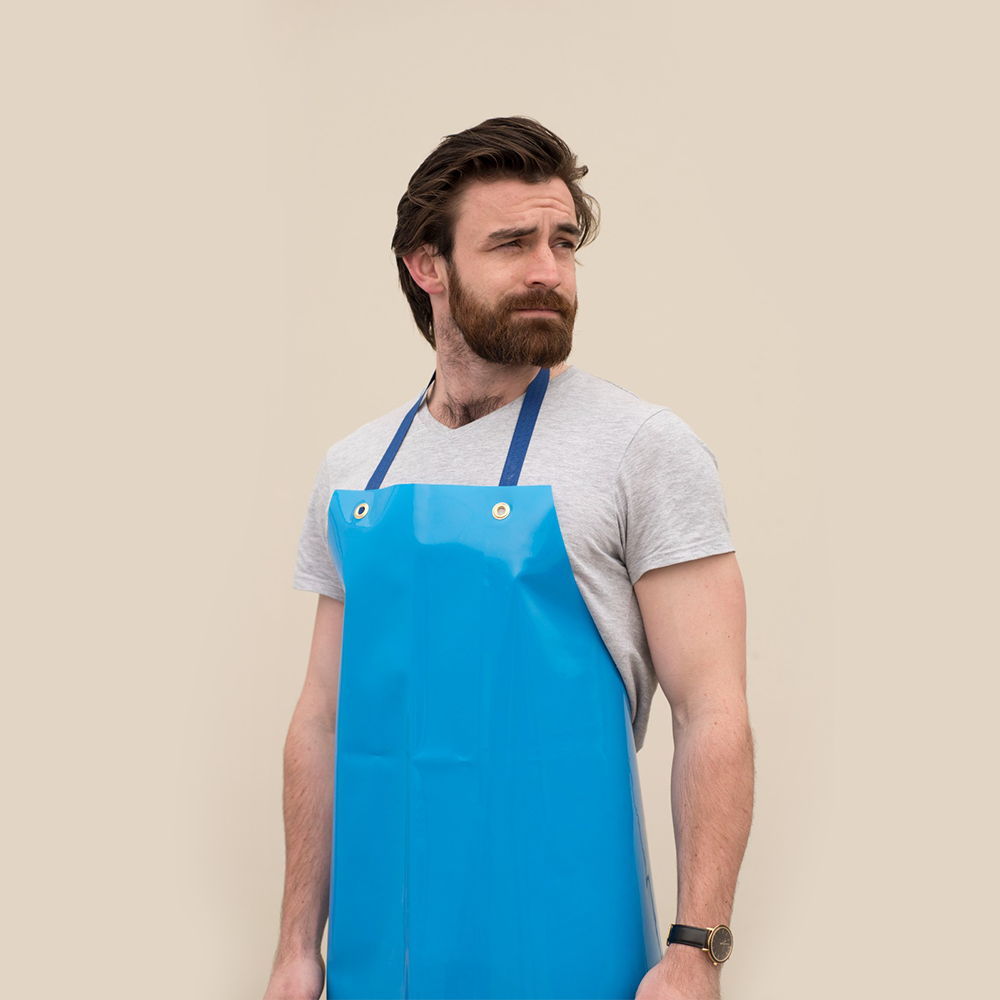
A TPU food-processing apron can be the right answer when wash-downs are frequent and flexibility matters. A lower-grade PVC apron may look similar on arrival, but once it stiffens in cold-room conditions or starts showing stress cracks around fold lines, the failure becomes obvious. The difference isn't branding, it's material chemistry and how the garment behaves under repeated cleaning, movement, and cold exposure.
What to ask the supplier
- Test evidence: ask for material-level data, not only a product brochure.
- Construction detail: ask how seams, straps, and closures are finished.
- Cleaning compatibility: ask what sanitising chemicals the garment is built to tolerate.
- Replacement cycle: ask how the item performs after repeated laundering or wash-down.
For food processors, the gear also has to fit the hygiene system. Aprons and sleeves need to be easy to clean, resistant to soak-through, and simple to remove without dragging contamination across the shift. That's why the garment that looks toughest isn't always the garment that lasts longest in a real wet room.
A practical buying rule keeps the decision honest.
If the supplier can't explain where liquid ingress starts, the buyer still doesn't know whether the garment will survive the shift.
PSC TRADING's TPU versus PVC apron guide sits in that same territory, the choice has to follow the work pattern, not the sales pitch.
Australian Regulatory Requirements Shaping Your PPE Choices
Australian procurement starts with a duty, not a catalogue. Safe Work Australia's Model WHS Regulations require higher-order controls first, then PPE only when risks can't be eliminated or minimised otherwise. That means the garment has to match a documented hazard, such as splash-prone food processing, wash-down zones, or cut-risk work, rather than being chosen because it's cheap or looks tidy on the shelf. The same framework also requires PPE to be suitable, fit the wearer, and be maintained so it remains effective. Safe Work Australia WHS framework discussion
For a butcher shop, that changes the buying conversation. A dry goods warehouse might get by with a different set of controls, but a site using knives, wet benches, and sanitising chemicals usually needs layered protection for hands, arms, and torso. The supplier should be able to explain how a waterproof apron works alongside sleeve protectors, cut-resistant gloves, and any face protection the task requires.
Food safety rules matter just as much
The Australia New Zealand Food Standards Code makes contamination control operational. Food premises and equipment must be kept in a clean and sanitary condition, and food handlers must take all practicable measures to prevent contamination of food and food contact surfaces. That has direct implications for clothing. If the apron traps residue, resists cleaning badly, or makes clean-down awkward, it's working against the hygiene system instead of supporting it. Food safety and contamination control guidance
For procurement teams, the translation is simple. Ask whether the garment is easy to clean, whether it can be removed without contaminating adjacent surfaces, and whether the fastening system suits the site's sanitation routine. A good supplier won't just sell you an apron, it will help you connect garment choice to the hazard assessment and the clean-down schedule.
That's the true test in Australian food-processing environments. Compliance is not a sticker on the pack, it's the fit between the hazard, the material, and the way the site operates.
Supplier Evaluation Criteria That Actually Matter
Price only tells you what the invoice looks like today. In meat rooms, the better comparison is whether the supplier can keep the site supplied, keep the garments working, and keep the paperwork clean enough to support audits. Lead time matters because a shop can't wait weeks for aprons when a batch fails early. Minimum order quantity matters because a retail butcher and a large abattoir don't buy in the same rhythm. Manufacturing origin matters because it affects supply-chain clarity and the practical speed of replenishment.
The most useful suppliers also understand that food work isn't one-size-fits-all. Australian-made gear can be easier to align with local expectations, and in sites with mixed workforces, sizing and fastening options can matter more than glossy product photos. If a supplier only offers one strap style and a narrow size range, it's signalling that fit has not been part of the design brief.
Here's a working comparison for buyers.
| Criterion | Butcher Shop Priority | Abattoir Priority | Hospitality Priority | Food-Processing Plant Priority |
|---|---|---|---|---|
| Lead times | High, because stock-outs hit hard | Very high, because line continuity matters | Moderate to high | Very high |
| MOQ flexibility | High | Moderate | High | Moderate |
| Manufacturing origin | Useful for speed and clarity | Useful for continuity | Useful for consistency | Useful for supply control |
| Customisation | Useful for fit and branding | Useful for workflow matching | Useful for presentation and fit | Useful for standardisation |
| Sustainability | Helpful when packaging waste matters | Helpful in broader procurement policies | Helpful for front-of-house and back-of-house alignment | Helpful for waste reduction goals |
A supplier with broad categories can also simplify procurement when the buyer needs more than one item family. PSC TRADING's food-processing equipment overview sits in that broader combined-supplier model, where PPE is evaluated alongside operational consumables instead of in isolation.
Buyer's shortcut: if the supplier can't talk about lead time, sizing, and cleaning compatibility in one conversation, it probably isn't built for food-processing procurement.
The point isn't to find the cheapest supplier. It's to find the one that can support the whole site without forcing managers to rebuild the order every time one item fails.
Matching Materials and PPE Types to Real-World Environments
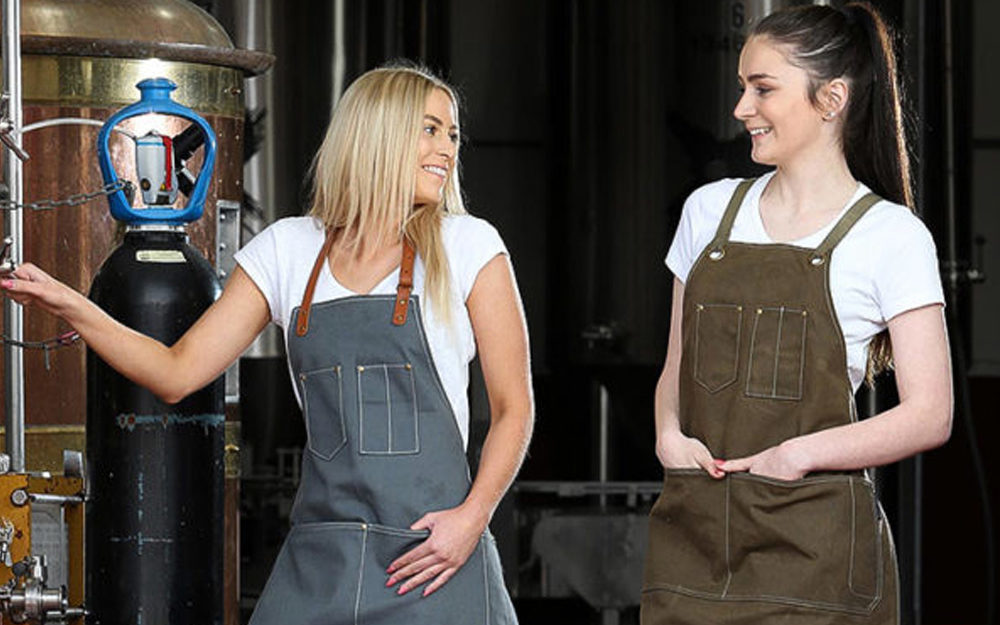
Material choice should follow the job, not the other way around. In cold rooms and wash-down environments, TPU aprons make sense because they stay more flexible than stiffer alternatives when temperatures drop. In dry but mess-heavy tasks like sausage stuffing, waxed canvas can work well because the priority is handling fat and protein buildup without unnecessary liquid immersion. On a butchery block, leather industrial aprons are still relevant where abrasion and cut exposure sit higher on the list.
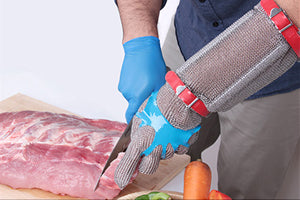
That logic extends beyond aprons. The kit is a system, and each layer has a job. Disposable protective gear suits hygiene-sensitive tasks where contamination control is the priority. Hand protection changes with the tool and the task. Eye and face protection matter when splash or debris is possible. Respiratory and hearing protection belong on some sites, not every site. Sleeve protectors fill the gap when the forearm is exposed during repetitive handling.
Build the set around the task
- Deboning station: TPU apron, cut-resistant gloves, sleeve protectors, face shield.
- Packaging area: lighter protective layers, with attention to hygiene and comfort.
- Cold handling: aprons and gloves that stay flexible in low temperatures.
- Wet wash-down zone: garments that drain, clean, and dry without trapping residue.
The fit issue matters as much as the material. A multi-year North American research program notes that many occupations still don't have PPE designed specifically for female workers and other underserved groups, and that ill-fitting PPE is linked with reduced mobility, more musculoskeletal pain, discomfort, and poorer task performance. That's especially relevant in butcheries and abattoirs where reaching, bending, and close-range motion are part of the job. Research on fit and underserved PPE users
The best supplier conversation asks a simple question. What configuration works when a worker has to move, wash, cut, and repeat it for the whole shift? That question filters out generic stock fast.

How a Combined Supplier Model Solves Real Procurement Problems
A good combined supplier reduces the number of places a buyer has to chase. In a butcher shop, that can mean ordering TPU aprons, knife pouches, meat bandsaw blades, and packaging through one source instead of coordinating with separate vendors for each category. In a processing facility, the same logic applies when a new sausage line needs casings, a sausage filler, and compatible protective gear without a dozen follow-up calls.
PSC TRADING Co PTY LTD is one example of that combined model in the Australian market. It manufactures and distributes food-processing supplies, including meat processing equipment, aprons, PPE, and packaging, with a clear focus on butcher, abattoir, and hospitality environments. That matters because the supplier can see how one item affects another. An apron choice sits differently when the same order also includes tools, casings, and workwear for the same workflow.
The practical win is administrative, but the primary gain is operational. When a supplier understands the site end to end, it can make more useful recommendations about fastening systems, sizes, and compatible gear. A butcher who buys a knife pouch from one vendor, an apron from another, and packaging from a third spends more time reconciling the order than running the floor. A combined source cuts that friction.

A combined model also helps with consistency. If a site standardises on one apron style, one fastening set, and one replacement pattern, supervisors aren't relearning each SKU every quarter. That makes training easier and keeps the procurement file cleaner when the next audit lands.
In food-processing procurement, fewer suppliers only helps when the supplier actually understands the workflow.
The buyer still has to verify the product specs, but a combined source can reduce the noise around the order and keep the clothing decisions tied to actual site conditions.
Your Procurement Checklist and Supplier Questions
A clean purchase starts with a short checklist and a few hard questions. If a supplier can answer them without dodging, the buying process gets a lot easier.
Pre-purchase checklist
- Certifications: verify the garment is supported by the conformity evidence your site requires, and don't accept vague product language.
- Material specifications: confirm the garment has the right resistance for the hazard, especially around chemical ingress, cuts, and repeated cleaning.
- Fit and comfort: request samples, because a garment that fits badly will get ignored or replaced early.
- Fastening systems: check that hooks, straps, buckles, or other closures work with the rest of the PPE set.
- Cleaning compatibility: confirm the garment suits the wash-down routine and doesn't hold residue.
- Supply continuity: review whether the supplier can keep your preferred item available at the right pace.
- Sustainability credentials: if packaging or waste reduction matters to your site, ask what options are available.
Questions to ask suppliers
- Can you provide material test reports?
- What's your lead time and MOQ?
- Do you offer custom sizes, logos, or fastening variations?
- What are your hygiene and cleaning guidelines?
- How do you handle replacement parts or repeat orders?
- Can you help match garments to layered PPE systems?
That last question matters more than most buyers realise. A waterproof apron that interferes with sleeves or gloves is a weak control, even if the product sheet looks impressive. The supplier should be able to explain how the garment sits alongside the rest of the workwear, not just how it looks in a photo.
Take your current apron and PPE list, compare it against this checklist, and pressure-test the supplier on the weak points before the next reorder. If your site wants fewer handoffs and more food-processing context in one place, review a combined supplier model like PSC TRADING's against your current buying process, then switch the items that keep failing first.
