





You can usually tell by 4am whether a plant made the right buying decision. The line is cold, the crew's waiting, a grinder has started to drag, and someone's already hunting for a spare part that should've been on the shelf yesterday. In a meat room or abattoir, the wrong manufacturer doesn't just mean a higher invoice, it means slower output, awkward cleaning, and a compliance problem waiting to surface.
That's why food processing equipment manufacturers have to be judged on more than purchase price. On the floor, the actual cost shows up in downtime, fit-up issues, wash-down performance, spare parts availability, and whether the gear matches the way the team works. A supplier can look fine on paper and still become expensive once the first shift starts asking for support.
Table of Contents
- Why Your Equipment Manufacturer Choice Defines Every Shift
- Categories of Food Processing Equipment Manufacturers
- What to Evaluate When Choosing a Manufacturer
- The Case for Local Manufacturing and Australian-Made Supplies
- Your Procurement Checklist for Equipment and Supplies
- Critical Questions to Ask Every Supplier
- Building a Supplier Relationship That Delivers Long-Term Value
Why Your Equipment Manufacturer Choice Defines Every Shift
At 4am, a procurement manager walking through a meat processing facility isn't reading brochures. They're checking whether the wash-down crew can reach every surface, watching for hygiene traps around seals and welds, and asking who will fix the machine if it stops before first break. That is the true test of a manufacturer, whether their gear disappears into the shift or becomes a daily interruption.
A supplier needs to understand that food equipment sits inside a wider operating system. Market demand is steady enough that buyers cannot afford to buy on price alone. One major industry estimate puts the Asia-Pacific region at 35.5% of global food processing equipment revenue in 2025, with the global market valued at USD 56.79 billion and projected to reach USD 78.71 billion by 2033 at a 4.2% CAGR Grand View Research. That growth shows the category is deep enough for poor decisions to hide until they start costing uptime.
Practical rule: if a manufacturer cannot support your cleaning regime, your output target, and your spare parts plan, the purchase price is the least important number on the page.
The same logic applies in Australia, where meat processors and commercial kitchens depend on equipment that handles throughput, hygiene, and compliance together. The wrong choice shows up in clogged lines, hard-to-clean joints, and unexpected stops while the team waits for a part that should have been local. The right choice gives you predictable changeovers, simpler cleaning, and fewer arguments with maintenance. A practical reference point is the meat processing equipment range used by buyers in this sector, because the test is whether the supplier understands how the machine behaves on a busy floor, not how it looks in a quote.
The buying decision comes down to one question. Can this manufacturer support the way your site runs, or are they selling a machine that only works in the quote?
Categories of Food Processing Equipment Manufacturers

Food processing buyers usually deal with three broad manufacturer types, and mixing them up creates headaches on the floor. A supplier that fits one role well can be a poor fit for another, especially in meat rooms, abattoirs, and commercial kitchens where hygiene, changeover discipline, and uptime all have to hold together.
Machinery specialists
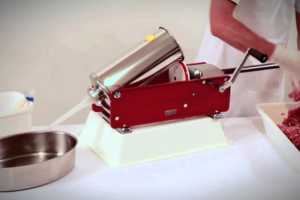
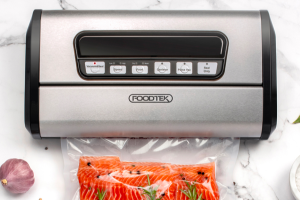
These manufacturers focus on specific machines such as bandsaws, mincers, sausage fillers, and vacuum machines. Their value is depth. They usually know the mechanics, wear points, and throughput limits of one equipment family very well, which matters when you need a grinder that keeps pace without heating product or a vacuum machine that holds seal quality under load.
In a butcher shop, a machinery specialist is often the right call for the core production asset. You want the machine to do one job cleanly and consistently, not come bundled with spare items you will never use. The hidden cost is support. If the supplier cannot show spare parts availability or service capacity, the machine's build quality will not protect you during a breakdown.
Full-service integrators
Full-service integrators provide complete lines or mixed-category supply across machines, consumables, and supporting items. They suit sites that want fewer purchase channels and a simpler procurement process. A plant ordering from one source for machines, vacuum bags, aprons, casings, and packaging can save time, especially when the buying team is stretched across operations and compliance.
The trade-off is focus. Some integrators are broad rather than deep, so you need to check whether they understand each product line or resell it. If you are looking at a catalogue that bundles equipment with protective workwear, tool carry items, and packaging, that can be efficient, but only if the specialist detail is still there. For a practical example of how that mix often appears in the market, the meat processing equipment range shows how a specialist catalogue can sit alongside consumables and workwear.
Component suppliers
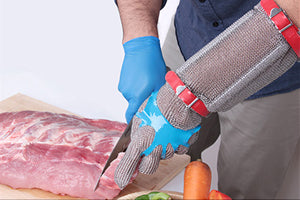
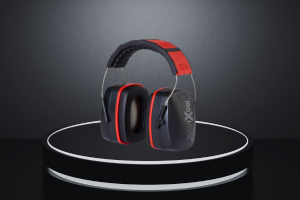
Component suppliers cover parts, consumables, and maintenance-related items. In meat processing, that can mean casings, vacuum bags, branding ink, PPE, knife pouches, apron accessories, and packaging support. Their importance is easy to underestimate until a shift loses momentum because a consumable is wrong, missing, or incompatible.
Product breadth can become a real operational advantage here. PSC TRADING Co PTY LTD sits in this camp with a range that spans meat processing equipment, aprons, PPE, packaging, and abattoir supplies, which matters when a site wants to source multiple floor-level items from one wholesale relationship. A buyer still needs to check fit, stock continuity, and replacement timing, because a broad catalogue does not help if the part you need is not on hand when the line stops.
The basic rule is simple. Choose the manufacturer type that matches the risk you are trying to control, not just the item you are buying.
What to Evaluate When Choosing a Manufacturer
Start with compliance and material quality
A food machine can look solid and still fail the floor test if it cannot handle hygienic cleaning. For food-contact stainless steel, the practical check is surface finish. Technical guidance aligned to food equipment standards points to food-contact surfaces targeting Ra 4–16 microinches maximum, about 0.10–0.41 µm, while electropolished lines are often held to Ra ≤ 0.8 µm SM Achinato. Weld dressing, passivation, and finish verification should be confirmed before commissioning, not after the first audit.
In a meat room, a rough weld or a poorly finished edge does not stay cosmetic for long. It becomes a cleaning issue, then a sanitation issue, then a recordkeeping issue. If a supplier will not talk clearly about finish, weld quality, or verification, you end up carrying the risk on your own site.
Match duty cycle to real workload
Motor size alone can mislead a buyer. Selection guidance separates S1 continuous duty from S3-40% intermittent duty, and that difference matters because a machine that only delivers rated power for part of a cycle behaves differently from one built for continuous use SM Huayi. Practical manufacturer data show grinders scaling from roughly 500–800 kg/h at 5.5 kW to 3000–5000 kg/h at 22 kW, while multipurpose processors may run at 300–500 kg/h with 3 kW drives.
A brochure number does not tell you how the machine behaves under real pressure.
If you size for the brochure instead of the duty cycle, you pay for heat buildup, speed droop, and poor batch consistency. Under-sizing leads to uneven particle size and rising temperatures. Oversizing adds capex without improving sanitation or product quality. A supplier who understands batch pattern, rest periods, and cleaning interruptions is worth more than one who only quotes a bigger motor.
Check service, spares, and changeability
The hidden cost in food equipment is usually not the first failure, it is the second delay. A supplier loses credibility fast if a small wear part takes too long to replace or if the service team cannot explain what failed. Ask who holds parts locally, what is stocked, and what still has to ship from overseas.
The same check applies to workflow fit. A grinder may be mechanically sound and still slow the team down if the loading height is awkward or the cleaning access is clumsy. That is why it helps to compare the machine to the people using it, not just the specification sheet.
| Equipment Evaluation Criteria at a Glance | What to Look For | Red Flags |
|---|---|---|
| Compliance | Documented food-contact suitability, finish verification, and cleaning-friendly design | Vague claims about “hygienic build” without evidence |
| Duty cycle | Clear fit between operating pattern and motor class | Nameplate power used as the only selling point |
| Spare parts | Local stock or a realistic replenishment plan | “Available on request” with no inventory detail |
| Service support | Fast technical response and usable after-sales help | Sales-led answers with no service structure |
| Workflow fit | Height, access, and cleaning compatibility with your floor | Equipment that looks good but slows the team |
For contamination control across the rest of the site, the cross-contamination prevention guide is worth keeping beside the purchasing checklist.
The Case for Local Manufacturing and Australian-Made Supplies
Local manufacturing changes the risk profile of a purchase. It usually means easier quality checks, quicker clarification on materials, and less guesswork when a site wants to inspect a product before buying more. It also makes supplier conversations more practical, because the buyer can talk to people who understand Australian wash-down, cold-room, and butcher-shop conditions.
Australian-made aprons are a good example. PSC TRADING produces aprons locally in TPU, PVC, waxed canvas, and leather, which gives kitchens and meat rooms options for different wet-area and abrasion needs. TPU and PVC make sense where cleaning is frequent and splash exposure is constant. Waxed canvas and leather suit tougher wear patterns where durability and fit matter more than a purely slick surface.
Imported equipment can still make sense, especially for highly specialised machinery where the local market doesn't offer the needed capability. The issue isn't import versus local in the abstract. The issue is whether the purchase depends on fast support, visible quality control, or easy replenishment. If those things matter, local supply often reduces stress.
The broader supply chain case is stronger when the item is a consumable or protective layer rather than a capital machine. Local aprons, sleeve protection, and nearby warehouse stock can keep teams moving while larger equipment decisions take longer. That's one reason many operators keep a mixed model, specialist equipment where needed, and local consumables where downtime hurts most.
The practical upside is simple. A local supplier is easier to chase, easier to verify, and usually easier to integrate into the site's day-to-day rhythm.
Your Procurement Checklist for Equipment and Supplies
Use the buying meeting to collect evidence, not promises. A good supplier won't mind questions, because the answers should already exist in their documentation and service records.
Before the meeting
- Map the actual task: Define what the machine or supply item has to do in your workflow, including cleaning, storage, and handover points.
- List the failure points: Write down where the current process slows down, leaks, jams, or creates sanitation pressure.
- Set the essentials: Decide what must be true on compliance, finish, fit, and support before you talk price.
During supplier screening
- Ask for exact product fit: Confirm whether the item is built for your category, such as butcher, abattoir, hospitality, or general food processing.
- Check replacement logic: Ask how spares, consumables, and wear items are ordered and replenished.
- Verify local support: Find out who answers service calls and what inventory sits in Australia.
Before you sign
- Review material and finish evidence: Request finish details for food-contact items and ask how the manufacturer verifies them.
- Confirm operational compatibility: Check that aprons, belts, pouches, or packaging items fit the workstation rather than fighting it.
- Test the supply chain: Place a trial order before you commit to a larger rollout.
For sites that also handle packaging, the industrial packaging supplies overview is a useful companion reference when you're aligning production and dispatch.
Critical Questions to Ask Every Supplier
Ask the questions that expose hidden risk
A supplier's answers matter more than the polish of the presentation. Start with duty cycle, because a machine built for intermittent use won't behave like one built for continuous operation, even if the quote looks attractive. Then ask how they've matched the machine to your workload, cleaning pattern, and expected wear.
For food-contact stainless steel, ask for finish evidence, not a hand-wave about “high quality steel”. If a supplier can't explain surface finish verification or won't discuss weld dressing and passivation, they're leaving you to infer the important part. That's a bad sign in any wet or wash-down environment.
Good answers are specific. They name the duty class, the surface condition, the spares held locally, and the person who handles service after the sale.
Ask about spares and recall readiness
You also need to know where the after-sales safety net sits. Ask which parts are kept locally, which parts are imported, and how the supplier handles urgent replacements. If the answer stays fuzzy, assume the delay risk sits with you.
Then ask about change control. If a supplier updates a product because of a compliance issue or design revision, how do they tell customers, and how do they track affected serial numbers? That question matters because food operations rely on traceability, and equipment suppliers should be able to support that discipline rather than complicate it.
Ask different categories different questions
Machinery suppliers should be able to talk about wear points, duty cycle, and service access. Consumable providers should be able to explain compatibility, storage, and replacement rhythm. PPE manufacturers should be able to explain material selection, fit, and how the item behaves under wash-down or long shifts.
For knife pouches, butcher belts, aprons, and similar floor items, ask how the product holds up in the actual workstation layout. A neat catalogue photo won't tell you whether a pouch gets in the way of movement or whether an apron fastening system suits the crew. The right supplier can answer that without hesitation.
Building a Supplier Relationship That Delivers Long-Term Value
Treat the first order like a field test. You're looking for fit, support quality, and whether the supplier notices operational issues before you have to chase them. If the relationship works, expand it in stages rather than overcommitting on day one.
A multi-supplier setup can work well when each vendor is strong in its lane. A consolidated supplier makes more sense when the site wants fewer invoices, simpler replenishment, and tighter coordination across equipment, PPE, and consumables. The wrong answer is to consolidate just for convenience, then discover the specialist knowledge has gone missing.
What you want is predictable support and fewer surprises. If a manufacturer helps the floor run cleaner, faster, and with less downtime, that relationship pays for itself every week.
If you're reviewing a current supplier list, start with the machines that stop production, then work outward to consumables, PPE, and packaging. Shortlist vendors that can show real service support, practical finish evidence, and local replenishment where it matters, then ask for a trial order before you commit the site to a larger rollout.
