





The phone rings while the boning room's already busy, the chill room door's been opening and closing all morning, and someone's just told you the auditor is due in the 30-day window. That's the moment most sites feel the pressure, not because the paperwork is missing, but because the floor has to prove what the paperwork claims. In a meat room, a food safety audit isn't a desk exercise. It's a test of whether the site, the people, and the equipment all behave the same way on a normal Tuesday as they do on a clean-up night.
Table of Contents
- The Reality of Food Safety Audits in Australia
- Understanding Audit Types and Frequency
- The Audit Lifecycle and What Inspectors Look For
- Common Non-Conformities in Meat Processing and Hospitality
- Your Step-by-Step Audit Preparation Checklist
- Building a Risk-Based Food Safety Culture
- Maintaining Continuous Compliance and Readiness
The Reality of Food Safety Audits in Australia
A proper audit in Australia starts with a simple question: can this site show that its controls work where the product is handled? That's why the auditor doesn't stop at binders and spreadsheets. The audit has to compare the documented food safety program with the real condition of the plant, including sanitation, process control, and employee practices, because a paper system can still fall apart on the floor if the wet areas are sloppy or the work habits drift. NSW Food Authority guidance is explicit that audits are a formal verification control, and that the assessment has to look at both the documented system and the plant conditions, not just one or the other NSW Food Authority audit guidance.
That's why a butcher shop, abattoir, or commercial kitchen feels the heat before an audit even begins. The site already knows what the inspector will notice first, clean-down standards, separation of wet and dry zones, the state of guards and seals, and whether staff are using the right PPE without shortcuts. Those are not cosmetic issues, they're the visible proof that the food safety program is alive.
What the audit is really checking
The biggest mistake I see is when teams treat audits like a compliance photo shoot. They scrub a few surfaces, tidy the office, and assume the rest will sort itself out. That usually fails on the floor, where the auditor can see if mincers are clean around hard-to-reach joins, whether belts and pouches are organised, and whether sanitation records match what happened in the room.
Practical rule: if the floor can't prove a control in under a minute, it probably isn't controlled well enough.
The broader Australian context is one of risk-based regulation and routine verification, not occasional punishment. That's the lesson behind the way mature inspection systems operate overseas as well. In recent UK-derived comparative data, 96.8% of inspected businesses in England, Wales, and Northern Ireland received a satisfactory-or-better food hygiene rating between 2020/21 and 2023/24, while Scotland averaged 92.3% Pass outcomes under FHIS United Kingdom Food Security Report 2024. Those figures aren't Australian data, but they show the kind of mature audit environment Australian buyers often benchmark against.
The practical takeaway is simple. Food safety audits don't just protect the regulator's interests. They protect the site's reputation, and they force the whole operation to behave like a controlled system instead of a collection of habits.
Understanding Audit Types and Frequency
A meat room audit is not all the same thing. A regulatory audit checks whether the site is meeting legal requirements and whether the room is being kept under control. A third-party certification audit tests compliance against a private standard or a customer assurance program. An internal audit is the business checking its own work before anyone else turns up and starts opening doors, lifting lids, and looking under benches. For a practical read on how HACCP-based systems support that routine control, see PSC Trading's commitment to food safety excellence through HACCP in Australia.
The frequency of those audits comes back to risk. Sites with wet areas, raw product, open handling, and long sanitation changeovers need tighter verification because small breakdowns show up faster and are harder to hide. The European Commission's official-controls reporting framework is built around routine verification at population scale, not complaint-only intervention, and that is the same basic logic Australian food oversight follows in practice European Commission annual official-controls reports. In the U.S., FDA oversight covered about 75,000 domestic food facilities at the end of FY2023, with an average of 8,353 domestic food-facility inspections per year from FY2018 to FY2023, which gives a sense of how far modern audit systems reach FDA inspection coverage benchmark.
How frequency is set in practice
In Australia, the better question is not how often a business gets checked. It is how often the evidence stays fresh enough to prove control. A site with wet rooms, raw meat exposure, and complex sanitation steps needs more regular internal verification than a dry warehouse or low-risk storage area. Higher risk means more chances for a missed clean, a weak temperature check, or a poorly stored tool to turn into a non-conformity.
South Australian guidance makes that risk logic plain. High-risk food business sectors must implement additional food safety management systems, mandatory food safety programs must be audited at least annually, the first audit should be arranged as soon as practical after the program is completed, the second audit should happen within 6 months, and FSMS audit frequency can sit anywhere from 3 to 12 months depending on performance SA Health food safety audits. That tells you what regulators are looking for. Early proof, then steady proof that the controls have not drifted.
For businesses working with third-party certification or supplier assurance, the FDA supplier-verification rule is a useful benchmark even though it is not Australian law. Where the hazard profile is high enough that failure could cause serious adverse health consequences or death, the default verification frequency can be an annual on-site audit. That is a familiar mindset in export-facing plants. The calendar follows the risk points, the corrective actions, and the traceability trail, not whoever has time on a Tuesday afternoon.

A clean way to plan resources is to match the audit type to the hazard profile. If the site works in wet areas, handles raw product, or depends on tight sanitation windows, the audit program should be narrower and more data-led, not broad and generic. That is where many sites get it wrong. The issue is not how many checklists exist. It is whether the frequency matches the room, the process, and the exposure on the floor.
A useful benchmark for Australian operators
National policy in Australia says that once covered businesses complete their food safety programs, those programs must be assessed and audited by an approved auditor. That makes audit coverage part of the control system, not an optional extra National Food Safety Audit Policy. The practical question is whether the site has the daily discipline to make the next audit uneventful.
That means the calendar needs to track cleaning validation, staff rotation, equipment maintenance, and record closure. If those parts are loose, the audit will show it. If they are tight, the auditor spends less time chasing gaps and more time confirming that the room already behaves like a controlled environment.
The Audit Lifecycle and What Inspectors Look For
A regulatory audit doesn't arrive as a surprise in the sense people imagine. The business receives a 30-day operating schedule, and the audit itself must be unannounced within that 30-day window. The only part that can be scheduled in advance is the records review, which means the floor still has to be ready without warning National Regulatory Food Safety Auditor Guideline.
That's why the best sites don't “prepare for audits”. They maintain a state where the next visit is boring. Documents are organised, cleaning records are current, and the chill room looks the same on audit day as it does on any other day. The unannounced nature of the visit is exactly why the physical site matters so much.
The sequence from notice to closing meeting
The audit lifecycle has a pattern. First comes the operating window, then the document review, then the site walk-through, then the evidence check, and finally the closing meeting and report. On the floor, that means the auditor is looking for the obvious things first, then the things people hope they won't notice.
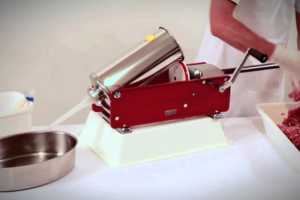
A butcher plant or meat room gets judged quickly on the visible controls. Are the bandsaw guards in place? Are the mincers clean and properly maintained? Are the butcher belts, knife pouches, and hand tools stored cleanly, not lying in splash zones? Does the chill room stay organised, or is product mixed with cleaning clutter?
The records matter too, but not as decoration. Sanitation records, traceability logs, and cleaning schedules have to line up with what happened in production. If the log says a room was cleaned, the room has to look and behave like it was cleaned.
The quickest way to lose credibility is to have tidy paperwork and a messy floor.
That's why the pre-onsite review is so important. If the records aren't current before the auditor gets into the plant, the rest of the visit starts uphill. The practical discipline is to keep logs, calibration notes, and cleaning sign-offs in a form that can be produced fast, without hunting across email threads or old binders.

What usually gets attention on the floor
Inspectors spend time where contamination or process loss is most likely. That includes wash-down areas, equipment interfaces, cool rooms, and places where staff move between dirty and clean tasks. If those transitions aren't controlled, the site looks unsteady even if the paper trail is neat.
The reason unannounced audits work is that they expose routines. Staff who usually do the right thing don't suddenly become cleaner because a clipboard arrived. They just keep doing the right thing. That's the level of readiness a site needs, especially in meat processing and hospitality where the workflow is fast and the surface risk is high.
Common Non-Conformities in Meat Processing and Hospitality
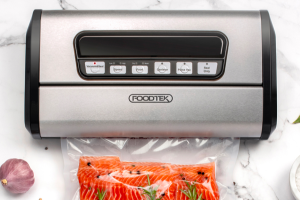
The worst non-conformities I've seen usually aren't dramatic. They're everyday failures that became normal because nobody challenged them. A cracked apron gets reused. A vacuum sealer still runs, even though the seal isn't consistent. A wet area stays wet longer than it should, and the team starts stepping around the problem instead of fixing it.
The difference between a clean site and an audit-ready site is often small but visible. In a clean site, staff notice when PPE is damaged, cleaning tools are stored properly, and packaging integrity is protected. In a site running on audit fatigue, people keep going until the issue shows up in a finding.
What an auditor sees immediately
Cross-contamination is usually the first pressure point. It shows up in work habits, not just labels. Raw and ready-to-eat areas get blurred, staff reuse gear, and the surfaces closest to the product are the ones that get the least careful attention. The result is a site that may look busy and productive, but doesn't look controlled.
Poor temperature discipline is another obvious problem, especially in cool rooms and transport steps. If product is sitting in the wrong place because the workflow is sloppy, the auditor notices the gap even before checking the logs. Packaging integrity matters too, because damaged seals, weak vacuum packs, or unprotected product tell the same story, the system is protecting output, not product safety.
For sites that want a practical reference on separating product paths, the internal guide on preventing cross-contamination in food rooms is a useful way to think about the daily routine. The principle is simple. Separation has to be physical, visible, and maintained.
Practical rule: if a process relies on people “being careful”, the process needs a better physical control.
The audit fatigue trap
Audit fatigue turns compliance into theatre. Staff know which records to show, but they're less consistent when nobody is watching. The problem is not paperwork itself, it's the gap between paperwork and the way the plant runs.
That's why worn gear matters so much. A damaged PVC apron or poorly maintained vacuum machine doesn't just look untidy. It tells the auditor that replacement cycles, maintenance habits, or storage standards are slipping. Once that pattern appears, the rest of the visit usually gets sharper.
The better standard is boring consistency. Clean equipment stays clean. Wet zones stay controlled. Protective clothing gets replaced before it becomes a contamination risk. That's the difference between passing on the day and building a site that passes naturally because it's already operating the right way.
Your Step-by-Step Audit Preparation Checklist
Audit prep goes smoother when it's built around what the floor touches. The three pillars that matter most are equipment, PPE, and documentation, because those are the things an auditor can verify quickly and repeatedly. If one of them is weak, the whole site feels shaky.
The checklist below works best in the week before the audit window, but the habits behind it should be daily. A good site doesn't scramble to invent order. It just confirms that the order already exists.

Equipment and physical controls
Start with the machines the auditor is likely to inspect closely. Bandsaw guards need to be in place and functioning. Mincers should be calibrated and consistent. Vacuum sealers need to produce reliable packs, because bad seals suggest the control system is drifting.
Look at the small things too. Hooks, straps, seals, and handles often reveal more than the main unit does. If apron hooks are bent, straps are frayed, or fittings are dirty, the room looks harder to control than it should. In a wet area, that matters.
Documentation that matches the floor
The paperwork set should be complete before the visit starts. HACCP plans, cleaning schedules, sanitation verification, training logs, and traceability records all need to be current and easy to pull. If the file structure is messy, the auditor reads that as a sign that the controls may be messy too.
For many teams, the cleanest approach is a single controlled folder structure that mirrors the actual operation, production, sanitation, training, and corrective actions. That way, no one wastes time guessing where the latest version lives.
Personnel readiness
People are part of the control system. Staff should know their assigned roles during the audit, who speaks to the auditor, who retrieves records, and who keeps production moving safely. If that's undefined, the site loses time and confidence.
- Bandsaw and mincer checks: confirm guards, wear points, and calibration status before the audit window starts.
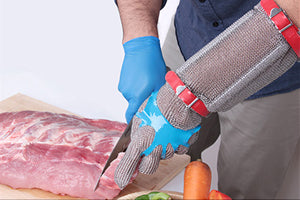
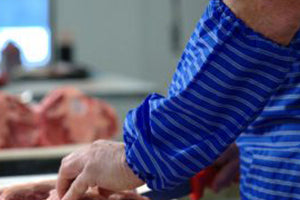
- PPE condition review: inspect TPU or PVC aprons, sleeve protectors, hand protection, and fasteners for damage or contamination risk.
- Traceability readiness: make sure lot codes, receiving records, and packing records connect without gaps.
- Cleaning verification: check that the last sanitation sign-off matches the condition of the room.
- Staff briefing: give operators a short, calm reminder about who answers questions and where records are kept.
Video walkthroughs can help team leaders rehearse the floor standard before the actual visit. A practical example is this audit-prep training clip:
Building a Risk-Based Food Safety Culture
Checklist compliance has its place, but a site that only follows a checklist usually leaks risk somewhere else. The stronger model is risk-based, where the team pays attention to the controls that move the needle, sanitation records, utility failures, damaged PPE, packaging issues, and equipment drift. That approach lines up with the broader direction of food safety auditing, which is moving away from broad ritual and toward evidence-led verification Global research report on food safety auditing gaps.
The point isn't to audit more. It's to audit smarter. If a cold room fails to hold condition, if cleaning gets rushed in wet zones, or if a tool storage habit keeps creating contamination risk, those are the places where attention belongs. A site that chases every minor paper discrepancy equally ends up missing the primary hazard.
What makes the culture stick
Reliable gear helps more than people admit. When PPE cracks, tears, or becomes awkward to wear, staff start improvising. When aprons are comfortable, durable, and suited to cold rooms or wash-down work, people keep them on and use them properly. That lowers friction, which matters more than slogans ever will.
Australian-made TPU aprons are a good example of the kind of supply choice that supports daily discipline in wet rooms. They're not a magic fix, but when an apron survives the environment and still cleans down well, staff are less tempted to swap it, fold it badly, or work around it. The same logic applies to sleeve protectors, knife storage, and other items that sit in the path of routine use.
A food safety culture becomes real when supervisors reward the right behaviour and fix the weak points fast. If a room has repeated water pooling, the issue needs engineering or workflow attention, not another reminder email. If staff are skipping PPE because the gear is awkward, the gear is part of the problem.
Practical rule: when the tools fit the work, compliance stops feeling like an interruption.
The value of this approach is that the audit stops being a crisis event. It becomes a verification of a system that's already under control, which is exactly what a mature meat or hospitality site should want.
Maintaining Continuous Compliance and Readiness
The sites that stay calm when an auditor walks in do not rely on luck. They keep testing their own controls, close corrective actions properly, and make the floor easy to read at a glance. Internal audits matter because they expose weak spots before an external auditor does, and the best teams treat those findings as routine maintenance.
Wet areas tell the truth fast. If drains are pooling, if hose storage is messy, or if staff are stepping around damaged PPE, the room is already signalling trouble before anyone opens a clipboard. In a meat room, the small daily habits matter as much as the paperwork, because inspectors see the condition of the work area first and the records second.
Good readiness starts with gear that suits the job. PPE that is hard to wear gets left on hooks, folded wrong, or swapped out for whatever is nearby. Aprons that clean down properly, sleeve protection that stays in place, and tools that are easy to store all reduce the habits that create non-conformities. The point is simple, if the gear works with the room, the room stays more consistent.
Cold-chain discipline needs the same treatment. A practical guide to cold-chain management in food operations is worth keeping in the team's reference folder because the primary risk is usually in the routine, not the one-off failure. Freezer zones, wash-down areas, and busy prep rooms all need the same clear standard, clear paths, and clear traceability, especially when stock is moving quickly and people are working under pressure.
Continuous readiness comes from systems that match the floor. A well-organised site, cleanable equipment, and records that line up with what is happening in the room are harder to catch out. The best audit prep is not a last-minute reset, it is the daily practice of keeping the wettest areas under control, checking the gear that gets handled constantly, and fixing small breakdowns before they become findings.
