



You can spend a day comparing bandsaw horsepower, mincer throughput, and vacuum pump specs, then still end up with the wrong purchase because the problem wasn't the machine. It was the distributor who couldn't commission it properly, stock spare parts locally, or answer a wash-down compliance question without calling someone else.
That's the part many Australian meat businesses learn too late. The equipment looks fine on paper, but if the support chain is weak, downtime, contamination risk, and rework start eating the margin you thought you'd saved.
Table of Contents
- Why Distributor Selection Matters More Than Equipment Specs
- Assessing Your Operation's Real Requirements
- Evaluating Product Range and Specialisation
- The Case for Local Manufacturing and Support
- Verifying Compliance and Food Safety Support
- Building a Sustainable Procurement Strategy
Why Distributor Selection Matters More Than Equipment Specs
The toughest procurement mistakes I've seen in Australian meat plants weren't caused by bad machines. They came from buying from a distributor who sold to the spec sheet but couldn't support the site once the truck left.
Support is part of the machine
A distributor is not just a middleman. In a butcher shop, abattoir, or processing line, that company determines whether you get commissioning help, realistic lead times, spare parts, training, and a sane path through a fault claim. If they don't understand wash-down design, stainless construction, or the difference between a cleanable guard and a cosmetic cover, the risk lands on your floor team.
The wider market context explains why this matters. The meat-processing-equipment market was estimated at USD 11.2767 billion in 2024 and projected to reach USD 15.0374 billion by 2030 DataIntelo report. That kind of sustained growth means distributors aren't just selling one-off capital items, they're serving recurring upgrades, consumables, and replacement cycles.
Practical rule: if a distributor can't explain installation, cleaning access, and service response in plain English, they're not ready for a meat plant.
The wrong choice creates hidden costs
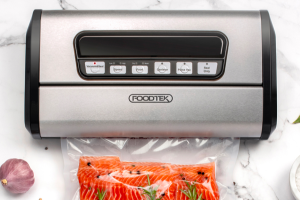
A low sticker price can look smart until the first breakdown. If a mincer sits idle because the head seal is backordered, or a vacuum packer can't be tuned for your bags, production stops while labour keeps burning. In my experience, that's where a cheap import becomes the most expensive asset on the site.
There's also a compliance angle. Australian buyers need suppliers who understand cleanability, wet-area hazards, and the practical realities of food handling. A distributor who only talks about capacity and ignores wash-down access is missing the point of a meat environment.
The industry structure reinforces the need for reliable wholesale supply. Australia's meat and meat product manufacturing had an annual turnover of about A$25.0 billion in 2022–23 Australian industry turnover reference, which is large enough to support specialised sourcing rather than opportunistic buying. In a market that size, distributor quality shapes uptime, not just purchasing.
Assessing Your Operation's Real Requirements
Start with how the site runs, not the brochure. A butcher shop, an abattoir, and a food plant can all need a mincer, but they often need different head sizes, duty cycles, cleaning routines, and floor layouts.
Build the requirement around workflow, not wish lists
Collect the basics first. Technical guides recommend gathering datasheets for power, throughput, materials, and footprint before purchase technical guide on meat processing machines. That order matters because a machine that fits the floor but not the workload is a poor buy, and so is a powerful unit that slows down cleaning or does not suit a wet area.
For mincers, the same guide notes common ranges from about 100 to 3,000 kg/hour, with 7.5 to 45 kW motors and plate sizes from 2 to 10 mm. If your shop trims and minces in bursts, you do not size for a theoretical peak that happens once a week. You size for the production rhythm you repeat, the staffing level on a normal day, and the cleaning window at the end of the shift.
Practical rule: buy for the workload you repeat, not the workload you hope to have someday.
Map hygiene-critical touchpoints before you price anything
The next filter is sanitation. FSANZ requires food businesses to keep premises and equipment in a clean and sanitary condition and to prevent contamination of food from food-contact surfaces and utensils FSANZ food standards code reference. That means a sharp price on a vacuum machine counts for little if the seals, guards, and contact surfaces are awkward to clean.
Use this quick assessment:
- Throughput bottlenecks: Identify where product waits, whether that is cutting, mincing, filling, packing, or wash-down.
- Hygiene pinch points: Mark every surface that needs fast access for cleaning, inspection, or disassembly.
- Consumable load: Track bags, casings, aprons, sleeves, and PPE usage by shift, not by guesswork.
- Growth pressure: Check whether a new line, contract, or export customer will change the workflow within the next purchasing cycle.
For practical buying, equipment suitability comes before glossy features, then hygienic design, then compliance paperwork. That sequence keeps you from overbuying capacity and underbuying cleanability. In a wet processing room, the wrong shortcut usually shows up first in cleaning time and then in audit stress.

Evaluating Product Range and Specialisation
A broad catalogue can save time, but only if the distributor understands the application behind every product. A narrow specialist might know one machine category well, yet still leave you stitching together bags, PPE, casings, and sanitation items from other suppliers.
Breadth helps when your site needs integration
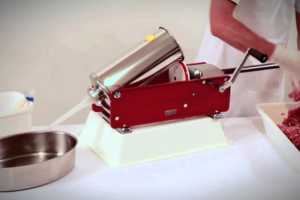
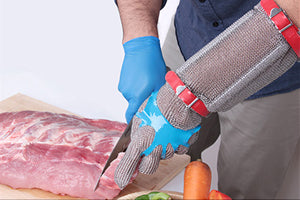
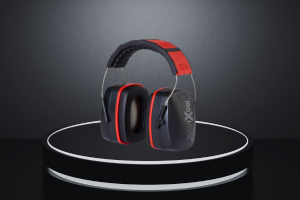
For a butcher or abattoir, the practical bundle often includes bandsaws, mincers, sausage fillers, vacuum machines, vacuum bags, casings, aprons, sleeve protectors, knife pouches, and hearing protection. A distributor with that range reduces compatibility mistakes and cuts the number of purchase orders that need chasing. It also makes reordering easier when a consumable runs out mid-week.
PSC TRADING Co PTY LTD is one example of a supplier that combines machinery, consumables, PPE, accessories, and packaging in one wholesale channel. That kind of portfolio matters when the buyer wants one contact point for the processing room and the back-of-house store.
Specialisation still matters in the details
Range alone doesn't prove competence. I look for signs that the distributor understands meat handling specifically, not generic food equipment. If they can talk about natural casings for sausage making, meat branding ink for carcass identification, or freezer pallet spacers for cold-chain airflow, they're thinking in site terms rather than catalogue terms.
The trade-off is straightforward.
| Broad-range distributor | Specialist distributor |
|---|---|
| Easier one-stop buying | Deeper technical focus |
| Better for mixed procurement | Better for niche applications |
| Fewer vendors to manage | Stronger product depth in one category |
| May miss site-specific detail | May require extra suppliers elsewhere |
A strong distributor doesn't just list products. It helps you avoid incompatible choices, like pairing a fast machine with weak bag stock or buying PPE that doesn't suit the wash-down routine. That's the practical value of specialisation, not the label on the homepage.

The Case for Local Manufacturing and Support
Imported equipment can look cheaper until you factor in freight, commissioning, parts delays, and the cost of waiting. In a meat plant, time lost to a stalled line is never just a maintenance issue, it's a labour problem, a stock problem, and sometimes a food safety problem too.
Local support changes the risk profile
When a machine is built or stocked locally, the site usually gets shorter lead times, simpler warranty handling, and better access to technicians who can visit. That matters in wash-down environments, where a failed seal or damaged guard isn't something you can ignore until next quarter. It needs to be fixed before the next shift starts.
The hidden cost is not just transport. It's also the support loop. If the distributor needs to email overseas for every part number, your repair window stretches. If they keep spares nearby and understand the machine, the problem gets solved faster and with less improvisation.
The cheapest purchase is often the one that exposes your operation to the longest interruption.
Consumables and workwear are part of the same decision
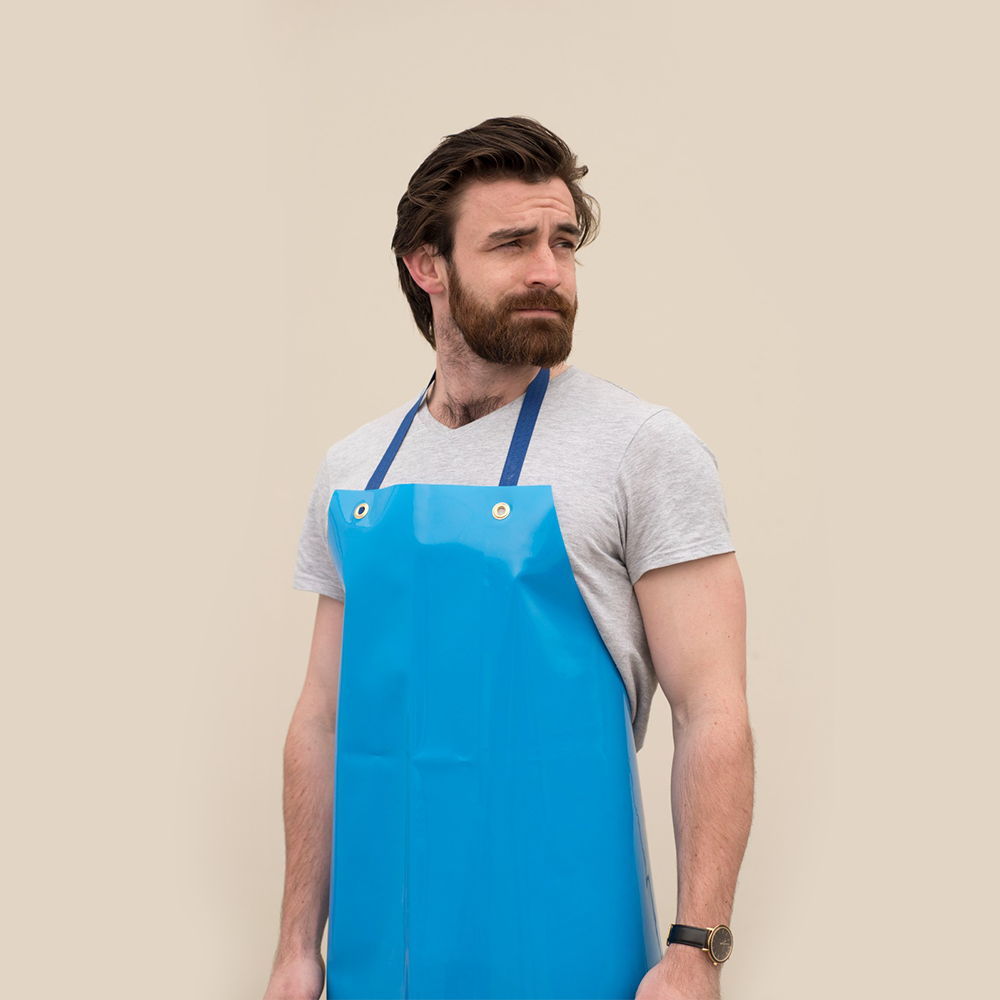
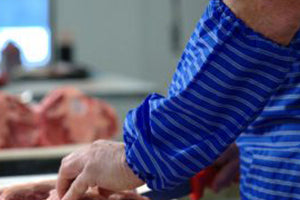
Local support matters beyond metal and motors. Australian-made aprons, locally stocked PPE, and readily available consumables keep a site moving when the unexpected happens. If a wash-down apron tears, a knife pouch fails, or sleeve protectors need replacing, the site manager doesn't want a two-week wait for the next container.
For buyers comparing support models, PSC TRADING's product mix shows the logic clearly. Its range covers processing equipment, protective workwear, and hygiene-related consumables, which means the purchasing team can link equipment support with the day-to-day items that keep people working safely. That's often the difference between a tidy quote and an operationally useful supply chain. See the broader manufacturing context in this overview of food processing equipment manufacturers.
The local-support argument is not sentimental. It's operational. If your plant runs on tight rosters and wet-area compliance, the value of nearby help shows up when the machine fails, not when you're signing the invoice.
Verifying Compliance and Food Safety Support
Compliance should be visible in the distributor's process, not just in a sales claim. If a supplier can't document design choices, cleaning access, and sanitisation support, they're asking you to trust a critical part of your food safety system on faith.
Check the equipment against sanitation requirements
NSF/ANSI/3-A 14159-1 requires meat and poultry processing equipment to be designed for sanitation and resistance to cracking, chipping, and foreign-matter penetration ANSI blog on NSF/ANSI/3-A 14159-1. That lines up with what matters on the floor, cleanable materials, smooth access, and no hidden dirt traps. A machine can look solid and still create cleaning problems if the seams, fasteners, and guards are awkward to reach.
Australian buyers should also look for practical design cues, such as 304 stainless steel, passivated surfaces, and cleanable guard and interlock designs. Those features are not decorative. They affect how quickly a team can clean the unit and how confidently the site can keep food-contact areas sanitary.
Cold-chain control sits in the same conversation because sanitation and temperature handling are linked in a real plant, especially once product moves between prep, holding, and dispatch. A distributor that understands this will talk through cold chain management practices as part of the equipment discussion, not as a separate theory exercise.
Use a simple verification sequence
Before you sign off, ask for the paperwork and test the physical access.
- Review the material and cleaning documents. Ask for manuals, surface specifications, and any sanitation guidance.
- Check the machine geometry. Look for places where product residue, water, or debris could collect.
- Inspect access under wash-down conditions. Open guards, remove quick-release parts, and see whether the unit can be cleaned without special tools.
- Confirm support for compliance records. The distributor should be able to provide documentation you can file with site records.
- Ask what happens after a fault. Recall handling, spare parts, and technical response all matter once the machine is live.
FSANZ requires food businesses to maintain premises and equipment in a clean and sanitary condition and to prevent contamination FSANZ food standards code reference, so this is part of day-to-day operating discipline. A distributor who understands that will talk about cleanability as seriously as they talk about throughput.

Building a Sustainable Procurement Strategy
A pallet jack sits idle, a wash-down bay is booked, and the production supervisor wants a replacement machine on the floor before the next shift starts. In that moment, procurement is no longer a paper exercise. It is the difference between a line that keeps moving and a week of avoidable disruption.
Good procurement in meat processing is a system for keeping production stable, protecting staff, and avoiding the false economy of buying on price alone.
Think in total cost, not sticker price
Total cost of ownership includes the purchase price, freight, commissioning, cleaning effort, parts access, and service response. In Australia, where food manufacturing runs on tight margins and downtime is expensive, those hidden items often cost more than the machine itself over its working life. The point is to buy the unit that still makes sense after the first fault, the first audit, and the first staff changeover.
The meat-processing-equipment market data supports a long replacement and upgrade cycle. One estimate put the market at USD 8.19 billion in 2022 and forecast USD 13.45 billion by 2030, implying a 6.40% CAGR USDA market research benchmark in the brief. Another placed it at USD 10.8 billion in 2023 and USD 17.3 billion by 2033 market estimate in the brief. Those figures point to an ongoing cycle of replacement, not a one-off purchase.
Build the buying habit around reliability
A sustainable purchasing approach usually looks like this, and it should be written into the way you assess every quote. If you want a practical starting point, a procurement best practices guide can help structure the checks before money changes hands.
- Lock in service expectations: Get clarity on commissioning, fault response, and parts availability before the order goes through.
- Separate critical and non-critical items: Keep spare stock for downtime-sensitive consumables like bags, PPE, and hygiene items.
- Review the site after installation: Check whether cleaning, access, and workflow matched the promise.
- Use suppliers strategically: Consolidate where the distributor covers your needs, diversify where lead times or risk exposure are too high.
- Reassess every upgrade: A machine that worked for a small team may not suit a busier line six months later.
Practical rule: a distributor earns repeat business by reducing uncertainty, not by quoting the lowest first price.
The strongest buying relationships come from a distributor that understands your site well enough to recommend the right upgrade at the right time. That keeps throughput steady without piling up dead stock or service headaches. If procurement is meant to support operations instead of distracting from them, build the process around support, compliance, and local responsiveness, then price the machine last.

If you are reviewing a purchase now, score the quote against three points only: local support, wash-down suitability, and spare parts access. Then ask the distributor to prove each one in writing before you commit, because in Australian meat processing, that is where the significant cost sits.
