

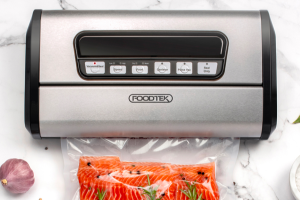



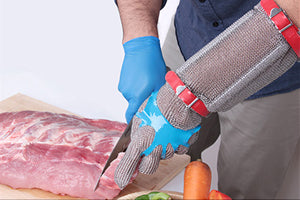



You're halfway through a shift, the phone's blowing up, and the orders don't line up with what's on the shelf. Ten supplier emails are open, two PPE orders are late, and someone's chasing sausage casings that should've been here yesterday. That's procurement in a busy butcher shop, abattoir, or food plant when it's run off inboxes and memory instead of a proper system.
The fix isn't more heroics. It's procurement best practices that suit the way Australian food businesses buy. The right approach keeps the cold-room moving, protects margin, and cuts the rubbish work that eats up your day. It also lines up with the practical mechanics of Australian public and private procurement, where whole-of-life value, clear requirements, records, and post-award follow-up matter just as much as the purchase itself OECD public procurement recommendation, public procurement guideline for PFOs.
If you're buying bandsaws, aprons, gloves, bags, casings, or wash-down gear, the same hard truth keeps showing up. Manual processes cause errors, e-procurement cuts waste, and a tighter supplier base gives you more control. The following ten practices turn the chaos into a repeatable system built for butcher shops, abattoirs, hospitality kitchens, and food processors working through real supply pressure.
Table of Contents
- 1. Supplier Consolidation and Strategic Partnerships
- 2. Total Cost of Ownership TCO Analysis
- 3. Demand Planning and Inventory Optimisation
- 4. Risk Management and Supplier Diversification
- 5. Performance Metrics and Supplier Scorecards
- 6. Collaborative Cost Reduction and Value Engineering
- 7. Contract Negotiation and Clear Terms
- 8. Ethical Sourcing and Sustainability Procurement
- 9. E-Procurement Systems and Digital Automation
- 10. Category Management and Strategic Sourcing
- 10-Point Procurement Best Practices Comparison
- Put These Procurement Best Practices to Work This Quarter
1. Supplier Consolidation and Strategic Partnerships
A kitchen, a butcher shop, and an abattoir all burn time on the same problem, too many vendors and not enough control. Once you're juggling separate suppliers for machinery, PPE, bags, hooks, and aprons, every extra account adds noise, more invoices, and more chance of something slipping. Consolidation doesn't mean buying everything from one source no matter what, it means choosing fewer partners who can carry the load.

For a wholesale operator like PSC TRADING, this might mean working with a tight group of reliable manufacturers for meat processing gear, aprons, and safety stock instead of spreading orders across a long tail of vendors. That kind of partnership supports better lead times through peak abattoir periods, cleaner stock replenishment, and simpler compliance checks for items like AS/NZS-rated PPE and food-grade apparel. It also makes quarterly reviews worth having, because you're talking to suppliers who know your seasonal peaks rather than just seeing sporadic purchase orders.
What consolidation looks like in the real world
Start with low-risk lines first, then build trust. A single TPU or PVC apron supplier that can handle Australian-made production and custom design work gives you consistency in materials and finish, while a preferred PPE distributor makes glove and sleeve protectors easier to keep compliant and in stock. For critical machinery, keep backup arrangements written into the contract so one late delivery doesn't stop production.
Practical rule: consolidate for leverage, but never consolidate so hard that one supplier outage can stall the floor.
Use a simple scorecard before you cut suppliers. Track on-time delivery, quality, responsiveness, and total cost, then back your decision with actual performance rather than habit or personal preference. The point isn't to make procurement smaller, it's to make it sharper.
2. Total Cost of Ownership TCO Analysis
The cheapest quote in the folder is often the most expensive decision in the freezer room. A meat bandsaw, an apron line, or a case of vacuum bags doesn't live on unit price alone. Freight, installation, training, maintenance, failure rates, and disposal all matter, especially when the gear sits in a wet, cold, or high-turnover environment.
The strongest procurement decisions compare the whole life of the purchase, not just the invoice. Australian public procurement guidance tells officials to look at whole-of-life value and broader factors like quality, fitness for purpose, and risk, not just the headline price OECD public procurement recommendation. The UN procurement manual pushes the same logic by including transportation, installation, operating, maintenance, and disposal in total cost of ownership UN procurement manual.
Why TCO matters on the shop floor
A cheaper imported apron can look good until the lead time stretches, customs drags, or the material wears out faster in wash-down use. A premium food-grade bag can still be the better buy if it avoids defects and downtime during packing. For a working buyer, TCO turns those trade-offs into something you can defend in front of the owner, the production manager, or the finance team.
Practical rule: if an item touches uptime, hygiene, or labour time, the supplier quote is only the starting point.
PSC TRADING's food processing equipment range is a good example of why this matters. A bandsaw purchase is really a bundle of costs, including delivery, setup, blades, service support, and the cost of being without it if something fails. A supplier who is dearer up front can still save money over the full run of the machine.
For consumables like aprons or PPE, calculate cost per use or per worker served. That's the cleanest way to compare gear that looks similar on paper but performs very differently in a cold, wet, or chemical-heavy environment.
3. Demand Planning and Inventory Optimisation
Stockouts don't just annoy the team, they blow up the day. You get rushed purchases, freight premiums, and awkward calls to customers who were expecting service, not excuses. On the other side, overbuying clogs the storeroom and ties up cash that should be working elsewhere.

Procurement teams in food businesses do best when they link buying to actual demand, not gut feel. That means using sales history, seasonal patterns, and usage data from the floor to decide when to place orders. It also means telling suppliers early enough that they can stage their own production and freight planning.
Forecasting that fits butcher, abattoir, and kitchen rhythms
The difference is in the seasonality. Sausage casings, hospitality aprons, and disposable PPE all spike differently across the year, while abattoir inputs tend to be steadier. If you know a product runs hot in spring or before holiday catering ramps up, you can build stock early and avoid the messy panic buys that come with short notice.
If you're running an online or wholesale catalogue, the next step is tighter workflow control. PSC TRADING's workflow efficiency guidance fits that thinking well, because it links buying discipline with the way orders move through the business.
Forecasts don't need to be perfect. They need to be good enough that the supplier can plan and your team doesn't run blind.
Build inventory rules by category. High-velocity items like disposable gloves deserve a different treatment from slower-moving equipment or special-order apron styles. When you match reorder points to lead times, you stop paying for emergency freight and stop asking the team to improvise with half-bad substitutes.
4. Risk Management and Supplier Diversification
Single-supplier buying feels efficient right up until it isn't. A port delay, a quality failure, a shipping snag, or a production outage can hit hard when you've got no second source ready to go. In food processing, the risk gets worse because the missing item often isn't cosmetic, it's operational.
The trick is to diversify without wrecking the efficiency you've built through consolidation. Keep a primary supplier for your preferred line, but qualify a secondary source for critical products like bandsaws, vacuum consumables, PPE, and sausage casings. That gives you options when supply goes sideways, without forcing the whole catalogue into a scattered mess.
Where backup plans actually pay off
For aprons and PPE, one domestic source and one approved offshore alternative can be the difference between continuity and chaos. For a plant that can't afford downtime, dual-sourcing can be worth the extra effort even if the backup supplier isn't the cheapest line on the page. The same logic applies to meat-processing equipment, where the secondary vendor may not get most of the spend but still needs to stay warm with occasional orders.
A good diversification plan starts with a needs assessment, market checking, and documented justification if you ever have to buy non-competitively. Practical integrity guidance also points buyers toward independent validation, clear award criteria, and regular review of non-competitive decisions integrity in public procurement guidance.
If the item stops production, it needs a backup. If the item is replaceable tomorrow, it still needs a trigger point.
Build safety stock for critical lines with long lead times, but don't let it turn into dead stock. Review turnover. Keep the relationship alive with the secondary supplier through a few orders each year so they remain real, not theoretical.
5. Performance Metrics and Supplier Scorecards
You can't manage suppliers by mood, memory, or the last complaint that landed in your inbox. A supplier scorecard gives procurement something better, a way to measure whether a supplier is helping the business or just filling space in the vendor list. In a food environment, that usually comes down to delivery, quality, responsiveness, and accuracy.
A scorecard doesn't have to be fancy. It has to be consistent. If a glove supplier keeps the shelf full, ships correctly, and answers fast when a line goes down, that's worth more than a polite rep and a glossy brochure.
Score the things that actually hurt or help
Pick a small set of measures and keep them category-specific. A meat bandsaw supplier should be judged differently from a PPE distributor or an apron manufacturer because the business impact isn't the same. On-time delivery matters, but so does defect rate, emergency response, invoice accuracy, and how well the supplier handles custom work.
PwC's 2024 Global Digital Procurement Survey puts data analytics and source-to-contract among the top use cases for procurement performance, and it also notes that carbon footprint monitoring solutions doubled to 51% since the prior edition PwC digital procurement survey. That matters because good scorecards are no longer only about price and lead time, they also help buyers compare service, sustainability, and landed cost in the same view.
Practical rule: if the scorecard can't drive a renewal, a reset, or a supplier conversation, it's just paperwork.
Share results with the supplier every month and review them properly each quarter. Keep the tone direct but collaborative. The aim is to fix the weak point, not collect bad news for a drawer.
6. Collaborative Cost Reduction and Value Engineering
Hard buyers chase discounts. Good buyers get suppliers involved in redesigning the cost out of the product without trashing the quality. That distinction matters in food processing, because a small design change can save labour, reduce waste, or make the line easier to clean.
Value engineering earns its keep. If an apron manufacturer can simplify hook styles, reduce unnecessary colour options, or fine-tune material thickness without compromising durability, the savings can show up across the whole range. The same thinking applies to spare parts and consumables, where standardising components across models can cut complexity for both sides.
Where the savings come from
The best projects start with one high-volume line and a supplier you trust enough to be blunt with. Share the commercial picture. Show where the margin is tight, where the waste sits, and where the product is causing avoidable handling problems. Suppliers usually respond better to honest cost breakdowns than to vague pressure for “a better price.”
Shared savings agreements work well when both sides can see the gain. That might mean the buyer gets the first chunk of savings, then the balance is split. It gives the supplier a reason to bring ideas, not just defend the current spec.
Practical rule: don't ask for cheaper. Ask for fewer parts, less waste, and less handling time.
In a kitchen or plant setting, even packaging changes can matter. If glove damage is happening during unboxing, better pack design can cut waste and make the item usable faster. In procurement, the smartest cost reduction is often the one that removes a problem before it reaches the floor.
7. Contract Negotiation and Clear Terms
A weak contract turns a buying decision into a dispute waiting to happen. Vague delivery dates, fuzzy quality standards, and missing escalation clauses are all invitations for arguments later. In a food business, that's not just annoying, it can disrupt production, delay compliance checks, and leave the team improvising.
Clear terms protect both sides. If you're buying a bandsaw, a contract should spell out delivery, installation support, warranty coverage, and spare parts availability. If you're buying casings or PPE, it should pin down quality specs, lead times, minimum order quantities, and what happens when the supplier misses the mark.
Put the hard parts in writing
The best contracts use measurable language. That means dimension tolerances, defect standards, service windows, and pricing rules tied to an index rather than open-ended increases. It also means setting out what happens if the supplier runs late, ships partial goods, or can't keep core sizes in stock.
Australian guidance on procurement mechanics is pretty clear, planning before purchase, documented criteria, market canvassing, contract records, and post-award review all matter public procurement guideline for PFOs. In practical terms, that means the contract isn't just a legal document, it's the memory of the buying decision.
If a supplier promise matters, write it down. If it can't be measured, it'll be argued about later.
Keep one template for standard buys and a tighter one for high-risk equipment. A $10,000 apron order doesn't deserve the same terms as a major machine purchase, and nobody should pretend otherwise.
8. Ethical Sourcing and Sustainability Procurement
Ethical sourcing isn't a nice-to-have once the rest of the job is done. It's part of how a food buyer protects reputation, staff safety, and customer trust. If you sell into hospitality, retail, or institutional food supply, people do care where the product came from and how it was made.
PSC TRADING's Australian-made apron lines are a useful example here, because local production gives buyers a clearer line of sight on workplace standards, wage compliance, and manufacturing conditions. The same logic applies to imported PPE or casings, where you need to know more than just the price and the carton count. If the supply chain is opaque, the risk travels with it.
Ethics and sustainability have to be practical
Start by mapping where products come from and what standards apply at each step. Third-party certifications can help, but they don't replace actual supplier checks. For top suppliers, an annual audit is a much better discipline than hoping the logo on the brochure tells the whole story.
PSC TRADING's industrial packaging supplies fit neatly into this conversation, especially where buyers want packaging that supports waste reduction without making the operation clumsy. If your packaging choice helps a customer cut landfill, keep products protected, and preserve traceability, that's a real procurement win.
Practical rule: sustainable procurement has to survive the cold room, the wash-down, and the invoice review.
The big mistake is treating sustainability like a separate desk. In food businesses, it belongs inside the buying decision, alongside quality and continuity. A slightly dearer supplier can still be the right one if the product performs better, the supply is cleaner, and the customer sees value in the choice.
9. E-Procurement Systems and Digital Automation
Manual procurement is slow, messy, and easy to mess up. Emails get missed, spreadsheets drift, invoices don't match, and nobody has a clean view of what's been ordered until something goes wrong. That's why digitising procurement workflows is one of the most useful changes a food business can make.
The benchmark data is blunt. Organisations using e-procurement tools see a 25% increase in order accuracy, automated invoice processing cuts errors by 40% and processing time by 50%, and automation reduces purchase-order processing time by 30%–40% procurement statistics benchmark. The same dataset also says process inefficiencies delay vendor payments by an average of 14 days, and the average cost per purchase order falls from $15 with manual processing to $3 with automation procurement statistics benchmark.
Where automation pays first
Start with the obvious stuff, invoice capture, three-way match, and approvals. Those steps give you the quickest return without trying to replace every human judgement in the buying process. A clean system still lets people review high-risk exceptions, which is exactly what you want for equipment, compliance-sensitive PPE, and anything tied to food safety.
A practical rollout might begin with an online catalogue for aprons, gloves, and consumables, then expand into equipment as the process matures. That lines up with how procurement software is usually adopted in real businesses, by proving the workflow on the easy categories first and then layering in the harder ones. It also makes it easier to track who's ordering what, from where, and on whose approval.
A system that captures the order, the receipt, and the invoice in one flow saves more time than another spreadsheet ever will.
If your current process lives in email, it's time to move it out of the inbox. The more your team buys through a system, the fewer surprises you'll have when the pallet lands, or doesn't.
10. Category Management and Strategic Sourcing
Managing procurement item by item is a good way to miss the bigger pattern. Category management groups related spend together, then applies one strategy to the whole bucket. That makes more sense for meat-processing equipment, PPE, aprons, and packaging than trying to negotiate every purchase like it's a one-off emergency.
A category view shows what's fragmented, what's overexposed, and where the opportunities sit. It also helps you decide which suppliers deserve strategic attention and which ones are just fill-ins. For PSC TRADING, that means looking at equipment, safety gear, and consumables as separate buying problems with different rules.
How category thinking changes the conversation
If the PPE category is spread across too many suppliers, you usually get inconsistent quality and awkward replenishment. If aprons are split between imported budget lines and Australian-made premium lines, category management helps you decide which segment serves which customer, and why. That's a much stronger position than chasing the lowest quote each time.
The biggest win is governance. A category owner can track spend, supplier performance, and strategy over time instead of reacting to the latest shortage. Strategic sourcing then becomes a cycle, review the market, decide whether to consolidate, diversify, or hold the line, and execute against that choice.
Practical rule: categories should follow how the business actually runs, not how a vendor catalogue is laid out.
For food businesses, that usually means separating equipment from consumables, and consumables from wear-and-tear items like aprons and PPE. Once that structure is in place, sourcing decisions get cleaner, faster, and far easier to defend.
10-Point Procurement Best Practices Comparison
| Strategy | Implementation Complexity 🔄 | Resource Requirements ⚡ | Expected Outcomes 📊 | Ideal Use Cases 💡 | Key Advantages ⭐ |
|---|---|---|---|---|---|
| Supplier Consolidation and Strategic Partnerships | 🔄 High, relationship-building, change mgmt | ⚡ Medium, negotiation time, dedicated account managers | 📊 Strong price leverage, fewer vendors, streamlined logistics | 💡 High-volume, standardised categories (equipment, PPE, packaging) | ⭐ Lower admin, better pricing, faster issue resolution |
| Total Cost of Ownership (TCO) Analysis | 🔄 Medium, data collection & modelling | ⚡ Low–Medium, analytics time, procurement expertise | 📊 Reveals lifetime costs, prevents false-economies | 💡 Capital equipment, long-life items, long lead-time sourcing | ⭐ Evidence-based purchasing, ROI justification |
| Demand Planning and Inventory Optimisation | 🔄 Medium, forecasting processes & supplier coordination | ⚡ Medium, data systems, training, forecast sharing | 📊 Reduced carrying costs, fewer stockouts, improved cash flow | 💡 Seasonal/volatile demand, high-volume consumables | ⭐ Lower working capital, predictable supplier schedules |
| Risk Management and Supplier Diversification | 🔄 Medium, supplier mapping & qualification | ⚡ Medium, vendor management, safety stock | 📊 Improved resilience, alternative sourcing options | 💡 Critical items where supply failure halts operations | ⭐ Supply continuity, credible alternatives, negotiation leverage |
| Performance Metrics and Supplier Scorecards | 🔄 Low–Medium, metric design & tracking cadence | ⚡ Low, reporting tools and periodic reviews | 📊 Objective supplier insights, trend visibility, continuous improvement | 💡 Ongoing suppliers, quality/delivery-sensitive categories | ⭐ Data-driven decisions, early issue detection |
| Collaborative Cost Reduction & Value Engineering | 🔄 High, cross-functional workshops & trust required | ⚡ High, engineering time, supplier involvement, possible CAPEX | 📊 Sustainable cost reductions, product/process improvements | 💡 High-cost/high-volume items with redesign potential | ⭐ Win-win savings, supplier-driven innovation |
| Contract Negotiation and Clear Terms | 🔄 Medium, legal drafting and customisation | ⚡ Low–Medium, legal counsel, negotiation time | 📊 Fewer disputes, clear remedies, defined SLAs | 💡 Equipment purchases, long-term agreements, critical supplies | ⭐ Risk allocation, enforceability, reduced ambiguity |
| Ethical Sourcing & Sustainability Procurement | 🔄 Medium, audits, traceability, supplier evaluation | ⚡ Medium, audit costs, certifications, reporting | 📊 Reduced reputational/legal risk, market differentiation | 💡 Brand-sensitive markets, regulatory compliance needs | ⭐ Reputation protection, customer alignment, premium positioning |
| E-Procurement Systems & Digital Automation | 🔄 High, IT integration, process redesign, change mgmt | ⚡ High, software, integrations, supplier enablement, training | 📊 Faster P2P cycle, fewer errors, real-time spend visibility | 💡 High transaction volumes, multisite organisations, distributed buyers | ⭐ Efficiency gains, analytics, frees staff for strategic work |
| Category Management & Strategic Sourcing | 🔄 High, deep analysis, taxonomy and governance | ⚡ Medium–High, category managers, market research, executive support | 📊 Aligned spend, strategic cost savings, better supplier strategies | 💡 Organisations with diverse spend or high total category spend | ⭐ Holistic sourcing, prioritised investments, improved supplier selection |
Put These Procurement Best Practices to Work This Quarter
Don't try to fix everything at once. Pick the two practices that solve your biggest pain right now, then make them real. If margins are tight, start with total cost of ownership and supplier consolidation. If stockouts are the problem, start with demand planning and supplier scorecards. If paperwork is eating the day, e-procurement should move to the front of the queue.
Assign one owner for each change, and give them a 90-day review date. That's enough time to test the process on aprons, gloves, bags, or another high-volume category without turning the whole business upside down. Keep the scope tight, write the rules down, and use the results to decide what gets rolled out next. Procurement is not a back-office chore when done properly. It's a margin lever, a risk control, and a service tool.
If you want a cleaner starting point, PSC TRADING gives Aussie buyers a practical one-stop wholesale source for meat processing gear, Australian-made aprons, PPE, casings, packaging, and cold-room supplies. Consolidating from day one makes the whole buying process easier, from requisition to receipt, and it gives you fewer suppliers to chase when the floor is busy and the orders are due.
