




You can buy a decent oven online in an afternoon, then spend the next six weeks discovering the fitout doesn't work. The power load pushes you into electrical changes, the canopy no longer suits the cooking line, the plumber wants a different connection, and the inspector starts asking about cleaning access, drainage, and hygiene surfaces. That's the cost of commercial kitchen equipment Australia buyers often miss, the purchase price is only the first line item.
For butcher shops, cafés, hotels, and food manufacturers, the equipment list has to work as a system, not a shopping cart. A mincer, bandsaw, vacuum machine, combi oven, or upright fridge can all be technically fine on its own and still create a bad kitchen if it breaks the workflow or fails a compliance check. The safest approach is to treat equipment selection as a fitout decision, a hygiene decision, and a maintenance decision at the same time.
Table of Contents
- Why Your Equipment Plan Makes or Breaks the Fitout
- Types of Commercial Kitchen Equipment by Function
- Australian Compliance and Food Safety Standards
- Kitchen Layout and Workflow Planning
- Budgeting and Total Cost of Ownership
- Choosing the Right Supplier and Procurement Approach
- Maintenance Planning and Warranty Strategy
Why Your Equipment Plan Makes or Breaks the Fitout
A butcher I worked with once ordered benches, refrigeration, and a bandsaw on price and delivery time. The gear arrived on schedule, but the install stalled because the layout hadn't accounted for wash-down flow, service access, and the way product moved from receiving to prep to display. The equipment was good enough. The plan wasn't.
That mistake is common because commercial kitchen equipment is usually sold as a product decision, when it's really a spatial and compliance decision. Australian food premises and equipment rules don't care whether a machine looked affordable in a catalogue, they care whether the installation supports safe cleaning, adequate water supply, drainage, and workable circulation. The wrong bench depth, the wrong canopy position, or the wrong refrigeration footprint can force a late redesign that costs far more than a better choice would have cost up front.
Practical rule: if you can't explain where each item sits in the workflow, who services it, and how it gets cleaned, you're not ready to buy yet.
The market size backs up why this matters. Australia's commercial kitchen appliances market was valued at about USD 1.66 billion in 2024 and is forecast to reach USD 2.36 billion by 2034 at a 3.6% CAGR over 2025–2034, while another estimate places it at USD 1.42 billion in 2025 and USD 2.62 billion by 2034 at 7.0% CAGR; both point to a large and still-growing base for foodservice, hospitality, and processing kitchens, well above USD 1 billion in Australia Expert Market Research.
A good buying plan starts with the room, not the brochure. Measure the service path, the wash-down zones, the power and water points, and the number of hands that need to work in the space at once. Then buy to that layout, not the other way around.
Types of Commercial Kitchen Equipment by Function

A usable equipment list starts with function. Group items by job, and the gaps show up fast, along with the machines that will create cleaning, handling, or layout problems later.
Food preparation gear
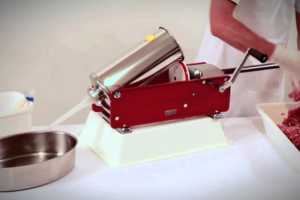
In a butcher shop, this is the workhorse group. Meat bandsaws, mincers, sausage fillers, slicers, and vacuum machines determine how quickly product moves from raw stock into saleable form. In hospitality kitchens, the same role is filled by slicers, mixers, processors, and prep benches that keep garnish, sauce, and portion prep moving without clogging the line.
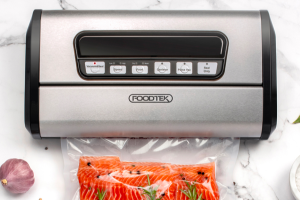
The mistake buyers make is choosing one machine at a time and forgetting how the set works together. A bandsaw with poor offcut handling slows the station down. A mincer that is awkward to strip and clean creates sanitation drag. A vacuum machine without the right bags and consumables can become a daily nuisance instead of a production tool. For a broader product view on processing gear, the food processing equipment Australia guide is a useful reference point.
The hidden cost here is not only purchase price. It is the time lost when the prep bench is too shallow, the wash area is too far away, or the operator has to keep crossing the room for consumables.
Cooking and heating gear
This group includes ovens, cooktops, deep fryers, griddles, and combi ovens. For a café or pub kitchen, the question is not which oven looks best in a brochure. It is what menu volume and cooking style the oven needs to support. A small cookline that is constantly stacked with tickets needs different heat recovery and output than a butcher shop doing prep reheating or tray cooking.
The Australian commercial cooking equipment segment was estimated at USD 178.3 million in 2023 and projected to reach USD 307.0 million by 2030 at a 7.6% CAGR, with volume rising from 26 thousand units in 2023 to 56 thousand units by 2030 Next Move Strategy Consulting. That unit growth explains why operators keep replacing domestic-style gear with commercial-grade kit once throughput starts to matter.
Heat load also affects the rest of the room. A cheap cooktop can look like a saving, then force a larger canopy, more extraction, or a different bench arrangement once the duty cycle is clear.
Cold storage and chain management
Refrigeration, freezers, underbench coolers, and cold-chain aids like pallet spacers protect product quality and reduce spoilage risk. Many fitouts go wrong because the fridge selected looked fine, but the loading pattern, door swing, or airflow space did not suit the room. In a meat business, the cold chain is a production system, not a cabinet.
Door clearance is one of the easiest traps to miss. A unit that technically fits on plan can still block a workpath, jam against another door, or slow the handover between prep, storage, and service.
Hygiene, sanitation, and PPE
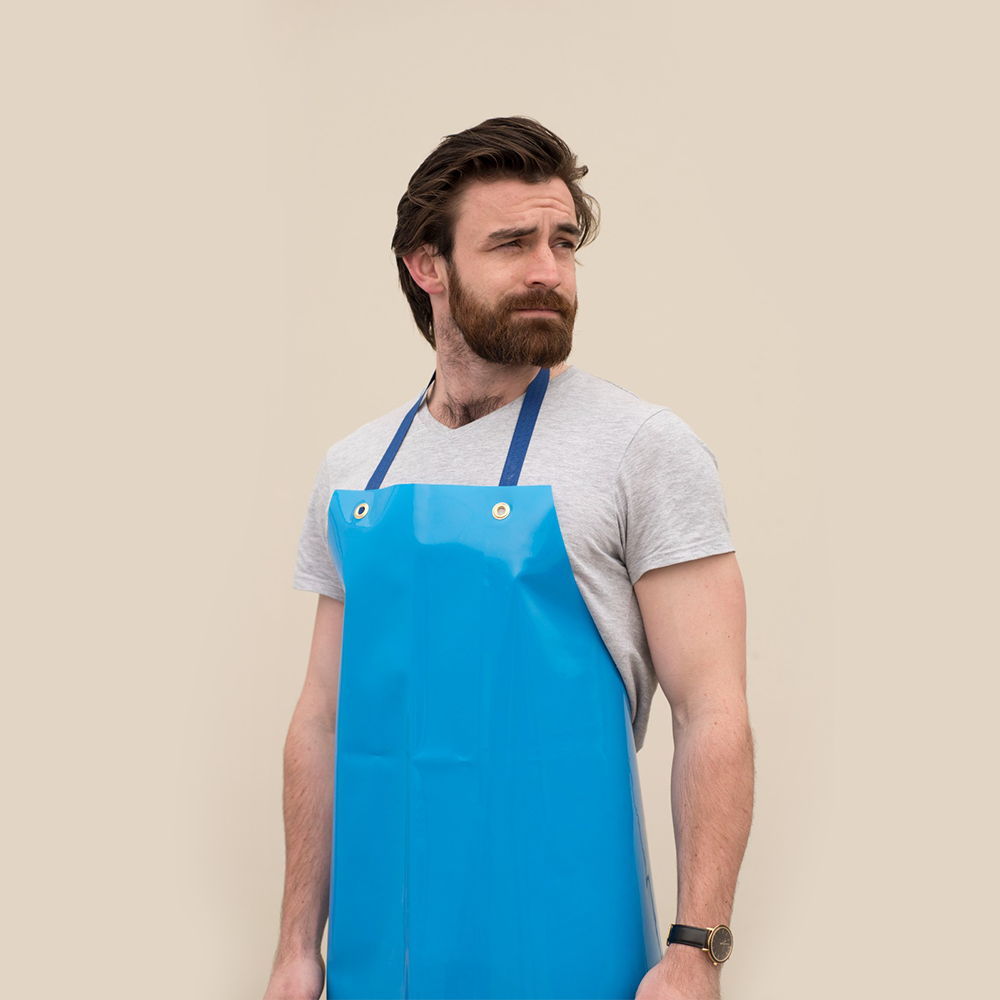
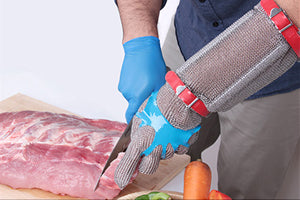
Wash-down surfaces, dishwashers, vacuum packaging, sanitising tools, and protective gear all sit in this category. Aprons, sleeve protectors, gloves, eye protection, face protection, and hearing protection are not add-ons. They are part of the equipment system that keeps the kitchen moving safely, especially in wash-down and high-splatter areas.
The floor reality matters here. If a wash station is awkward to reach or the PPE storage point is out of the way, staff stop using it consistently. That turns a compliance item into a workflow fault.
Safety and workflow aids
Fire access, clear walkways, and equipment placement matter as much as the appliance itself. Accessibility is often overlooked, but safe circulation and easy workstation reach are part of a kitchen that works for a mixed workforce. Equipment dimensions, handle placement, and bench height all affect how comfortably people can do the job.
A poor layout often shows up after the fitout, not during the purchase. The trolleys clip corners, lids foul adjacent equipment, and a simple cleaning pass takes longer than it should. That is where a low-cost buy becomes an expensive refit.
Australian Compliance and Food Safety Standards

Australian compliance is not a paperwork afterthought. It changes what you can buy, how it has to be connected, and whether the finished kitchen can open without expensive rework.
Food premises rules shape equipment choice
Food Standards Code Standard 3.2.3 applies to all food businesses in Australia, and it ties fixtures, fittings, and equipment to hygiene performance and adequate water supply Food Standards Australia New Zealand. A bench, sink, or wash station can look solid and still fail the job if it cannot be cleaned properly or if it interrupts the sanitation sequence the site needs to maintain.
A practical example is a small independent meat processor choosing wash-down surfaces and storage that can be maintained to food-premises standards instead of fitting out with domestic-style furniture. The issue is whether the fixtures support cleaning, contamination control, and the daily pace of the business. A procurement decision that ignores those duties often looks cheap on the quote and expensive once the room has to be altered.
For operators building a compliance-first buying process, HACCP documentation needs to sit alongside the equipment brief, not after the purchase order. A useful reference point is PSC Trading's approach to food safety and HACCP alignment in Australia, because the documentation trail matters when you are matching machinery, consumables, PPE, and wash-down needs to the way the kitchen runs.
Water and drainage connections are design-critical
When equipment connects to water or sanitary drainage, WMTS-101:2025 requires minimum product requirements for appliances and commercial catering equipment connected to the water service and or sanitary plumbing piping ABCB. The specification calls for watertight service connections to comply with AS 3688, sanitary plumbing connections to comply with AS 1589/AS 2887 or equivalent, and connected hoses to meet AS 3499 or IEC 61770/EN 61770.
Leakage control and hose-set performance are not optional details. A cheap hose or poorly matched connection can turn a new install into a maintenance problem before the kitchen even starts trading. If you are buying dishwashers, steamers, plumbed prep sinks, or anything with a drainage line, ask for the compliance evidence before you sign. That check often reveals whether the supplier is offering a genuine fitout solution or just moving boxes.
State guidance can set concrete kitchen thresholds
Queensland's commercial-kitchen guidance for liquor licensing says the kitchen must have at least 5 items from a specified list, including a multi-plate cooktop, an oven greater than 60 L, a recessed deep fryer, an overhead ventilation canopy, sufficient cold and dry-goods storage, sufficient cleaning space, and a preparation bench or equivalent equipment Queensland Government. The commissioner also needs to be satisfied the kitchen has enough floor space and adequate commercial-grade equipment for the menu.
That is a reminder that “enough gear” is not the same as “the right configuration.” A café chasing a licence can own several appliances and still fail the kitchen test if the layout does not show the minimum functional structure. A butcher shop can face the same problem if the refrigeration, prep, and wash areas are all present but poorly separated for the work being done.
Kitchen Layout and Workflow Planning

A butcher shop can look ready on paper and still fail on the floor if chilled carcass handling, trimming, packing, and wash-up all collide in the same corridor. I have seen a layout where the vacuum packer was positioned between the cool room and the handwash sink, so staff kept cutting across each other just to move product. The fix was not another bench. It was a better sequence for the room.
Workflow zones need to be deliberate
The basic flow runs from receiving, storage, preparation, cooking, cleaning, and dispatch. That order only works if the equipment follows the same logic. If the freezer door swings into a prep lane, or the vacuum packer sits where staff have to squeeze past a hot line, the kitchen starts working against itself.
A good example is a meat room where the bandsaw sits too close to the handling bench. Offcuts build up, the operator loses a clean landing zone, and people start reaching across moving product. The answer is usually layout discipline, not another machine. A practical commercial kitchen design plan should place the dirty side, clean side, and traffic paths before anyone signs off on equipment positions commercial kitchen design.
Accessibility belongs in the plan, not the finish stage
Most Australian buying advice focuses on brands and output, but teams also need to think about reach, clearance, and sight lines. Accessible placement helps with circulation, emergency access, and workstation usability, especially in high-turnover hospitality teams where people change roles often. A bench that suits one operator can be awkward or unsafe for another if the height or approach angle is wrong.
Useful test: if a new staff member can't tell where to stand, where to pass product, and where to set tools down within a minute, the layout is doing too much of the thinking.
Placement details affect service and safety
Overhead ventilation canopies, extinguisher access, and clear walking lines all matter because busy kitchens do not pause to reset themselves. Existing Australian guidance on kitchen safety puts weight on practical placement of safety equipment, which is a reminder that the room shape changes the safety outcome. The same logic applies to preparation benches, sink access, and service clearances around hot equipment.
The best layouts are usually boring in the right way. Staff do not have to ask where the clean pans go, product does not backtrack across the room, and nobody needs to walk around a machine just to do a basic task. That simplicity keeps a kitchen productive over a long shift.
Budgeting and Total Cost of Ownership

A cheap quote can be the most expensive decision in the room. The test is not the sticker price, it is what the equipment costs to run, service, and keep compliant in an Australian kitchen.
Compare the machine, not just the invoice
A lower-priced oven can look attractive until it pushes up energy use, adds heat to the room, or forces a ventilation upgrade that was never allowed for. A better-specified unit may cost more upfront, but it can reduce operating strain and keep the kitchen in a steadier working range. The same applies to vacuum machines, refrigeration, and anything that runs every day.
A separate Australia food service equipment outlook estimated the broader market at USD 679.6 million in 2024 and USD 982.3 million by 2030 at a 7.4% CAGR, with kitchen purpose equipment the largest revenue segment in 2024 and the fastest-growing category, according to Grand View Research. That movement toward kitchen-purpose machinery points to a simple buying pattern, operators are paying for function and throughput, not appearance.
Hidden cost often sits in downtime
When a machine fails during service, the repair invoice is only part of the bill. Output drops, staff stand around, customers wait, and the rest of the kitchen starts improvising around the gap. In a butcher shop or café, one failure can clog the whole line.
A budget vacuum sealer that wastes consumables or needs constant rework may look cheaper on day one, but repeated waste and interruptions change the economics quickly. The same problem appears when a heavy cooker needs installation changes that were never allowed for in the original budget. The purchase price stays low, then the fitout bill rises later.
Budget for the site, not the catalogue
A safe quote comparison needs to include equipment, installation, services, compliance work, and expected maintenance. That is the only way to tell whether a lower purchase price is a saving. If the quote does not show what the unit needs to be safe, clean, and operational in an Australian kitchen, it is incomplete.
Choosing the Right Supplier and Procurement Approach
Suppliers should be evaluated like long-term operations partners, not just sellers of steel. The right one helps with specification, compliance documentation, timing, and after-sales support, which matters more than a glossy catalogue photo when a site is trying to open.
What to check before you order
Start with the basics. Ask for compliance documents before purchase, confirm whether the equipment suits your power, water, and drainage points, and find out how the supplier handles spare parts and service. If your project depends on a tight opening date, lead time matters just as much as unit price.
- Compliance evidence: Request certificates, installation notes, and any product-specific connection requirements before you commit.
- Service coverage: Check who services the gear locally and how warranty claims are handled if something arrives damaged or fails early.
- Range breadth: A supplier that can cover machinery, PPE, aprons, packaging, and consumables can reduce handoffs and ordering errors.
- Material fit: In wet areas, food-grade, waterproof, and easy-clean products are often more practical than general-purpose alternatives.
Single-source procurement can simplify the job
One advantage of buying through a supplier with a wider range is fewer mismatched orders. PSC TRADING PTY LTD, for example, is an Australian manufacturer and wholesale distributor of industrial and food-processing supplies, with Australian-made aprons in TPU, PVC, waxed canvas, and durable nylon alongside machinery, consumables, PPE, accessories, and packaging. That kind of range can help a butcher shop or hospitality kitchen keep aligned purchases under one procurement relationship.
Lead times also deserve attention. Australian-made items and imported items don't move on the same schedule, and that difference can make or break a staged fitout. If you're coordinating benches, machines, and protective gear, the supplier needs to tell you what can land together and what can't.
Procurement works best when the menu drives the spec
A supplier should be able to map equipment to menu intent. A venue doing fast casual service has different requirements from a meat processor doing batch work or a hotel kitchen handling volume peaks. The point is to buy what the room can support and what the team can use every day.
Maintenance Planning and Warranty Strategy
Equipment lasts longer when maintenance starts on day one, not when something squeals, leaks, or burns out. That's especially true in butcher shops and busy kitchens, where a small fault can cascade into a service failure.
Preventive maintenance protects the investment
High-use gear like meat bandsaws and mincers needs routine checks, cleaning discipline, and correct set-up. A blade that's tensioned badly can fail early. A vacuum machine that runs with the wrong consumables can burn through parts faster than it should. Those are avoidable problems, not bad luck.
Keep the service schedule simple enough that the shift team will actually follow it.
The right consumables matter too. Vacuum bags, sausage casings, and matching accessories need to suit the machine, not just the task. If the fit is wrong, the equipment works harder, quality drops, and the warranty conversation gets complicated very quickly.
Warranties only help if you can use them
A strong warranty process starts with records. Keep model numbers, invoices, install details, and service notes together. If something fails, the supplier or manufacturer will ask what happened, how the unit was used, and whether the machine was maintained correctly.
Warranty claims are also easier when the kitchen has used the equipment as intended. That means no improvised parts, no mismatched consumables, and no shortcuts around cleaning or tensioning instructions. A kitchen that treats equipment care as part of the daily routine usually gets more life out of every purchase.
If you're planning a butcher shop, hospitality kitchen, or food-processing fitout, start with a room sketch, a functional equipment list, and a supplier who can talk openly about compliance and service. Then compare quotes on total cost, not just price. If you want practical help choosing equipment, consumables, PPE, or apron solutions that fit Australian wash-down and food-processing conditions, contact a specialist supplier before you place the order, and make the first quote review the last one you need to redo.
