




You're on shift, the wash-down is already running, and someone in the line is tugging at an apron that's gone stiff, a glove has split at the cuff, and the only spare pair is the wrong size. That's how industrial protective products fail, not in a neat product brochure, but in a wet, cold, hurried workplace where every shortcut gets exposed fast. In meat processing and hospitality, the wrong gear slows people down, contaminates product, and turns a routine task into a repeat problem.
The point isn't to buy more PPE. It's to buy gear that fits the task, survives the cleaning cycle, and stays usable when the work gets messy. Australian workplaces also operate under a compliance framework that treats PPE as part of a broader risk control system, not a box to tick and forget, especially where hands, blades, splashes, impact, and slips are part of daily work. For a practical cross-check on contamination control, see how cross-contamination is prevented in food handling.
Table of Contents
- Why Your Choice of Protective Gear Matters
- An Overview of Core Protective Products
- Choosing Your Material The Trade-Offs Explained
- Meeting Australian Standards and Compliance
- Risk-Based Selection In Action
- The Smart Buyer's Procurement Checklist
- Maintaining Gear for Longevity and Safety
Why Your Choice of Protective Gear Matters
A butcher starts the morning in a cheap apron that looked fine yesterday. By lunch, the neck strap has stretched, the front is holding moisture, and the seam at the lower edge has started to gape every time he bends over a carcass rail. Nobody gets hurt in that first hour, but the shift gets slower, the staff keep adjusting gear with contaminated gloves, and the line loses time to fixes that should never have been needed.
That's the total cost of poor industrial protective products. The purchase price is usually the smallest part of the bill, because a weak apron, the wrong glove, or a stiff sleeve protector creates repeat replacement, more downtime, and more chances for hygiene failure. In food sites, gear isn't only there to reduce injury, it also helps control fluid exposure, blade contact, and contamination at the point of work.
Practical rule: if the crew keeps modifying the PPE to make it wearable, the PPE wasn't matched to the task.
Australian risk data makes that point hard to ignore. Safe Work Australia reported 200,600 serious workers' compensation claims in 2021–22, with body stressing and falls, trips and slips among the common causes of serious injury, and it recorded 183 worker fatalities in 2023. Manufacturing alone employed about 871,000 people in August 2024, so the scale of the domestic PPE need is not small, and it isn't limited to construction or heavy industry, either. These figures show why durable gear matters across meat processing, warehousing, construction, and manufacturing, not just in high-profile sites (Safe Work Australia data and Australian manufacturing employment context).
For hospitality and food production, the lesson is simple. If the apron soaks through, the glove tears at the thumb, or the face shield fogs and gets removed, the workforce starts adapting around the gear instead of working with it. That's where compliance, productivity, and safety stop lining up.
An Overview of Core Protective Products
Start with the job, not the catalogue. A meat room, a wash-down bay, and a commercial kitchen all need protection, but they don't need the same configuration, and the wrong overlap usually means workers wear too much in the wrong places and too little where it counts.

Body protection
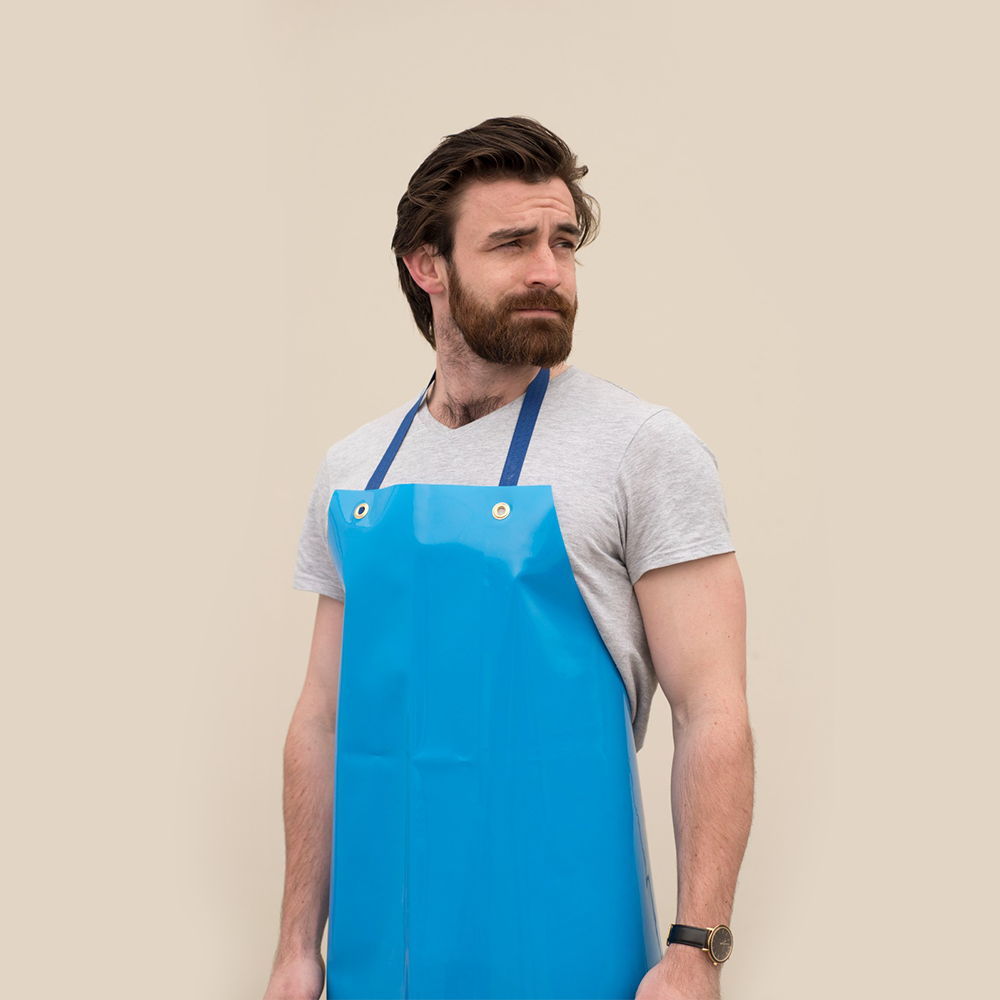
Aprons, sleeve protectors, and gowns sit in the most obvious category, but the detail matters. A splash apron protects against fluids and light contamination, while a heavier-duty apron is built to keep its barrier under repeated cleaning, movement, and contact with tools. In a butcher shop, that usually means the apron has to bend, scrape, and rinse clean without turning brittle.
Hand protection
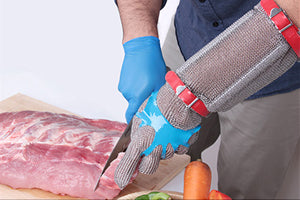
Gloves do the work that hands can't safely do bare. Cut-resistant gloves, thermal gloves, and chemical-resistant gloves each solve a different problem, and the wrong one is a false economy. A glove that handles cold product well may still fail around blades, while a cut glove can be awkward if the task involves constant washing or frequent change-outs.
Footwear and lower-leg protection
Slip-resistant, waterproof boots keep people upright on wet floors and protect against soak-through. In food plants, footwear has to cope with spills, sanitation, and long hours on hard surfaces. If the sole track holds grease or the upper absorbs water, the boot stops being protective and starts becoming another maintenance item.
Head, face, respiratory, and hearing protection
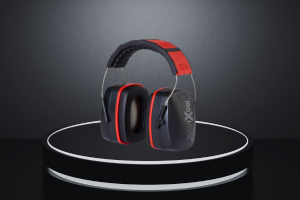
Hairnets, beard covers, face shields, masks, and hearing protection all fill gaps that body and hand PPE can't cover. In a processing room, a face shield helps with splash and debris, while respiratory protection matters for dust, vapour, and fumes in specific tasks. Hearing protection belongs where the noise is part of the job, not where someone remembers to wear it.
The quick inventory check
- Hands: Are the gloves matched to cut, heat, cold, or chemical exposure?
- Body: Do the aprons and sleeves keep liquid out and stay flexible enough to work in?
- Feet: Are the boots waterproof, slip-resistant, and appropriate for standing work?
- Head and face: Are hair, splash, and airborne exposure all covered?
- Breathing and hearing: Are the masks and ear protection task-specific, not generic?
That inventory is often where sites find the gaps. They usually don't need more categories, they need better selection inside each category.
Choosing Your Material The Trade-Offs Explained
The material choice decides how long gear lasts, how easy it is to clean, and how badly it fails when conditions turn ugly. In Australian meat-processing, the best aprons resist not just water but chemical degradation from sanitation cycles. TPU is favoured for flex-crack resistance and cleanability, while PVC gives lower-cost splash resistance but can fail under aggressive cleaners or in cold temperatures. A critical factor is whether seams and fasteners outlast the fabric membrane under high-pressure cleaning, because that's where service life is usually won or lost (apron material performance in sanitation-heavy environments).
Material comparison for food and industrial environments
| Material | Best For | Durability | Flexibility (Cold) | Ease of Cleaning | Cost |
|---|---|---|---|---|---|
| TPU | Wet-processing, wash-down, cold rooms | Strong where flex-crack resistance matters | Good | High | Higher |
| PVC | Splash protection, budget-conscious sites | Moderate, but can stiffen or degrade | Mixed | Good | Lower |
| Waxed canvas | Dryer work, traditional butcher settings | Good for wear, less ideal for harsh sanitation | Better than rigid plastics | Moderate | Moderate |
| Leather | Impact-prone and abrasion-heavy tasks | Strong for abrasion, not for constant wet exposure | Fair | Lower in wet-clean settings | Moderate to higher |
| Disposable fabrics | Short-duration contamination control | Limited | Good for short use | Easy, then discard | Lower per item, higher over time |
Where each material works, and where it doesn't
TPU earns its place in cold, wet rooms because it moves with the body and cleans up without becoming chalky. That matters when staff are bending, reaching, and turning all shift. PVC still has a role when splash resistance is the main issue and the budget is tight, but it's not the answer for aggressive cleaners or low-temperature work.
Waxed canvas and leather still show up in real sites because they're useful in the right conditions. Waxed canvas gives a familiar, durable feel in less extreme wash-down settings, while leather holds up where abrasion is the bigger threat than liquid ingress. Disposable fabrics make sense for short-term contamination control, but they rarely win on total service life in a wet, repetitive environment.
A material only looks cheap until you count the replacements and the time spent changing it out.
That's why buyers should test the gear in the actual workplace. Cold rooms, hot kitchens, wash-down stations, and trimming benches each punish materials differently. If the apron survives the menu of tasks but the hardware fails first, the supplier still hasn't solved the actual problem.
Meeting Australian Standards and Compliance
Australian compliance works best when you treat PPE as part of a risk system, not a standalone product category. The Model Work Health and Safety laws came into effect on 1 January 2012, which harmonised safety regulation across most Australian jurisdictions and made PPE a formal part of hazard control rather than an informal site preference (harmonised WHS framework and PPE role). Under that framework, PPE sits at the final line of defence in the hierarchy of controls, so it's there to manage residual risk after hazards have been reduced as far as practical.
That matters in abattoirs and food plants because the task drives the selection. A waterproof apron isn't automatically enough if the work also involves blades, chemical splash, or cold-room movement. A hearing protector isn't a compliance win if it blocks communication and gets removed on the floor.
What compliance should look like on site
- Documented hazard match: The PPE suits the task, not just the department.
- Maintenance record: The gear is inspected, cleaned, and replaced on schedule.
- Training proof: Workers know when to wear it and when not to reuse it.
- Supplier traceability: You can identify the product line and its specifications.
The procurement habit that saves time is simple, ask for evidence before you ask for price. For glove selection and task matching, cut 5 glove guidance for worksite buyers is a practical reference point.
Compliance also changes how you judge fit-for-purpose. A product can look durable and still be wrong if it is too stiff for the task, too hard to clean, or incompatible with the work system. The site passes when the PPE fits the hazard and the people wear it all shift.
Risk-Based Selection In Action
A bandsaw operator in a butcher room needs a different setup from a cook pulling trays from a hot pass. The bandsaw task brings cut risk, splash, and movement around wet floors, while the kitchen task leans toward heat, grease, and short bursts of contact. The mistake is buying one “universal” set and hoping it covers both.

A butcher at the cutting line
A butcher handling carcasses and a bandsaw needs cut-resistant gloves, eye protection, and a durable apron that doesn't ride up when reaching. If the apron is too stiff, the worker compensates by adjusting posture, which slows the line and increases fatigue. If the glove grip is poor, the knife hand starts overworking to compensate.
The same logic applies to footwear. Slippery, waterlogged soles turn a clean floor into a hazard, which is why slip resistance is part of the selection, not an afterthought. In this setting, gear has to let the operator move freely while still covering the main exposure points.
High-pressure wash-down
Wash-down crews need waterproof body protection, gloves that tolerate repeated wet work, and respiratory protection where aerosols or cleaner fumes are present. The gear has to survive repeated cleaning without seams peeling or fasteners loosening. If the apron traps liquid at folds or the cuffs wick water back into the sleeve, the whole system becomes uncomfortable and gets worn incorrectly.
Matching ratings to the task
For specific industrial hazards in Australia, product specifications need to align with performance classes. Some safety footwear must withstand 15,000 V for 20 s without puncture, which shows why buyers in meat-processing must match PPE ratings directly to cut, impact, or electrical risk rather than relying on broad labels (performance-class matching and footwear electrical test example). That same logic applies to gloves and face protection where the actual hazard energy matters more than the brochure description.
A useful way to assess any task is to ask three questions. What can cut, splash, burn, puncture, or contaminate? What part of the body is most exposed? What has to stay usable after the first hour, not just during the first try-on?
The Smart Buyer's Procurement Checklist
A buying decision in meat processing or hospitality should start with the job on the floor, not the product label. Wet rooms, cold rooms, wash-down routines, sharp edges, and contamination control all change what gear will hold up. Sites get into trouble when they buy from a catalogue first, then discover the apron sits badly at the neck clip or the boot slides on a damp floor.

The seven checks that matter
- Assess risk: List the hazards, then rank them by task.
- Define specifications: Set material, size, closure, and performance needs before you compare products.
- Vet the supplier: Ask for steady supply, clear product detail, and traceable batches.
- Compare lifecycle cost: Count replacements, laundering, and downtime, not just the sticker price.
- Trial with users: Put the gear on the people who will wear it, then watch what they adjust.
- Plan maintenance: Decide who inspects, cleans, and retires the gear.
- Verify compliance: Make sure the product matches the site's duty of care and documentation needs.
That list gets sharper when the purchasing team looks beyond the first purchase price. A solid purchasing process helps sites judge whether a lower-waste option still stands up to washing, contamination control, and disposal once it is used day after day, and A solid purchasing process also makes it easier to compare options on service life, not marketing language. Buyers are already weighing sustainability against durability in PPE buying decisions, so total cost of ownership matters more than a green label on its own (sustainability versus durability in PPE buying decisions).
For a supplier option that already works across butcher and food-processing categories, PSC TRADING Co PTY LTD carries aprons, PPE, and related consumables for those environments, including food-processing and hospitality use cases. The value is not the brand name, it is whether the supplier can keep the same spec in stock and keep the gear matched to the site.
Procurement test: if two products look similar, choose the one you can explain to an auditor and a line worker in the same sentence.
A site that buys well avoids the habit of taking whatever is cheapest that week. It also gives supervisors a clear reason for why one glove, apron, or boot was chosen over another, which matters when people need to trust the gear in wet, cold, and contamination-controlled work.
Maintaining Gear for Longevity and Safety
A good apron can still become unsafe if it's cleaned badly, stored wet, or kept in service after the seams start opening. Maintenance is part of the protection system. If the gear is dirty, stiff, cracked, or delaminating, it isn't performing its job properly, no matter what the label says.
TPU aprons need cleaning that protects the membrane and the stitching. Harsh abrasion, sharp folding, and aggressive chemicals shorten life faster than most sites expect. PVC needs a similar eye on brittleness and crack formation, especially after repeated exposure to cleaners or colder storage conditions, while waxed canvas needs care that preserves its coating rather than stripping it away.
A simple inspection routine
- Check seams and fasteners: Look first at the points that fail before the fabric does.
- Flex the garment: Cracking, stiffness, or peeling means the material is losing integrity.
- Inspect contact zones: Cuffs, lower edges, and chest fronts take the hardest wear.
- Replace on damage, not on habit: A damaged garment stays in service too long on busy sites.
Clean storage matters as much as cleaning itself. Hanging gear dry keeps liquid from sitting in folds, and separating used PPE from clean stock reduces cross-contamination risk. In meat and food sites, that separation also helps staff grab the right item quickly without second-guessing whether it's fit for the next task.
The biggest maintenance mistake is waiting for visible failure. By the time an apron tears wide open or a glove split is obvious, the gear has usually been compromised for a while. A short daily check catches the problem early and keeps the whole PPE system dependable.
If your site is still cycling through the same broken aprons, wrong-size gloves, and slippery boots, start with a task-by-task PPE review this week. Walk the floor, talk to the people wearing the gear, and replace the items that fail at the seam, the cuff, or the sole before they fail on the job.
