

The first decision happens before the knives are sharpened. A butcher pulls an apron from the hook, checks yesterday's stains, and asks whether it will handle another shift. A chef considers the same question from a different angle: will the apron protect the uniform without turning into a hot, awkward layer during service?
A waxed canvas apron sits between traditional workwear and modern protective equipment. It offers a distinctive appearance, useful water repellency, abrasion resistance, and a surface that can develop character over time. It also has limits that matter in Australian butcher shops, commercial kitchens, food-processing rooms, and wash-down areas.
The practical question isn't whether waxed canvas looks premium. It's whether the material matches the workstation. For dry prep, front-of-house service, barbecuing, craft work, and presentation-led hospitality, it can earn its place. For constant splash, raw-meat processing, aggressive cleaning, or sanitised production areas, TPU or PVC may be the more sensible purchase.
Table of Contents
- What a Waxed Canvas Apron Actually Does on a Real Shift
- The Material and Construction Behind a Waxed Canvas Apron
- How to Choose the Right Waxed Canvas Apron for Your Job
- Waxed Canvas Compared to PVC, TPU, and Leather Aprons
- Food Safety, Wash-Down, and Hygiene Suitability
- Care, Cleaning, and Re-Waxing Routine That Actually Works
- Where a Waxed Canvas Apron Makes Sense and Where to Skip It
What a Waxed Canvas Apron Actually Does on a Real Shift
At opening time, a boutique butcher may want an apron that protects clothing from sawdust, light splashes, packaging marks, and contact with benches. The apron also forms part of the shop's presentation. A heavy cotton canvas with a visible texture and developing patina supports that traditional craft identity in a way a disposable plastic apron never will.
Australian fabric suppliers describe waxed canvas as cotton canvas coated with wax to create a water-repellent, durable textile. The material is used for rugged workwear and utility products, and its appearance changes with handling and wear rather than remaining visually static. Australian waxed canvas specifications and use guidance support that practical heritage-workwear position.
On a dry prep bench, the waxed surface helps droplets sit on the face of the fabric long enough to be wiped away. It can also cope with rubbing against benches, tools, and aprons hooks better than a lightweight fashion fabric. A home butcher, barbecue operator, or chef working mainly with dry ingredients may value the combination of protection, comfort, and visual identity.
The same apron becomes a different proposition beside a wash-down hose. Water can enter through stitching, worn areas, tie points, and folds. Grease, meat juices, marinades, and cleaning chemicals also create a maintenance problem because the wax finish can't be treated like a conventional washable uniform.
The working trade-off: waxed canvas supports presentation and craft identity, while TPU and PVC usually win when the priority is fast, wipe-clean hygiene.
That distinction should guide the purchase. Waxed canvas is a water-repellent textile, not a fully waterproof barrier. If a worker needs an apron that can be sprayed, sanitised, dried, and returned to service with minimal attention, a coated synthetic material is usually better aligned with the routine.
The Material and Construction Behind a Waxed Canvas Apron
Waxed canvas starts with densely woven cotton canvas, then receives a wax finish that changes how water interacts with the surface and improves resistance to everyday abrasion. The result suits contact with benches, tools, and clothing better than an untreated lightweight fabric, but the finished apron isn't fully waterproof. The technical comparison of waxed and dry canvas explains why that distinction matters on a working floor.
The wax functions as a surface treatment rather than a sealed rubber coating. A splash across the centre may bead or spread slowly, while water can still enter through seams, needle holes, worn creases, pocket openings, and stress points. In wet processing, those construction details often fail before the main panel does.
Start with the canvas weight
Canvas weight is commonly listed in ounces. A product may compare 18-ounce and 24-ounce canvas, but the heavier option is not automatically the better apron. Extra material can improve structure and resistance to rubbing, while also adding stiffness, heat retention, and fatigue during a long shift.
A butcher doing dry trimming may appreciate a firm body, deep pockets, and strong ties. A chef moving between benches may work better with less bulk and more flexibility. Choose around the job and the wearer's movement, not the largest number on the specification sheet.
Understand the finish
Dry wax and wet wax finishes have different hand feels and working behaviour. Dry waxed canvas generally feels cleaner and less oily. A heavier wax treatment can create a more pronounced surface and stronger initial water repellency, although heat, detergents, and aggressive washing can reduce the coating.
The supplier's care instructions matter more than the finish name alone. An apron used beside a wash-down hose will place demands on the finish that a dry prep bench will not.

Inspect the load-bearing details
Check the neck strap, waist ties, pocket corners, and attachment points. A broad canvas panel cannot compensate for a thin strap that cuts into the neck or stitching that pulls away when a knife pouch is loaded.
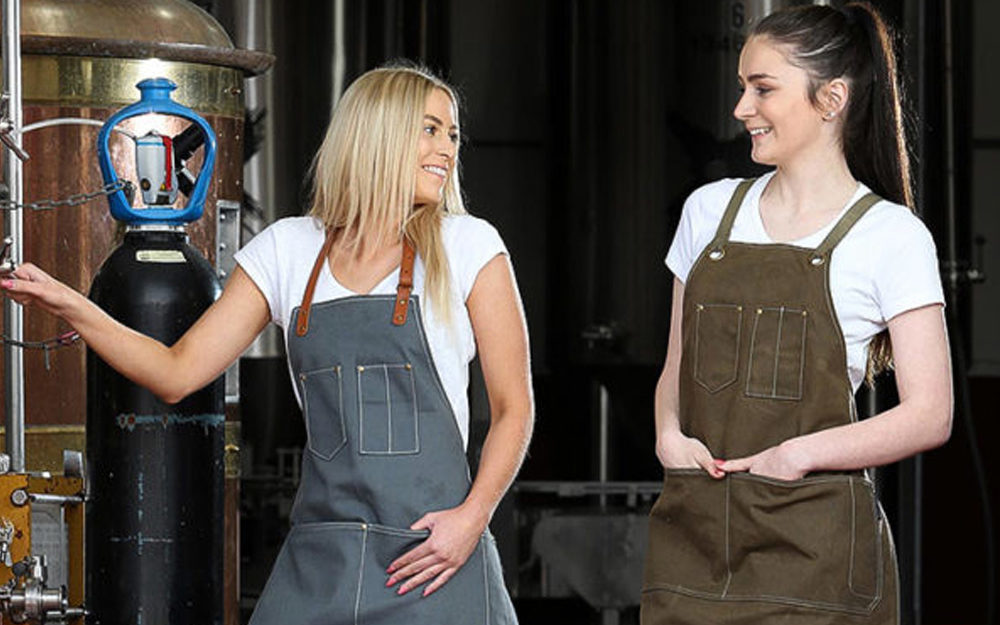
Leather straps reinforce a traditional appearance, while cotton webbing may feel more flexible and easier to replace. Buckles provide adjustment. Simple ties fit a wider range of bodies without complex hardware. Pocket placement also affects how the apron hangs. A central pocket suits small tools and cloths, while side pockets can reduce crowding when the wearer leans over a bench.
For a broader view of traditional materials and trade-focused construction, compare the design principles in this guide to full-grain leather aprons. The practical lesson applies to waxed canvas too: fabric choice matters, but the complete load path matters just as much.
How to Choose the Right Waxed Canvas Apron for Your Job
A product photograph can hide the details that determine whether an apron works at a real workstation. Before approving a quote, assess the apron as a piece of equipment rather than as a style accessory.
Match coverage to the workstation
Coverage should follow the exposure pattern. A waist apron may suit a coffee bar where the main risk is light splashing and clothing marks. A bib apron is more appropriate for a butcher, smoker, or chef who needs protection across the chest and lower torso.
Australian apron suppliers show how practical sizing varies, with examples including 860x1250 mm, 860x1450 mm, 960x1450 mm, and 1350x810 mm. Australian apron dimensions and packing formats illustrate why buyers should measure the work area and wearer rather than select by the word “large” alone.
A longer apron may protect more clothing but can catch on drawers, equipment, or the wearer's knees. A wider apron can improve side coverage, especially when a worker turns across a bench. Ask where splash and contact occur.
Evaluate the fabric and lining
Start with the canvas weight, then consider the finish and hand feel. A firm, heavy apron can work well for a butcher who leans against benches and carries tools, while a lighter build may suit a chef who spends the shift walking and reaching.
A lining can improve comfort against clothing, particularly around the chest and neck. It can also add another layer that holds heat or complicates cleaning. For food-handling work, a simple, accessible construction is often easier to inspect than a heavily layered design.
Check straps, reinforcement, and hardware
The strap system should let the wearer adjust the apron without creating pressure at one point. Examine:
- Neck support: A broad strap distributes load more comfortably than a narrow cord when the apron carries tools or pockets.
- Waist adjustment: Long ties accommodate different body shapes, while buckles provide repeatable adjustment for a team sharing equipment.
- Reinforced joins: Look for dense stitching at the neck, waist, and pocket corners, where repeated pulling causes failure.
- Hardware choice: Metal buckles may support durability, but exposed hardware can mark benches or become uncomfortable when the wearer bends forward.
Treat pockets as workflow equipment
A pocket should have a defined job. A chef may need a cloth, thermometer, notebook, or small utensil. A butcher may require a dedicated knife pouch or belt rather than storing blades in a general apron pocket.
Deep pockets can be useful, but they also collect scraps and make the apron heavier. Open-top pockets empty quickly, while secured pockets keep contents in place during movement. Keep sharp tools separate from food-contact surfaces and follow the site's own tool-control procedures.
Separate hospitality from meat processing
A front-of-house hospitality apron can prioritise colour, branding, fit, and a clean silhouette. A butcher apron needs practical coverage, durable attachments, and a realistic cleaning plan. Those requirements overlap, but they aren't interchangeable.
For Australian procurement teams, the care label should be checked before purchase. The Consumer Goods (Care Labelling) Information Standard 2023 governs textile care labelling in Australia, so the product should arrive with instructions that accurately reflect how the waxed finish must be maintained. Australian mandatory care-labelling requirements provide the relevant compliance context.
Waxed Canvas Compared to PVC, TPU, and Leather Aprons
The right material depends on the cleaning routine as much as the work itself. Waxed canvas brings a traditional appearance and comfortable fabric feel, but it is only water-repellent. PVC and TPU are better suited to liquid control and rapid cleaning, while leather offers strong abrasion resistance and visual impact without being a universal wet-area solution.
| Criterion | Waxed Canvas | PVC | TPU | Leather |
|---|---|---|---|---|
| Water resistance | Water-repellent, not fully waterproof | Fully waterproof when correctly constructed | Strong waterproof protection for wet work | Resistant to some spills, depending on finish and construction |
| Wipe-down behaviour | Controlled cleaning protects the wax | Simple wipe-down suits many wet tasks | Wipe-clean surface suits food-processing routines | Wipe and condition carefully |
| Breathability | More fabric-like and generally more breathable than coated materials | Limited breathability | Limited breathability, but often flexible | Limited breathability and can feel warm |
| Abrasion resistance | Strong for fabric workwear | Resists liquid, but may tear or split when damaged | Flexible for repeated wet handling | Strong against rubbing and tool contact |
| Long-shift comfort | Softens with use, but can feel heavy or warm | Can feel stiff and hot | Often flexible, though still non-breathable | Can be heavy and warm |
| Presentation | Heritage, craft, premium casual appearance | Industrial and functional | Clean, modern protective appearance | Traditional, rugged, premium appearance |
| Best fit | Dry prep, barbecue, front-of-house, craft-led work | High-splash and wash-down tasks | Food processing, wet benches, repeated cleaning | Dry trades, craft work, abrasion-heavy tasks |
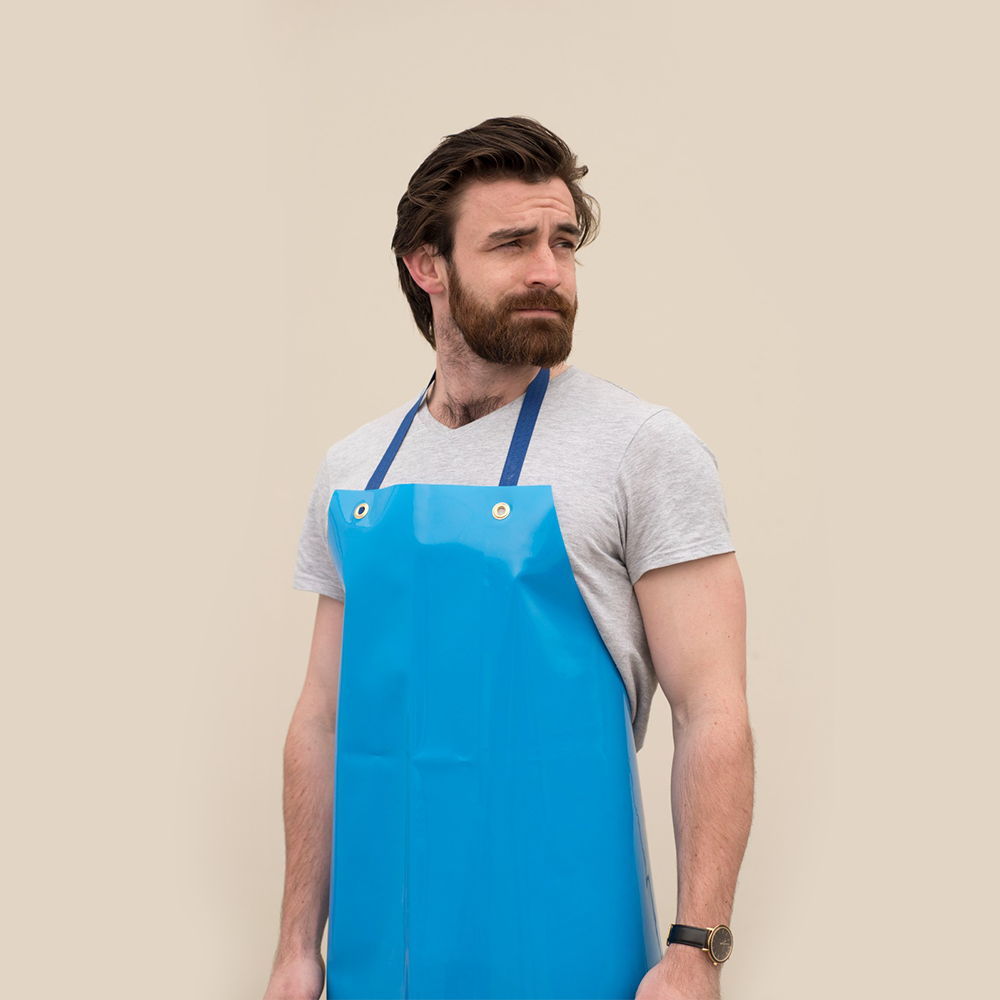
PVC and heavy-duty vinyl aprons are marketed in Australia as completely waterproof and seam-sealed for chefs and industrial food-industry tasks. Waterproof hospitality apron options show the operational advantage of a synthetic barrier when a butcher or kitchen worker faces splashes, grease, and frequent wipe-downs.
TPU often gives food-processing workers a more flexible alternative where liquid protection still matters. It suits movement between cutting, trimming, handling, and cleaning, especially when the apron must be wiped repeatedly during a shift. Industrial apron specifications can include 10,000 mm water-column ratings for PU and nylon wash-down PPE, with claims covering liquid chemicals and infective agents. Industrial protective apron specifications demonstrate the performance documentation buyers may seek for demanding environments.
Waxed canvas earns its place in dry preparation, barbecue service, front-of-house work, and craft-led hospitality. It feels less clinical than plastic and develops a finish that suits visible customer-facing roles. The trade-off is operational: grease, raw-meat residue, and daily hose-downs can turn that character into a cleaning problem.
Leather suits a barbecue operator, craftsperson, or dry butcher counter where heat, sparks, and abrasion matter more than hose-down hygiene. It is a poor substitute for a seam-sealed waterproof apron in a wash bay.
For a closer material comparison, use this TPU versus PVC food-processing apron guide. The practical rule is clear: choose waxed canvas for moderate exposure and presentation, TPU for flexible wet protection, PVC for maximum wipe-clean waterproofing, and leather for dry, abrasion-heavy tasks.
Food Safety, Wash-Down, and Hygiene Suitability
Waxed canvas can sit near food without automatically becoming the wrong choice, but proximity to food isn't the same as direct, prolonged food contact. A chef using the apron during dry preparation, a barbecue operator serving customers, or a butcher working a front counter may benefit from the fabric's surface protection and presentation.
The decision changes in a raw-meat room or wash-down bay. Australian food businesses manage contamination and packaging risks under the Food Standards Code, and FSANZ identifies migration and contamination as active issues in food packaging safety guidance. That context supports a conservative approach. An apron should be selected for the site's hygiene process, not only for how it looks when new.
Use the cleaning method as the test
If the standard operating procedure requires staff to hose an apron, apply sanitiser, remove grease, and return it to service quickly, waxed canvas is usually a poor default. The wax layer can degrade under heat and surfactants, while repeated brushing and hosing can abrade coated canvas and reduce repellency.
A disposable waterproof apron may be more practical where contamination requires immediate replacement. Australian food-processing suppliers describe disposable aprons with waterproof surfaces for meat and food processing because they protect clothing and can be replaced when contaminated. Disposable apron information for food processing reflects that replaceability-first workflow.

A waxed canvas apron can make sense when the site can keep it away from heavy contamination and follow the manufacturer's care instructions. It shouldn't be treated as a food-contact surface, and it shouldn't replace a documented protective garment where the hazard assessment calls for waterproof, chemical-resistant, or disposable protection.
For practical contamination controls beyond the apron itself, review this guide to preventing cross-contamination. Garment choice works best when it supports the whole hygiene routine, including storage, replacement, cleaning, and staff training.
Care, Cleaning, and Re-Waxing Routine That Actually Works
Waxed canvas rewards disciplined care and punishes improvised laundering. Assign a simple routine to staff so nobody puts a coated apron through the same wash cycle as a cotton kitchen towel.
- Remove debris first. Shake the apron out and use a soft brush for dry scraps, sawdust, flour, and surface grit.
- Wipe local marks. Use a cold, damp cloth on fresh spills. Work gently from the outside of the mark towards the centre.
- Avoid coating killers. Don't machine wash, use hot water, apply bleach or harsh detergents, tumble dry, or send the apron to a dry cleaner. Australian care guidance recommends avoiding these treatments because heat and surfactants can damage the wax layer and reduce repellency. Waxed canvas care recommendations explain the reason for the restrictions.
- Dry naturally. Hang the apron in a cool, dry, ventilated place. Don't seal it damp in a locker, where odours and mildew can become harder to manage.
- Re-wax when performance drops. If water stops beading across exposed areas or the fabric feels dry and absorbent, apply a suitable wax bar or tin according to the manufacturer's instructions. Warm the wax gently, work it into clean fabric in thin layers, and use controlled heat only if the product instructions permit it.

There isn't one reliable re-waxing calendar for every operator. A barbecue apron used lightly may need attention less often than one exposed to repeated cleaning, brushing, and outdoor work. For a busy food business, include the labour and drying time in the ownership decision. TPU or PVC may cost less effort because the operator can wipe the surface instead of preserving a finish.
Where a Waxed Canvas Apron Makes Sense and Where to Skip It
Choose waxed canvas for a boutique butcher counter, barbecue smoker, coffee bar, dry prep station, craft-led hospitality venue, or home butcher where appearance, moderate splash protection, and fabric comfort matter.
Choose TPU or PVC for an abattoir floor, seafood-processing station, raw-meat room, dishwash area, or daily wash-down bay. Those environments prioritise waterproofing, fast cleaning, and contamination control over patina.
The decision rule is simple: if the apron must be wiped, rinsed, and returned to service repeatedly, buy the wipe-clean material; if it mainly protects clothing while representing the craft, waxed canvas can be the right tool.
If you're specifying aprons for a butcher shop, commercial kitchen, or food-processing site, contact PSC TRADING Co PTY LTD with the workstation, splash exposure, cleaning method, coverage requirement, and fastening preference. Ask for a material recommendation based on the actual shift, then compare waxed canvas with TPU or PVC before placing the order.
