





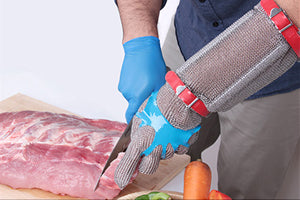



The order looked straightforward: bandsaw blades, vacuum bags, disposable gloves, aprons, sausage casings and labels. Then the morning shift started, a blade began to drift through a primal cut, the glove dispenser emptied before the next changeover, and the casing size delivered for the sausage run didn't match the filler horn. In a meat operation, a missing consumable rarely stays an isolated purchasing problem. It becomes slower cutting, extra handling, more cleaning, interrupted packing and a rushed search for a substitute.
That pressure is increasing across Australia. The sector processed 8.88 million cattle in FY25, the third-largest annual cattle slaughter since 1978, while lamb slaughter reached 26.06 million head, the second-largest financial year on record, according to Meat & Livestock Australia's processing data. The practical lesson for buyers is simple. Meat processing supplies need to match the facility's actual work rate, product mix, hygiene system and maintenance capability, not a generic catalogue checklist.
Table of Contents
- A Day on the Floor and Why Supplies Matter
- The Core Categories of Meat Processing Supplies
- Matching Supplies to Your Operation Type
- Compliance and Hygiene Considerations in Australia
- Maintenance and Lifecycle Tips for Key Items
- Sustainability and Packaging Choices for Meat Operations
- A Procurement Checklist and the Case for Consolidation
A Day on the Floor and Why Supplies Matter
At first light, the floor is already organised around movement. Carcases or cartons arrive, knives are checked, aprons are put on, hand protection is selected and wash-down areas are prepared. A butcher may start by breaking down primals for the display cabinet, while an abattoir crew moves product through cutting, trimming, packing and chilling. A commercial kitchen may be portioning meat for service, with less machinery but no less need for dependable packaging, labels and temperature control.
The first failure often looks minor. A bandsaw blade that has lost its edge makes the operator push harder and produces an uneven cut. A mincer plate that isn't maintained can affect texture and slow the batch. A vacuum pouch with the wrong size or seal performance creates rework at the packing bench. These issues don't just cost product. They occupy a skilled worker, interrupt the next station and make sanitation more difficult.
Practical rule: Buy for the point where a failure stops the shift, not only for the item that appears cheapest on the purchase order.
A glove shortage creates a different kind of disruption. Workers need to change protective equipment when it becomes contaminated, damaged or unsuitable for the next task. If the correct gloves, sleeve protectors or aprons aren't available, the supervisor has to pause the line or accept an avoidable hygiene and safety risk. Australian guidance also makes PPE a risk-assessment matter. Safe Work Australia's PPE guidance places responsibility on PCBUs to provide PPE unless it has already been supplied by a labour hire provider, while WA's abattoir safety checklist identifies items such as cut-resistant gloves, aprons, safety shoes, hair nets, respirators and eye protection according to site risks.
What the first shift reveals
By the time the first finished pack reaches cold storage, the operation has already tested several supply decisions:
- Cutting equipment: Is the bandsaw stable, cleanable and ready for the product being portioned?
- Hand tools: Are knives sharp, secure in their pouches and separated from contaminated surfaces?
- Protective clothing: Can aprons and gloves be changed without sending staff looking through another room?
- Casings and fillers: Do the casing diameter and filler attachments suit the recipe and batch?
- Packaging: Do pouches, trays, labels and clips protect the product without slowing the line?
- Cold-chain support: Are insulated liners, freezer pallet spacers or temperature labels available where they're needed?
Australia's processing base is structurally concentrated. A 2025 Australian meat-processing industry report states that fewer than 300 abattoirs remain nationally, with 148 processing red meat, and that 50 abattoirs closed during the previous ten years. Its breakdown identifies 145 remaining abattoirs, including 96 without service kills and 51 offering service kills. For procurement, that means equipment downtime and supply delays can affect a facility with limited alternatives nearby.
A useful stocktake therefore starts with the shift, not the storeroom. Watch where operators wait, where product is handled twice and where a damaged item forces an improvised workaround. Those observations tell you which meat processing supplies deserve reliable minimum stock and which can be ordered less frequently.
The Core Categories of Meat Processing Supplies
On a busy shift, a blunt knife slows trimming, a missing clip stops packing and an unsuitable pouch sends finished product back for rework. Meat processing supplies work as a connected system. Equipment changes the product, consumables keep the process moving, packaging protects the finished item and cold-chain aids support it during storage and dispatch.

Start with processing equipment
Bandsaws deliver consistent cuts through bone-in product and primals. Check blade compatibility, guarding, cleanability and replacement-blade supply before comparing machine size. A powerful saw that takes too long to strip down can add cleaning labour after every production run.
Mincers rely on matched plates, knives and feed arrangements. The machine rating means little if worn cutting components force repeated stops or produce an inconsistent texture. Keep the machine, plate and knife specifications together in the purchasing record.
Sausage fillers and vacuum machines support further processing and packing. Filler horns must match the casing, while vacuum sealers require compatible bags, dependable sealing bars and serviceable gaskets. Record the machine model beside each consumable specification, because “vacuum bag” is too broad for dependable reordering.
Build the consumables layer
Casings, nets, tying loops, clips, twine, labels and knife accessories are used throughout the shift and are easy to understock. Natural casings require controlled storage and proper preparation. Nets and loops should match the product shape and its cooking or display requirements. Knife pouches and butcher belts keep tools available without leaving blades on benches or product-contact surfaces.
PPE belongs in the same purchasing review because use, contamination and changeovers drive consumption. Common items include disposable gloves, cut-resistant or mesh gloves, sleeve protectors, eye protection, hearing protection and waterproof aprons. Select each item for the task, exposure and cleaning routine rather than relying on an “industrial” label.
Finish with packaging and storage
Vacuum pouches, film, trays, clips, cartons and labels carry product through the final stage. Packaging should suit food contact, match the sealing equipment and withstand the handling conditions on the site. For Australian plastic food-contact use, MLA's safe retailing guidance identifies AS 2070:1999 as the relevant standard.
Cold-chain aids support refrigeration rather than replace it. Insulated liners, ice packs, freezer pallet spacers and temperature labels help protect product during packing, storage and dispatch. A controlled reorder list for compatible items makes training easier, limits substitutions and helps staff identify which component failed when a pack does not perform.
Matching Supplies to Your Operation Type
A facility that cuts for a retail counter does not buy supplies the same way as a plant moving product through several processing stations. The right choice depends on the work between receiving and dispatch, the pace of each shift, available storage and the consequence of a failed item.
Australia's national throughput provides useful context for procurement. The Australian Bureau of Statistics livestock release reports that cattle slaughter in the June 2026 quarter rose 2.8% to 2.5 million head, while the gross value of cattle and calves slaughtered increased 7.6% to $6.5 billion. Those figures describe the scale of the national system, not a standard shopping list. A small operator may need flexible, low-volume purchasing, while a high-volume plant needs planned spares, consistent specifications and dependable replenishment.
Supply Priorities by Operation Type
| Category | Butcher Shop | Abattoir | Commercial Kitchen |
|---|---|---|---|
| Cutting equipment | Bandsaw, hand knives and display-cut tools suited to varied customer orders | Heavy-duty bandsaws, spare blades, breakdown tools and maintenance support | Compact cutting equipment and knives for repeatable portions |
| Mincing and filling | Mincer, plates, knives, filler and selected casings for retail batches | High-capacity mincing and filling equipment with planned parts replacement | Portion-control equipment and simple batch controls |
| PPE | Cleanable aprons, gloves, hair coverings and footwear suited to counter and prep areas | Cut-resistant gloves, protective aprons, eye protection, footwear and area-based PPE rotation | Gloves, aprons, hair coverings and task-specific protection |
| Packaging | Display-ready trays, vacuum pouches, labels and clips | High-throughput pouches, cartons, labels and traceability controls | Portion pouches, containers, labels and service-ready storage |
| Cold chain | Chilled display and transport aids | Chilling, freezing and dispatch support, including airflow aids | Insulated transport containers, liners and temperature checks |
| Procurement focus | Presentation, flexibility and low interruption at the counter | Throughput, standardisation, spares and documented rotation | Speed, portion consistency, hygiene records and storage discipline |
A butcher shop benefits from flexible equipment and separate consumable lines. Several casing types, retail labels and washable aprons may be needed, with each item easy to locate during a busy counter shift.
An abattoir needs reserve stock tied to production risk. Blade availability, PPE rotation, maintenance parts and packaging continuity matter because one missing item can interrupt several connected stations. Regional access also affects lead times and supplier choice. The Australian meat-processing capacity report identifies 26 remaining abattoirs in NSW and 38 in Queensland, illustrating why a facility's state and location can shape its replenishment plan.
A commercial kitchen usually prioritises repeatable portions, compact storage and quick changeovers. It may not require an industrial bandsaw, but it still needs packaging that seals consistently, labels that support kitchen traceability and PPE suited to wet floors, knives and cleaning chemicals. Procurement should follow the operation's actual bottleneck, rather than the equipment list of a larger facility.
Compliance and Hygiene Considerations in Australia
Compliance starts with the task and ends with evidence. A supplier can provide a food-grade pouch or protective apron, but the site still needs to show that the item was selected, used, cleaned, stored and replaced in a controlled way.
Australian meat hygiene guidance requires implements used in processing to be sanitised with potable water at no less than 82°C, and export-meat monitoring treats pre-operational contact-surface microbiology as a quality indicator with an acceptable documented criterion of ≤5. These requirements are set out in the Australian red-meat market access technical resource. In practice, a sanitation log should identify the area, method, responsible person and verification result where required.
Australian Compliance Anchors for Key Supply Categories
| Supply Category | Governing Standard | Key Threshold | Audit Artefact |
|---|---|---|---|
| Processing implements | Australian meat hygiene guidance | Sanitisation with potable water at no less than 82°C | Wash-up and sanitation records |
| Contact surfaces | Export-meat monitoring guidance | Pre-operational criterion of ≤5 where documented | Microbiology verification records |
| Packaging | AS 2070:1999 and food safety guidance | Food-contact suitability and clean condition | Supplier specification and batch record |
| Chilled meat | Australian food safety guidance | Hold chilled meat at no warmer than 5°C | Temperature monitoring record |
| Protective clothing | FSANZ Standard 3.2.2 | Prevent contact between meat surfaces and ordinary clothing | Cleaning, sanitisation and issue records |
| PPE | Risk-assessment-based workplace safety guidance | Suitable protection for the identified task | PPE assessment and issue register |
FSANZ Standard 3.2.2 defines protective clothing to include aprons, head coverings, capes and smocks that stop meat-contact surfaces touching a worker's body or ordinary clothing. It also requires protective clothing and personal equipment used in retail meat premises to be cleaned and sanitised at the end of each day's operation.
Wash-up design matters just as much as the apron specification. Australian meat-processing guidance requires facilities where workers can clean and sanitise aprons, boots and work equipment during and at the end of each shift. Workers moving between processing areas also need to wash and sanitise hands, aprons, knives, pouches and boots before entering another area. A boning-room worker moving to a packing line after handling raw product is a practical example of why area-based controls matter. The CSIRO meat-processing guidance describes these wash-up and movement requirements.
For a practical cross-check of movement controls, equipment separation and cleaning routines, use this guide to preventing cross-contamination. The useful audit question is not “Is the item compliant?” It's “Can the team show the specification, cleaning record, batch traceability and replacement decision?”
Maintenance and Lifecycle Tips for Key Items
Equipment life is decided during ordinary routines, not during the annual service visit. A bandsaw blade, rubber apron, vacuum sealer or casing can appear serviceable until a small defect becomes a production interruption.
Keep cutting equipment predictable
Inspect bandsaw cuts for drift, tearing and uneven thickness. On high-throughput lines, sharpening bandsaw blades and hand knives is commonly managed on a weekly routine, adjusted to product, use and the site's sharpening system. The correct cadence is the one that prevents operators from forcing the cut. A blade that requires excessive pressure is already affecting safety, consistency or both.
Grinder plates and knives need daily teardown, cleaning and appropriate lubrication. Residue left behind can affect the next batch and make inspection harder. Store removed parts where they can drain and dry properly, then check for damage before reassembly.
Protect aprons and sealing equipment
Rubber and food-processing aprons last longer when operators use a suitable pH-neutral sanitation approach instead of harsh treatment that dries or cracks the material. Look closely at hems, seams, tie points and areas behind straps. Discolouration, stiffness or a split seam is a replacement signal, not a cosmetic nuisance.
Vacuum machines need the sealing bar and chamber cleaned after use, with particular attention to grease and product residue. Check the gasket for flattening, cuts and loss of elasticity. Replacement timing depends on cycle count and machine condition, so a site should track actual use rather than rely on a universal calendar. Micro-leaks under vacuum are an early warning that the gasket, pouch, seal temperature or bar alignment needs attention.

Store casings as a controlled ingredient
Natural and collagen casings should be kept in sealed tubs under the product supplier's stated storage conditions, with stock rotated FIFO. Prevent drying, temperature abuse and contamination from nearby chemicals or raw materials. The operator preparing a sausage batch should be able to identify the casing type, size, lot and preparation status before the filler starts.
A basic routine can be written on the production board:
- Before the shift: Inspect blades, guards, plates, knives, sealing surfaces and apron condition.
- During the shift: Remove damaged PPE, clear product residue and check for unusual machine noise or cut resistance.
- After production: Strip down equipment, clean and sanitise contact parts, dry components and record defects.
- Before reordering: Compare usage with lead time, review damaged stock and confirm the replacement specification.
A failed gasket during a busy packing run rarely announces itself before the first leaking pouch. The inspection routine is cheaper than discovering the problem at dispatch.
Sustainability and Packaging Choices for Meat Operations
On a busy packing shift, a pouch has to protect the product, seal reliably and fit the site's waste arrangements. Sustainability only works when the packaging performs through vacuum, freezing, transport and retail handling. Australian buyers should match the format to the facility rather than select from a generic product list.
Australian Environment Ministers agreed in November 2023 that the Commonwealth would regulate new packaging design requirements, including minimum recycled-content rules and bans on harmful chemicals. The scheme was scheduled to commence on 1 January 2026, with design requirements to be finalised by the end of 2024, according to MLA's red-meat packaging framework.
The same framework cites APCO targets of 100% reusable, recyclable or compostable packaging, 70% plastic packaging recycled or composted and 50% average recycled content. Treat these as sourcing and design considerations, then confirm the current obligation for the product, jurisdiction and packaging format.

Choose packaging around the whole process
A recyclable mono-material pouch can simplify end-of-life handling compared with a mixed-material laminate. It still needs to withstand vacuum, sealing, freezing, transport and retail handling. Some formats require a longer seal dwell time or tighter bar calibration, so test them on the actual machine before changing a production run.
Traditional multi-layer pouches can provide strong barrier performance, while their mixed materials may make recovery difficult. Request a clear material declaration, food-contact documentation, recyclability certification and lifecycle statement. “Eco” alone does not describe technical performance.
For cartons, specify recycled-content board where it meets wet-strength, stacking and food-contact separation requirements. Smaller butchers can trial compostable overwrap films for selected retail cuts, provided the film matches the disposal pathway available through customers, councils or commercial waste contractors. Bulk-input formats may reduce corrugated packaging and simplify storeroom handling, but only if the larger pack does not increase expiry or contamination risk.
Waste separation also affects the result. Where permitted, direct blood and offal into suitable pet food-grade or rendering streams, send tallow to collection programmes, and recover bone meal through rendering. Packaging changes have more value when they support a broader waste plan.
For films, cartons, liners and other industrial packaging supplies, ask the supplier to specify the material's intended use, recovery pathway and supporting evidence.
This video provides additional visual context for packaging selection and handling:
A Procurement Checklist and the Case for Consolidation
A workable purchasing system follows the way the floor consumes stock. Start with items that can stop production, then cover safety and hygiene rotation, then packaging and cold-chain support, and only after that review capital equipment.
Record every line item properly
Use a live register with these fields:
- Monthly consumables: Bandsaw blades, vacuum bags, casing salt, clips, labels, gloves and sanitation items. Record the machine or process each item supports.
- PPE rotation: Disposable gloves, cut-resistant hand protection, safety glasses, sleeve protectors, aprons and slip-resistant footwear. Record task, size, material and replacement trigger.
- Packaging and cold chain: Pouches, film, trays, cartons, temperature labels, insulated liners, ice packs and freezer pallet spacers. Record food-contact documentation and storage requirements.
- Equipment and spares: Bandsaws, mincers, sausage fillers, vacuum machines, plates, knives, gaskets and sealing-bar components. Record service contacts and compatible alternatives.
For each item, capture the supplier, lead time, food-grade certification reference and backup option. Add the storage location, responsible buyer and reorder signal. A casing may need a different control from a disposable glove, but both should be traceable to a defined specification.
Fragmented ordering creates predictable problems. Minimum order quantities may not match usage, slow-moving stock can expire in a corner and documentation can arrive in inconsistent formats. A glove from one supplier and an apron from another may both seem suitable, yet the site can struggle to produce a complete product specification or cleaning record during an audit.
Procurement control: Consolidation only helps when the catalogue is controlled. Keep approved alternatives listed, test substitutions before a shortage and record the reason for every change.
A single wholesale source can reduce administration by bringing machinery, consumables, PPE, aprons, packaging and abattoir items into one ordering workflow. It can also simplify HACCP paperwork, recall traceability and delivery planning. PSC TRADING Co PTY LTD is one Australian option with a catalogue spanning meat bandsaws, mincers, sausage fillers, vacuum bags, casings, food-processing aprons, PPE, sanitisation items, packaging, meat branding ink and freezer pallet spacers.
Use this procurement best-practices guide to review how your current process handles approvals, backup supply and records. Then ask your purchasing team to audit the next order against the checklist, identify its most vulnerable line and confirm a tested alternative before the next busy shift.
If your operation needs a more reliable supply plan, start with the floor walk. List the equipment, PPE, packaging and consumables that each station uses, then contact PSC TRADING with those specifications to discuss compatible products, documentation and a consolidated purchasing list for your butcher shop, abattoir or commercial kitchen.
