





You've got a pallet pulled from a chiller, a chef ringing because the seafood delivery turned soft on the run, and a dispatch team trying to work out whether the packaging failed, the route ran long, or the handoff was sloppy. In meat, seafood, and hospitality, cold chain packaging solutions sit right in the middle of that problem. They're not just a box or a liner, they're part of the control system that protects product quality, food safety, and margin.
Australia makes that harder and more important at the same time. The country exported about $75 billion in agricultural, fisheries and forestry products in 2022–23, with meat and livestock among the largest categories, so temperature-controlled packaging matters far beyond pharmacy lanes, especially for meat, seafood, and other perishables moving through warehouse staging and export handoffs (Department of Agriculture, Fisheries and Forestry, via IMARC summary). On top of that, the global cold-chain packaging market was valued at USD 33.3 billion in 2025 and is forecast to reach USD 75.2 billion by 2034, at a 9.21% CAGR, which tells you this is now a serious packaging category, not a niche add-on (IMARC market summary).
Table of Contents
- Why Cold Chain Packaging Matters for Meat and Hospitality
- Core Types of Cold Chain Packaging
- Performance Metrics and Thermal Profiling
- Active vs Passive Systems in Plain English
- Selection Criteria That Actually Filter the Options
- Implementation Checklist for Operations and Logistics
- Matching Packaging to Real Butcher and Hospitality Workflows
- Putting It All Together and Common Questions
Why Cold Chain Packaging Matters for Meat and Hospitality
A warm delivery doesn't just create an unhappy customer. It can ruin trimming yield, shorten shelf life, and force a manager to make a call on stock that should've been saleable. In a butcher shop, that shows up as anxious rework and waste. In a kitchen, it shows up as a prep team being forced to reject product that looked fine on the docket but arrived out of spec.

Cold chain packaging is a system, not a carton
A common mistake is treating packaging as the last purchase in the chain. For Australian meat processors and hospitality buyers, the packaging decision affects how product moves from chiller to vehicle, from vehicle to dock, and from dock to cool room. That's why the practical questions are about temperature stability, airflow, hold time, and handoff discipline, not just carton strength.
There's also a strong commercial reason to get it right. Australia's export base makes quality protection essential across long domestic routes and international legs, and the market growth in cold-chain packaging shows how much businesses now depend on insulated, reusable, and temperature-buffering formats to reduce risk (IMARC market summary). In my own buying work, the weakest systems were almost never the fanciest. They were the ones where the packaging choice didn't match the route, the delay window, or the product's sensitivity.
Practical rule: if the product loses value when temperature drifts, packaging is part of product integrity, not just logistics.
The upside is straightforward. The right setup reduces spoilage risk, makes dispatch more predictable, and gives QA a cleaner audit trail. For meat and hospitality operators, that usually means fewer complaints, fewer write-offs, and less scrambling when a delivery is delayed.
Core Types of Cold Chain Packaging
The easiest way to choose well is to separate the packaging by job, not by brand name. In meat and hospitality supply chains, five formats show up again and again. Each solves a different part of the problem, and each fails in a different way when misused.

The five formats buyers actually use
Insulated boxes are the basic thermal shell. They're useful when you need a stable internal environment for packed meat, seafood, or prepared food, especially for staged dispatch and last-mile delivery. In practice, they work well for a butcher sending mixed packs to retail customers or a kitchen receiving chilled components from a supplier.
Gel packs and ice refrigerants add cooling capacity without active power. They're a common choice where the product needs direct temperature buffering through a short or moderate transit window. A seafood supplier sending chilled portions to a restaurant group often uses this format because it's simple to pack, easy to scale, and familiar to receiving staff.
Phase-change materials, or PCMs, are the more controlled version of the same idea. A cold-chain primer explains that passive systems use phase-change materials to maintain temperature stability without external power, which is why they're used when the product needs a tighter band and a more predictable hold (Temprecision cold-chain primer).
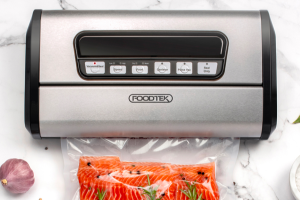
Vacuum packaging is different. It isn't a transport cooler, it's a product-protection method that reduces moisture exposure and air contact. That matters for butcher pack-out, portion control, and storage before dispatch. If the seal is poor, the whole chain starts from a weaker position. PSC TRADING's vacuum-bag guidance is a useful reference point for teams using that format in house (PSC TRADING vacuum bag guidance).
Pallet spacers help the load breathe. They're important when frozen or chilled product is stacked tightly and airflow needs to move through the pallet face. PSC TRADING also stocks freezer pallet spacers, which makes them relevant for abattoir and dispatch lanes where stack stability and freezing efficiency both matter.
| Format | Typical Use Stage | Best Fit For |
|---|---|---|
| Insulated boxes | Pack-out and last-mile | Mixed chilled orders, retail drops |
| Gel packs and ice refrigerants | Dispatch and transit | Short-to-medium chilled deliveries |
| Phase-change materials | Controlled transit | Tighter temperature bands |
| Vacuum packaging | Processing and pre-dispatch | Portioning, moisture control, shelf-life support |
| Pallet spacers | Freezing and pallet staging | Airflow support, stack management |
Performance Metrics and Thermal Profiling
Buyers often ask for “better insulation” when they really need a clearer performance target. That starts with three terms. Hold time is how long the system stays in range. Temperature drift is how far it moves away from target during the journey. Thermal profiling is the evidence that shows what happened inside the pack, not just what the label promised.
Read the pack against the route
For food transport, the useful question is whether the packaging can cover the actual delay window. One industry guide lists gel pack and PCM systems at 2°C to 8°C for 24 to 96 hours, dry ice systems at -78°C and below for 24 to 72 hours, and vacuum-insulated panel systems supporting hold times of up to 120 hours (Disher cold-chain guide). Those are not universal guarantees, but they are practical anchors when comparing quotes or validating a lane.
The point is to match the format to the shipment. A short, chilled hospitality delivery doesn't need the same profile as a frozen export sample or a delayed regional meat run. If a supplier can't tell you how its pack behaves across the likely dwell time, you're buying hope, not control.
A useful benchmark for AU-region seafood is especially tight. A thesis hosted by Imperial College cites New Zealand food-safety guidance showing frozen fish transport is typically kept between -1°C and +1°C (Imperial College thesis repository). That range is narrow enough to make packaging design, loading practice, and route timing matter just as much as the vehicle itself.
If the temperature band is tight, the packaging needs to absorb the real-world messiness, loading delays, dock time, and traffic, not just the planned travel time.
What to ask before you approve a quote
- Ask for the target band: Don't accept “keeps product cold” as a specification.
- Ask for the delay window: Match the pack to realistic door-to-door timing.
- Ask for validation method: Thermal claims should connect to actual profiling, not assumptions.
- Ask about recovery after abuse: Some packs fail fast when opened too often or staged too long.
The best packaging spec is the one that survives the worst normal day, not the best test-lab day.
Active vs Passive Systems in Plain English
The cleanest split in cold-chain buying is simple. Active systems use external power, such as refrigerated trucks, to provide continuous cooling. Passive systems use pre-conditioned materials, such as phase-change materials, to hold temperature without an external energy source (Temprecision cold-chain primer).
Choose by lane, not by preference
If you're moving product on a long-haul abattoir-to-distribution-centre lane, active refrigeration is usually the safer base layer because the temperature is controlled through the journey. If you're handling a last-mile seafood drop, a restaurant replenishment run, or a direct customer order, passive packaging can be enough when the transit window is short and predictable.
Pallet spacers sit in both worlds. On active lanes, they help keep air moving through the load. On passive lanes, they protect stack structure and reduce dead zones where product warms unevenly. That's why they matter in frozen freight as much as they do in chilled dispatch.
Passive systems are often the practical answer when a kitchen or butcher needs protection without the overhead of powered equipment at every leg. They're also easier to deploy when the receiving point isn't set up for specialised refrigerated handling. Active systems, though, are hard to beat when the product must stay under control for long stretches or through repeated handling.
PSC TRADING's industrial packaging range, including related packaging and cold-storage supply categories, can be part of that mix when the workflow needs packaging plus handling support (PSC TRADING industrial packaging supplies).
Practical rule: use active cooling for the long lane, passive protection for the handoff, and airflow control for the pallet.
The bad choice is trying to make one format solve every stage. The better choice is to break the route into legs and assign the right protection to each leg.
Selection Criteria That Actually Filter the Options
A buying decision gets a lot easier when you stop arguing about brands and start filtering by a short list of operational requirements. I'd use five: temperature range, transit time, regulatory and compliance needs, sustainability, and total cost.

Start with the product, then work outward
If you're packing frozen fish, the temperature band is far tighter than for many chilled meals, so the packaging needs to match that sensitivity. If you're dispatching short-run butcher boxes, the transit time may matter more than ultra-low temperature capacity. The product decides the pack, not the other way around.
Compliance matters because not every food business handles packaging the same way. A site with strict QA requirements needs something that can be validated, repeated, and documented. A hospitality operation with simpler dispatch may care more about ease of use and cost per send. That difference changes what “good” looks like in practice.
Sustainability is now part of the filter
The Australian policy direction is clear. The Australian Packaging Covenant Organisation says the 2025 national packaging targets include 100% reusable, recyclable or compostable packaging, 70% of plastic packaging being recycled or composted, and 50% average recycled content (Australian Packaging Covenant Organisation target summary, via MDPI review). The same source also notes Australia generated about 7.7 million tonnes of packaging in 2022–23, with only about 63% recycled or composted, which shows a real implementation gap (same source).
That gap matters because a pack can be thermally excellent and still create avoidable waste. Reusable shippers, recyclable liners, and compostable components all have their place, but they need to be matched to wash-back logistics, contamination risk, and staff behaviour. If the team won't return it, reuse fails. If the product can't stay safe, sustainability fails.
Use total cost, not unit price
A cheap pack that creates spoilage is expensive. A more expensive system that protects product, reduces claims, and cleans up the waste stream may be the better buy. That's the trade-off procurement has to face, especially in meat and hospitality where product value sits close to the packaging decision.
Implementation Checklist for Operations and Logistics
The best packaging spec falls apart if dispatch, QA, and production are doing different things. The rollout needs owner-by-owner discipline, or the same recurring failures will keep showing up.
Build the process around handoffs
Production: confirm the product is packed at the correct temperature and that vacuum seals, liners, and closures are intact before the lot moves to staging. If sealing is inconsistent, the chain starts weak and everything downstream is harder.
Dispatch: pre-condition PCM packs correctly, load pallets so airflow isn't blocked, and avoid leaving staged goods exposed while paperwork catches up. A pallet stacked too tightly can undo a lot of packaging spend.
QA: sample inbound product against the agreed temperature band and check for signs of leakage, thawing, or seal failure. If you don't verify the incoming condition, you won't know whether the issue was pack-out, lane time, or receiving delay.
Procurement: source packaging against the actual lane profile, not the general category description. A long regional lane, a local restaurant drop, and a frozen export leg are different buying problems.
Seal failures, blocked airflow, and wrong pre-conditioning settings are the three mistakes I'd audit first in most food businesses.
Use the linked cold-chain management guidance as a process reference when you're documenting those steps internally (PSC TRADING cold-chain management guidance). The goal is a repeatable routine, not a heroic one-off rescue.
A simple site audit can start with five checks
- Check pack-out temperature before dispatch.
- Check hold time against the delivery window.
- Check airflow paths through the pallet stack.
- Check seal integrity on vacuum or lined packs.
- Check receiving instructions so the other end knows what to expect.
If one of those five fails regularly, the packaging spec probably isn't the only problem.
Matching Packaging to Real Butcher and Hospitality Workflows
A butcher shop, a mid-size abattoir, a hospitality venue, and a home butcher all face the same basic question, but the answer changes with scale and handling style. The useful test is to match the product category to the stage of the chain and then choose the packaging that supports that stage.
Butcher shop and abattoir pack-out
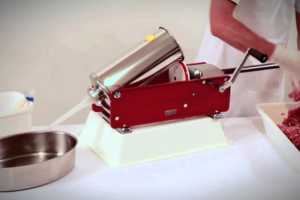
In a butcher shop, the work starts with vacuum machines and vacuum bags because the seal protects portioned product before it ever reaches transport. That's the point where moisture control and shelf-life management matter most. In an abattoir or meat-processing facility, the same logic extends to standardised pack-out and staging, where consistent bag performance makes downstream handling easier.
PSC TRADING's meat-processing range fits that environment because it covers vacuum machines, vacuum bags, and related butcher supplies in one wholesale source. For a buyer, that matters less as a branding point and more as a way to reduce compatibility problems between equipment and consumables.
Hospitality venue and dispatch lanes
A hospitality venue usually needs a combination of insulated boxes for dispatch and sustainable packaging options where the site is trying to reduce waste or satisfy procurement rules. Chilled prepared food, seafood, and meat cuts often move in short lanes where the receiving team wants a clean handoff, clear labelling, and no mess. That's where insulated formats do the heavy lifting.
For transport between sites, freezer pallet spacers help maintain airflow and can make frozen staging more reliable. They're a practical fit when a venue or distributor is stacking product tightly and still needs efficient freezing or load stabilisation.
Home butcher and smaller operators
A home butcher or small operator usually needs simpler control, not more complexity. Vacuum sealing gives the clearest gain, then a modest insulated shipper or chilled pack-out format can bridge the handoff. Over-engineering the pack often adds cost without improving the result.
That's why the best supplier relationship is usually the one that can cover the whole workflow, not just the shipping box. A single source like PSC TRADING Co PTY LTD can cover vacuum gear, insulated formats, freezer pallet spacers, and sustainable packaging options, which helps when the buying team wants fewer moving parts and fewer mismatched consumables.
Putting It All Together and Common Questions
The buying framework is straightforward. Choose the format by stage, validate it with performance metrics, filter it through temperature, transit time, compliance, sustainability, and cost, then roll it out through a disciplined operations checklist. That sequence keeps the decision grounded in the lane, not the brochure.
A few questions come up repeatedly. How do you balance sustainability and thermal performance? By treating end-of-life and reuse as part of the spec, while still protecting the product's temperature band. How do you scale from one shop to multiple sites? Standardise the pack-out rules first, then keep the same packaging logic across locations. What should you audit first? Seal integrity, pack-out temperature, and airflow paths usually tell you more than the packaging label does.
If you're reviewing your current setup, start with one lane, one product type, and one receiving point. Tighten that loop first, then extend the same standard across the rest of the operation.
If you're updating a meat, seafood, or hospitality cold chain now, start with the route you trust least and audit the packaging against it today. Then compare your current system with the product categories above, check whether your team's pack-out steps are repeatable, and ask your supplier for options that fit both performance and waste-reduction goals.
